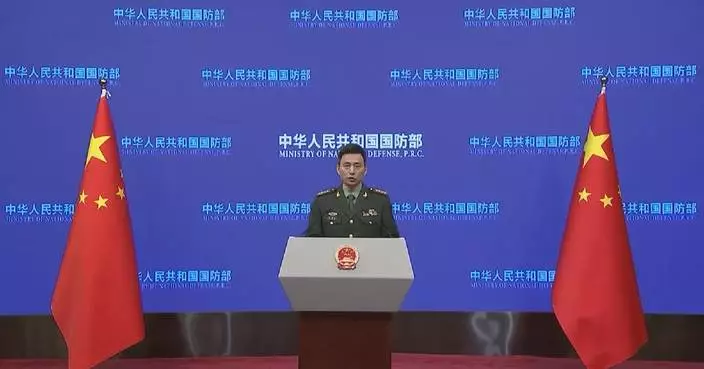
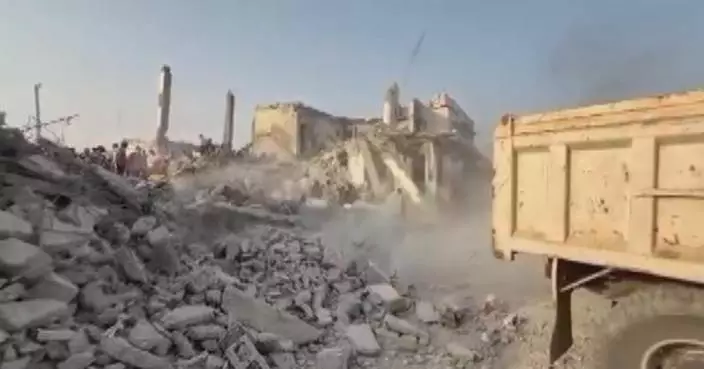
International organizations have condemned the U.S.-Israeli attacks on Iran and called for a return to dialogue to prevent further escalation.
The United States and Israel on Saturday launched a surprise strike on Iran, prompting Iran's retaliatory missile attacks on Israel and U.S. targets across several countries in the region. The Iranian Red Crescent said at least 201 people throughout the country had been killed in the U.S.-Israeli airstrikes, with 747 injured, according to Iranian news media.
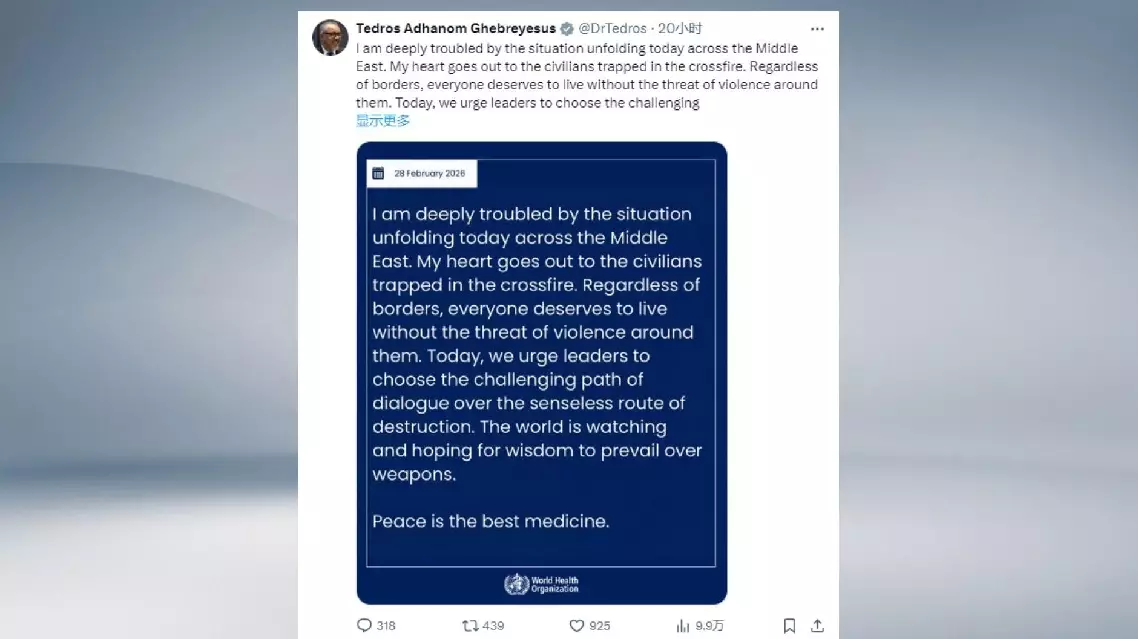
World Health Organization (WHO) Director-General Tedros Adhanom Ghebreyesus on Saturday released a statement, saying he was deeply troubled by the situation unfolding across the Middle East.
Regardless of borders, everyone deserves to live without the threat of violence around them, Tedros said. He urged leaders to choose the challenging path of dialogue over the senseless route of destruction.
On the same day, the United Nations Children's Fund (UNICEF) released a statement expressing deep concern following reports of strikes in Iran and across the region, highlighting the grave danger facing children.
The statement said UNICEF urges all parties to exercise maximum restraint and uphold their obligations under international humanitarian and human rights law, including the protection of civilians and the essential services children rely on to survive. Targeting civilians and civilian objects, including schools, is a violation of international law, it said.
The Chairperson of the African Union Commission, Mahmoud Ali Youssouf, on Saturday expressed deep concerns about the reported military strikes carried out by the United States in coordination with Israeli forces against targets inside Iran, an escalation that marks a serious intensification of hostilities in the Middle East.
Calling for restraint, urgent de-escalation and sustained dialogue, Youssouf stressed that all parties must act fully in accordance with international law and the United Nations Charter to safeguard international peace and security.
The chairperson warned that further escalation threatens to worsen global instability, with serious implications for energy markets, food security, and economic resilience -- particularly in Africa, where conflict and economic pressures remain acute.
The League of Arab States (LAS) has also issued a statement to appeal to all international parties to work towards de-escalation as soon as possible, to spare the region the scourge of instability and violence, and to return to dialogue.
International organizations condemn U.S.-Israeli attack on Iran, call for dialogue
Researchers at China's Chongqing University recently announced that a butterfly has successfully emerged from its pupa while orbiting Earth, yielding valuable data on biological survival in the harsh microgravity environment of space.
The butterfly chrysalis was sealed inside a small experimental space ecosystem payload developed by the university's research team and carried into space aboard the Kuaizhou-11 Y8 carrier rocket on Dec. 13, 2025.
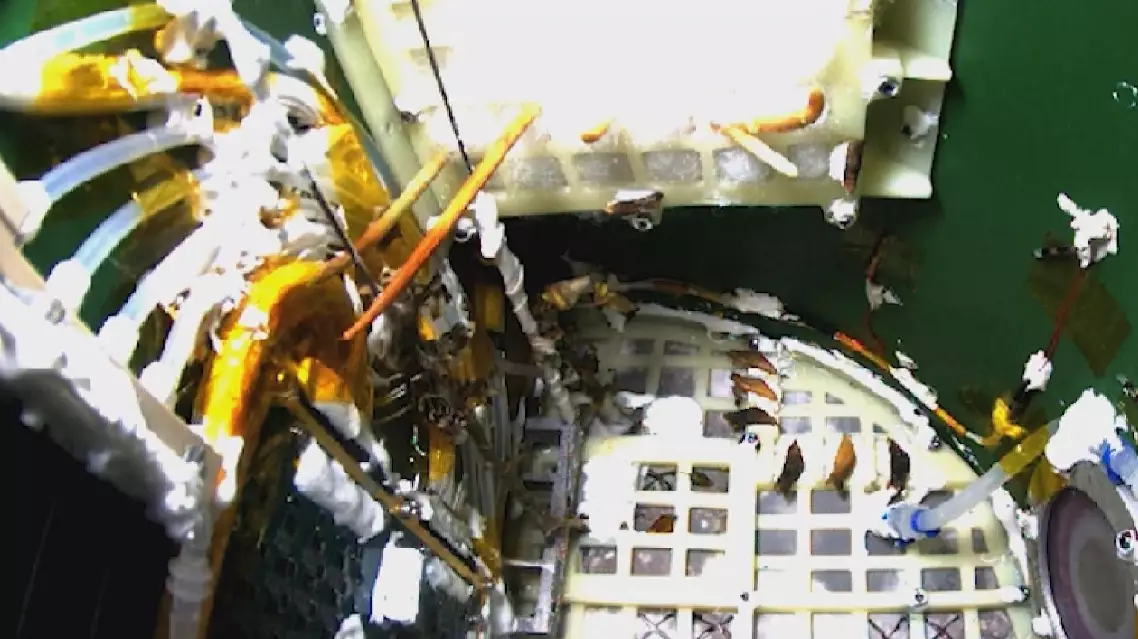
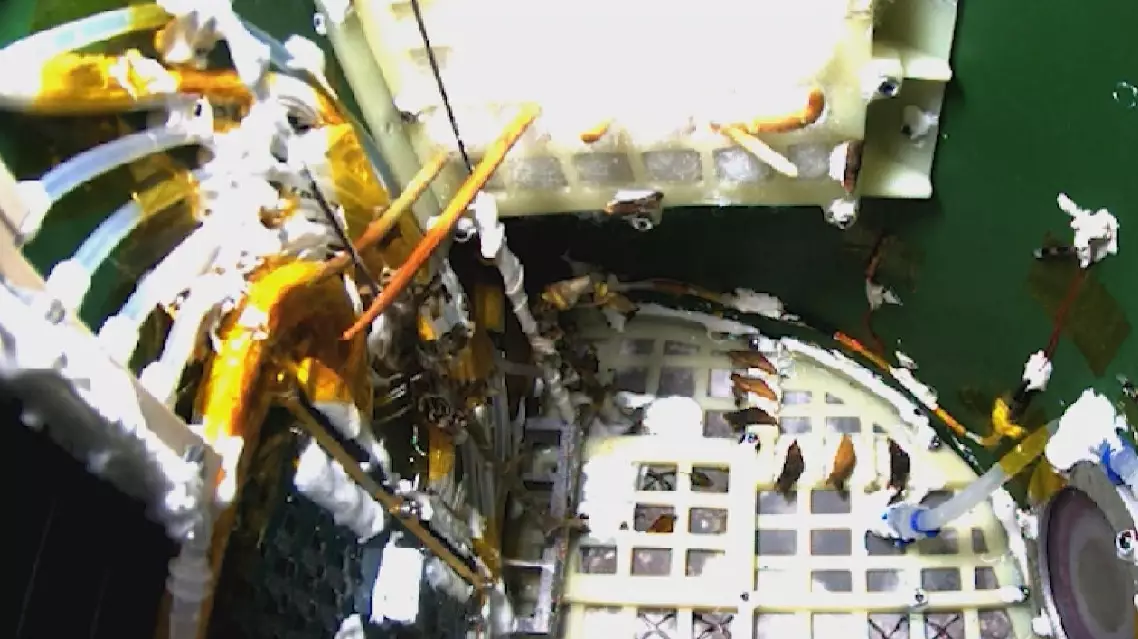
Photos taken in space show the emerged butterfly moving inside the capsule, resting on leaves, and fluttering its wings, demonstrating notable adaptation to microgravity.
In order to witness the emergence of butterflies from their chrysalises in space, Professor Xie Gengxin of Chongqing University led a research team to conduct multiple rounds of screening and ultimately selected Swallowtail butterflies as the test subjects.
The selected butterfly species take approximately one to two weeks to transition from larvae to pupae and then to adult butterflies, which aligns with the duration of this on-orbit experiment. Additionally, the chrysalis's structure must withstand the various shocks encountered before and during launch.
"On the day of the launch, there will be intense vibrations. Therefore, when selecting the animals, we had to choose a species capable of enduring the two-week period of darkness and stillness before the launch while also being able to withstand the impact. In the end, we discovered that butterfly chrysalises were a relatively ideal target," said Qiu Dan, deputy chief engineer of the butterfly experiment payload.
The research team's payload, "Shennong Kaichu 2," serves as the "space home" for the butterfly chrysalises. It has a total mass of 8.3 kilograms and an internal usable space of 14.2 liters. In addition to the butterfly chrysalises, the research team also placed a chili plant, soil, water, and other materials inside the payload.
"With leaves on the chili plant, when sunlight shines in, it can carry out photosynthesis and produce oxygen for the little butterfly. We also introduced some microorganisms into the soil. On one hand, they help improve the soil; on the other hand, they can regulate oxygen and carbon dioxide levels while also purifying the air," said Xie, who is also the chief engineer of the butterfly experiment payload.
Data frameshifted back from the space show that technical indicators inside the sealed cabin of the "Shennong Kaiwu-2" payload, including pressure, temperature, and humidity, have remained stable and normal.
The successful hatching and flight of the butterfly in a microgravity environment not only verified the resilience of life on Earth but also provided important reference for life-support technologies in future long-term deep-space exploration.
Chinese space experiment sees butterfly emerge from in orbit
Chinese space experiment sees butterfly emerge from in orbit