A drone operation system designed to support offshore oilfield operations was officially deployed in the Beibu Gulf of the South China Sea on Saturday, marking a major step forward in integrating marine energy development with low-altitude drone technology.
The system completed its pilot phase at the Weizhou 12-1 oilfield's central platform, which handles crude oil processing and centralized outward transportation for 13 surrounding production platforms, supported by 18 subsea pipelines totaling 238 kilometers in length.
In the past, to ensure the safety of these subsea pipelines, regular inspections had to be carried out using tugboats.
The tugboats would depart from the platform and sail along the pipeline route. A complete inspection would take 33 hours, with fuel costs alone reaching tens of thousands of yuan per mission.
Moreover, the process would be highly susceptible to sea conditions, and inspections had to be postponed in adverse weather.
"With the drones, we can transmit real-time footage back to our central control. The drones have greatly increased our inspection efficiency by 30 percent," said Li Yanchuang, director of the Weizhou 12-1 oilfield of the Zhanjiang Company of China National Offshore Oil Corporation.
The drone system has now been deployed across 41 offshore platforms and two onshore terminals across China, supporting subsea pipeline inspections, logistics delivery, and emergency response operations.
"To date, we have inspected more than 3,600 kilometers of pipelines and deployed drones for small cargo and meal deliveries, saving us nearly 15 million yuan (about 2.2 million U.S. dollars) annually in vessel rental and fuel costs and cut carbon emissions by 25,000 tons. This truly achieves cost reduction, efficiency increase and intelligent upgrade in the operation of offshore oilfields," said Meng Wenbo, Manager of Coordination at the company.
However, achieving large-scale and routine drone operations at sea has never been an easy task. Developers of the drone system have overcame significant challenges, particularly those posed by limited maritime communication coverage.
"We have realized data transmission and communication by deploying self-assembled communication base stations and equipping drones with communication modules. In addition, we have adopted a solution combining the BeiDou Navigation Satellite System with BeiDou ground stations to meet high-precision navigation requirements of the drones, which ensures seamless coverage and stable flight in complex environments and areas beyond the reach of shore-based signals," Li said.
In addition, the drones are also custom-designed to withstand the sea's high-temperature, high-salinity, and high-humidity conditions, which can severely corrode electronic components and airframe materials.
"In light of the specific environmental conditions of the offshore oil industry, we've carried out tailored research and development, promoting the upgrade of domestically produced drones in the high-end manufacturing sector. Based on this, we have preliminarily established China's first set of operational and management standards for drones used in offshore oilfield operations," Meng said.
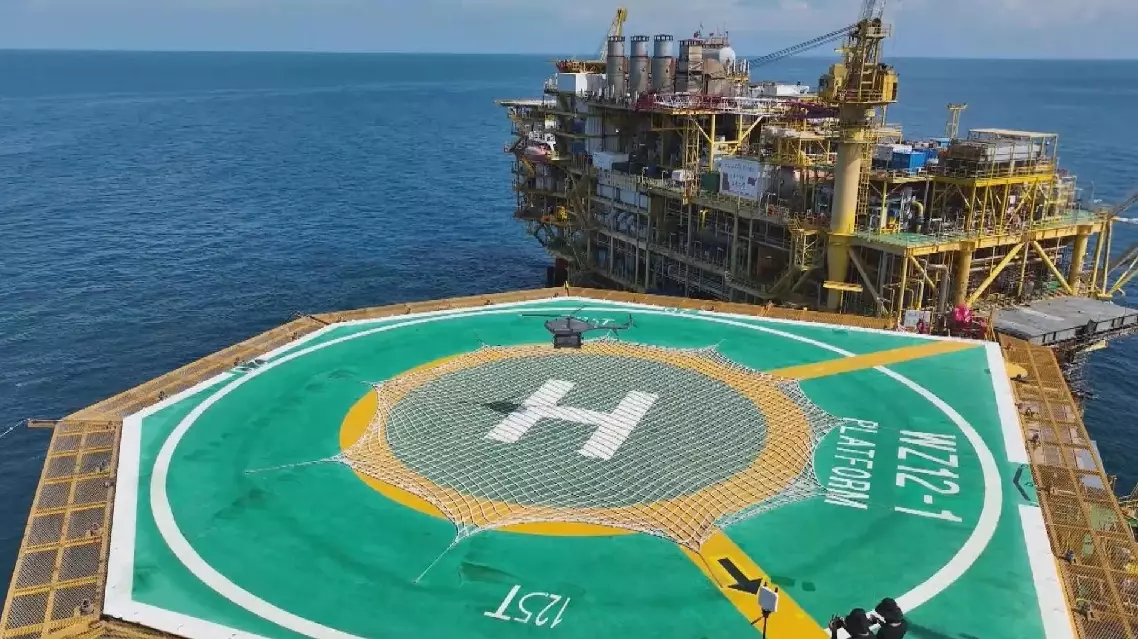
Drone operation system launched to boost offshore oilfield management efficiency in China's Beibu Gulf
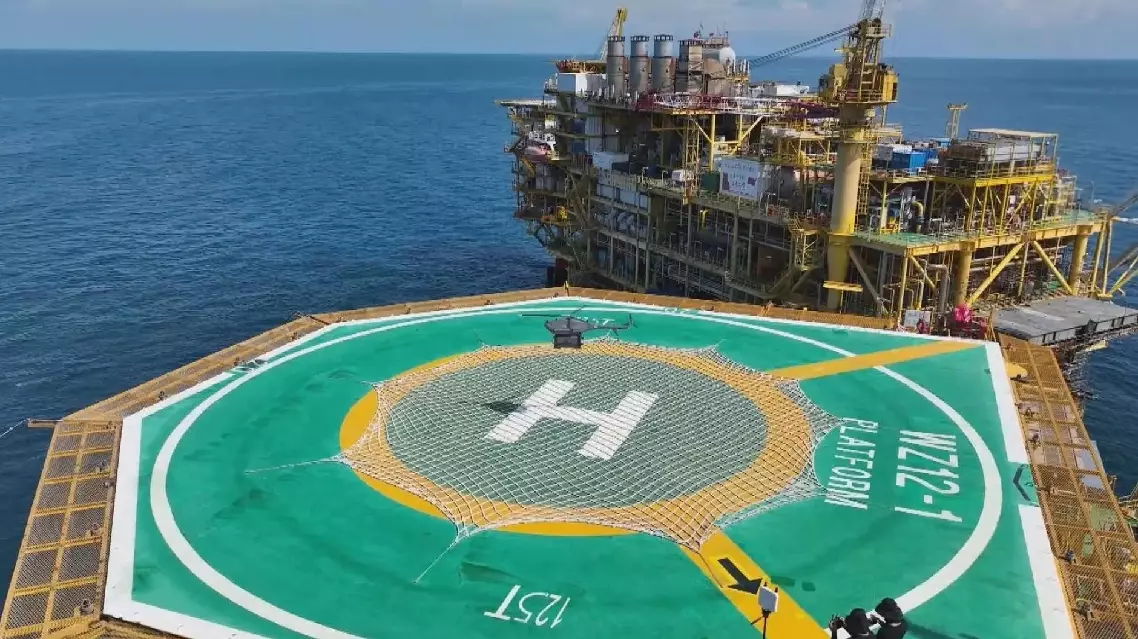
Drone operation system launched to boost offshore oilfield management efficiency in China's Beibu Gulf