China's defense ministry on Saturday accused Japan of taking "reckless" steps toward neo-militarism and called on the international community to remain "highly vigilant."
The remarks were made by Zhang Xiaogang, a spokesman for the Ministry of National Defense, in response to the Japanese government's plans to revise its three key security documents this year, and to accelerate discussions on amending principles governing the export of defense equipment.
"China has carried out relevant military operations to safeguard its territorial sovereignty and security interests. The actions are fully compliant with both domestic and international law, and are entirely legitimate and justified. We need to point out that the past has not been forgotten. Japan once used the so-called situation threatening Japan's survival as a pretext to launch wars of aggression, committing heinous crimes against its Asian neighbors and the world. The right-wing forces in Japan were now reviving similar rhetoric about so-called external threats, attempting to justify military expansion and pursue a hidden political agenda," Zhang said.
"The international community should remain highly vigilant, resolutely oppose Japan's reckless moves toward neo-militarism and uphold the victorious outcome of World War II and the post-war international order. We urge Japan not to barrel down the wrong path or reverse the wheel of history. Otherwise, it is doomed to suffer a speedier and greater defeat," he said.
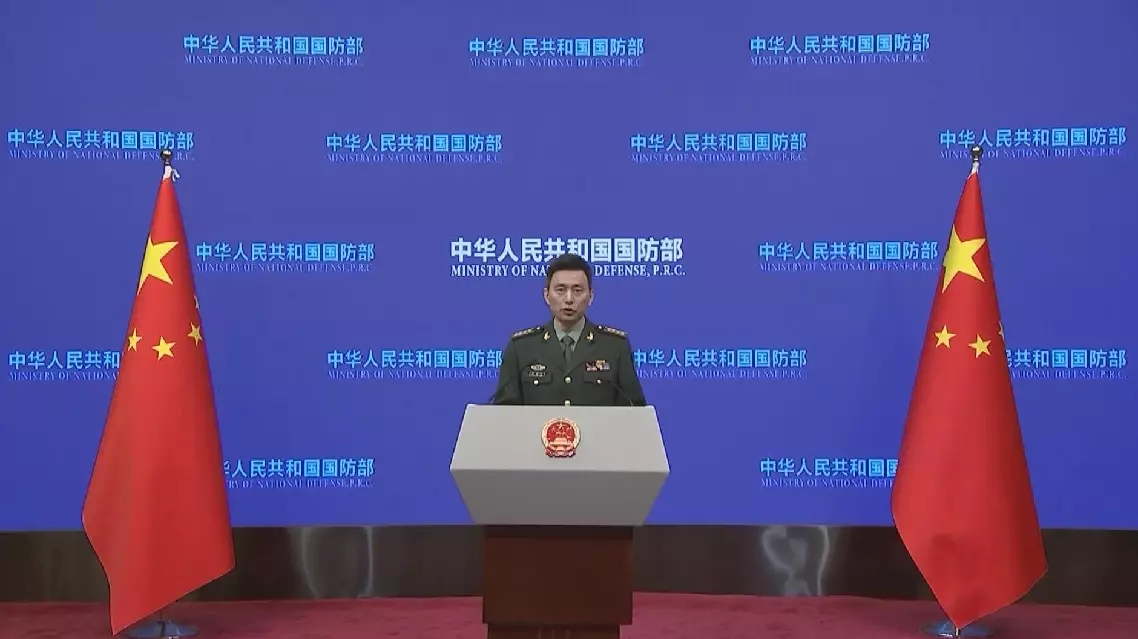
China warns against Japan's "reckless" moves toward neo-militarism
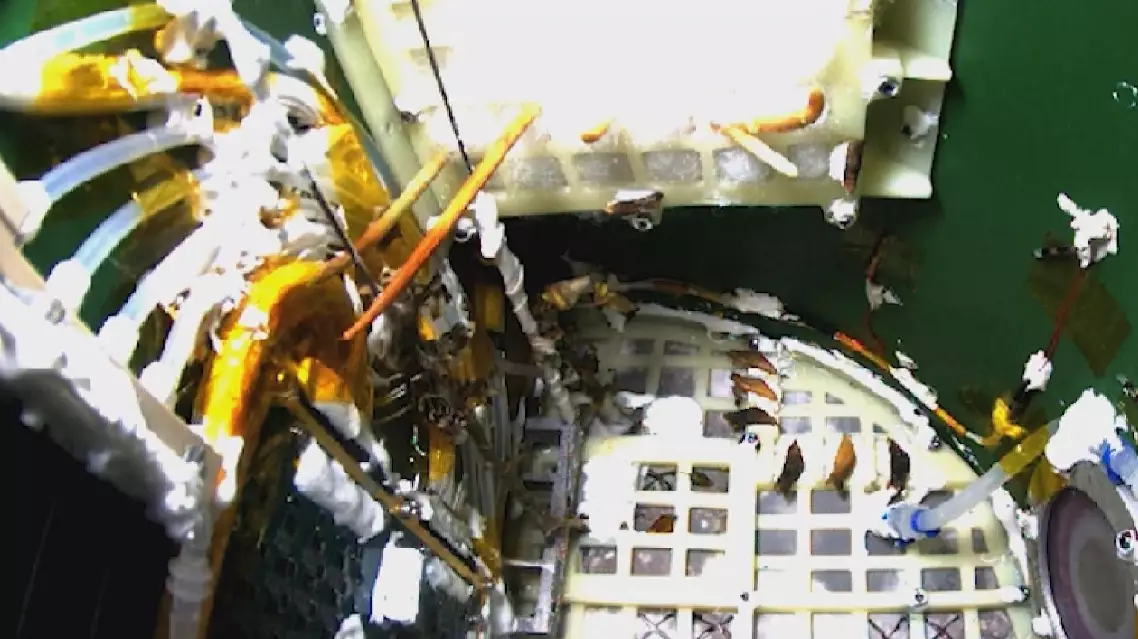
Researchers at China's Chongqing University recently announced that a butterfly has successfully emerged from its pupa while orbiting Earth, yielding valuable data on biological survival in the harsh microgravity environment of space.
The butterfly chrysalis was sealed inside a small experimental space ecosystem payload developed by the university's research team and carried into space aboard the Kuaizhou-11 Y8 carrier rocket on Dec. 13, 2025.
Photos taken in space show the emerged butterfly moving inside the capsule, resting on leaves, and fluttering its wings, demonstrating notable adaptation to microgravity.
In order to witness the emergence of butterflies from their chrysalises in space, Professor Xie Gengxin of Chongqing University led a research team to conduct multiple rounds of screening and ultimately selected Swallowtail butterflies as the test subjects.
The selected butterfly species take approximately one to two weeks to transition from larvae to pupae and then to adult butterflies, which aligns with the duration of this on-orbit experiment. Additionally, the chrysalis's structure must withstand the various shocks encountered before and during launch.
"On the day of the launch, there will be intense vibrations. Therefore, when selecting the animals, we had to choose a species capable of enduring the two-week period of darkness and stillness before the launch while also being able to withstand the impact. In the end, we discovered that butterfly chrysalises were a relatively ideal target," said Qiu Dan, deputy chief engineer of the butterfly experiment payload.
The research team's payload, "Shennong Kaichu 2," serves as the "space home" for the butterfly chrysalises. It has a total mass of 8.3 kilograms and an internal usable space of 14.2 liters. In addition to the butterfly chrysalises, the research team also placed a chili plant, soil, water, and other materials inside the payload.
"With leaves on the chili plant, when sunlight shines in, it can carry out photosynthesis and produce oxygen for the little butterfly. We also introduced some microorganisms into the soil. On one hand, they help improve the soil; on the other hand, they can regulate oxygen and carbon dioxide levels while also purifying the air," said Xie, who is also the chief engineer of the butterfly experiment payload.
Data frameshifted back from the space show that technical indicators inside the sealed cabin of the "Shennong Kaiwu-2" payload, including pressure, temperature, and humidity, have remained stable and normal.
The successful hatching and flight of the butterfly in a microgravity environment not only verified the resilience of life on Earth but also provided important reference for life-support technologies in future long-term deep-space exploration.
Chinese space experiment sees butterfly emerge from in orbit
Chinese space experiment sees butterfly emerge from in orbit