Protesters gathered in the Yemeni capital city of Sanaa and multiple places under Houthi control on Sunday to denounce the U.S. and Israeli attacks on Iran that killed Supreme Leader Ayatollah Ali Khamenei besides massive civilian casualties, expressing Yemeni solidarity with the Iranian people.
The protests unfolded as U.S. and Israeli forces continued a second consecutive day of airstrikes against Iranian targets. In Sanaa, crowds of protesters flooded Al-Sabeen Square, waving Yemeni and Iranian flags while chanting anti-U.S. and anti-Israeli slogans. Similar demonstrations were reported in Houthi-held provinces, reflecting widespread anger over the escalation that has heightened tensions across the Middle East.
"We are here today to strongly protest the U.S.-Israeli aggression against Iran and to stand firmly in solidarity with the Iranian people. We are here every day, ready to respond to the call and confront the U.S. and Israel to the end," said Salah, a Sanaa resident.
"The Yemeni people and Houthi forces are on high alert. If the situation escalates and Yemen is attacked, we will respond decisively," said Dhaifallah Al-Shami, former Houthi official.
On the same day, Houthi leader Abdulmalik al-Houthi reiterated his full support with Iran, emphasizing that he is prepared for any developments in the ongoing conflict between Iran on the one hand, and the U.S. and Israel on the other.
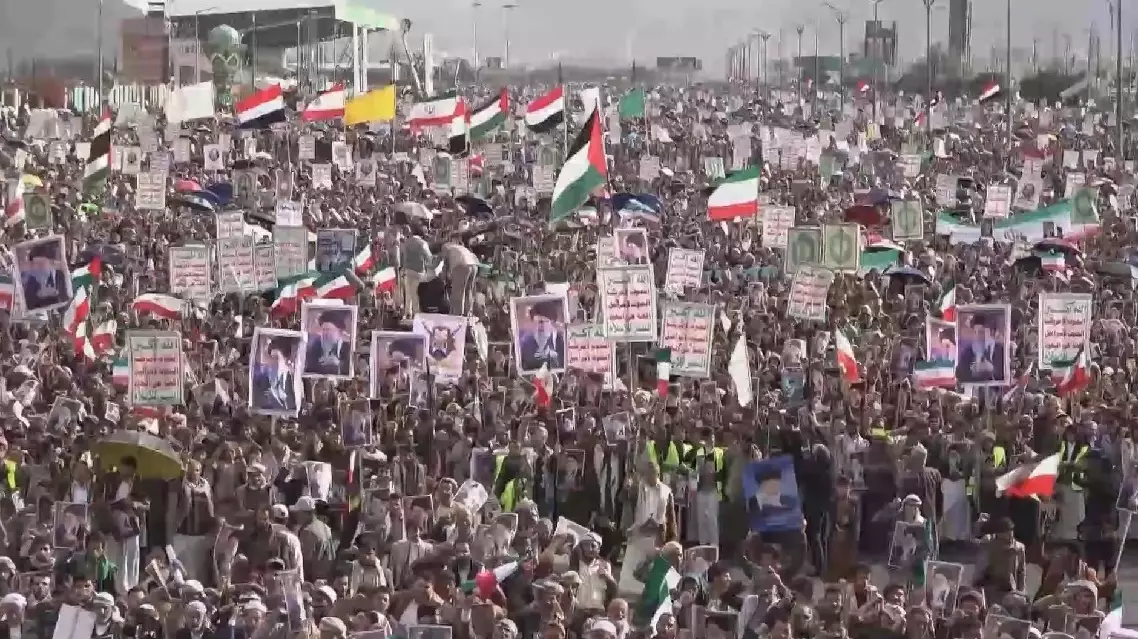
Mass protests held in Yemen to condemn U.S.-Israeli strikes on Iran
Maritime traffic through the Strait of Hormuz declined sharply this week, with daily transits falling to just seven vessels on Thursday, half the volume recorded the day before, Belgian shipping analytics firm Kpler said in a social media update on Friday.
Of the seven vessels, four were outbound from the Persian Gulf and three inbound. Three of the ships were identified as having links to Iran, Kpler noted.
Meanwhile, the U.S. Department of Treasury warned Friday that any shippers paying tolls to Iran for passage through the strategic waterway are at risk of punitive sanctions.
The Office of Foreign Assets Control (OFAC) under the department said the United States is aware of "Iranian threats to shipping" and demands for payments to receive safe passage through the strait, and the demands may include several payment options, including fiat currency, digital assets, offsets, informal swaps, or nominally charitable donations made to the Iranian Red Crescent Society.
"OFAC is issuing this alert to warn U.S. and non-U.S. persons about the sanctions risks of making these payments to, or soliciting guarantees from, the Iranian regime for safe passage," an OFAC advisory said. "These risks exist regardless of payment method."
The Strait of Hormuz handles roughly 20 percent of the world's seaborne oil flows. Iran tightened its grip on the vital waterway after Israel and the United States launched their joint strikes on Iran on Feb. 28. The U.S. imposed a naval blockade targeting ships going to and from Iran.
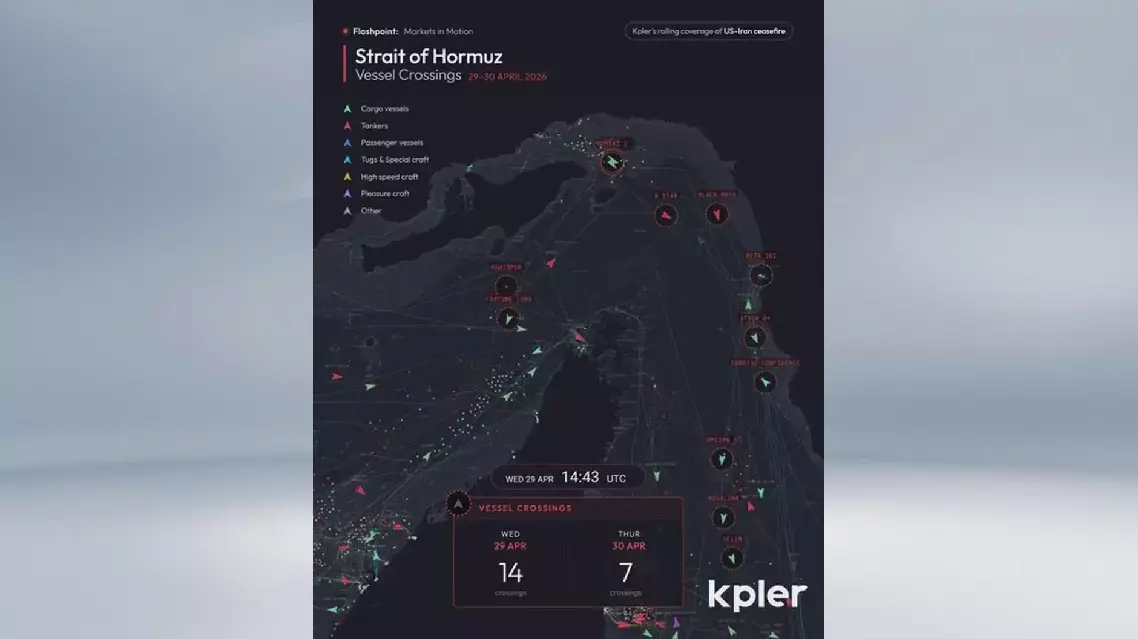
Daily crossings through Strait of Hormuz drop to 7 vessels: Kpler data