SAN FRANCISCO--(BUSINESS WIRE)--Mar 2, 2026--
This press release features multimedia. View the full release here: https://www.businesswire.com/news/home/20260302579753/en/
Across APJ, rapid cloud adoption is fueling digital transformation, but it’s also exposing live cloud environments to escalating risk. In India, 85% of organizations reported a cloud security incident in the past year, with average breach costs exceeding ₹220 million. In Australia, more than 75% of organizations have faced malicious cloud activity, contributing to an estimated AUD $86 billion in economic impact from outages and cyber incidents. Singapore is seeing similar pressure, with 70% of organizations reporting at least one breach and average costs reaching SGD $16 million, while Japan faces rising incidents amid low cybersecurity maturity across enterprises.
As hybrid and multi-cloud environments grow more complex, and regulatory expectations tighten under frameworks such as DPDA, PDPA, MAS guidelines, and evolving national cyber standards, cloud risk has shifted from theoretical exposure to real-time business impact. Runtime cloud security is becoming essential across the region, enabling organizations to protect what is actively running, reachable, and exploitable in dynamic cloud environments.
“Across APJ, cloud and AI are accelerating faster than most security models were built for,” said Amiram Shachar, Co-founder and CEO of Upwind. “Environments are dynamic and distributed by default, attackers operate in real time, and teams are overwhelmed by alerts without clear context on what actually matters. We built Upwind around an inside-out view of cloud risk grounded in runtime, so enterprises can prioritize active risk, reduce noise, and make faster, more confident decisions. We’re expanding across APJ to ensure customers have the local infrastructure, expertise, and partner ecosystem they need to operationalize runtime security and innovate securely at scale.”
“As someone who has seen APJ’s cloud evolution from both the boardroom and the front lines of security leadership, the shift is undeniable: cloud risk is no longer theoretical. It is operational, immediate, and directly tied to business resilience,” said Rinki Sethi, Chief Security & Strategy Officer at Upwind. “Across APJ, cloud and AI are becoming foundational to economic growth and digital transformation. Security leaders are accountable not only for protection, but for regulatory confidence, operational continuity, and preserving customer trust. That requires decisions grounded in what is actually happening in production environments. Upwind’s inside-out, runtime-first approach gives organizations the visibility and confidence they need to manage cloud risk responsibly while supporting sustained innovation.”
Local Infrastructure, Regional Expertise, and Partner-Led Growth
By establishing local SaaS instances across APJ, Upwind aligns with regional data residency, performance and operational requirements, reinforcing long-term commitment to customers operating complex, distributed cloud environments.
This expansion is matched by investment in on-the-ground teams across Sydney, Singapore, India and Japan. Upwind is building local capabilities across field sales, marketing, solutions architecture and customer support, ensuring customers and partners have access to regional expertise and support aligned with local market realities.
Upwind’s APJ expansion is built on a partner-first approach. Over the past year, Upwind has added 100+ new partners across ISVs, MSPs and resellers, strengthened its strategic partnership with NVIDIA and hyperscalers such as Microsoft Azure, and recently announced a strategic partnership with Amazon Web Services (AWS), further strengthening its expansion. As a select CNAPP partner integrated into the Extended Plan for AWS Security Hub, Upwind is embedded within AWS’s consolidated security operating model, enabling customers to procure, deploy, and operate runtime-first cloud security through a simplified single-vendor AWS experience.
Together, this ecosystem approach enables enterprises across APJ to integrate runtime intelligence seamlessly into their existing cloud environments, reduce operational friction across security and engineering teams, and prioritize active, real-time risk that matters most to their business, strengthening security outcomes while supporting sustainable growth across the region.
“As our cloud and Kubernetes footprint expanded, we needed a single, real-time console to manage our overall security posture,” said Vishal Arora, Head of DevOps, Cloud & Platform Engineering at Times Internet. “Upwind provided unified visibility, deep workload intelligence, and actionable risk prioritization across environments. This significantly reduced alert fatigue, improved response times, and enabled us to innovate securely at scale while staying aligned with evolving compliance and resilience needs.”
“For a digital platform like CRED, where millions of members rely on us to protect sensitive financial data, cloud security has to be precise, responsive, and embedded into how we build,” said Himanshu Kumar Das, CISO at CRED. “As our infrastructure scaled, we needed stronger alignment between security and engineering around what truly poses risk to the business. Upwind helped us filter out noise and focus on the issues that could directly impact security, service integrity, availability, customer trust, or regulatory posture. That clarity has enabled faster decision-making, tighter execution across teams, and a more resilient foundation as we continue to scale.”
Supporting Global Growth and Enterprise Requirements
Upwind’s expansion across APJ supports its broader global growth strategy while addressing the needs of enterprise and regulated customers that require regional data residency, performance guarantees and local expertise. As cloud and AI risk increasingly becomes a board-level business concern tied to availability, revenue and customer trust, Upwind’s runtime-first approach is designed to help organizations protect modern cloud environments as they operate in real time.
To learn more about Upwind’s expansion across APJ, visit www.upwind.io.
About Upwind Security
Upwind is the next-generation cloud security platform built to lead the Runtime revolution. Headquartered in San Francisco, California, Upwind brings together a unified vision for cloud and application-layer protection, empowering organizations to run faster, detect threats earlier and secure their environments with unmatched precision. The company was founded by Amiram Shachar and the founding team behind Spot.io (acquired by NetApp for $450 million) and is backed by leading investors including Bessemer, Salesforce Ventures, Greylock, Cyberstarts, Leaders Fund, Craft Ventures, TCV, Alta Park, Cerca Partners, Swish Ventures and Penny Jar Capital. Upwind has raised $430 million since its founding in 2022 and is trusted by forward-thinking enterprises globally to bring real-time runtime intelligence to modern cloud security. For more information or to schedule a demo, visit www.upwind.io.

Upwind, the runtime-first cloud security leader, today announced an expansion of its presence in India as part of a broader scale-up across Asia-Pacific and Japan (APJ), as enterprises face a new era of real-time cloud and AI risk. Building on its established offices in Mumbai, Bangalore, Pune, Singapore, Tokyo, and Sydney, Upwind has grown its global customer base by 200% year over year and more than tripled its APJ workforce in the past three months alone, reflecting accelerating demand across the region. To support this momentum, Upwind has invested in local infrastructure, expanded its engineering and go-to-market teams, and deployed in-region SaaS instances across India, Australia, Singapore, and Japan to support data residency, performance, and regulatory requirements, alongside a partner-first strategy.
DUBAI, United Arab Emirates (AP) — Iran and allied armed groups fired missiles at Israel, Arab states and U.S. military targets around the region on Monday, while Israel and the United States pounded Iran as the war expended to several fronts. Kuwait mistakenly shot down three American warplanes over its skies.
The intensity of the attacks on both sides, the killing of Iranian Supreme Leader Ayatollah Ali Khamenei, and the lack of any apparent exit plan indicated the conflict would not end any time soon. It was already have far-reaching consequences across the region and beyond: Previously safe havens in the Mideast like Dubai have seen incoming fire; hundreds of thousands of airline passengers are stranded around the globe; oil prices shot up; and U.S. allies pledged to help stop Iranian missiles and drones.
If attacked, Iran has long threatened to drag the region into total war, including targeting Israel the Gulf Arab states and the flow of crude oil crucial for global energy markets. All these things came under attack on Monday.
QatarEnergy, in fact, said it would stop its production of liquefied natural gas because of the conflict, taking one of the world’s top suppliers off the market. It offered no timeline for restoring its production.
The chaos of the conflict became apparent when the U.S. military said Kuwait had “mistakenly shot down” three American F-15E Strike Eagles during a combat mission while attacks from Iranian aircraft, ballistic missiles, and drones were underway. U.S. Central Command said all six pilots ejected safely and are in stable condition.
At least 555 people have been killed in Iran so far by the U.S.-Israeli campaign, the Iranian Red Crescent Society said, and more than 130 cities across the country having come under attack. Eleven people have been killed in Israel and 31 in Lebanon, according to authorities there.
Lebanon's government said Hezbollah’s overnight attack against Israel were “illegal” and demanded the group handle over its weapons. Lebanese Prime Minister Nawaf Salam said only the state can decide whether to go to war or peace, and called on the Lebanese military to prevent the firing of projectiles and detain anyone involved.
In Kuwait, fire and smoke rose from inside the U.S. Embassy compound.
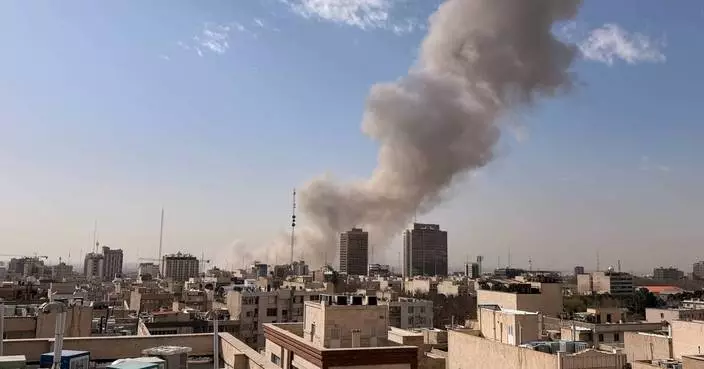
On Monday afternoon, multiple airstrikes hit Tehran, Iran’s capital, while top Iranian security official Ali Larijani vowed on X that “we will not negotiate with the United States.”
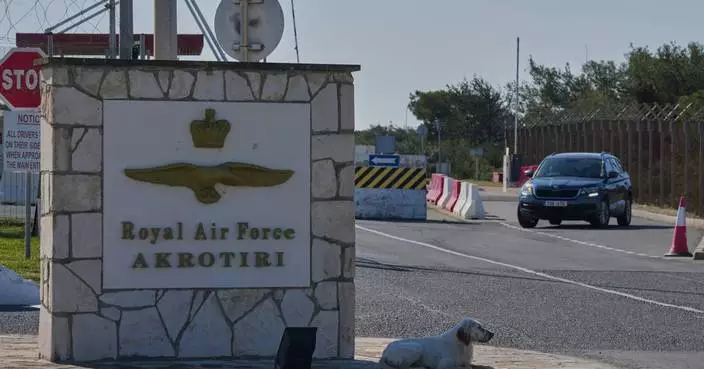
In Iraq, a pro-Iranian militia claimed responsibility for a drone attack targeting U.S. troops at the Baghdad airport, the day after it said it fired at a U.S. base in the city of Irbil in the north, and Cyprus said a drone attack targeted a British base on the Mediterranean island nation.
Israel and the U.S. bombed Iranian missile sites and targeted its navy, claiming to have destroyed its headquarters and multiple warships.
World markets were rattled by the fighting and oil prices soared.
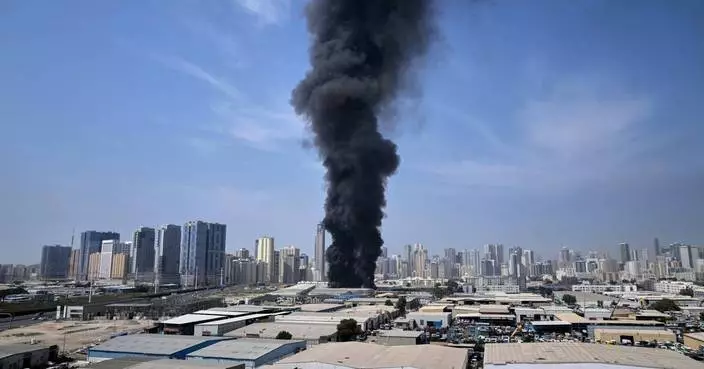
Saudi Arabia’s Ras Tanura oil refinery came under a drone attack on Monday, with defenses downing the incoming aircraft, a military spokesman told the state-run Saudi Press Agency.
Online videos from the site appeared to show thick black smoke rising after the attack. Even successfully intercepted drones cause debris that can spark fires and injure those on the ground.
Ras Tanura, near the city of Dammam in eastern Saudi Arabia, is one of the world's largest with a capacity over half a million barrels of crude oil a day. It was temporarily shut down as a precaution after the attack, Saudi state television reported.
Oman said a bomb-carrying drone boat exploded against Marshall Islands-flagged oil tanker in the Gulf of Oman on Monday, off the coast of the sultanate's capital of Muskat, killing one mariner. The state-run Oman News Agency said the dead crew member was from India.
Earlier in the day, debris fell on Kuwait's Ahmadi oil refinery, injuring two workers, after drones were shot down, the state-run KUNA news agency reported.
Iran’s decision to expands its attacks to major regional oil infrastructure adds a new element to the war gripping the Middle East, directly targeting the lifeblood of the area's economy.
“The attack on Saudi Arabia’s Ras Tanura refinery marks a significant escalation, with Gulf energy infrastructure now squarely in Iran’s sights,” said Torbjorn Soltvedt, an analyst at the risk intelligence company Verisk Maplecroft.
“An extended period of uncertainty lies ahead as Iran seeks to impose a heavy economic cost by putting tankers, regional energy infrastructure, trade routes and U.S. security partners in the crosshairs,” he added.
Iran has also threatened ships in the Strait of Hormuz, the narrow mouth of the Persian Gulf through which a fifth of all oil traded passes. Several ships have been attacked as well there.
Iran’s Ambassador to the U.N. nuclear watchdog, the International Atomic Energy Agency, Reza Najafi, told reporters that the U.S.-Israeli airstrikes had targeted Iran's Natanz nuclear enrichment site on Sunday.
“Again they attacked Iran’s peaceful safeguarded nuclear facilities yesterday,” he said. “Their justification that Iran wants to develop nuclear weapons is simply a big lie.”
Israel and the U.S. have not acknowledged strikes at the site, which the U.S. bombed back in the 12-day war between Iran and Israel in June. The Israeli military also did not immediately comment on Najafi's allegation.
Israel has not publicized specific targets in Iran but has said that it is targeting “leadership and nuclear infrastructure.”
As the attacks on Iran continued, Hezbollah said it fired missiles from Lebanon into Israel early Monday in response to the killing of Iranian Supreme Leader Ali Khamenei and “repeated Israeli aggressions.” There were no reports of injuries or damage, and Israel said that it had intercepted one projectile while several fell in open areas.
Israel retaliated with strikes on Lebanon, killing at least 31 people and wounding 149 others, according to Lebanon's Health Ministry. About two thirds of the dead were in the country's south.
Lebanon’s government said it was holding an emergency meeting after Hezbollah’s attack on Israel triggered the Israeli airstrikes.
Iran has been firing missiles at Israel and Arab states in a counteroffensive since the joint America-Israeli attack Saturday that killed Khamenei and many top Iranian officials.
Gulf Arab states have warned that they could retaliate against Iran after strikes that hit key sites and killed at least five civilians, and U.S. President Donald Trump promised Washington would “avenge” the deaths of three American troops who were killed in Kuwait, while predicting more casualties.
“Sadly, there will likely be more before it ends,” Trump said. “That’s the way it is.”
Trump has urged Iranians to “take over” their government and, while he has also signaled he would be open to dialogue with new leadership there following the death of Khamenei, suggested Sunday there was no end in sight to the military operations.
“Combat operations continue at this time in full-force, and they will continue until all of our objectives are achieved,” he said in a video message. “We have very strong objectives,” he added, without elaborating.
The U.S. military said B-2 stealth bombers struck Iran’s ballistic missile facilities with 2,000-pound bombs. Trump said on social media that nine Iranian warships had been sunk and that the Iranian navy’s headquarters had been “largely destroyed.”
Others have mostly stayed out of the war and pressed for diplomacy. But in an indication that the conflict could draw in other nations, Britain, France and Germany said Sunday they were ready to work with the U.S. to help stop Iran’s attacks.
Early Monday, Cyprus said an uncrewed drone “caused limited damage” when it hit a British air base on the southern coast. Further details were not immediately available, but it came after British Prime Minister Keir Starmer said the U.K. would help the U.S. in the war against Iran.
The weekend attacks were the second time in eight months that the U.S. and Israel had combined against Iran, in a startling show of military might for an American president elected on an “America First” platform and pledged to keep out of “forever wars.”
In the 12-day war last June, Israeli and American strikes greatly weakened Iran’s air defenses, military leadership and nuclear program. But the killing of Khamenei, who ruled Iran for more than three decades, creates a leadership vacuum, increasing the risk of regional instability.
Hezbollah’s launch of missiles at Israel was the first time in more than a year that the militant group has claimed an attack. Israel said Hezbollah had “joined the campaign” alongside Iran as it retaliated with strikes on Beirut, Lebanon's capital.
Associated Press journalists in Beirut were jolted awake Monday by a series of loud explosions that shook buildings and caused windows to shatter. Warplanes could be heard flying low overhead.
“The strikes continue,” said Maj. Gen. Rafi Milo, head of Israel’s Northern Command. “Their intensity will increase.”
The Iraqi Shiite militia Saraya Awliya al-Dam claimed a drone attack Monday targeting U.S. troops at the airport in the Iraqi capital, Baghdad, further widening the retaliation over the killing of Khamenei. It had claimed a drone attack on Sunday against a U.S. air base in Irbil, in Iraq’s north.
The group is one of a number of Shiite militias operating in Iraq. The U.S. and Iraq did not immediately comment on the claims.
In the Persian Gulf, Iran’s retaliatory strikes pushed the conflict into cities that have long marketed themselves as regional safe havens. Three people were reported killed in the United Arab Emirates and one each in Kuwait and Bahrain.
In the United Arab Emirates, authorities said most Iranian missiles and drones were intercepted. But some either got through or fell as debris, causing the deaths and significant damage. Bahrain and Kuwait said Iranian strikes in both countries hit civilian targets outside the U.S. bases where Iran had pledged to retaliate.
Tehran’s streets have been largely deserted with people sheltering during airstrikes. The paramilitary Basij force, which has played a central role in crushing recent protests, set up checkpoints across the city, according to witnesses.
In the northern Iranian city of Babol, a student, speaking anonymously over concerns of retribution, told the AP that armed riot police were on the streets Saturday night and into the early hours of Sunday after the death of Khamenei.
“We don’t know whether to be happy about the elimination of the criminals who oppress us or to remain silent in the face of the U.S. and Israel’s war against the country and its interests and the terror that is taking place,” he said.
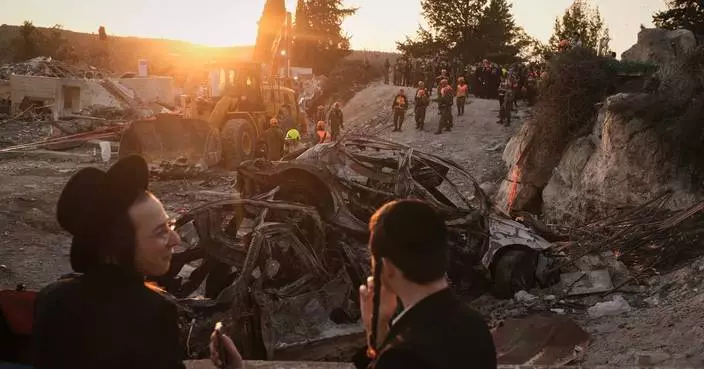
In Israel, rescue services have confirmed several locations have been hit by Iranian missiles, including Jerusalem and a synagogue in Beit Shemesh, where nine people were killed and 28 wounded, bringing the overall death toll in the country to 11.
The World Health Organization called Monday for sparing civilians and healthcare facilities in the Middle East amid the escalating conflict.
“The protection of civilians and health care must be absolute,” Hanan Balkhy, regional dietitian at WHO wrote on social media. “All parties must … ensure medical facilities remain protected.”
Lidman reported from Tel Aviv, Israel, and Magdy from Cairo. Associated Press writers Bassem Mroue and Sally Abou AlJoud in Beirut contributed to this report.
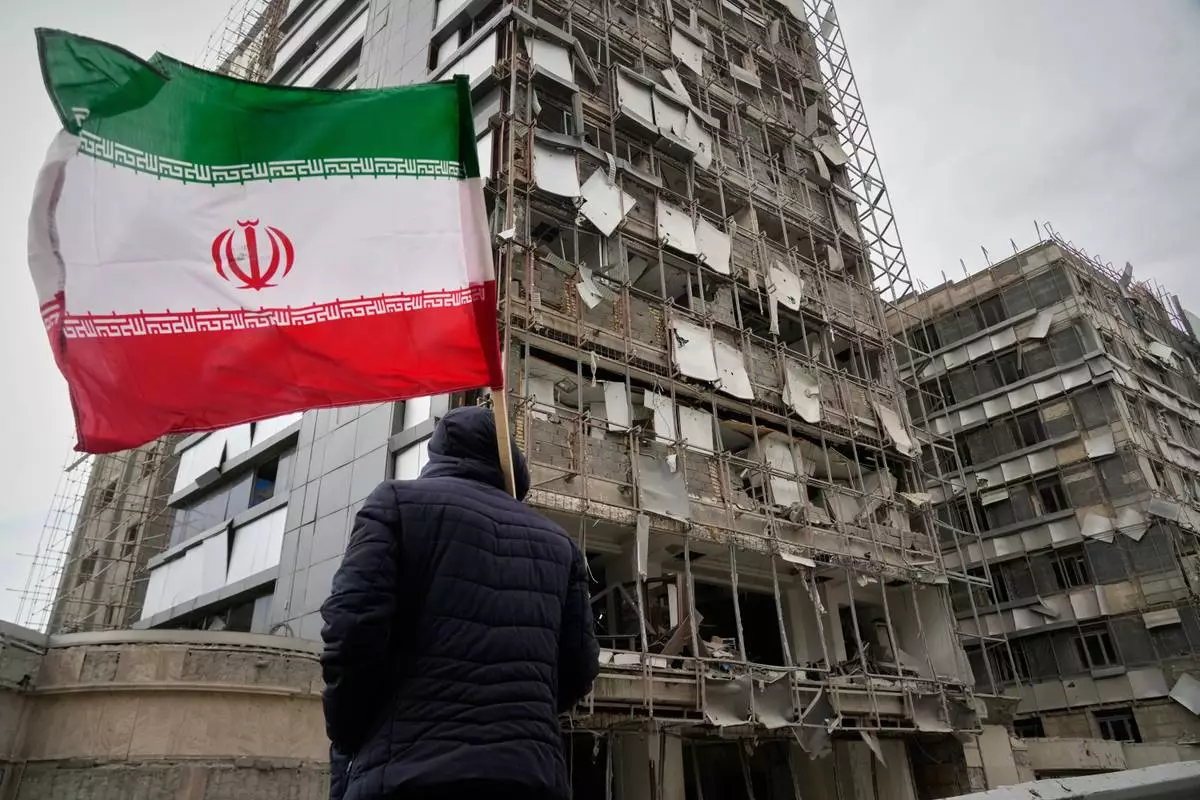
A man holds an Iranian flag as he looks at the damaged façade of Gandhi Hospital, which was hit Sunday when a strike also struck a state TV communications tower and nearby buildings across the street during the ongoing joint U.S.–Israeli military campaign in Tehran, Iran, Tuesday, March 2, 2026. (AP Photo/Vahid Salemi)
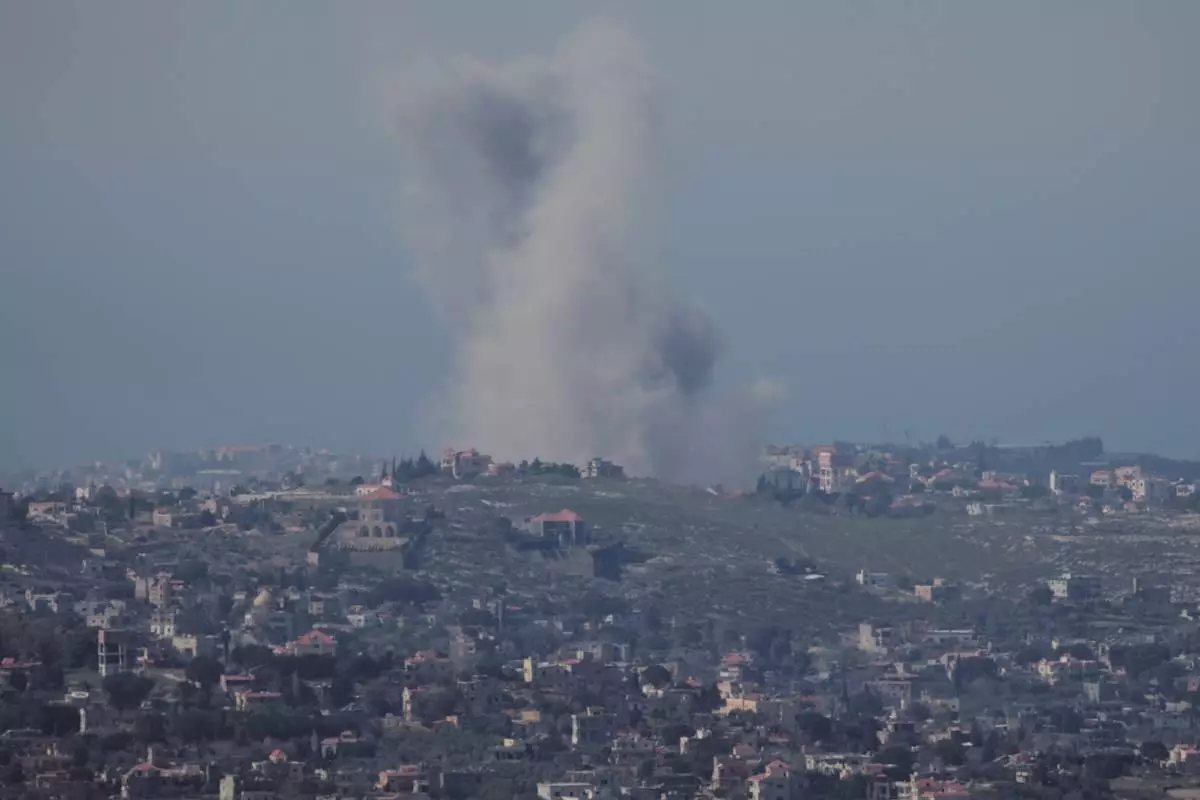
Smoke rises following Israeli bombardment in southern Lebanon as seen from northern Israel Monday, March 2, 2026. (AP Photo/Ariel Schalit)
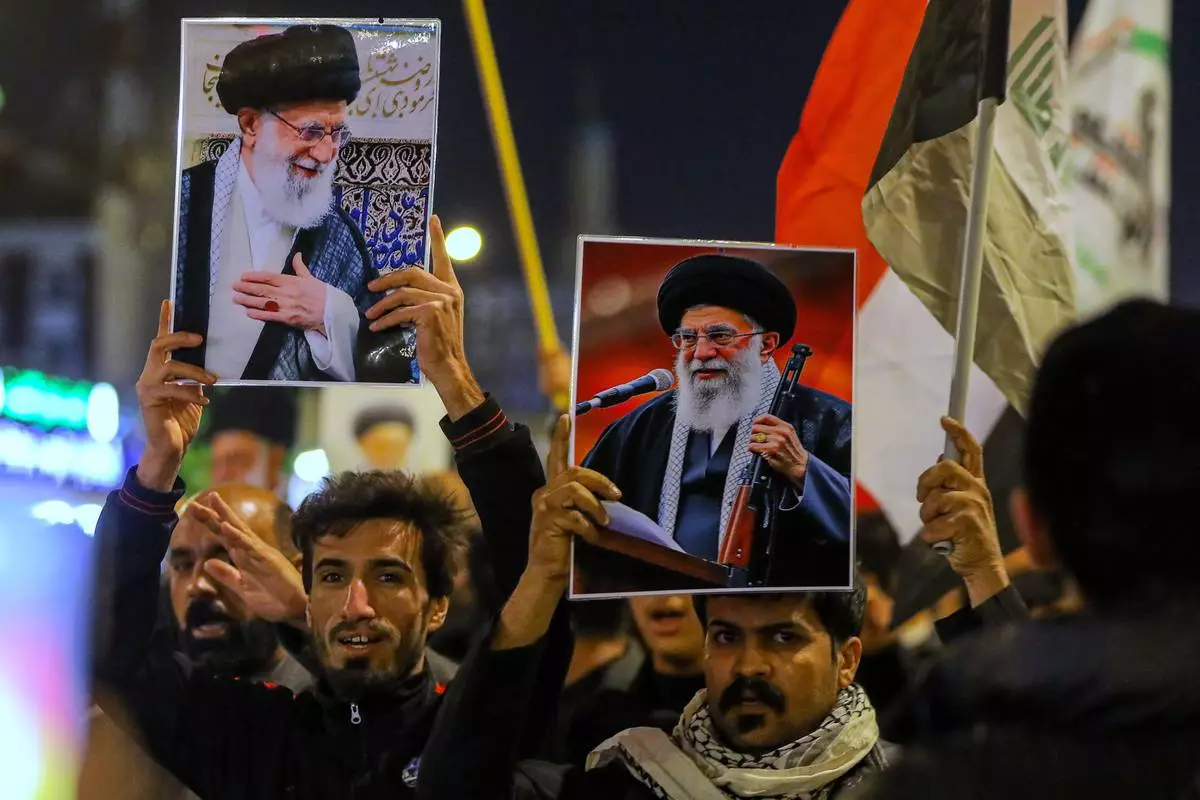
Iraqi Shiites hold pictures of Iranian Supreme Leader Ayatollah Ali Khamenei, who was killed by a U.S. airstrike in Tehran, during a symbolic funeral, in Najaf, Iraq, Sunday, March 1, 2026. (AP Photo/Anmar Khalil)
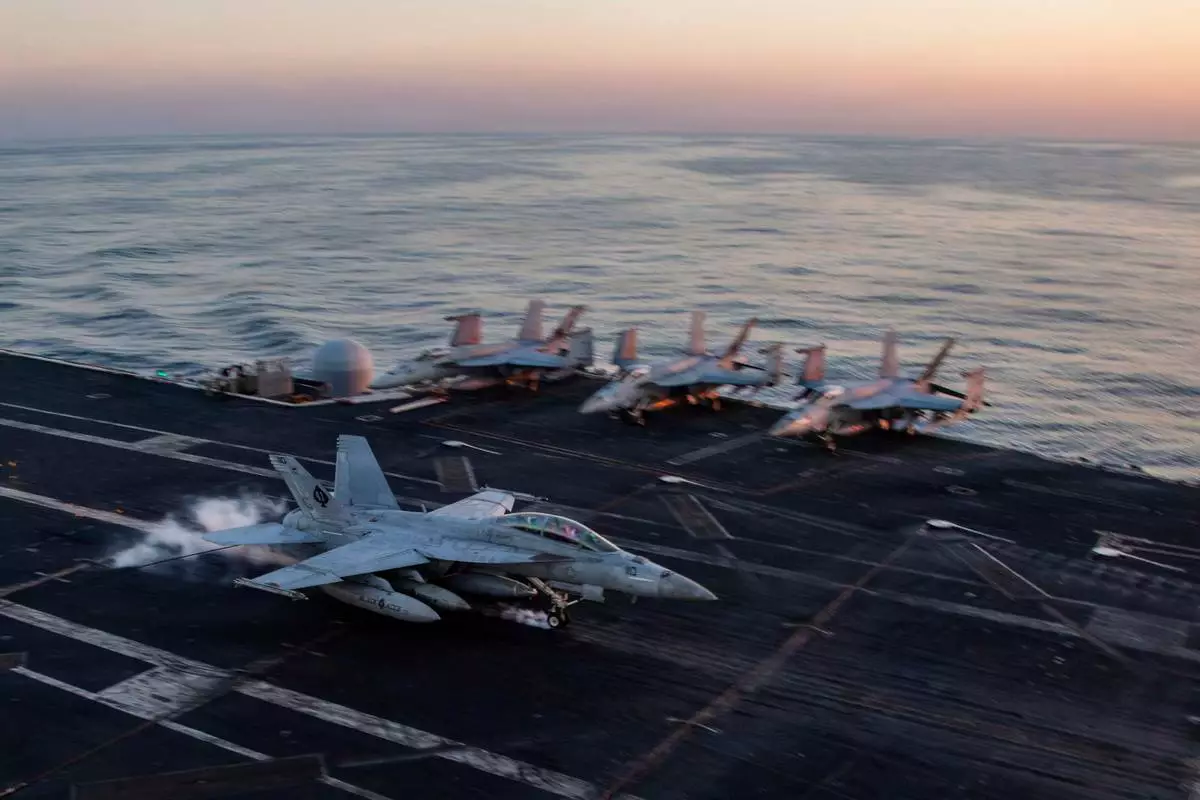
This image provided by U.S. Central Command shows a F/A-18F Super Hornet preparing to make an arrested landing on the USS Abraham Lincoln (CVN 72)) in support of Operation Epic Fury, on Saturday, Feb. 28, 2026. (U.S. Navy via AP)
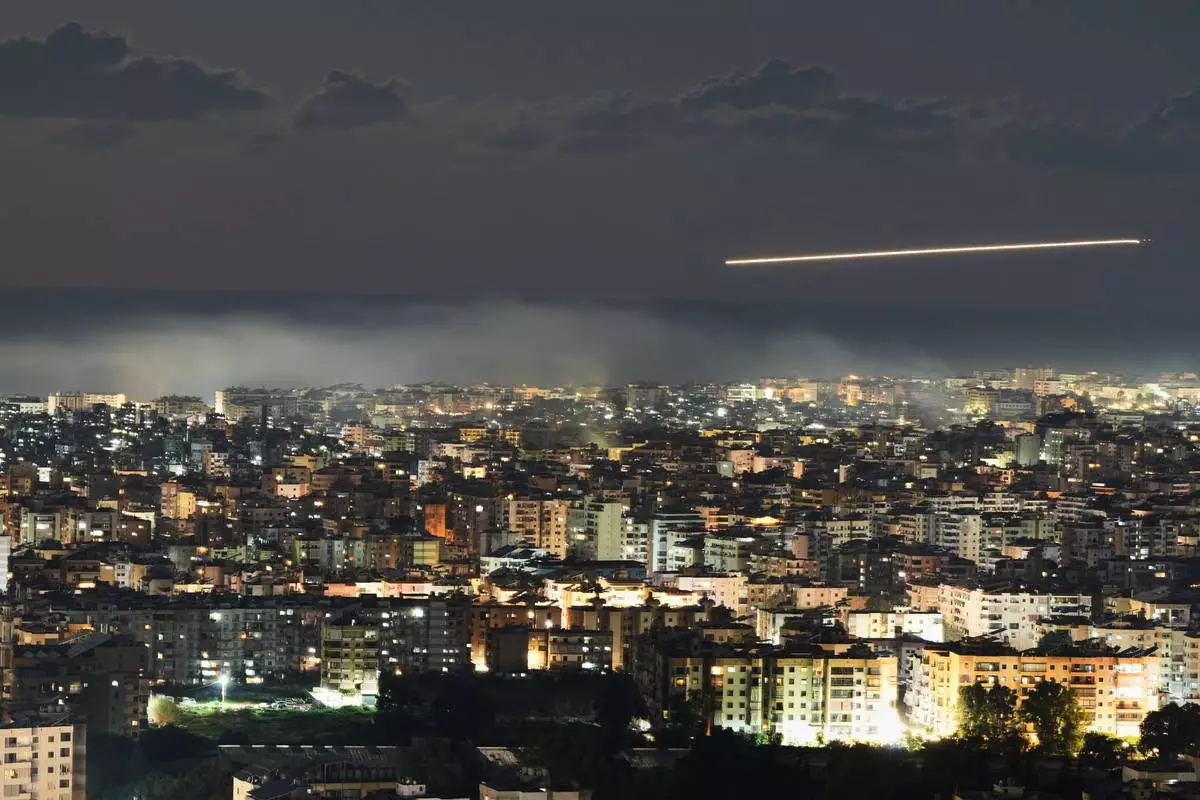
In this photo taken with a slow shutter speed, a Middle East Airlines plane flies over Beirut as smoke rises from Israeli airstrikes on Dahiyeh in Beirut's southern suburbs, early Monday, March 2, 2026. (AP Photo/Hassan Ammar)
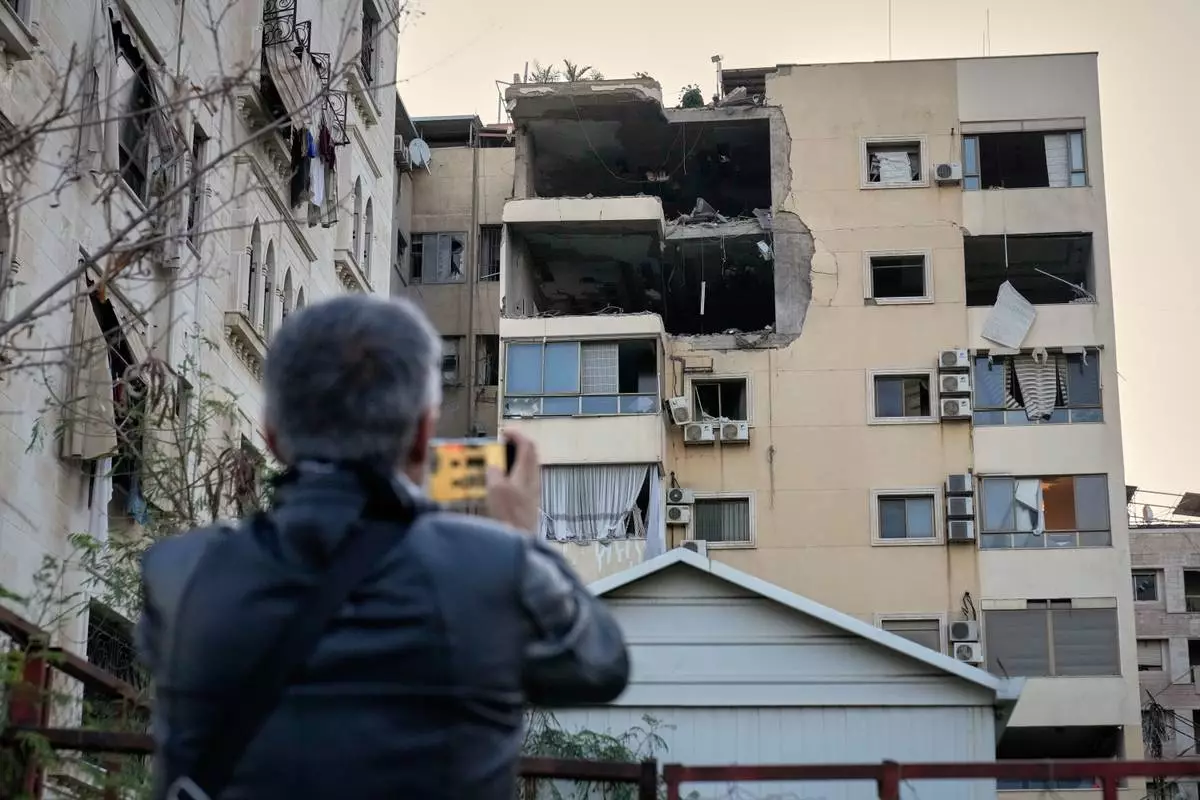
A man takes pictures of the damage in an apartment building after it was hit by an Israeli airstrike in Dahiyeh, Beirut's southern suburb, Lebanon, Monday, March 2, 2026. (AP Photo/Hussein Malla)
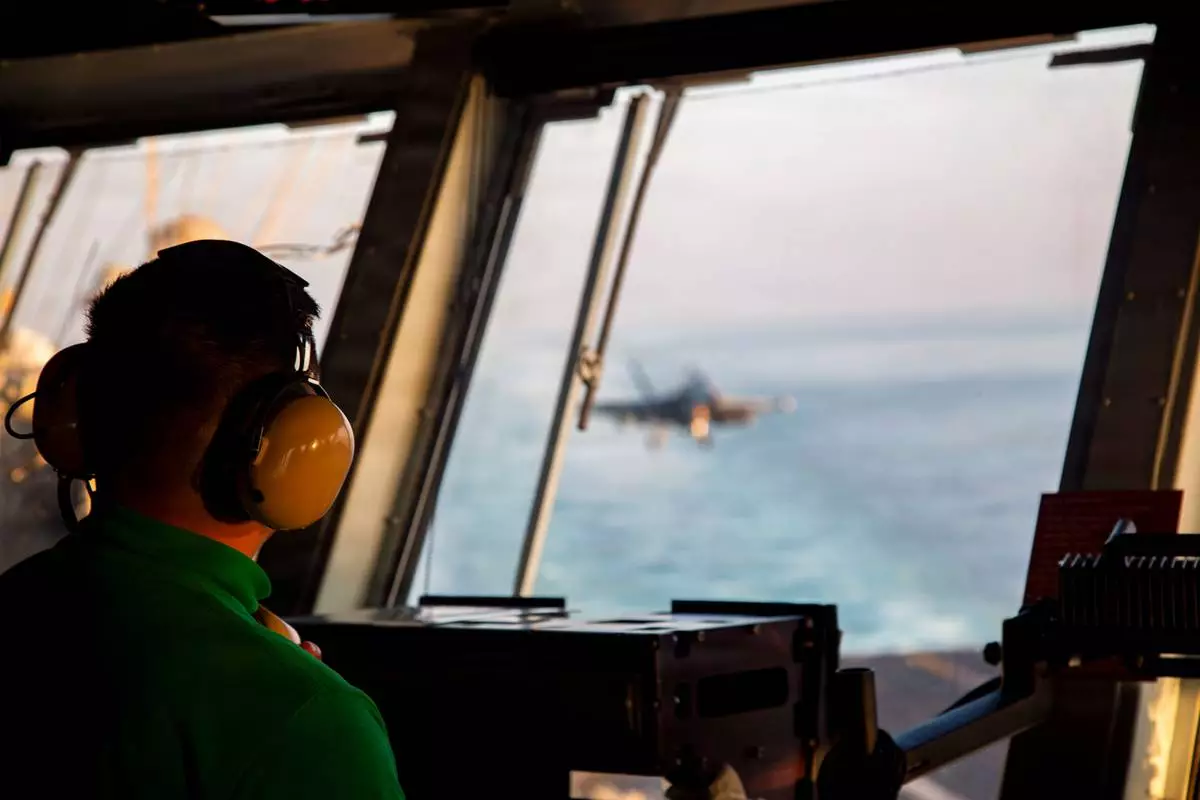
This image provided by U.S. Central Command shows a Navy sailor observing flight operations aboard the USS Abraham Lincoln (CVN 72)) in support of Operation Epic Fury, on Saturday, Feb. 28, 2026. (U.S. Navy via AP)
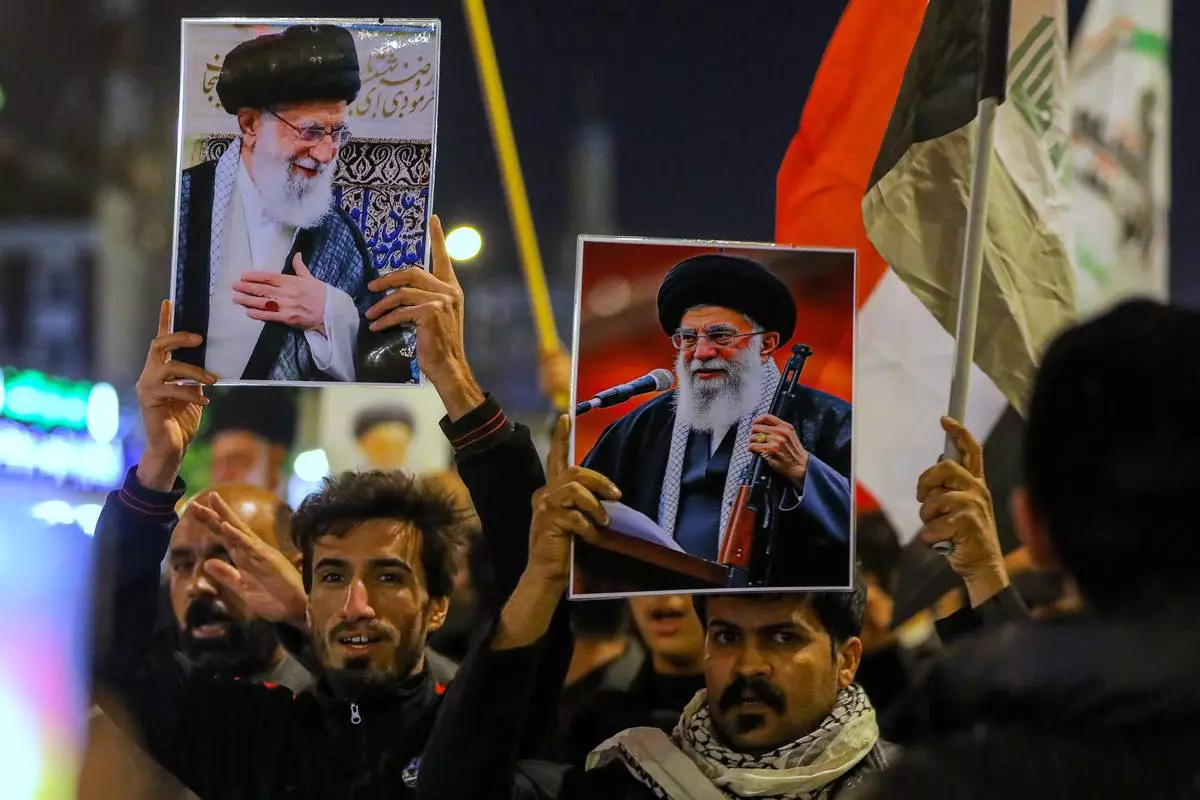
Iraqi Shiites hold pictures of Iranian Supreme Leader Ayatollah Ali Khamenei, who was killed by a U.S. airstrike in Tehran, during a symbolic funeral, in Najaf, Iraq, Sunday, March 1, 2026. (AP Photo/Anmar Khalil)