New trends are fueling consumption in China as young people increasingly buy not just for necessity, but for joy, personal connection and a sense of self, forming what has been dubbed the "emotional economy."
For many Chinese consumers, shopping is no longer about price versus utility, but about feeling, identity and impulse. This increasingly prevalent mindset marks a significant shift from "value-for-money" to "value-for-mood."
Chinese lifestyle retailers like Miniso, which sells IP-themed figurines and toys in addition to home goods, have tapped directly into this.
"Miniso's prices are good, and I like the characters, so I come in to look around," said a consumer choosing products themed on Zootopia at a Miniso store in Beijing.
"When I'm shopping for daily necessities, I just buy what I like," said another customer.
"Beyond basic needs, today's consumers crave products that reflect their identity and social value. We're enhancing every touch point to enable richer brand conversations," said Chen Chang, Global Communications Director for Miniso.
The trend has gone well beyond shopping and extended into experiences, boosting visits to places like the Chimelong Ocean Kingdom in Zhuhai City of south China's Guangdong Province, which strives to create a whole world built on emotion.
The economic ripple is significant. For every yuan the park earns, it generates nearly four yuan for the host city. Across the wider supply chain, that multiplier reaches 15 yuan.
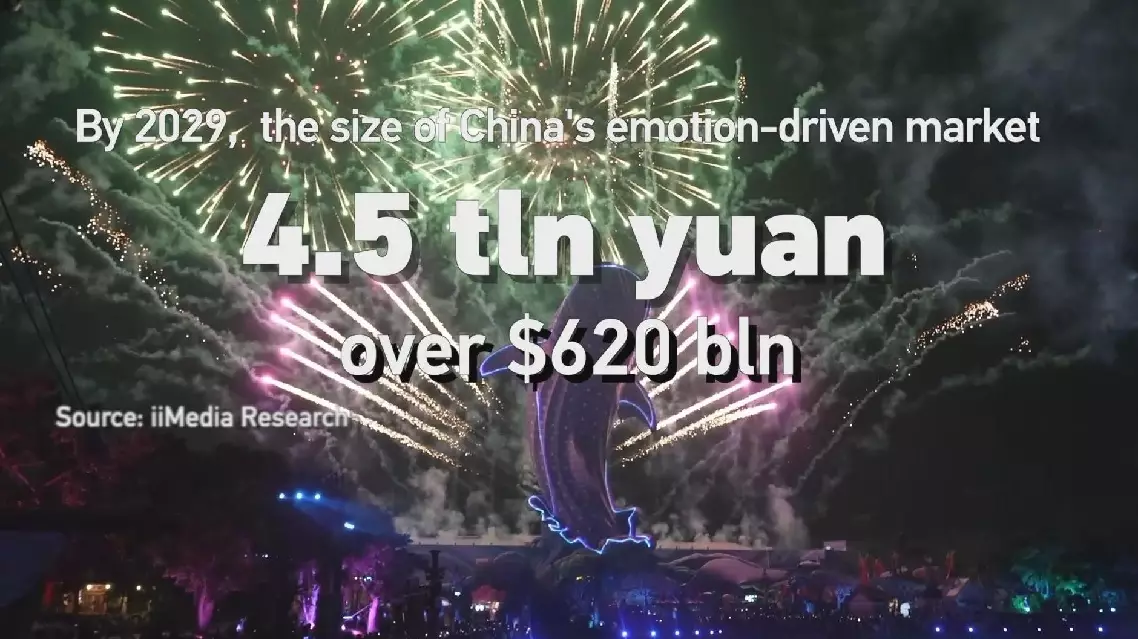
By 2029, China's emotion-driven market is projected to surpass 4.5 trillion yuan (over 620 billion U.S. dollars), according to iiMedia.cn.
'Emotional economy' fuels consumption in China