In a city of more than 20 million people, southwest China's Chengdu City says its development logic is simple: put people first. From community governance to urban renewal, local authorities are designing policies and public spaces around residents' real needs.
One example is the community cafeteria in the city’s Qingyuan Community, which is increasingly available across the city and provides free, healthy lunches to elderly residents every day. These cafeterias also serve as vibrant social hubs that connect and engage seniors, helping them feel part of a wider community.
Local community leaders and social workers frequently visit such venues to gather firsthand insights for people-centered improvements, ranging from community governance to urban renewal.
"This place is wonderful. Elderly people can eat here, chat, and even brag with friends—it’s a great place to spend time," said senior resident Li Hanzhang.
Social workers also organize their regular “Ba Ba” meetings—open-air discussions in tea houses and residential compounds—to collect residents’ concerns and suggestions, then design projects that address both immediate and long-term needs.
"Through tea house meetings and residential compound meetings, we continuously gather opinions and suggestions from residents. Then we form deliberation rules and discuss together: What are the recent needs of our residents? Based on both potential and explicit needs, we design and integrate resources to provide quality projects," said Qiao Hong, Deputy Party Secretary of Qingyuan Community.
For some, these services provide both emotional support and practical help.
"After my husband passed away, I almost fell into depression. But since coming here, with the care from community leaders and the support from everyone around me, I have been able to pull myself out of the trap. Now I feel especially happy," local resident Yuan Rongxia said.
The same people-centered philosophy is reflected in the renovation of the Jinjiang River. Once polluted, it has been transformed into a green leisure corridor open to the public.
"I actually think it's quite simple. During the Jinjiang River renovation process, we considered returning the space to the people, sharing the culture, and creating resonance through services. We designed the entire renovation of both riverbanks and the cruise route according to this model. So actually, I think this is also a microcosm of Chengdu's happiness," said Guan Shoucheng, Deputy General Manager of Chengdu Jinjiang Greenway Construction Investment Group.
Today, the revitalized riverfront has become a public space where residents relax, socialize, and reconnect with nature -- a tangible example of how urban planning and community governance come together under a people-first approach.
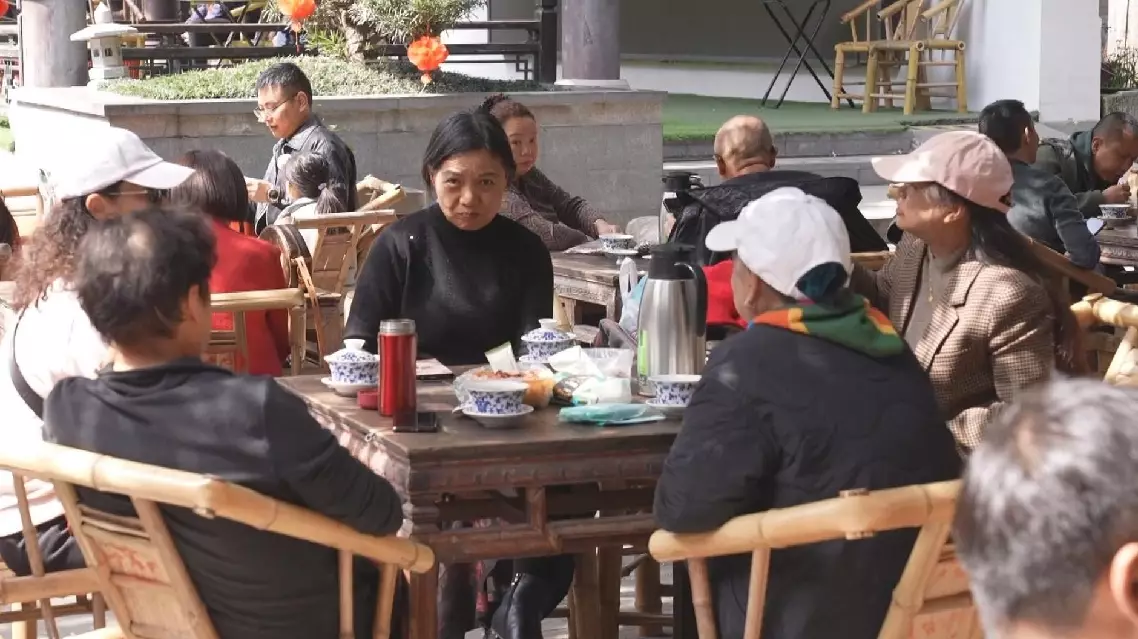
People-focused changes reshape communities across Chengdu