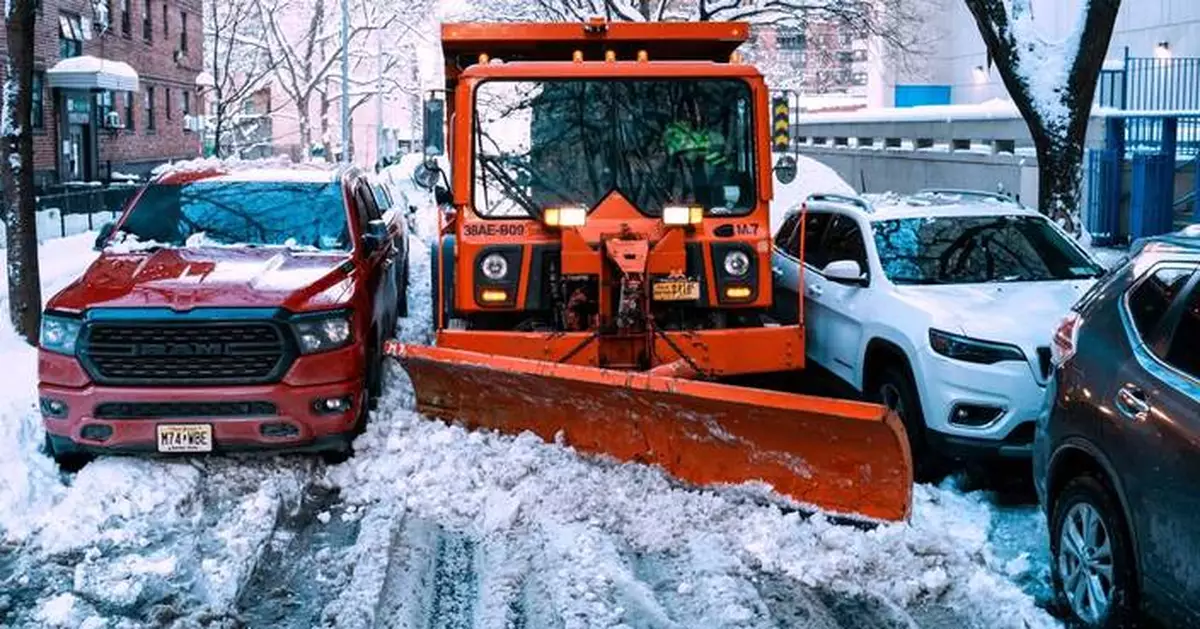
Residents of Syracuse, New York — America’s snowiest city — once barraged a service hotline with street neglect complaints during blizzards, even if plows had passed two hours earlier but the work was hidden by fresh snow.
Now public trust seems to be rising as Syracuse and other cities across the U.S. integrate upgrades such as video monitoring, GPS mapping and artificial intelligence into snow operations that once relied almost entirely on manual planning.
Syracuse was one of the first to revamp the way it deploys its snowplows, and complaint calls have dropped by 30% under the new system, said Conor Muldoon, the city’s chief innovation officer.
“People will look out their window and say, ‘Hey, you guys are doing a terrible job,’” Muldoon said. “And we can point to a public map and say, ‘Here’s all the breadcrumbs for when that plow was there.’”
Each winter, Syracuse averages 126 inches (3.2 meters) of snow, more than any other U.S. city of at least 100,000 people. Even before the blizzard that pounded the Northeast last week, the city had already surpassed its typical average due to a record 2-foot (60-centimeter) accumulation on one day in late December.
With a goal of clearing every street within 24 hours after a storm, Syracuse partnered in 2021 with San Francisco-based Samsara to put live GPS tracking and dashcams on city fleet vehicles including snowplows. Integrated with GIS mapping software, the system allows officials to monitor live video and plow locations in real time.
While residents can’t access live feeds, they can view a public map that updates every 5 minutes to show which roads have been cleared.
Samsara started incorporating AI into its products in 2019. This winter, for the first time, it has provided customers with footage from other cameras within its large network, helping officials better understand conditions on a street even when no worker is there.
Kiren Sekar, the company's chief product officer, cited an example of needing to dispatch the closest plow for a snow emergency in Plainwell, Michigan.
“Rather than having to sift through a list of vehicles, it can actually figure this out: ‘We've got Trevor in vehicle 203, 15 minutes away,'” Sekar said.
Samsara partners with communities of various sizes to upgrade their snowplow systems, but the nation's largest city — New York City — developed its own.
Its tracking program known as BladeRunner monitors snow removal equipment (including garbage trucks with plows attached) while a human in a command center — not AI — analyzes the GPS data. The city is exploring AI in the future to process the thousands of 311 calls and online service requests it can get in a single day.
The other way the big city's approach differs from its upstate neighbor of Syracuse is that each plow runs a specific route during storms, ensuring main and side streets get essentially the same treatment.
“So what it does is allow equity,” said Joshua Goodman, deputy commissioner at the city’s Department of Sanitation.
Typically 99% of the city's roads will be plowed within the first four hours after a moderate snowfall under ideal conditions, but Goodman said it didn't quite meet that mark during last week's historic storm.
With U.S. cities and states spending upward of $4 billion each year on snow operations, the new technology also helps assure roads aren't overplowed or oversalted, which can cause environmental damage.
Fayetteville, Arkansas, launched a public-facing snow removal map for the first time this winter. It reported improvements in plowing time, labor costs and fuel savings, despite enduring about double the snow from a year ago.
“This is the first year some roads have ever been treated or plowed, and that goes right back to being able to see where we need to go and if we’ve been there,” said Ross Jackson Jr., the city's fleet operations manager.
The township of Edison, New Jersey, reduced its spending on salt and brine by 35% and its insurance payouts by 60%, thanks to video that helped prove plow drivers usually weren't at fault when the vehicles collided with another motorist's car.
Video installed on snowplows in Iowa helped demonstrate that all but one of 12 snowplow accidents in a single day were the other driver's fault, said Craig Bargfrede, the state’s winter operations administrator.
“How can you not see this big orange truck with flashing lights ahead of you?” he said. “Boom, they just drive right into us.”
Kalamazoo County was the first county in Michigan to employ turn-by-turn navigation to dispatch snowplows during a storm. Rusty McClain, assistant general superintendent of its Road Commission, called it a huge improvement in efficiency.
“The old-school way of doing it, that bird’s eye view of where everyone needs to go to plow, was just in a large book with paper maps,” McClain said. “You’d have to pull over, find the page you’re looking for, call somebody on the phone and ask if they have plowed that area.”
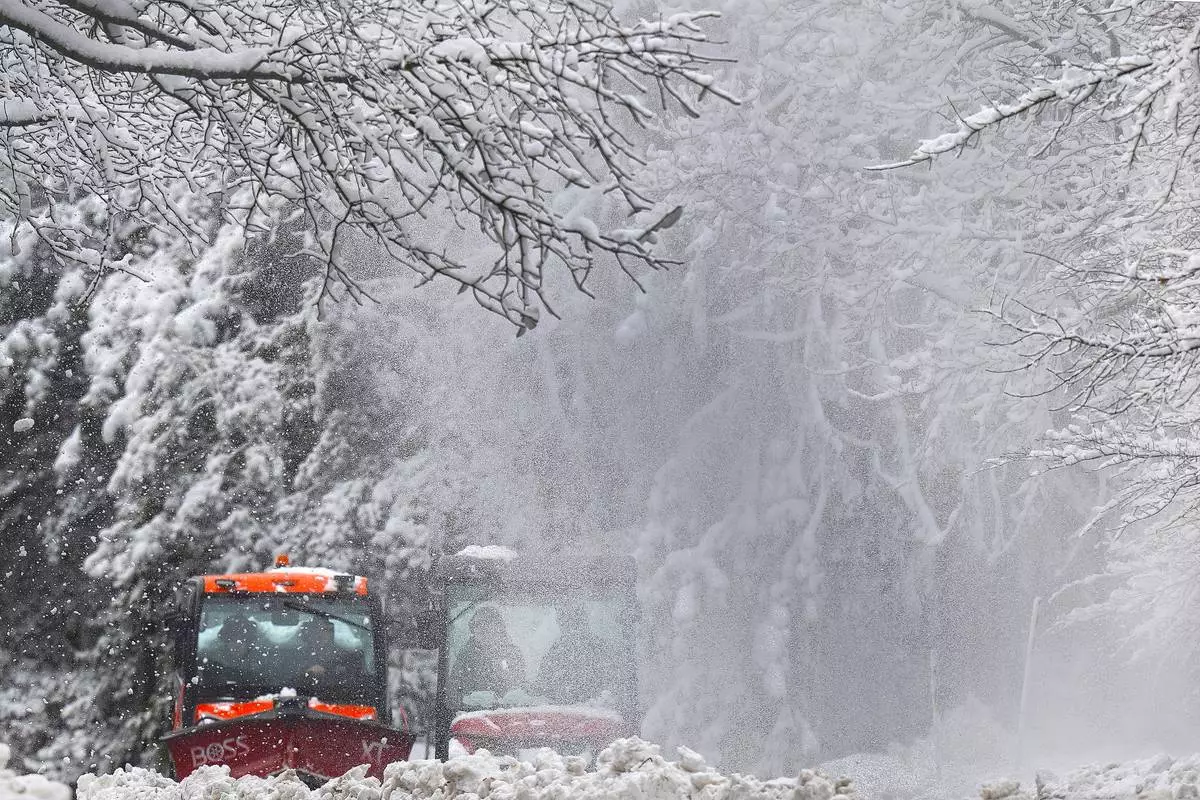
Snow removal vehicles plow through snow covered pathways at Swarthmore College in Swarthmore, Pa., Monday, Feb. 23, 2026. (Jose F. Moreno/The Philadelphia Inquirer via AP)
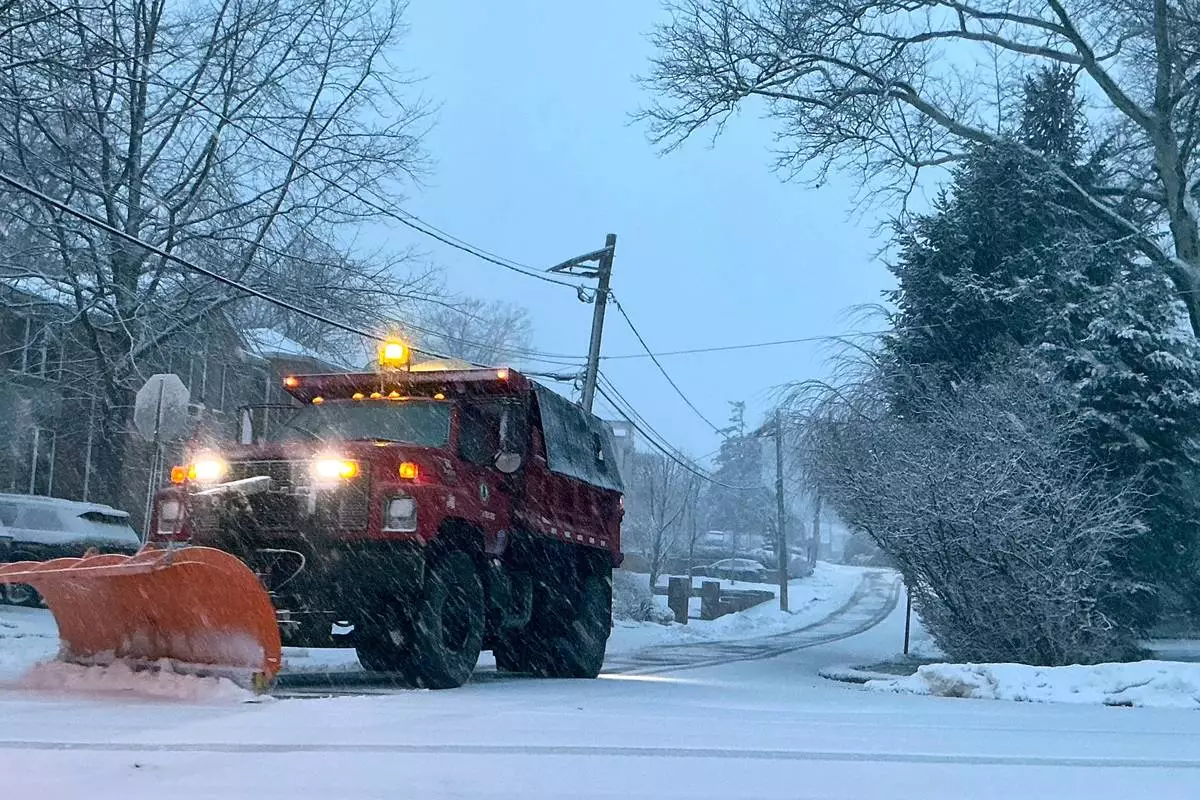
A plow starts removing snow from a residential street during the beginning of an intense winter storm, Sunday, Feb. 22, 2026, in Fort Lee, N.J. (AP Photo/Pablo Salinas)
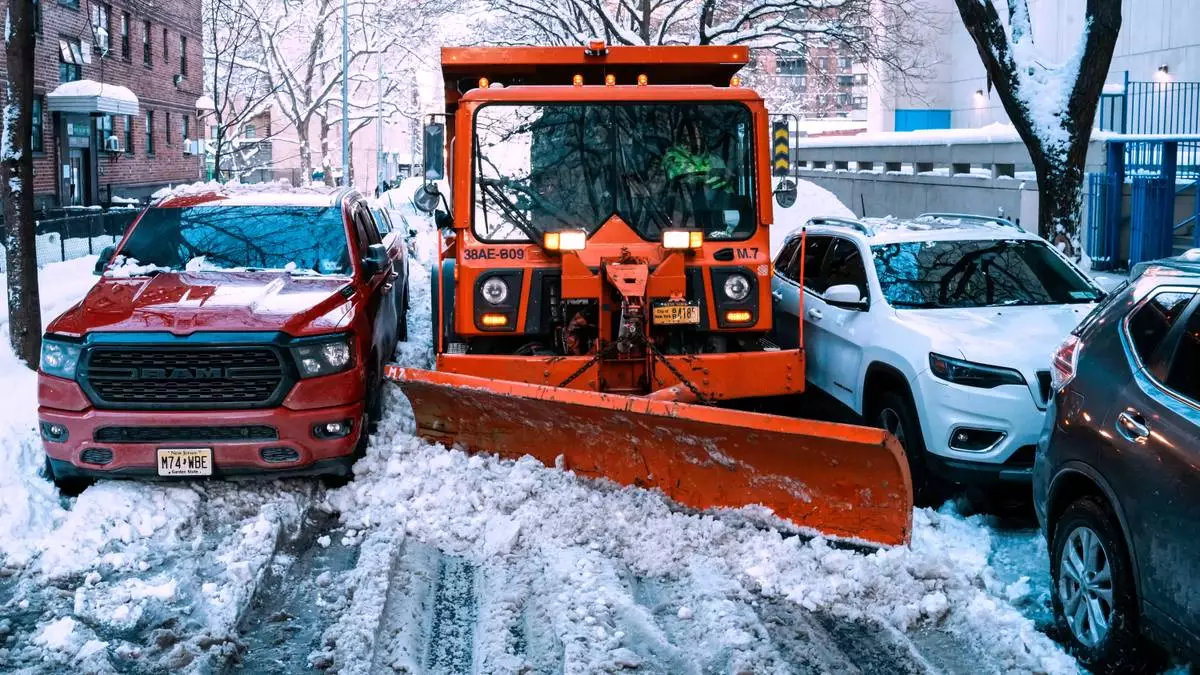
A truck removes snow for them street a day after a winter storm on Tuesday, Feb. 24, 2026, in New York. (AP Photo/Eduardo Munoz Alvarez)
BUNIA, Congo (AP) — The World Health Organization said on Wednesday the risk of spread of the Ebola virus in Congo and Uganda is high at national and regional levels, but low at the global level.
The risk assessment came as the leader of the WHO team in Congo said the outbreak, which has led to over 130 suspected deaths, could last at least another two months as aid efforts intensified to stem the spread.
WHO has declared the Ebola outbreak a public health emergency of international concern, requiring a coordinated response. On Tuesday, it expressed concern over the “scale and speed” of the outbreak.
Worried residents in eastern Congo have reported rising prices for face masks and disinfectants following the outbreak of the rare type of Ebola, known as the Bundibugyo virus. It spread undetected for weeks following the first known death, while authorities tested for another, more common Ebola virus, which came up negative, health experts and aid workers said. There are no approved medicines or vaccines for the Bundibugyo virus.
So far, 51 cases have been confirmed in Congo's northern provinces of Ituri and North Kivu, as well as two in Uganda, WHO Director-General Tedros Adhanom Ghebreyesus said on Wednesday. Beyond that, there are 139 suspected deaths and almost 600 suspected cases, he said.
“We know that the scale of the epidemic is much larger,” he said. “We expect those numbers to keep increasing.”
Congo was expecting shipments from the United States and Britain of an experimental vaccine for different types of Ebola, developed by researchers at Oxford, Jean-Jacques Muyembe, a virus expert at the National Institute of Biomedical Research, told reporters on Tuesday.
“We will administer the vaccine and see who develops the disease,” he said.
A U.S. national who tested positive for the virus in Congo arrived in Berlin on Wednesday for treatment in a special isolation ward at the Charité hospital.
A “comprehensive examination” was taking place to determine how to proceed with treatment, German Health Ministry spokesperson Martin Elsässer said. He said he wouldn’t comment on the patient’s condition. The German authorities and the U.S. CDC have not identified the patient.
Separately, the Christian aid organization Serge said in a statement that one of its doctors — which it identified as American medical missionary Dr. Peter Stafford — has been evacuated from Congo “and is receiving specialized medical treatment” after he developed Ebola symptoms.
In Bunia, the site of the first known death, schools and churches remained open on Wednesday, and some residents were wearing masks in the street. Residents said that masks have become harder to find and that some disinfectants previously sold for 2,500 Congolese francs (about $1) now cost up to 10,000 francs ($4.4).
“It’s truly sad and painful because we’ve already been through a security crisis, and now Ebola is here too,” said Justin Ndasi, a resident of Bunia. “We have to protect ourselves to avoid this epidemic.”
Trish Newport, emergency program manager at aid group Doctors Without Borders, posted on social media that her team in Bunia identified suspected cases over the weekend at the Salama hospital, which has no isolation ward. They unsuccessfully tried to place them at another health facility in Bunia.
“The team called around to other health facilities to see if they had isolations,” she said. “Every health facility they called said, ‘We’re full of suspect cases. We don’t have any space.’ This gives you a vision of how crazy it is right now.”
In Mongbwalu, the town at the epicenter of the current outbreak, the border with Uganda remains open, and gold mining activities continue, Chérubin Kuku Ndilawa, a local civil society leader, told The Associated Press.
“There’s no panic. People continue with their normal lives, but they’re also starting to spread the word,” said Ndilawa, adding that controlling the outbreak has been hindered by a lack of public handwashing stations.
“We hope for the proper triage and isolation facilities to be installed today, and if that doesn’t happen, we will be completely overwhelmed,” Dr. Richard Lokudu, medical director of the Mongbwalu General Hospital, told the AP.
“The challenge is that the staff are not trained to handle suspected cases. We are also understaffed. The hospital has its current staff, yes, but if the cases are confirmed, the hospital is truly at risk given the large number that could arrive. We have no protection.”
Dr. Didier Pay, a doctor at the Mongbwalu General Hospital, said his clinic was treating around 30 Ebola patients and that a student from the local medical technology institute died on Wednesday morning.
Health experts said the delayed detection of the virus and large population movements in affected areas, which already suffer a preexisting humanitarian crisis, complicated the response. Parts of eastern Congo are controlled by armed rebels, hampering the delivery of aid.
Congo said the first person died from the virus on April 24 in Bunia, but the confirmation did not come for weeks. The body was repatriated to the Mongbwalu health zone, a mining area with a large population.
“That caused the Ebola outbreak to escalate,” said Congo’s Health Minister Samuel Roger Kamba.
Dr. Anne Ancia, the head of the WHO team in Congo, said authorities still haven’t identified “patient zero.” There was a long road ahead, she said, adding that cuts in funding had “a marked detrimental effect on humanitarian actors.”
U.S. Secretary of State Marco Rubio told reporters on Tuesday that the Trump administration would “lean into” Ebola response efforts with a priority on funding 50 emergency clinics in affected areas. The U.S. has so far contributed $13 million to the effort and Rubio said more would be coming.
Associated Press writers Jamey Keaten in Geneva, Wilson McMakin in Dakar, Senegal, and Geir Moulson in Berlin contributed to this report.
For more on Africa and development: https://apnews.com/hub/africa-pulse
The Associated Press receives financial support for global health and development coverage in Africa from the Gates Foundation. The AP is solely responsible for all content. Find AP’s standards for working with philanthropies, a list of supporters and funded coverage areas at AP.org.
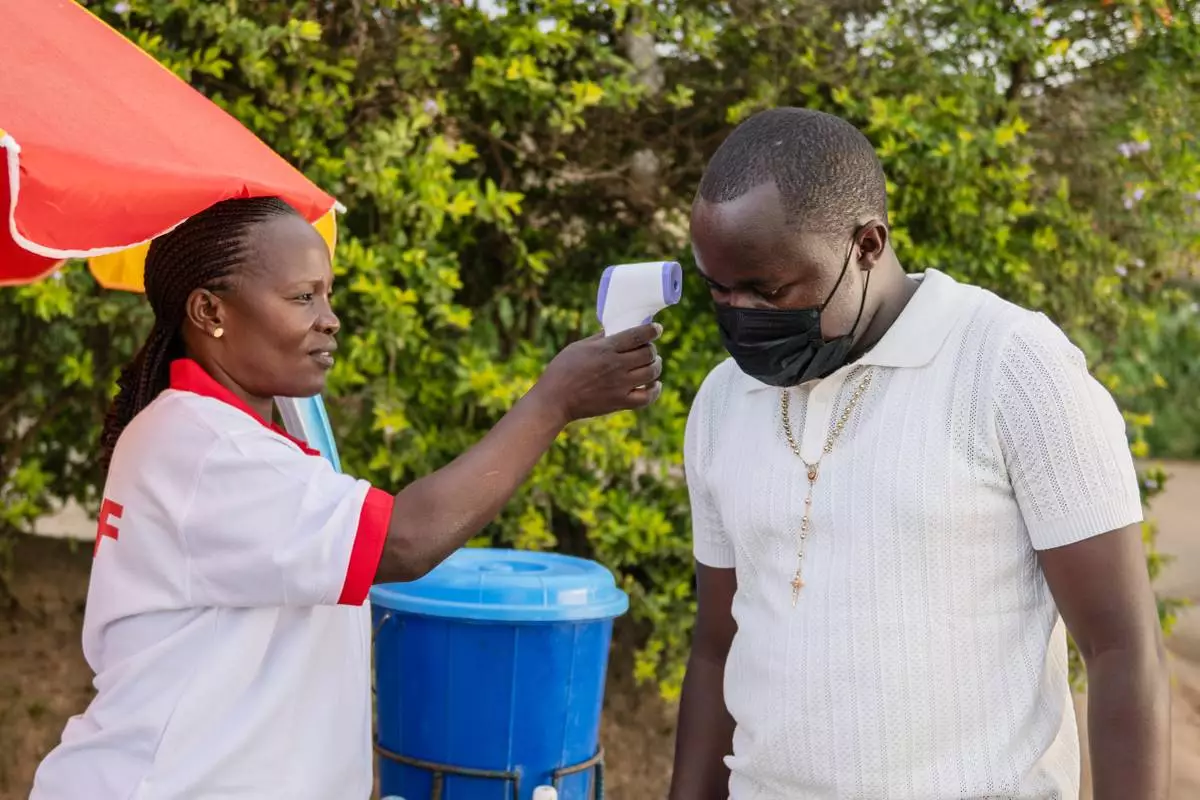
A health worker uses a thermometer to screen a man by the roadside in Bunia, Congo, Tuesday, May 19, 2026. (AP Photo/Moses Sawasawa)
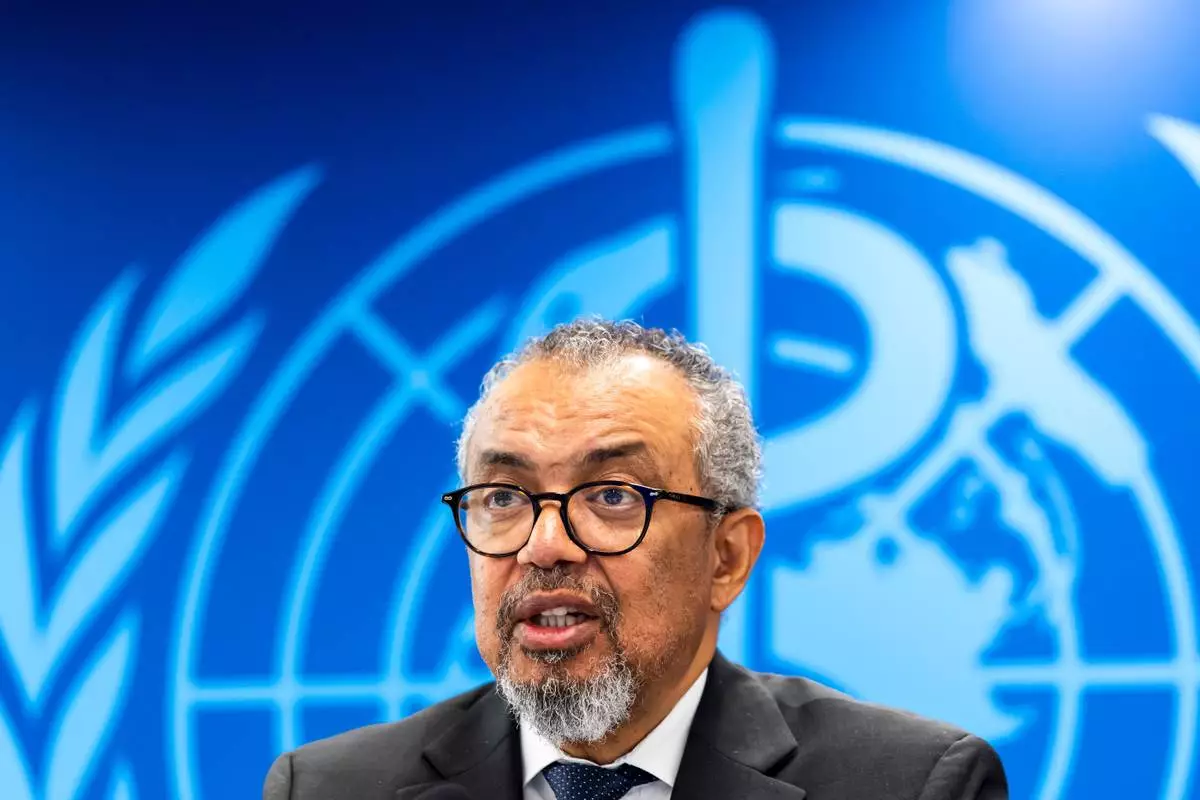
World Health Organization Director-General Tedros Adhanom Ghebreyesus speaks to the media following an emergency committee during a press conference at its headquarters in Geneva, Switzerland, Wednesday, May 20, 2026. (Salvatore Di Nolfi/Keystone via AP)
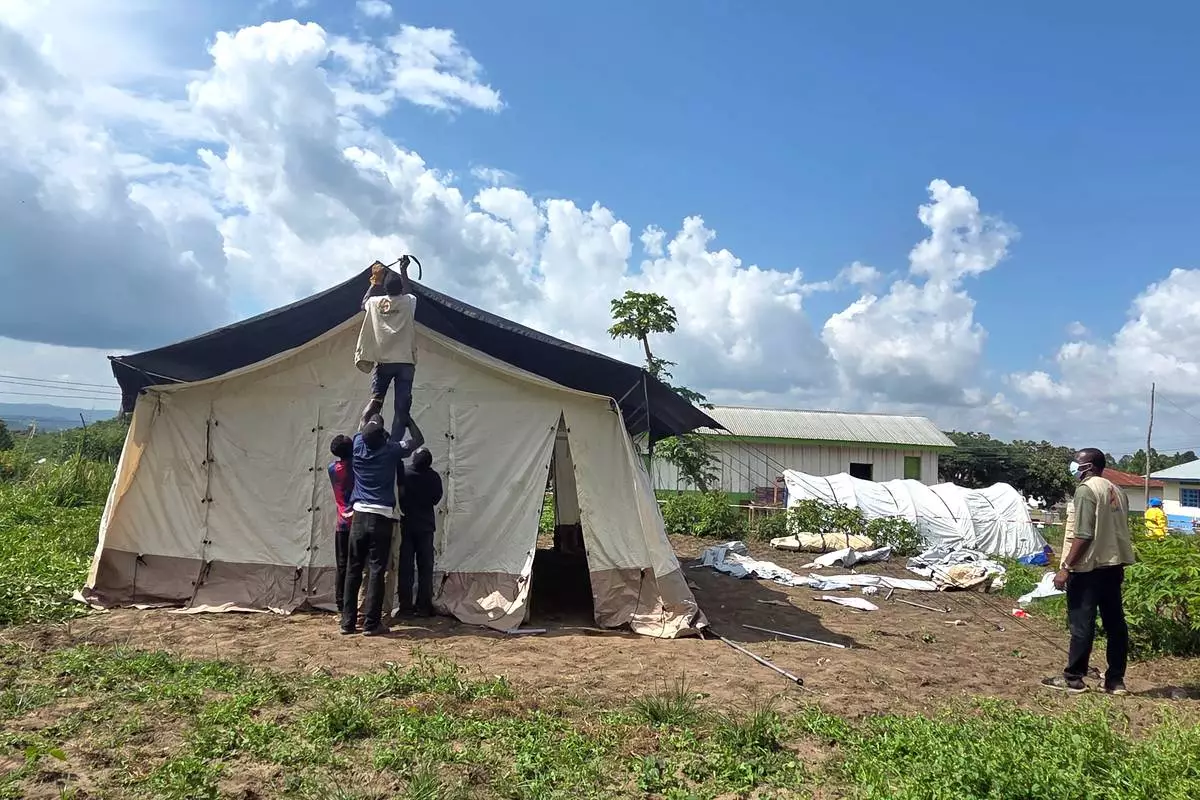
Aid workers set up an Ebola treatment center in Rwampara, Congo, Tuesday, May 19, 2026. (AP Photo/Dirole Lotsima Dieudonne) Corrects from Bunia to Rwampara
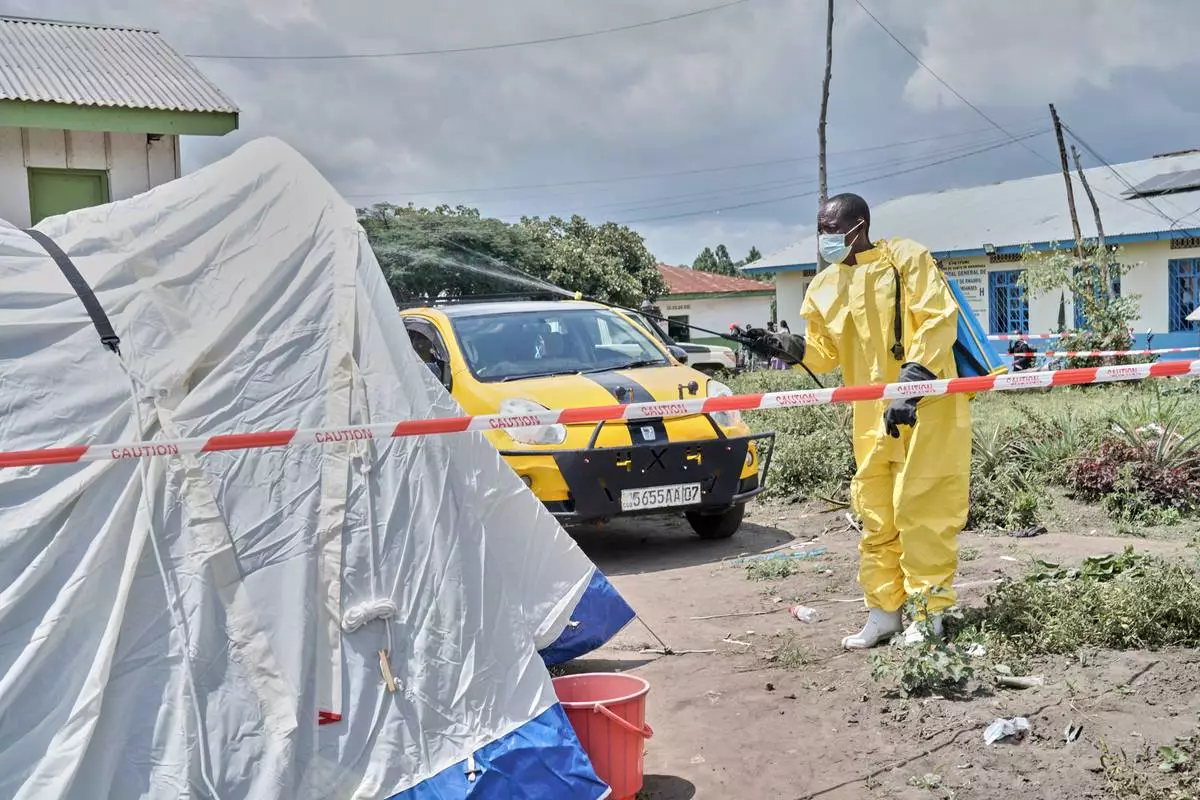
A man sprays a tent at an Ebola treatment center in Bunia, Congo, Tuesday, May 19, 2026. (AP Photo/Dirole Lotsima Dieudonne)
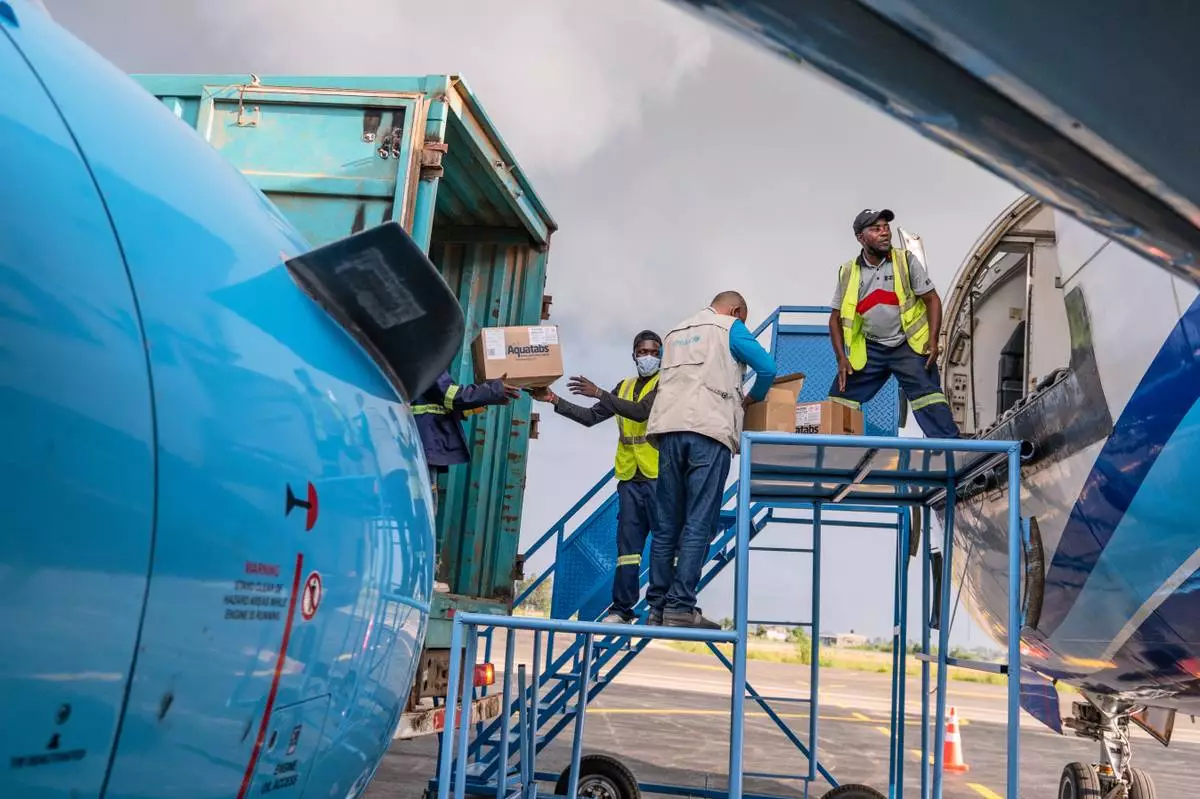
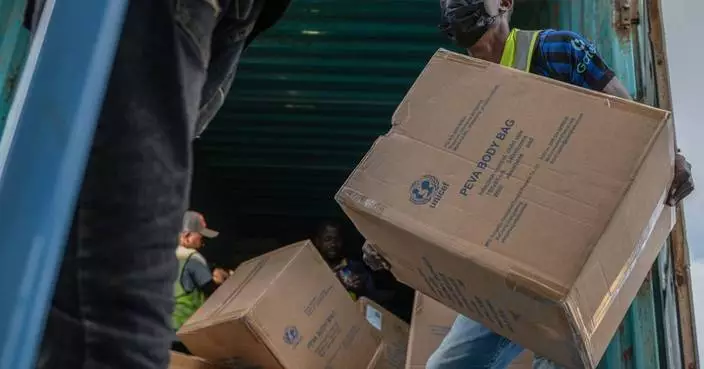
People offload a shipment of more than 15 tons of supplies donated by UNICEF as part of the response to the Ebola virus outbreak at Bunia National Airport in Bunia, Congo, Tuesday, May 19, 2026. (AP Photo/Moses Sawasawa)
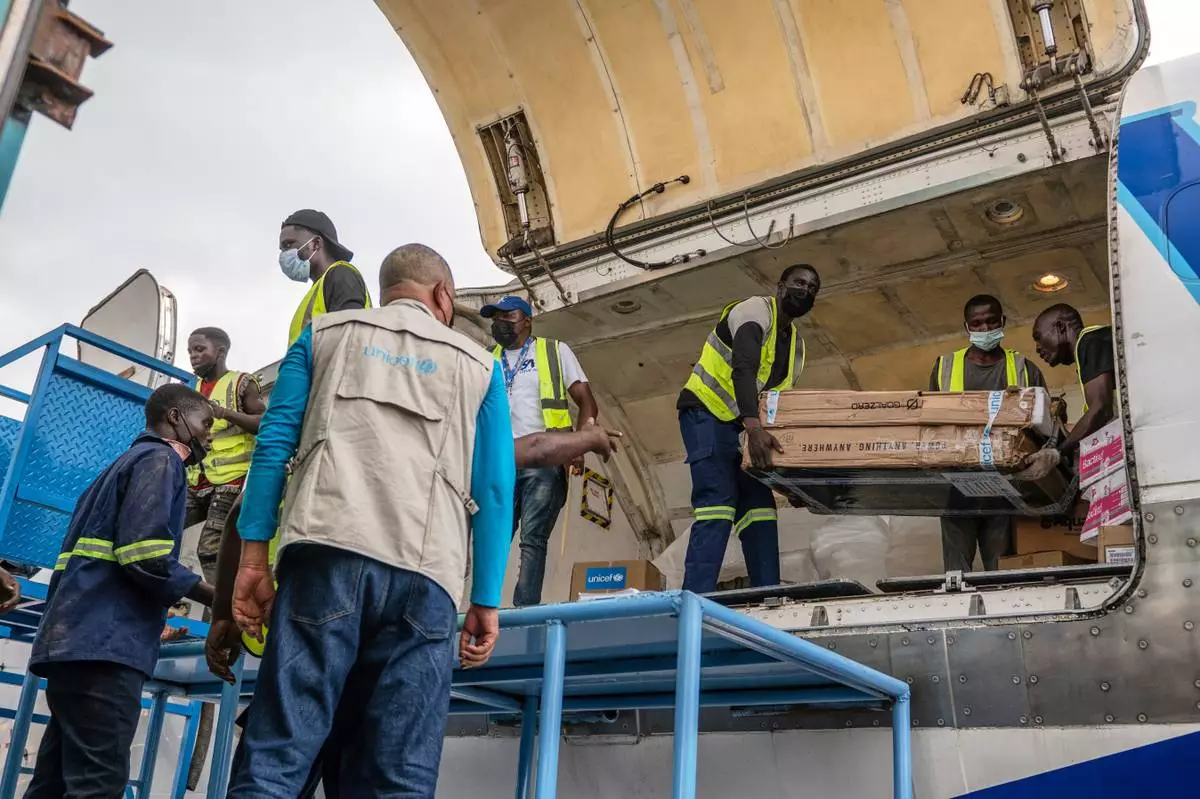
People offload a shipment of more than 15 tons of supplies donated by UNICEF as part of the response to the Ebola virus outbreak at Bunia National Airport in Bunia, Congo, Tuesday, May 19, 2026. (AP Photo/Moses Sawasawa)
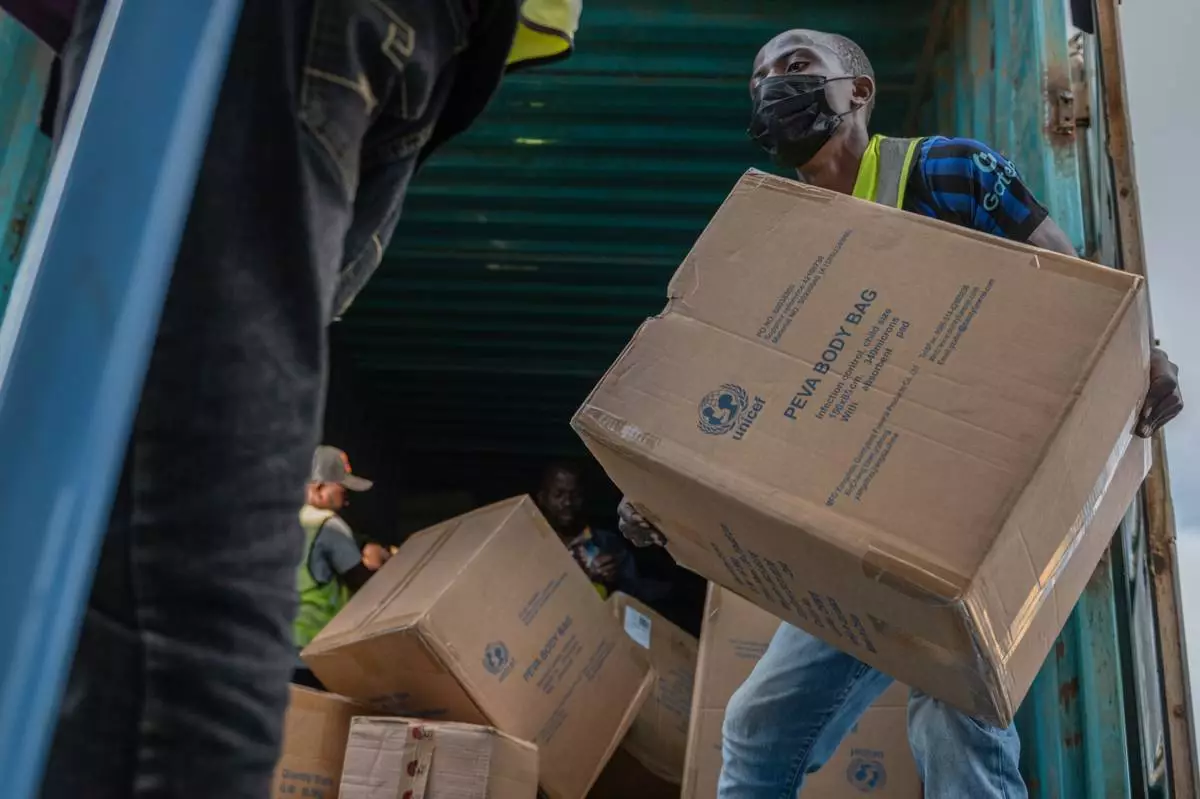
People offload a shipment of more than 15 tons of supplies donated by UNICEF as part of the response to the Ebola virus outbreak at Bunia National Airport in Bunia, Congo, Tuesday, May 19, 2026. (AP Photo/Moses Sawasawa)