PARIS (AP) — France is moving to align its nuclear deterrent strategy more closely with European allies while keeping full control over any strike decision — an unprecedented coordination that French President Emmanuel Macron described as crucial to bolstering the continent’s strategic autonomy.
Experts say the plan reflects growing doubts across Europe about U.S. reliability when it comes to the continent's defense. France has been the only nuclear power in the European Union since Britain’s exit from the bloc in 2020.
Macron’s move reflects that, in case of a nuclear crisis, France would be the one offering “some form of a nuclear security guarantee," said Florian Galleri, a nuclear deterrence expert at the Massachusetts Institute of Technology’s security studies program.
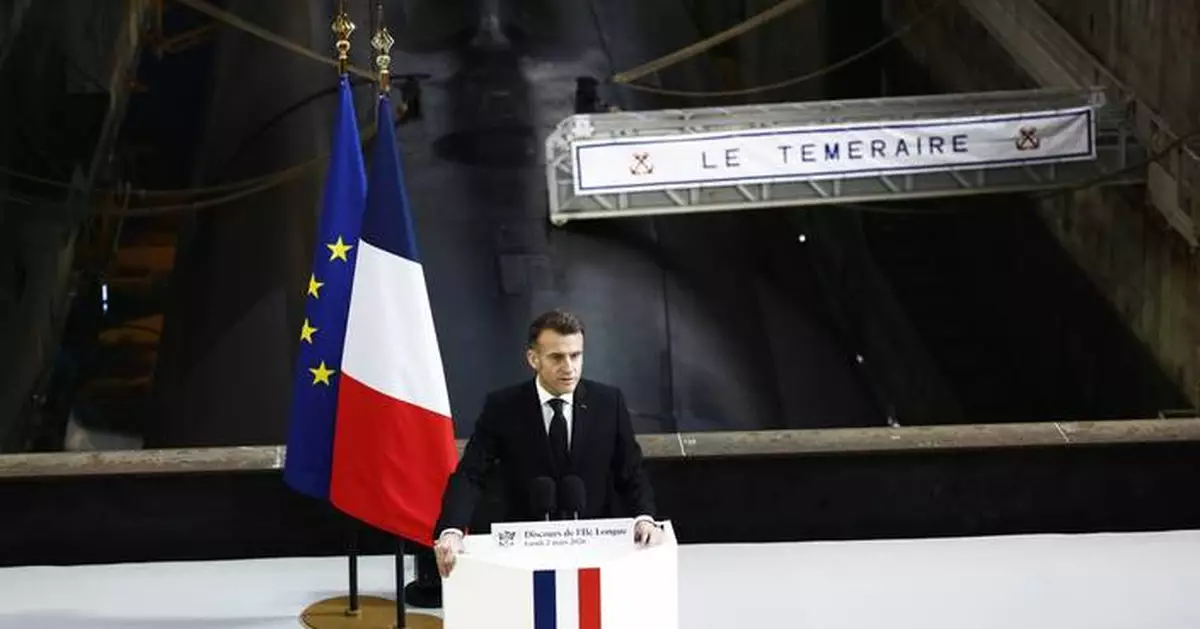
Speaking Monday from a top-secret submarine base in Western France, Macron announced “a new step of France’s deterrence."
His speech marked what could be the start of a major shift in policy that would allow, for the first time, temporary deployment of French nuclear-armed aircraft to allied countries.
Macron said that Paris has started nuclear talks with eight nations — Britain, Germany, Poland, the Netherlands, Belgium, Greece, Sweden and Denmark. Partners joining the initiative would see their territory “gain a clearly affirmed link to our deterrence,” Macron said.
American allies have played a central role in Europe’s defense since the end of World War II, protecting the continent through NATO’s nuclear mission.
However, Macron noted, recent U.S. national security and defense strategies reflect a reshuffling of American priorities.
Faced with heightened tensions with Russia, which has a vast nuclear arsenal and is developing new missiles, and as China expands its nuclear forces, “our way of thinking must change,” Macron said.
Outlining the new strategy he called “forward deterrence,” Macron insisted that France won't share any decision-making since under its constitution, the president remains solely responsible for any decision on using nuclear weapons.
Still, that stance underscores a fundamental contradiction, Galleri said. “The strategic backing intended to integrate French nuclear deterrence into a collective European defense framework necessarily requires a degree of coordination and joint planning,” he argued.
“One cannot, for example, carry out a nuclear strike without consulting a partner,” he added.
France's new approach offers the possibility for partners to participate in deterrence exercises, Macron also said. In case of crisis, French nuclear forces could be supported by some European conventional capabilities.
That could involve early warning systems — allies' satellites and radars detecting and tracking missiles, engaging air defense and anti-drone protections and long-range deep-strike capabilities, he said.
Ultimately, the new doctrine would allow the temporary deployment of nuclear-armed aircraft to allied countries across Europe, Macron added.
Macron also said that evolving defenses among France’s competitors, the emergence of regional powers, possible coordination among adversaries and proliferation risks had led him to conclude that France must increase its number of nuclear warheads, for the first time since the 1990s and the end of the Cold War.
France currently possesses an estimated 290 warheads.
Héloïse Fayet, a nuclear deterrence specialist at the French Institute of International Relations, a Paris-based think tank, cited a part of Macron's speech where the president said France’s nuclear deterrent is designed to inflict on an adversary “damage from which they would not recover.”
That means “we must always be able to inflict that kind of damage,” Fayet said while deploring Macron’s decision not to publicize the numbers of France's warheads.
If Russia, for example, improved its defense systems, then France would need “more nuclear warheads,” Fayet said.
Macron made clear that any European coordination would come in addition to NATO’s nuclear mission, in which France does not participate, and be compatible with the alliance’s role in European security.
Ian Lesser, a NATO expert and distinguished fellow at the German Marshall Fund, said Macron’s move “reflects the state of security in Europe" following Russia's full-scale invasion of Ukraine, as well as the “growing uncertainty about the American security commitment to Europe.”
Europe now has to "deal with a more aggressive Russia for some time to come,” Lesser said.
NATO’s deterrence works through a strong American troop presence in Europe, with U.S. nuclear weapons stationed there, including in Germany, Belgium and The Netherlands.
“The bulk of Europe’s conventional deterrence is lodged in NATO — strategic command and organization, design and deployment,” Lesser stressed.
“NATO is critical," he added and ”France is really not looking to weaken that. So the point about it being complementary is important.”
Associated Press writer Lorne Cook in Brussels contributed to this report.

A Rafale aircraft takes part in a refueling operation moments before the arrival of French President Emmanuel Macron at the nuclear submarine navy base of Ile Longue in Crozon, France, Monday March 2, 2026.(Yoan Valat/Pool Photo via AP)

Members of the French Navy are aboard a submarine awaiting the arrival of French President Emmanuel Macron at the nuclear submarine navy base of Ile Longue in Crozon, France, Monday March 2, 2026. (Yoan Valat/Pool Photo via AP)
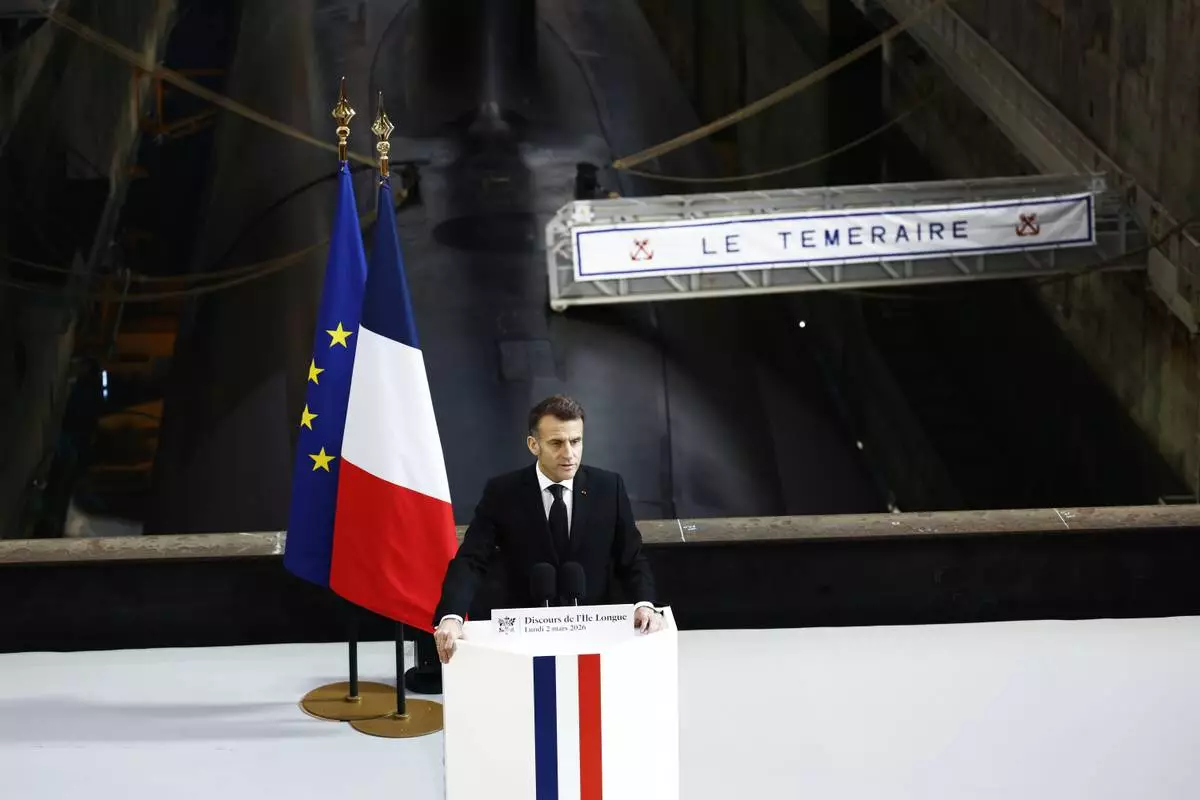
French President Emmanuel Macron delivers a speech next to the submarine 'Le Temeraire' (The Temerarious) at the Nuclear submarines Navy base of Ile Longue in Crozon, France, Monday March 2, 2026. (Yoan Valat/Pool Photo via AP)
DALLAS (AP) — Texas Republican Sen. John Cornyn is trying to hold on for a fifth term in Tuesday's GOP primary, while Democrats will choose whether to send U.S. Rep. Jasmine Crockett or state Rep. James Talarico to a November general election where the party once again hopes it has a chance.
Texas is one of three states kicking off this year’s midterm elections with primaries that come as the U.S. and Israel are at war with Iran. The war, which began over the weekend, has killed at least six U.S. service members, spiraled into a regional confrontation as Iran retaliated and sent oil and natural gas prices soaring. President Donald Trump, who campaigned on an isolationist “America First” agenda and went to war without authorization from Congress, faces mounting questions over its rationale and an exit strategy.
Tuesday also is the final day of voting in North Carolina and Arkansas in primaries that mark the start of the 2026 midterms, as Democrats look to break the GOP’s hold on Washington and derail Trump.
Cornyn faces a challenge from MAGA favorite Ken Paxton, the Texas attorney general, and U.S. Rep. Wesley Hunt in a contest that's expected to advance to a May runoff between the top two vote-getters. The three Republicans have campaigned on their ties to Trump, who has not endorsed in the race.
Crockett and Talarico each argue that they are the stronger general election candidate in a state that backed Trump by almost 14 percentage points in 2024 and where a Democrat hasn’t won a statewide race in over 30 years.
Voters also are choosing House candidates using new congressional district boundaries that GOP lawmakers — urged on by Trump — redrew to help elect more Republicans.
Cornyn hopes to avoid becoming the first Republican senator in Texas history not to be renominated.
His cool relationship with Trump is part of why Cornyn is vulnerable. He and allied groups have spent at least $64 million in television advertising alone since July to try stabilize his support.
Paxton began campaigning in earnest only last month. He's made national headlines for filing lawsuits against Democratic initiatives. He remained popular in Texas despite a 2023 impeachment trial on corruption charges, of which he was acquitted, and accusations of marital infidelity by his wife.
All three Republicans have run ads boasting of their coziness with Trump. But Senate GOP leaders, who are backing Cornyn, worry that Paxton's liabilities would make it harder to defend the seat if he is the nominee — and require significant spending that could be better used elsewhere.
Cornyn raised those concerns Tuesday on Fox News. “Republican voters are going to need to decide, do we want to win?” he said.
Hunt's entry into the race in October made it trickier for any primary candidate to win at least 50%, the threshold needed to avoid a May 26 runoff.
Crockett and Talarico have waged a spirited race as Democrats look for their first Senate win in Texas since 1988.
Talarico, a seminarian who often references the Bible, has held rallies across the state including in heavily Republican areas. Crockett, who has built a national profile for zinger attacks on Republicans, has focused on turning out Black voters in the Dallas and Houston areas.
Tanu Sani, who cast a Democratic ballot in Dallas, said she'd been undecided until recently but opted for Talarico because he “really spoke to me in the way he tries to unify.”
Andrew Kern, another Democratic voter in Texas, explained his support of Talarico similarly, describing “an approach that’s bridging some of the divisiveness.”
Talarico had outspent Crockett on television advertising by more than four to one as of late February. He got a burst of attention — and campaign contributions — last month from CBS' decision not to air his interview with late-night host Stephen Colbert, who said the network pulled the interview for fear of angering Trump's FCC.
Texas Republicans' unusual, mid-decade redistricting was aimed at helping Trump's party pick up Democratic-held seats as the GOP tries to maintain its threadbare House majority in Washington. The result matched several Democratic incumbents in primary fights and set up new general election battlegrounds.
In the 34th District, former Rep. Mayra Flores is attempting a comeback. Flores made history in a 2022 special election as the first Republican to win in the Rio Grande Valley in 150 years, but lost her bid for a full term later that year. She faces Eric Flores, a lawyer endorsed by Trump, for the nomination to run against Democratic Rep. Vicente Gonzalez.
In the 23rd District, Rep. Tony Gonzales is considered vulnerable after an alleged affair with a staffer who killed herself. He's being challenged by gun manufacturer and YouTube influencer Brandon Herrera, who calls himself “the AK guy.” The district includes Uvalde, site of a deadly 2022 shooting at Robb Elementary School.
Republican Rep. Dan Crenshaw is challenged in the 2nd District by GOP state Rep. Steve Toth, who was endorsed by Sen. Ted Cruz.
Former Major League Baseball star Mark Teixeira is running in District 21, in southwest Texas, for the seat held by Republican Rep. Chip Roy, who is running for state attorney general. Teixeira, a Republican, played for four MLB teams, including the Texas Rangers and the New York Yankees when they won the 2009 World Series.
Democrat Bobby Pulido, a Latin Grammy winner, is running in South Texas' 15th District against physician Ada Cuellar. The nominee will face two-term Republican Rep. Monica De La Cruz.
In the 33rd District, Democratic Rep. Julie Johnson faces former Rep. Colin Allred, a former NFL linebacker and 2024 Senate nominee. Johnson, a first-term congresswoman, is seen as vulnerable partly because Allred previously represented part of the district, which weaves through the Dallas and Fort Worth areas. He also retains a national fundraising network from his Senate campaign.
Democratic Rep. Al Green also is fighting to stay in office after his Houston-based 9th District was drawn to be lean Republican. Green, 78, is now running in a newly drawn 18th District against Democratic Rep. Christian Menefee, 37, who won a January special election for the current 18th District. The new one includes two-thirds of Green's old district.
Republican Gov. Greg Abbott is running for reelection and faces a likely matchup with Democratic state Rep. Gina Hinojosa.
Four-term U.S. Rep. Chip Roy is seeking the GOP nomination for state attorney general, with Paxton running for Senate. Roy has been a prominent member of the conservative Freedom Caucus.
Associated Press reporter Sara Cline in Dallas and Bill Barrow in Atlanta contributed.
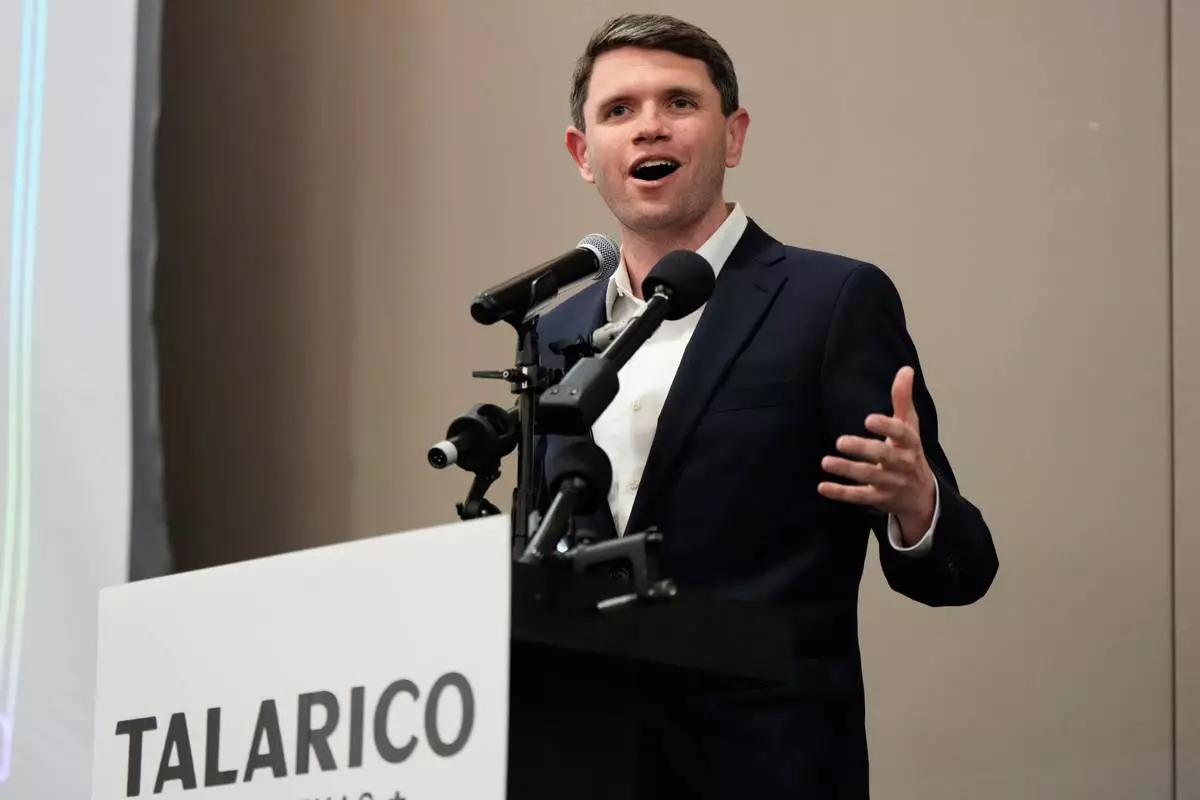
James Talarico, a Texas Democratic primary candidate for U.S. Senate, speaks during an event at the University of Houston Monday, March 2, 2026, in Houston. (AP Photo/Ashley Landis)
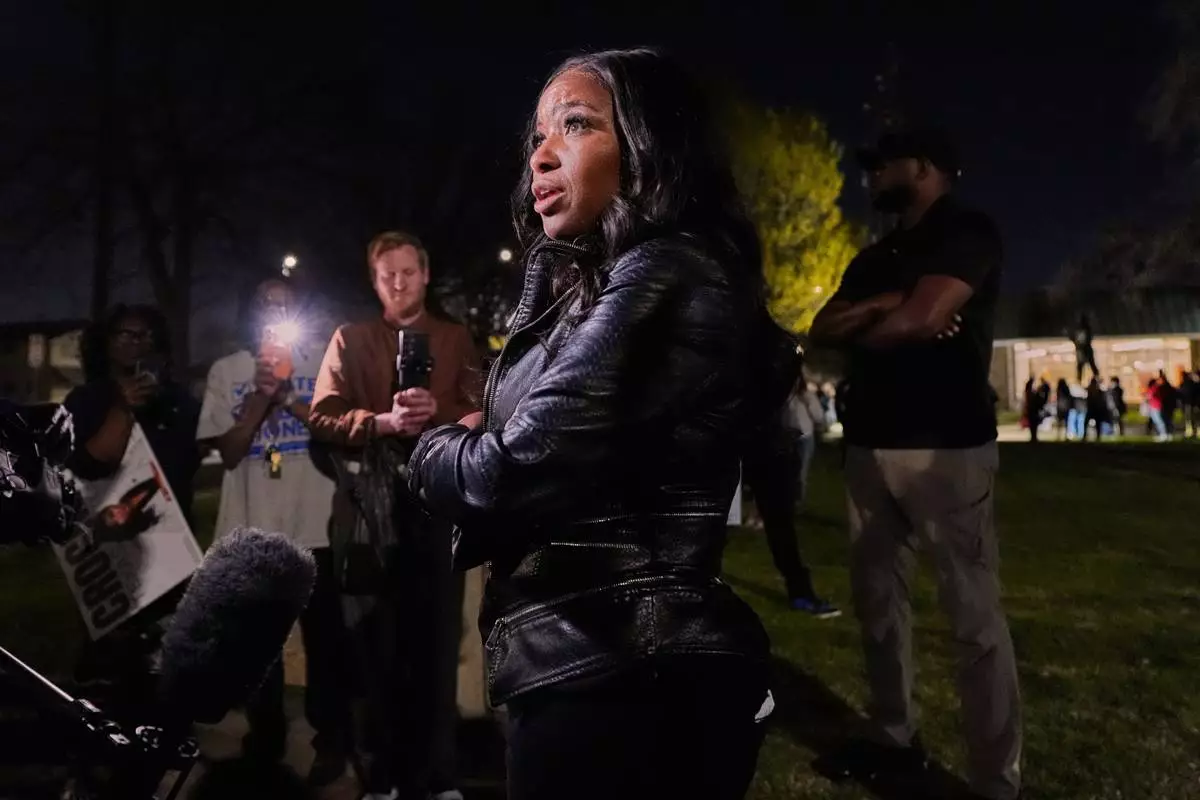
Primary candidate for U.S. Senate Rep. Jasmine Crockett, D-Texas, responds to a question during a broadcast interview at a campaign stop in Dallas, Friday, Feb. 27, 2026. (AP Photo/Tony Gutierrez)
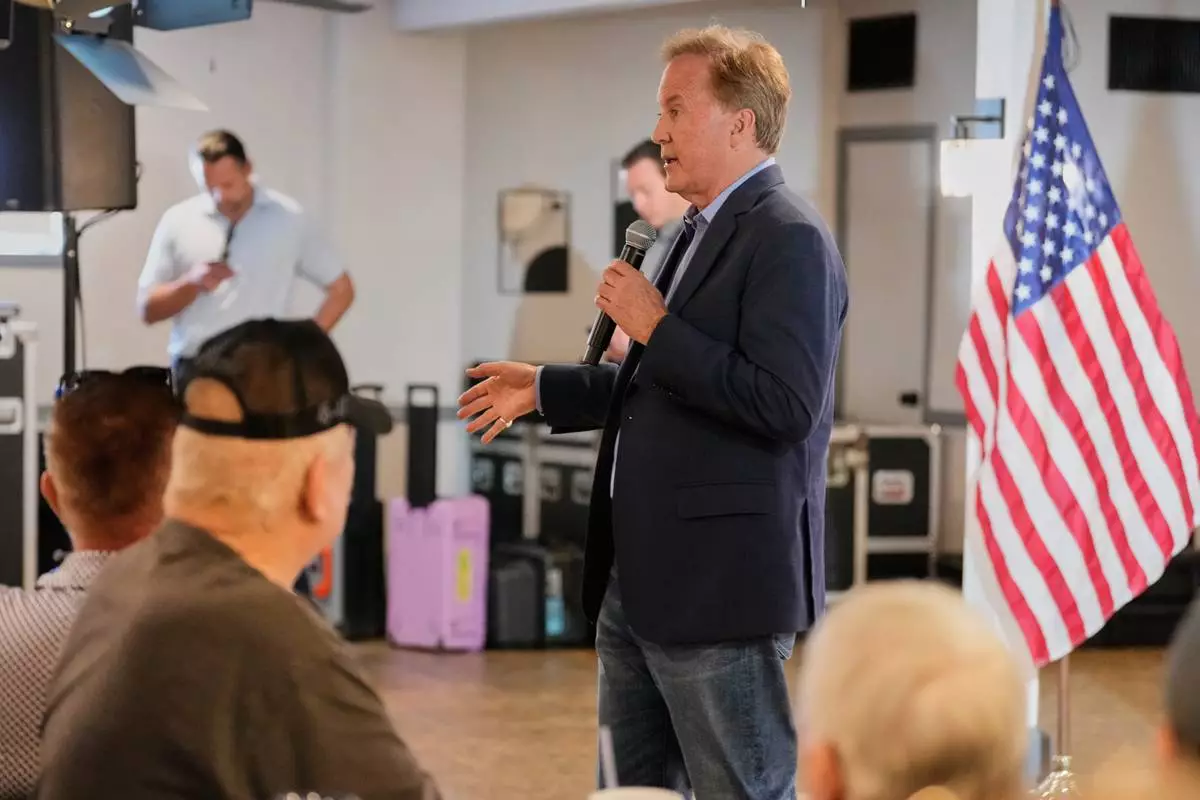
Texas Attorney General Ken Paxton, a Republican candidate for the U.S. Senate, addresses supporters during a campaign stop, Monday, March 2, 2026, in Waco, Texas. (AP Photo/Tony Gutierrez)
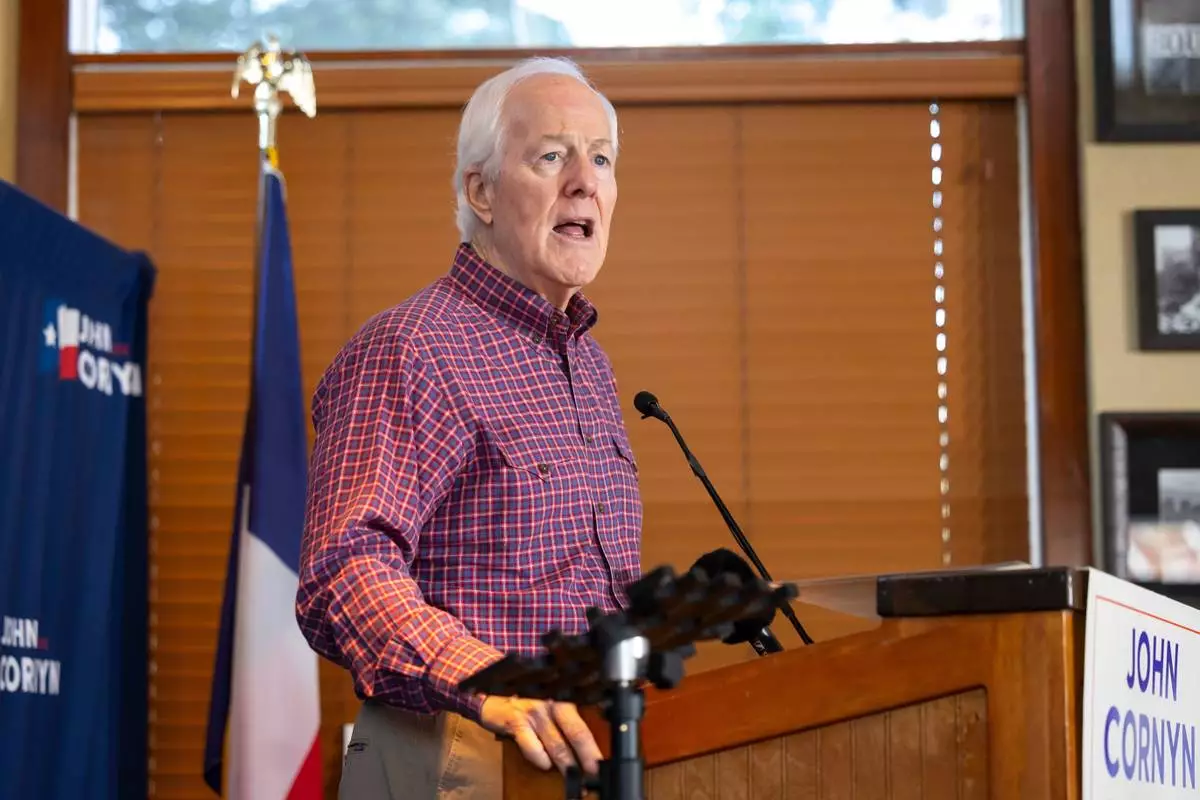
Sen. John Cornyn, R-Texas, speaks during a campaign stop in The Woodlands, Texas, Saturday, Feb. 28, 2026. (AP Photo/Annie Mulligan)