CLARKSVILLE, Tenn. (AP) — In the military-heavy communities surrounding Fort Campbell, a sprawling U.S. Army base that straddles the Tennessee-Kentucky line, the war in Iran is on a lot of people's minds.
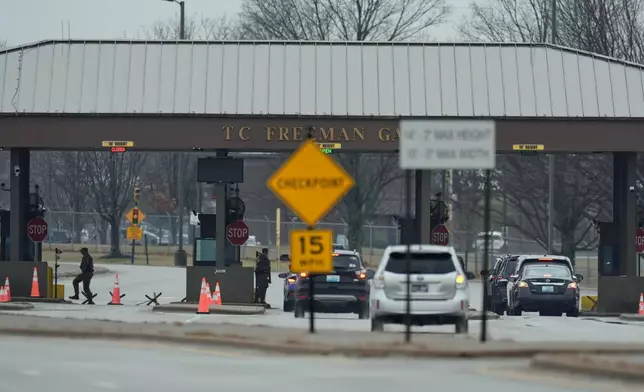
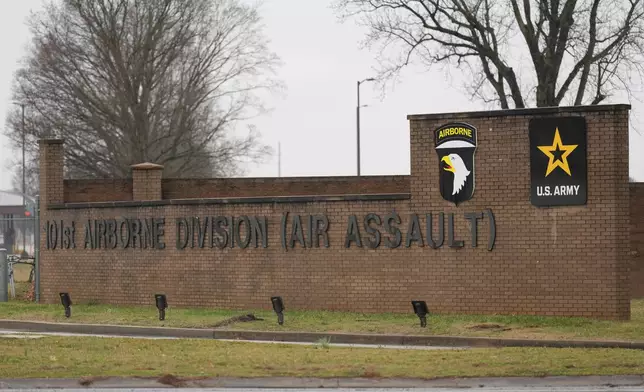
The base is home to the 101st Airborne Division, known as “the Screaming Eagles,” which has been a key force in America’s major conflicts since World War II. After Sept. 11, 2001, tens of thousands of troops from the post started regular deployments to Afghanistan and Iraq. During troop surges in those countries, yearly combat casualties in the division surpassed some of its deadliest years in Vietnam.
Click to Gallery
An entrance to Fort Campbell Army installation is seen Monday, March 2, 2026, in Oak Grove, Ky. (AP Photo/George Walker IV)
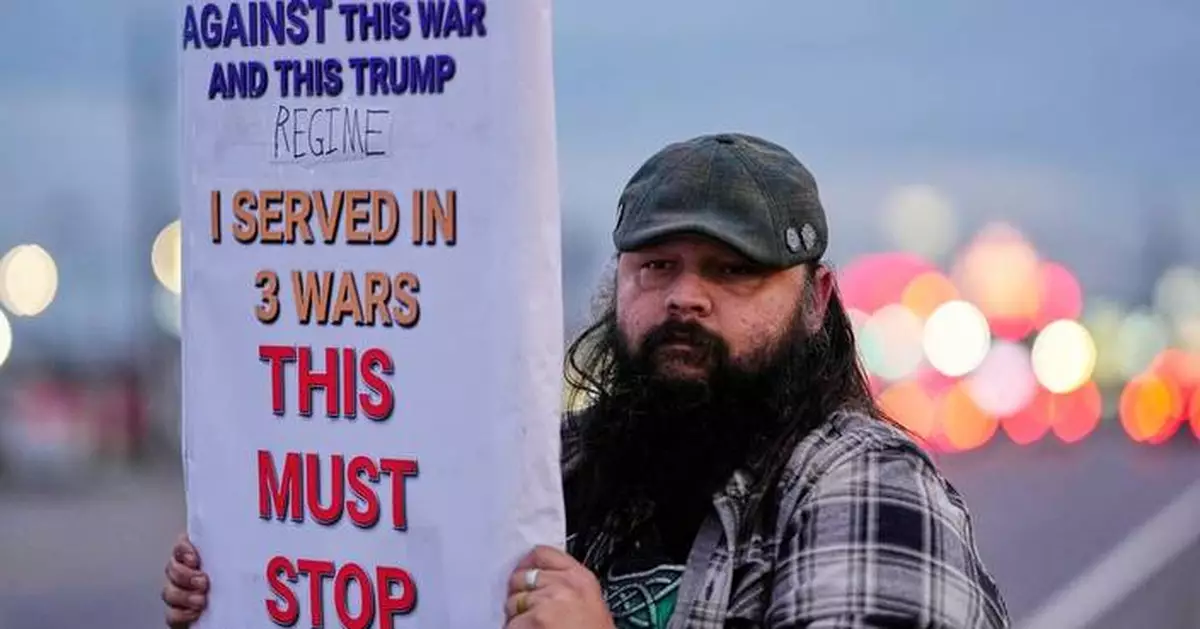
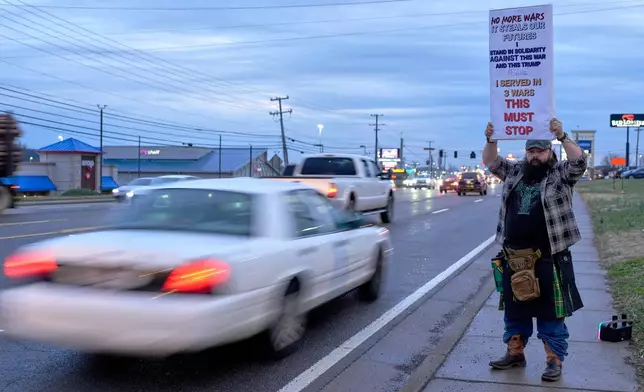
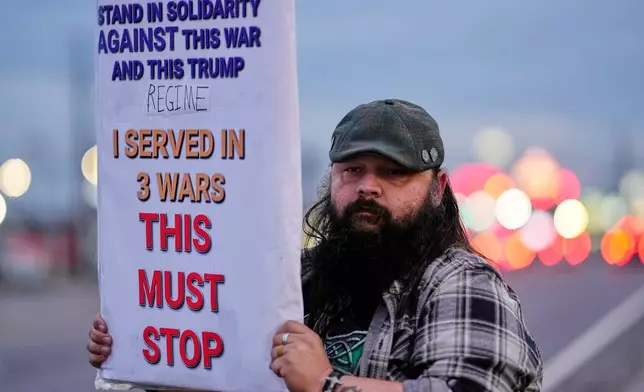
Army veteran Christopher William McFarland protests the war in Iran on Monday, March 2, 2026, in Clarksville, Tenn. (AP Photo/George Walker IV)
Army veteran A.J. Mayo sits during an interview Monday, March 2, 2026, in Clarksville, Tenn. (AP Photo/George Walker IV)
Fort Campbell Army installation is seen Monday, March 2, 2026, in Oak Grove, Ky. (AP Photo/George Walker IV)
Army veteran Christopher William McFarland protests the war in Iran on Monday, March 2, 2026, in Clarksville, Tenn. (AP Photo/George Walker IV)
The towns of Oak Grove, Kentucky, and Clarksville, Tennessee, surround the base and cater to the soldiers there with military clothing stores, barbershops and fast food restaurants. War memorials and monuments fill the cities' green spaces. There are American Legion and Veterans of Foreign Wars posts and military support centers. At Austin Peay State University, in Clarksville, a third of the students are military or veterans.
Juan Munoz is an Army veteran who spent time in Afghanistan and now works as a career counselor in Clarksville for people leaving the military. He said families in the area have “mixed emotions” about the new war. Many younger soldiers are excited to deploy, while their spouses, parents and siblings worry about their safety.
“You can’t ever give up the concern for your loved one, who’s potentially putting themselves in harm’s way,” he said. However, that concern doesn't stop them from supporting the attack on Iran. “At the end of the day, they’re going to support their service member.”
Munoz said he thinks the war is a “great move," because Iran is equipping our enemies, putting our troops and our allies in the region in danger.
“It’s what needs to be done,” he said.
Edward Bauman, a veteran with 23 years in the Army who deployed to Iraq, Kuwait and Afghanistan, spoke to a reporter on Monday outside an Oak Grove box store. He based his support for the war on his trust in President Donald Trump.
“My takeaway is there had to have been some reason for him to bomb them. I don’t think he would have just went out of his way to just, ‘I’m going to bomb these people’,” he said.
He does not believe Trump is taking America into another prolonged conflict in the Middle East.
“It’s not going to be another Afghanistan. It’s not going to be another Iraq. We’re not going to go in and try to occupy them,” he said.
Defense Secretary Pete Hegseth said on Monday that the conflict “is not endless” even as he warned that more American casualties are likely in the weeks ahead.
Shannon Razsadin, CEO of the Virginia-based nonprofit Military Family Advisory Network, said there is “a good amount of stress and anxiety from the community just around the unknowns right now."
In spite of the stress, she said, “They’re incredibly proud. Military families are proud of their service. And our military, our service members are prepared, and they are ready."
Susan Lynn, a state representative in Mount Juliet, Tennessee, about 70 miles (110 kilometers) southeast of the Army base, is one of those proud but concerned family members. In 2020, she took to Facebook to thank Trump for not sending her son, who is enlisted in the Air Force, into "another war.” On Saturday, she posted that he has been deployed and asked for prayers.
“From the time my son was a little boy, he wanted to be in the Air Force,” Lynn said in a phone interview on Monday. “He’s extremely patriotic. He will do anything to support our commander in chief. And I feel the same way. That if our commander in chief has made this executive decision, that this is something we should do, then I will trust that.”
Meanwhile, Chris McFarland, another veteran who served out of Fort Campbell and deployed to Kuwait, Iraq and Afghanistan, has been making his opposition to the war in Iran well known. As soon as he learned of it, he had a sign made declaring “No more wars” and has been holding it on a major thoroughfare in Clarksville every day.
McFarland, who leads the nonprofit Veterans for All, which advocates for veteran healthcare, said he has seen some hostility from drivers during his protest, but also some people have pulled over to talk to him. Many want more information about what is happening.
They are ”in shock, confused, concerned," he said.
McFarland does not mince words in describing his personal feelings about the attack on Iran.
“It is 100% unnecessary. It is unconstitutional. Literally, our own Congress didn’t even approve of this. This was done without anyone’s acknowledgement at 3:00 in the morning to murder people over in Iran.”
For many combat veterans like himself, he said the idea of a new war is bringing up bad memories.
“It just puts us right back in, right back at ground zero.”
Associated Press reporter Allen G. Breed in Wake Forest, North Carolina, contributed.
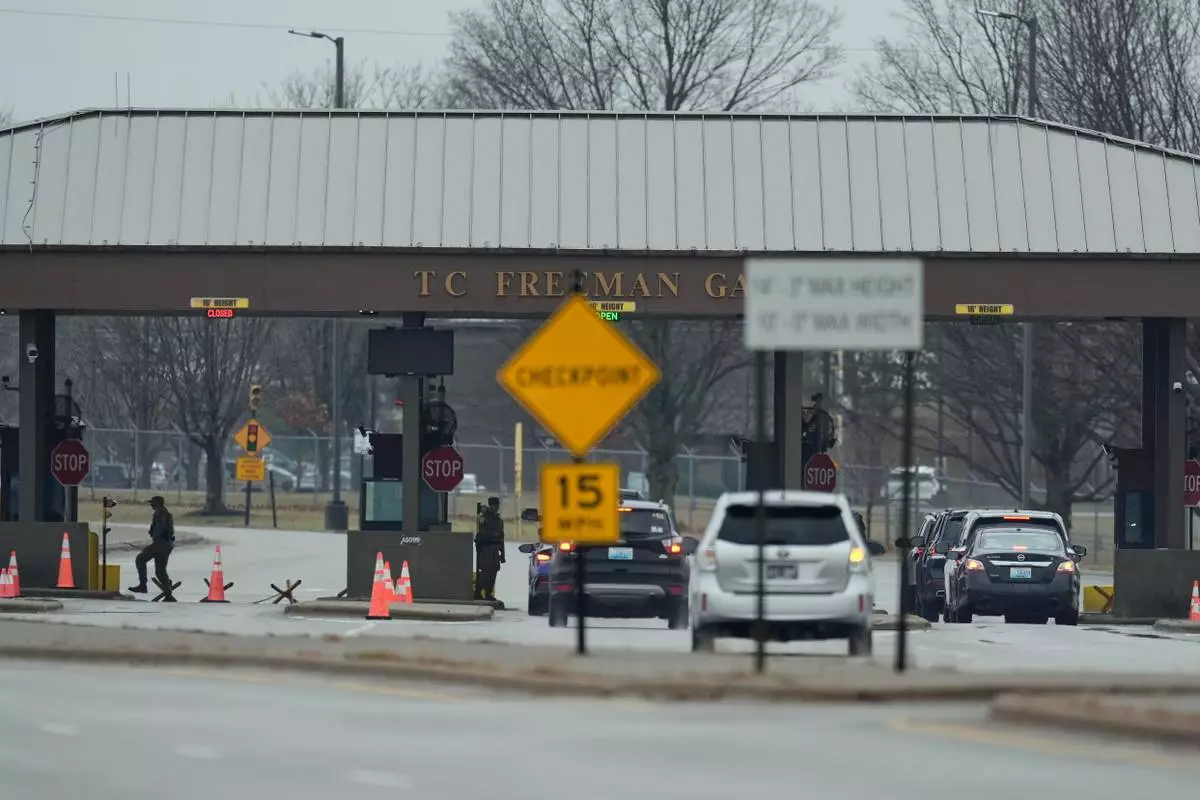
An entrance to Fort Campbell Army installation is seen Monday, March 2, 2026, in Oak Grove, Ky. (AP Photo/George Walker IV)
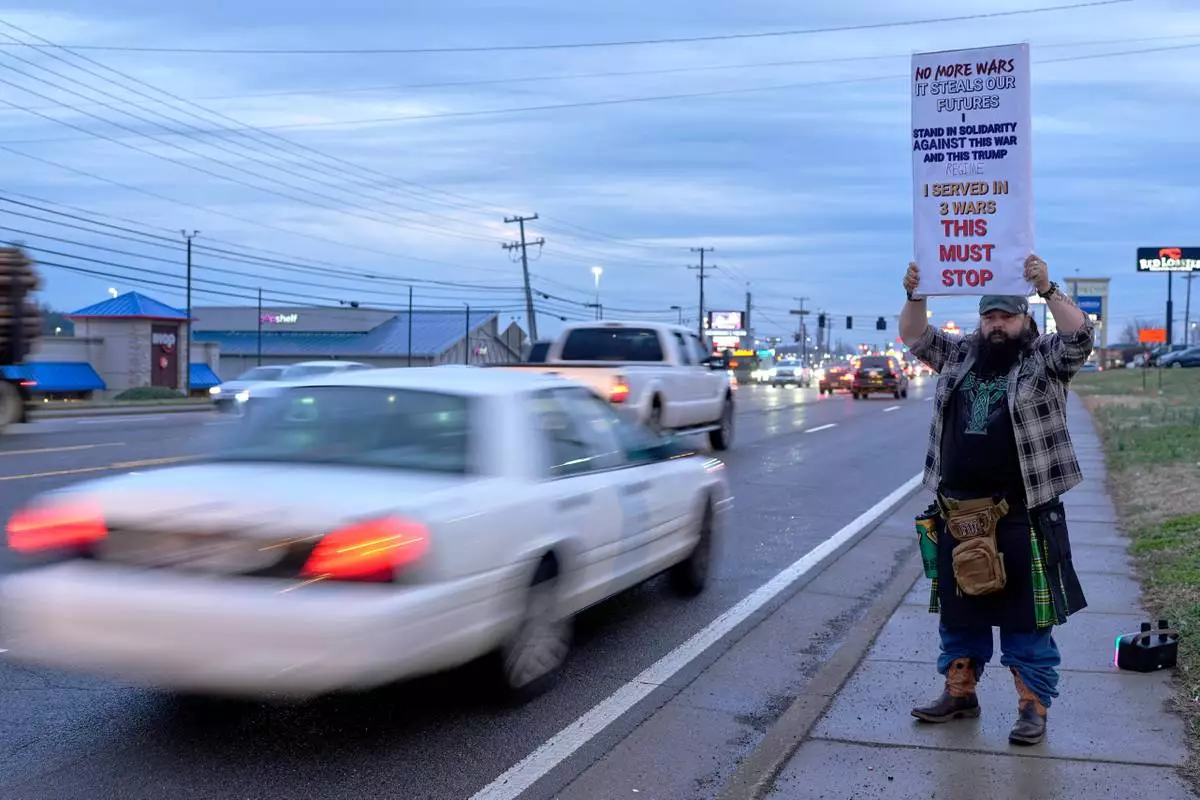
Army veteran Christopher William McFarland protests the war in Iran on Monday, March 2, 2026, in Clarksville, Tenn. (AP Photo/George Walker IV)

Army veteran A.J. Mayo sits during an interview Monday, March 2, 2026, in Clarksville, Tenn. (AP Photo/George Walker IV)
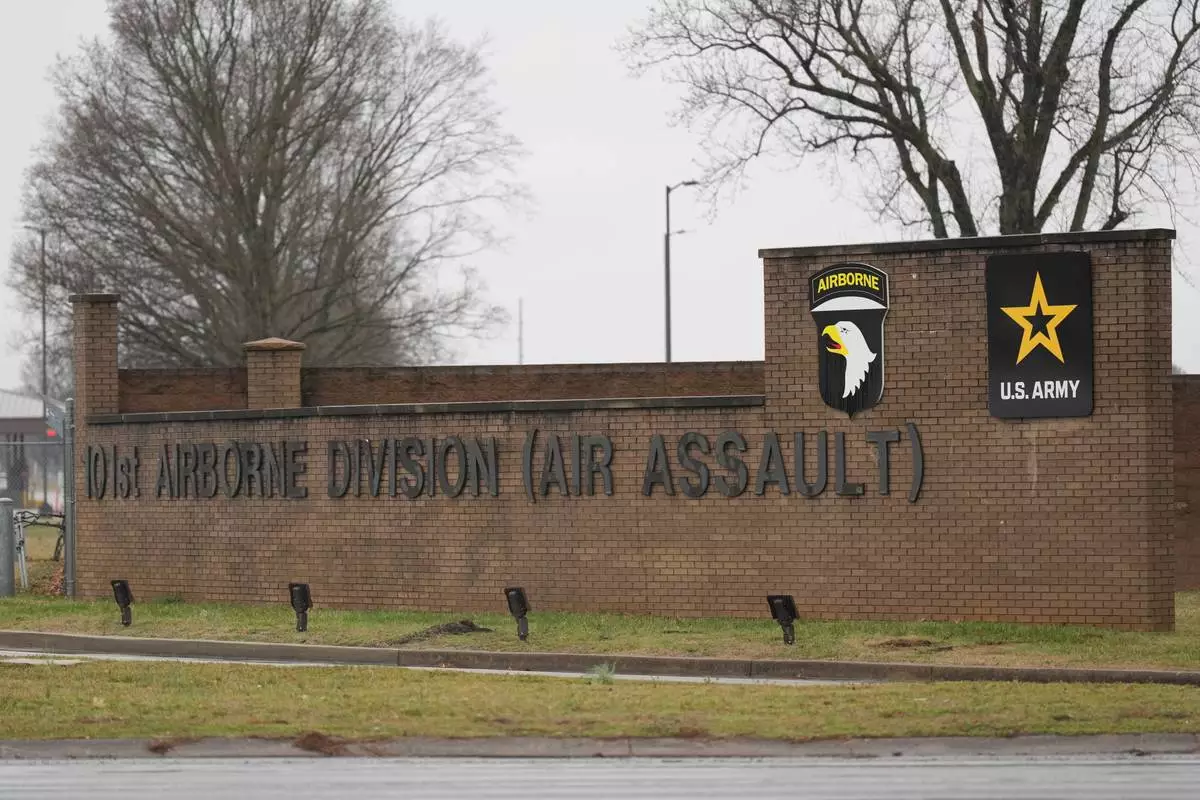
Fort Campbell Army installation is seen Monday, March 2, 2026, in Oak Grove, Ky. (AP Photo/George Walker IV)
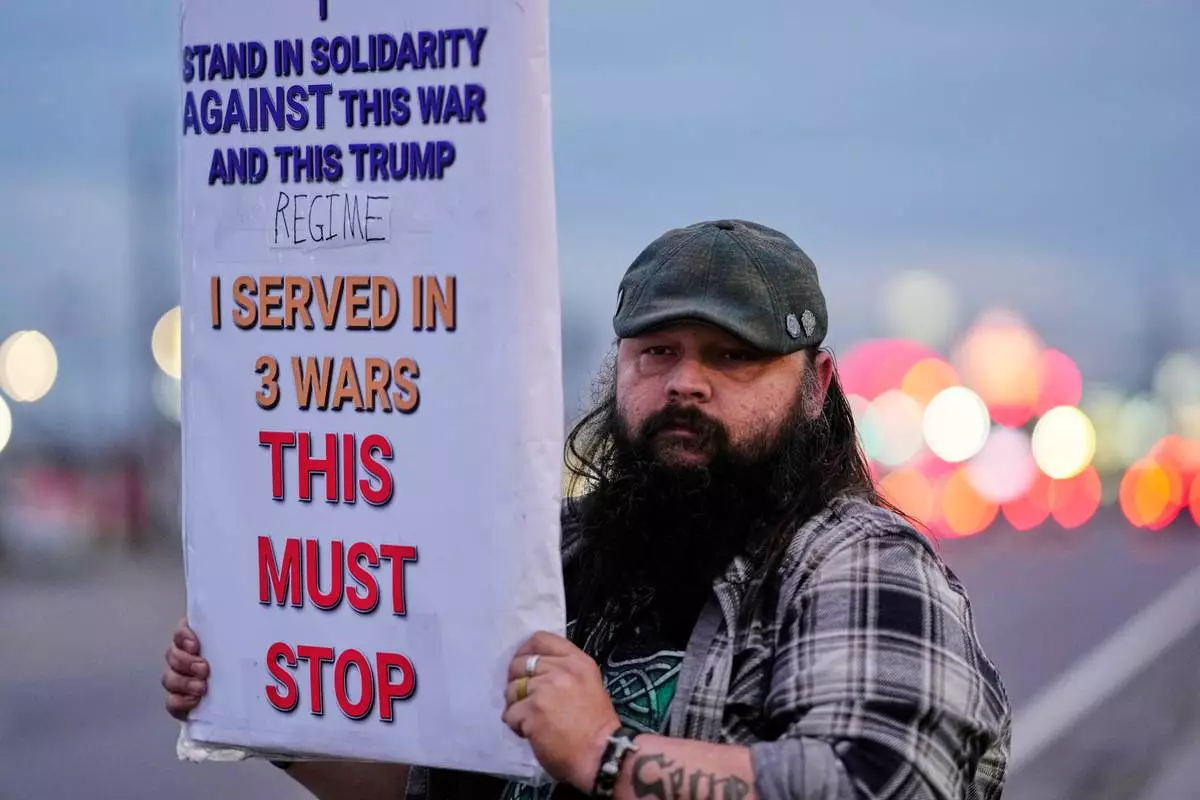
Army veteran Christopher William McFarland protests the war in Iran on Monday, March 2, 2026, in Clarksville, Tenn. (AP Photo/George Walker IV)
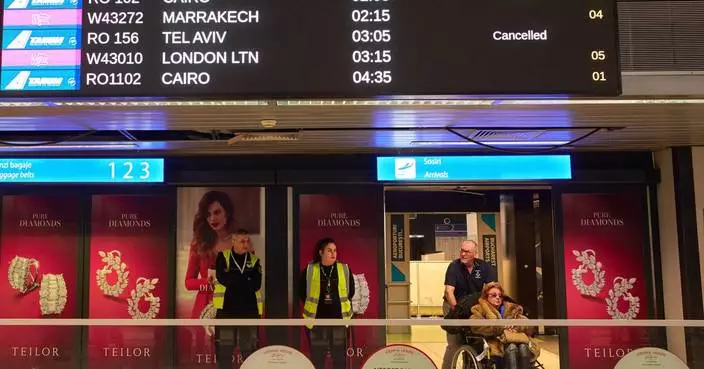
WASHINGTON (AP) — The largest U.S. diplomatic drawdown in the Middle East since the Iraq War began more than two decades ago is creating an apparently unplanned-for crisis for the Trump administration as the United States and Israel strike Iran in a widening conflict.
The State Department has been forced to close several embassies to the public, shut down at least one consulate, order the departure of embassy staff and families from at least six nations, and advise Americans in 14 countries to leave the region immediately despite the war closing major airports and causing widespread flight cancellations.
Nonetheless, the department said Tuesday that more than 9,000 Americans had safely returned from the Middle East since the weekend, many of them without government assistance, and that it was reaching out to those who have sought help.
The State Department was “securing military aircraft and charter flights for American citizens who wish to leave the Middle East,” Dylan Johnson, assistant secretary of state for public affairs, said Tuesday on X. He added that the department has been in contact with nearly 3,000 Americans wanting to leave the region or seeking information about how to depart.
Charter flights were being arranged from Jordan, Saudi Arabia and the United Arab Emirates. In countries where airports or airspace was closed, the department said, it is organizing land travel to countries where flights are available, including Egypt and Oman.
Still, emergency reductions in embassy staffing and post closures since the strikes on Iran began on the weekend have put a severe strain on the ability to help U.S. citizens in need of assistance that might usually be considered routine. Consular services are unavailable in many places and the personnel reductions have limited crucial official engagements with allied and partner governments during the war, including in Bahrain, Jordan, Kuwait, Lebanon, Pakistan, Qatar and Saudi Arabia.
The scale of the American drawdown in the region rivals if not exceeds what was done in the run up to and the immediate aftermath of the Iraq invasion in 2003. Back then, the State Department reduced its staffing in more than a dozen countries and advised U.S. citizens to leave or seriously consider leaving countries throughout the Middle East, North Africa and South Asia from Morocco to Pakistan.
On Monday, Americans were told in a hastily drafted announcement posted on X to leave Bahrain, Egypt, Iran, Iraq, Israel, Jordan, Kuwait, Lebanon, Oman, Qatar, Saudi Arabia, Syria, the United Arab Emirates and Yemen even though commercial flights and other transportation have been disrupted.
Americans had been advised early Tuesday that the State Department had ordered nonessential diplomats and embassy families to leave Bahrain, Iraq, Jordan, Kuwait, Qatar and the UAE.
The embassies in Jordan, Kuwait, Lebanon and Saudi Arabia also were closed to the public Tuesday. But only one diplomatic mission — the U.S. consulate in Karachi, Pakistan — had completely suspended operations.
A drone attack on the U.S. Embassy in Riyadh caused a “limited fire,” Saudi Arabia’s Defense Ministry said.
The strike in Riyadh caused part of the embassy's roof to collapse, although there were no reported deaths or injuries to staff, according to an internal State Department memo. It said there were no deaths or injuries after two drones hit the vicinity of the embassy in Kuwait City.
Confusion was playing out around the region, raising questions about the preparations for possible military action and its impact on travel and the safety of Americans overseas, which is the State Department's primary responsibility.
“If Americans are being instructed to leave but are given no viable pathway, that suggests one of two things: The system is not being activated, or the system has atrophied,” said Shawn VanDiver, president of AfghanEvac, a group that supports Afghan nationals seeking to come to the United States after having served with U.S. forces in Afghanistan.
He noted that during the U.S. withdrawal from Afghanistan in 2021, the Biden administration had organized the evacuation of 121,000 people in a matter of days.
“Crisis response cannot be partisan,” he said. “It has to survive transitions. It has to be staffed, exercised, and protected. The oversight question is straightforward: Was the post-Afghanistan crisis response architecture sustained, or has it been weakened?”
The State Department did not immediately respond to a query about its planning for embassy and consulate staffing or providing assistance to American citizens in the event of a conflict with Iran.
The U.S. government cannot compel American citizens to leave any country. In rare circumstances, it can make it illegal for U.S. passports to be used for travel to a specific destination. The only such restriction is on North Korea. But before the strikes began, Secretary of State Marco Rubio said Friday that the restriction might also be applied to Iran.
Travel advice from the State Department, including admonitions not to visit a country or to leave it, often is not respected. Many people reside in or have close family living there and either ignore or decline to heed the advice.
There are large numbers of U.S. citizens living in or traveling throughout the Middle East. The State Department, however, refuses to offer an estimate because Americans are not required to report their presence in any country abroad. It says any estimate would be inaccurate.
Tens of thousands of U.S. citizens, many of them dual nationals, are believed to live in Israel, Lebanon, Egypt and Iran.
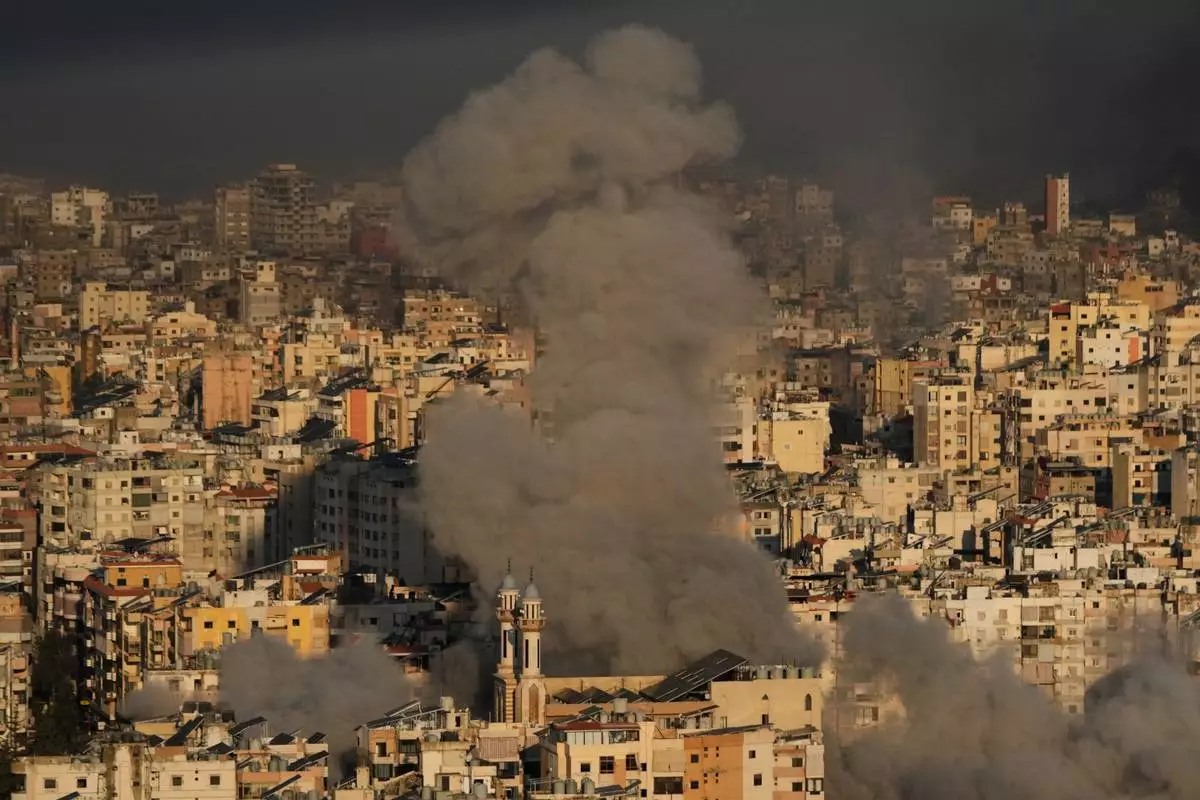
Smoke rises from Israeli airstrikes in Dahiyeh, a southern suburb of Beirut, Lebanon, Tuesday, March 3, 2026. (AP Photo/Hussein Malla)
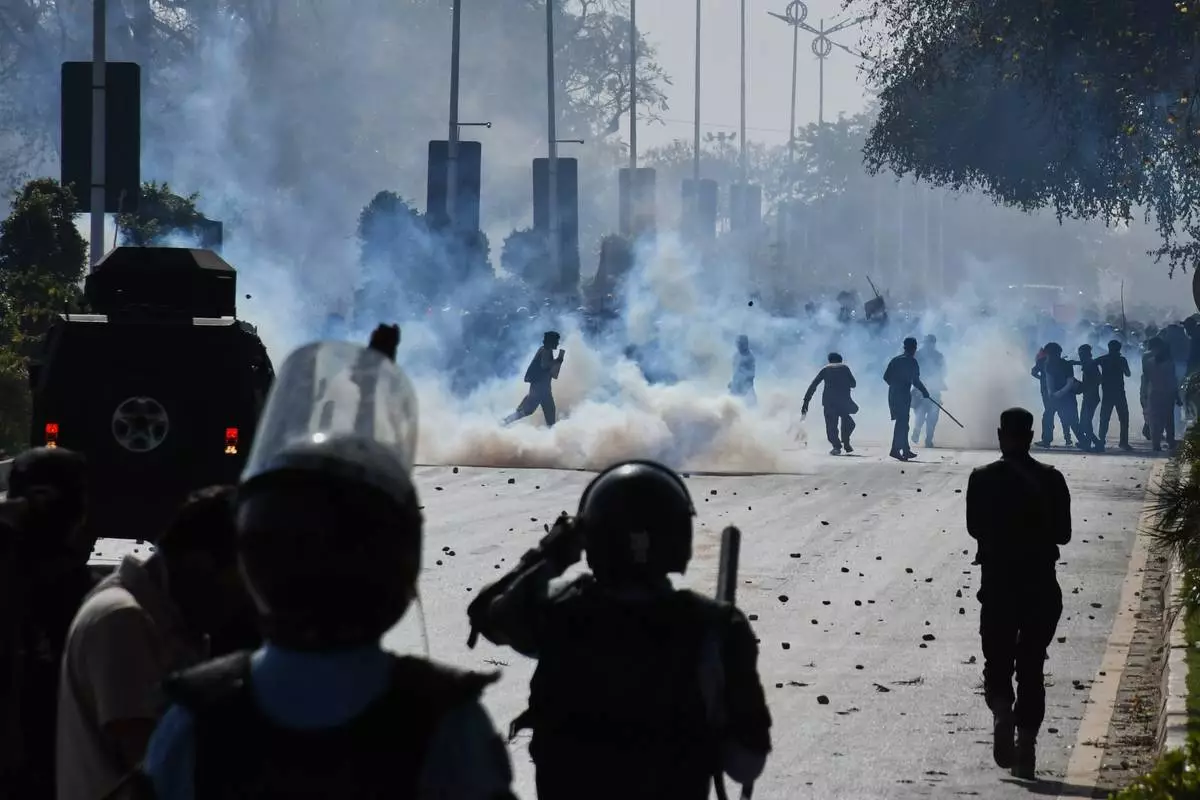
Police officers fire tear gas shells to disperse Shiite Muslims marching toward U.S. Embassy during a rally to condemn the killing of Iranian Supreme Leader Ayatollah Ali Khamenei, in Islamabad, Pakistan, Sunday, March 1, 2026. (AP Photo/M.A. Sheikh)
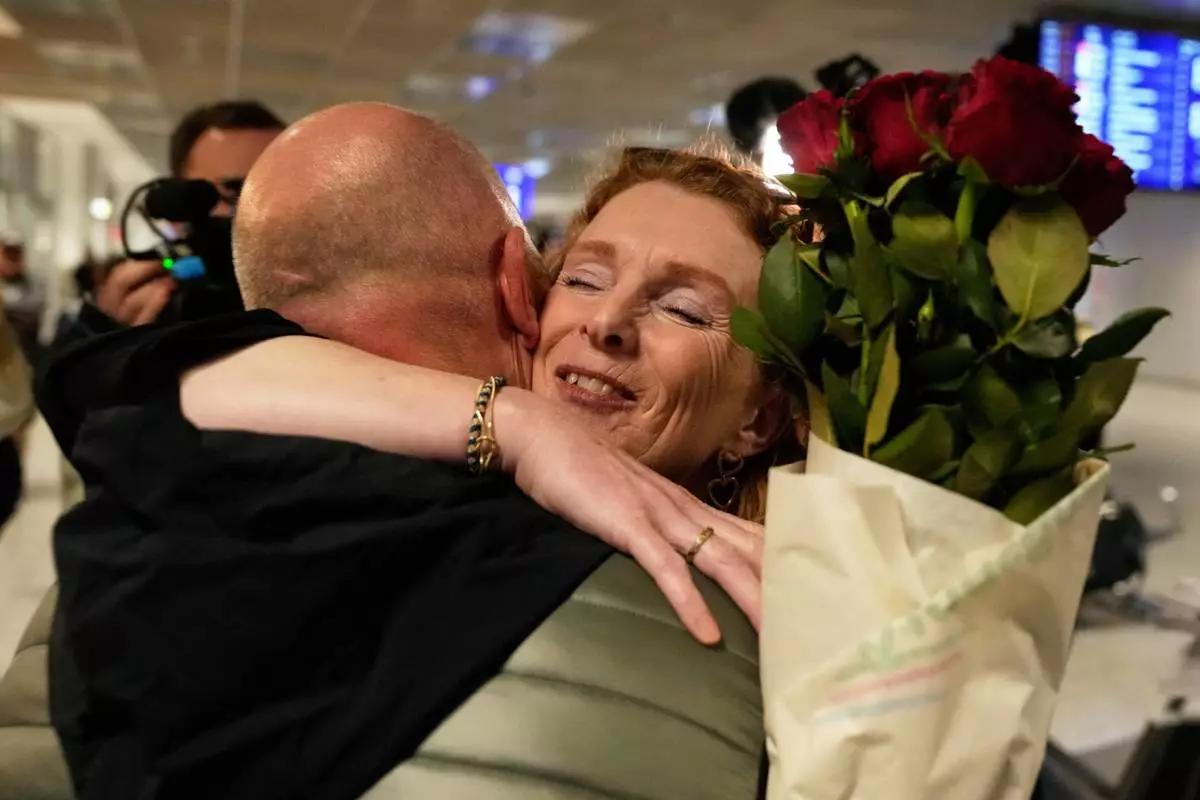
People arrive at the International Airport in Frankfurt, Germany, after being evacuated from Dubai on a commercial flight, Tuesday, March 3, 2026. (AP Photo/Michael Probst)
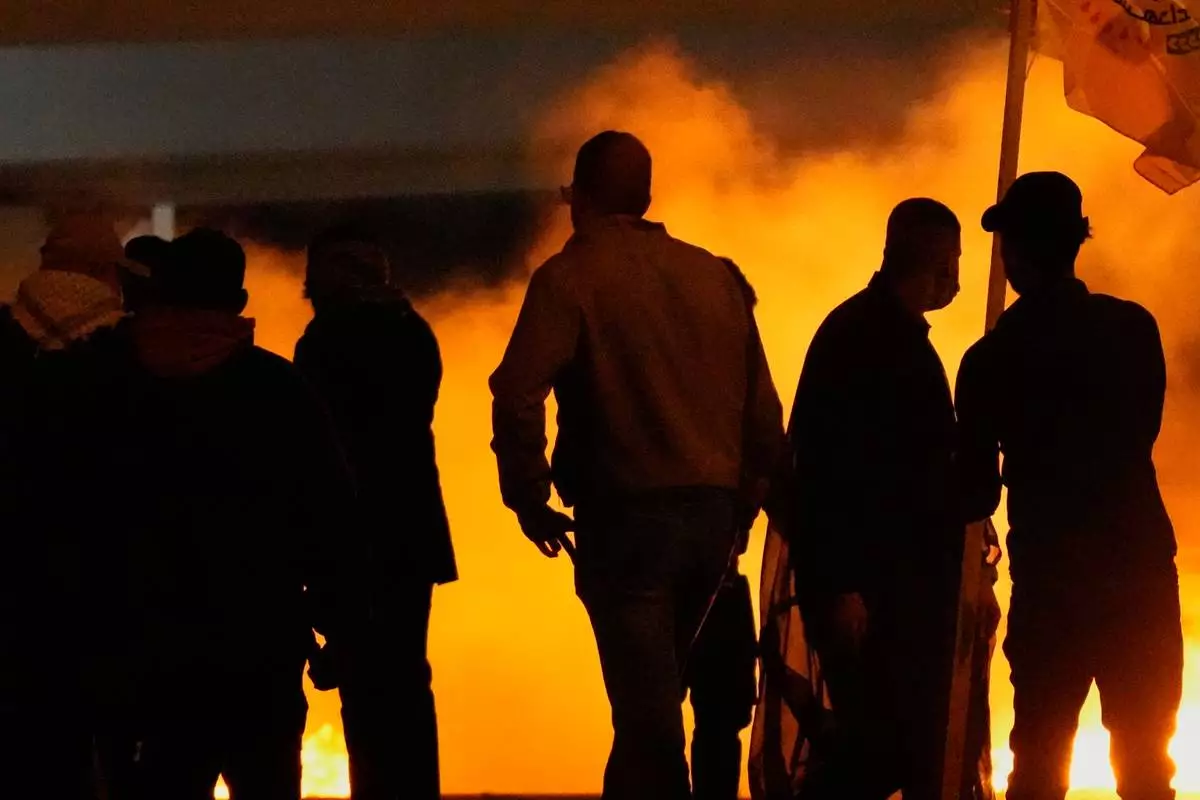
Security forces fire tear gas to disperse a protest against U.S. and Israeli attacks on Iran, at a bridge leading to the fortified Green Zone where the U.S. Embassy is located in Baghdad, Sunday, March 1, 2026. (AP Photo/Hadi Mizban)
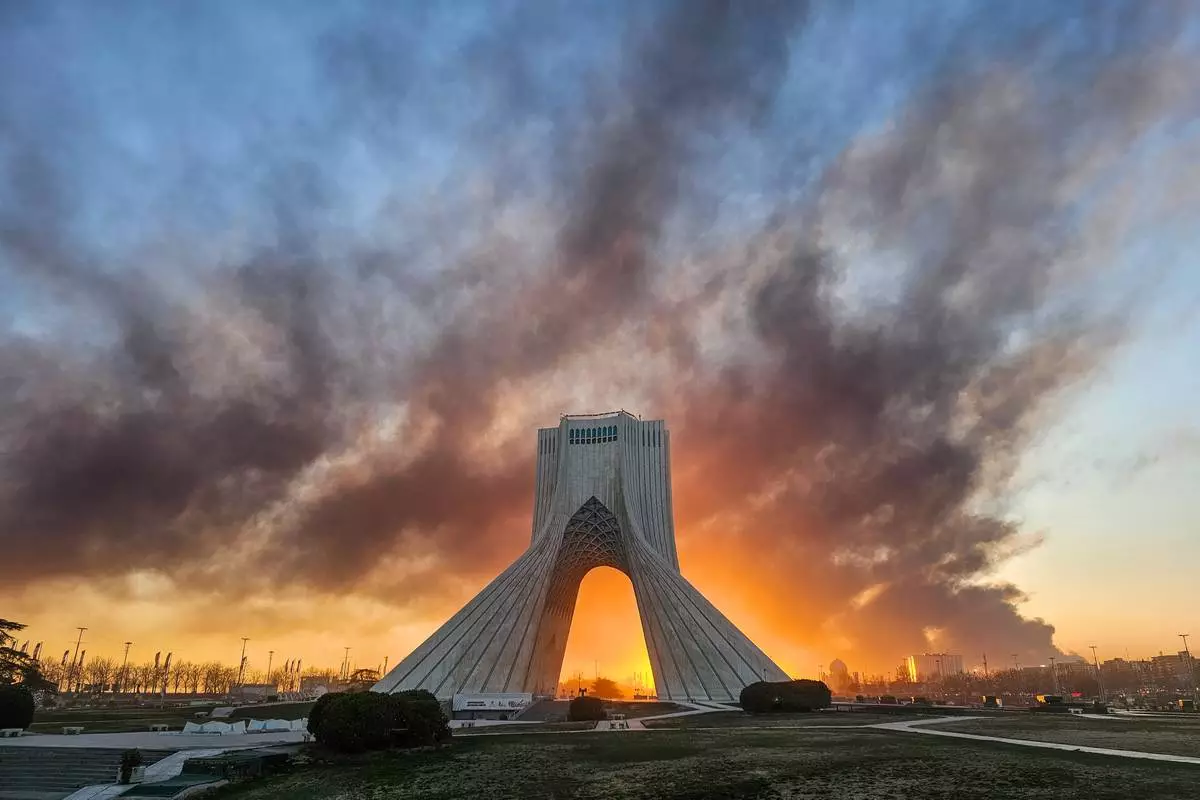
Smoke rises up behind Azadi, or freedom tower, following a U.S.-Israeli military strike in Tehran, Iran, Tuesday, March 3, 2026. ((Davoud Ghahrdar/ISNA via AP)