Skip to Content Facebook Feature Image

A trial seeks to tie Iranian paramilitary to alleged assassination plot in US

News

A trial seeks to tie Iranian paramilitary to alleged assassination plot in US
News

News

A trial seeks to tie Iranian paramilitary to alleged assassination plot in US

2026-03-04 05:25 Last Updated At:05:31

NEW YORK (AP) — While the U.S. fights a widening war in Iran, American prosecutors are airing claims that Iran's paramilitary Revolutionary Guard was entangled in a foiled 2024 assassination plot that eyed then-candidate Donald Trump as a possible target.

The alleged scheme is at the center of a criminal trial that started in a federal court in New York last week, days before the Mideast combat that now looms in the background.

“This trial is happening in interesting times,” Judge Eric Komitee told lawyers this week in the case of Asif Merchant, a Pakistani national accused of trying to hire hit men to kill a U.S. politician. Merchant didn't name a target but searched online for Trump rally locations, according to prosecutors, who introduced evidence Tuesday that Merchant’s laptop contained photos of both Trump and then-President Joe Biden at a time when they were rivals for the presidency.

An FBI agent testified Tuesday that Merchant told her he had a Revolutionary Guard “handler” and believed the handler would help bankroll the plan. Merchant's lawyer suggested the purported statements might not be accurate.

Merchant, 47, has pleaded not guilty to attempted terrorism and other charges. His attorneys say prosecutors are trying to wedge evidence into a narrative that doesn't fit.

Merchant has children in Iran and has traveled there. His lawyers have portrayed his trips as religious pilgrimages and family time. But federal authorities have long suggested that he had ties to Iran's theocratic government.

When Merchant was indicted in 2024, then-FBI Director Christopher Wray said the case was “straight out of the Iranian regime’s playbook.” Then-Attorney General Merrick Garland portrayed it as an example of “Iran's lethal plotting against Americans.”

In court Tuesday, an FBI agent opened a window — though a narrow, constrained one — on the government's basis for pointing a finger at Tehran.

It stems from what Merchant allegedly told agents in a July 2024 interview. The session wasn't recorded, and the agents' report on it is sealed. Only a few questions about it were allowed in court.

According to agent Jacqueline Smith, Merchant said one of his cousins introduced him to a Revolutionary Guard handler at some point in Iran. Formally called the Islamic Revolutionary Guard Corps, the force has been prominent in Iran under the country's late Supreme Leader Ayatollah Ali Khamenei, who was killed in the U.S.-Israeli attack this weekend. The U.S. deems the Revolutionary Guard a “foreign terrorist organization.”

Merchant said he expected his handler would reimburse $5,000 that Merchant had gotten from his cousin and had given to the supposed hit men, who actually were undercover FBI agents, Smith told jurors. She said Merchant also relayed some advice from the handler: “If he noticed he was being surveilled, he should act normal."

Defense lawyer Avraham Moskowitz underscored that the interview wasn’t recorded, and he described the agents’ report as “someone’s impression of what was said.”

“I disagree with that characterization,” Smith said, but acknowledged the sealed document wasn’t a verbatim account.

The interview was what's known as a proffer session, generally a time when defendants or suspects and their lawyers explore the possibility of cooperating with authorities. Moskowitz noted, while jurors weren't in the room, that proffers can produce a mix of things "that may be true and other things that are said that may not be true.”

While getting only a glimpse of that interview, jurors have seen and heard recordings of Merchant interacting with undercover FBI agents and with an acquaintance who flagged him to the agency in the first place.

In one June 2024 recording that was played in court this week, Merchant told the undercover agents that he and associates in Pakistan were looking for people to steal documents, create protests at political events, “and the last thing is: Maybe you can, say, kill someone.”

“The third thing you wanted, like, that could be a big deal,” one of the agents observed. He dangled the possibility that “you want somebody’s wife killed?”

“No, no.... maybe it’s some political person, maybe some other person,” said Merchant, who later explained that he didn’t yet know exactly whom.

“Wow,” the agent said, adding: “That’s gonna cost.”

About a week later, Merchant was recorded meeting the agents at a Manhattan rooftop restaurant and then, in a nearby car, handing them $5,000 in rolled-up, rubber-banded $100 bills.

Merchant was arrested in Texas on July 12, 2024, as he was packing to fly back to Pakistan, authorities said in court documents.

A day after Merchant's arrest, a Pennsylvania man made an attempt on Trump's life at a campaign event in Butler, Pennsylvania. Officials said it appeared the gunman acted alone but that they had been tracking a threat on Trump’s life from Iran, a claim that the Islamic Republic called “unsubstantiated and malicious.”

The president alluded to the alleged Iranian plots Sunday as he discussed Khamenei's death.

"I got him before he got me,” Trump told ABC News.
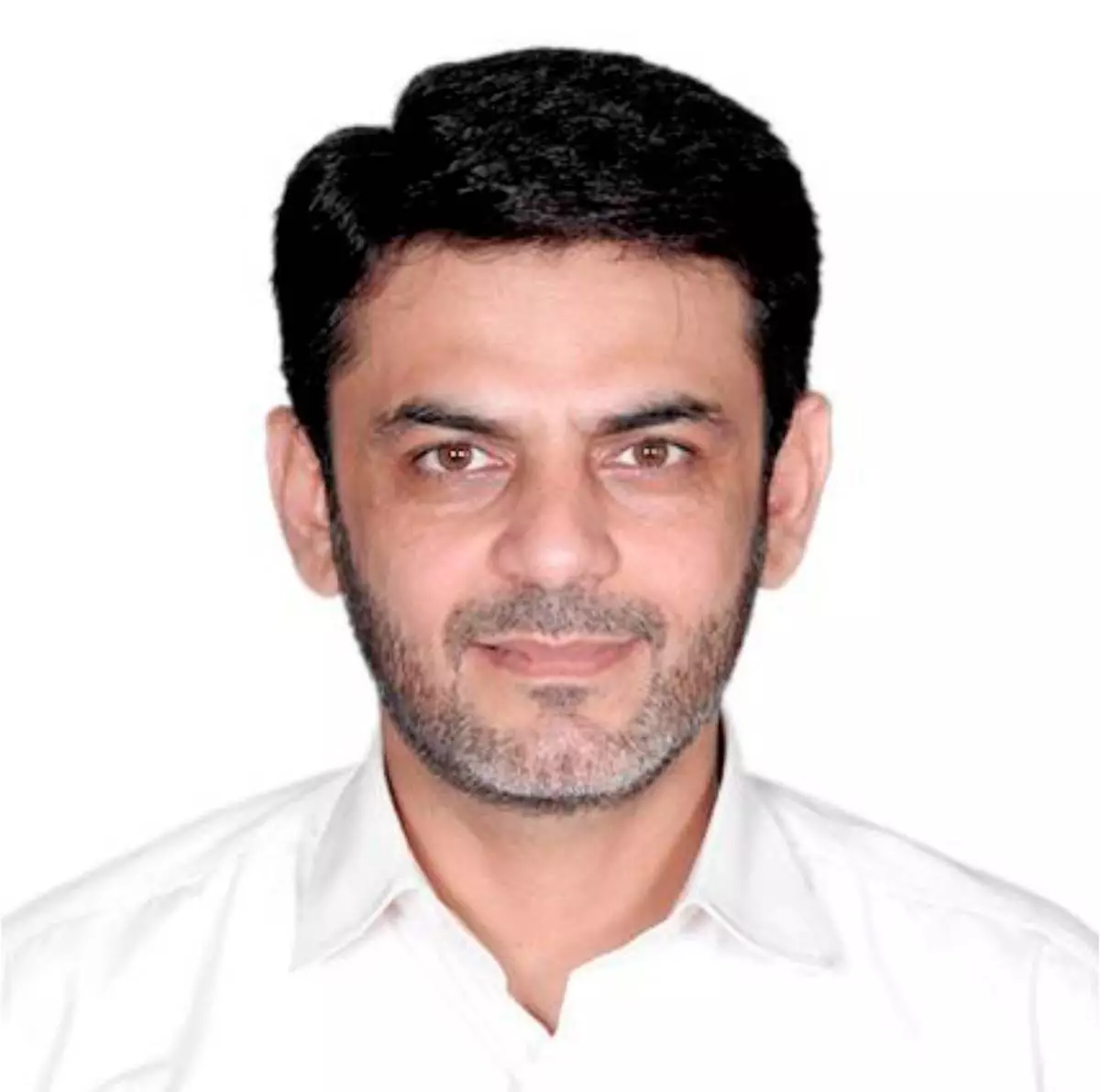
FILE - This image provided by the Justice Department, contained in the complaint supporting the arrest warrant, shows Asif Merchant. (Justice Department via AP, File)
FILE - This image provided by the Justice Department, contained in the complaint supporting the arrest warrant, shows Asif Merchant. (Justice Department via AP, File)

WASHINGTON (AP) — President Donald Trump on Tuesday threatened to end trade with Spain, citing a lack of support over the U.S. and Israeli attacks on Iran and the European nation's resistance to increasing its NATO spending.

“We’re going to cut off all trade with Spain,” Trump told reporters during an Oval Office meeting with German Chancellor Friedrich Merz. “We don’t want anything to do with Spain.”

The U.S. president's comments came a day after Spanish Foreign Minister José Manuel Albares said his country would not allow the U.S. to use jointly operated bases in southern Spain in any strikes not covered by the United Nations’ charter. Albares noted that the military bases in Spain were not used in the weekend attack on Iran.

Trump said despite Spain's refusal “we could use their base if we want. We could just fly in and use it. Nobody’s going to tell us not to use it, but we don't have to.”

It is unclear how Trump would cut off trade with Spain, given that Spain is under the umbrella of the European Union. The EU negotiates trade deals on behalf of all 27 member countries.

“If the U.S. administration wishes to review the trade agreement, it must do so respecting the autonomy of private companies, international law, and bilateral agreements between the European Union and the United States,” a spokesperson from Spanish Prime Minister Pedro Sánchez’s office said Tuesday.

The EU said it expects the Trump administration to honor a trade deal struck with the 27-nation bloc in Scotland last year after months of economic uncertainty over Trump’s tariff blitzkrieg.

“The Commission will always ensure that the interests of the European Union are fully protected,” said European Commission spokesperson Olof Gill.

It was just the latest instance of the president wielding the threat of tariffs or trade embargoes as a punishment and came on the heels of a Supreme Court decision that struck down Trump's far-reaching global tariffs. While the court said that the International Emergency Economic Powers Act does not authorize the president to unilaterally impose sweeping tariffs, Trump now maintains that the court allows him to instead impose full-scale embargoes on other nations of his choosing.

Trump also complained anew Tuesday about Spain's decision last year to back out of NATO's 5% defense spending target. At the time, Spain said it could reach its military capabilities by spending 2.1% of its GDP, a move that Trump roundly criticized and responded to with tariff threats as well.

Spain, Trump said, is “the only country that in NATO would not agree to go up to 5%” in NATO spending. "I don’t think they agreed to go up to anything. They wanted to keep it at 2% and they don’t pay the 2%.”

Merz noted that Trump was correct and said, "We are trying to convince them that this is a part of our common security, that we all have to comply with this.”

Spain defended its position Tuesday, saying it is "a key member of NATO, fulfilling its commitments and making a significant contribution to the defense of European territory,” the spokesperson in Sánchez’s office said.

During the Oval Office meeting, Trump turned to U.S. Treasury Secretary Scott Bessent for his opinion on the president's embargo authority.

Bessent said, “I agree that the Supreme Court reaffirmed your ability to implement an embargo." Bessent added that the U.S. Trade Representative and Commerce Department would "begin investigations and we’ll move forward with those.”

A representative from the U.S. Treasury Department did not respond to a request from The Associated Press for additional comment.

Sánchez has been critical of the U.S. and Israeli attacks on Iran, calling it an “unjustifiable” and “dangerous” military intervention. His government has demanded an immediate de-escalation and dialogue and also condemned Iran’s strikes across the region.

Trump said, “Spain has absolutely nothing that we need other than great people. They have great people, but they don’t have great leadership."

Spain’s position on the use of U.S. bases in its territory marks the latest flare-up in its relationship with the Trump administration. Under Sánchez, Europe’s last major progressive leader, Spain was also an outspoken critic of Israel’s war in Gaza.

Naishadham reported from Madrid. AP journalist Sam McNeil in Brussels contributed.

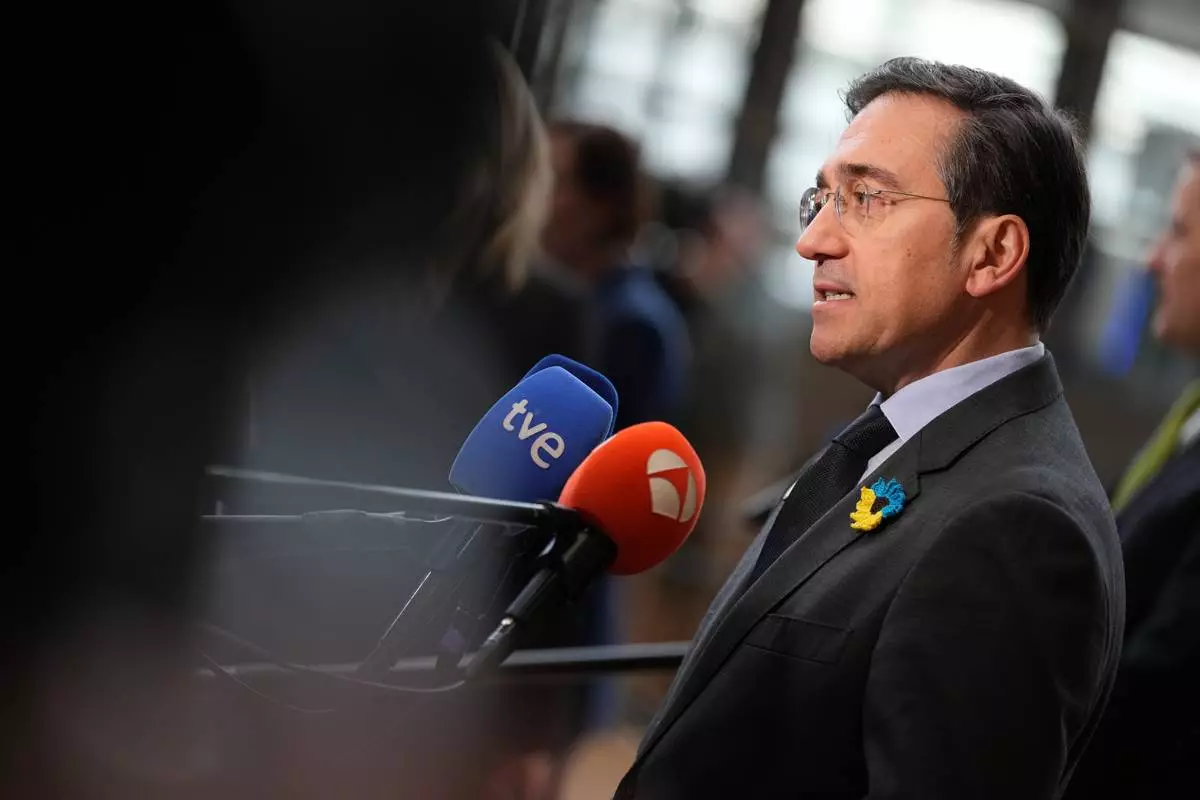
Spain's Foreign Minister Jose Manuel Albares Bueno speaks with the media as he arrives for a meeting of EU foreign ministers at the European Council building in Brussels, Monday, Feb. 23, 2026. (AP Photo/Virginia Mayo)

Spain's Foreign Minister Jose Manuel Albares Bueno speaks with the media as he arrives for a meeting of EU foreign ministers at the European Council building in Brussels, Monday, Feb. 23, 2026. (AP Photo/Virginia Mayo)

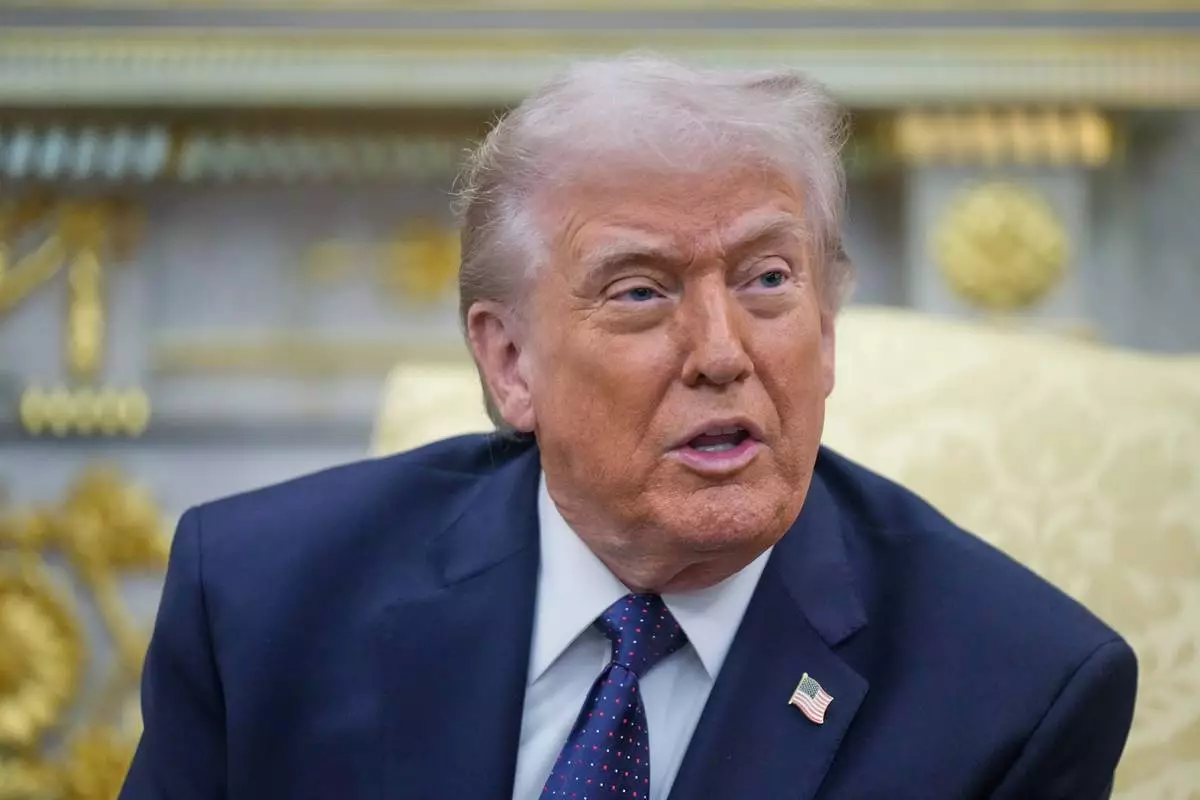
President Donald Trump speaks during a meeting with German Chancellor Friedrich Merz in the Oval Office at the White House, Tuesday, March 3, 2026, in Washington. (AP Photo/Mark Schiefelbein)

President Donald Trump speaks during a meeting with German Chancellor Friedrich Merz in the Oval Office at the White House, Tuesday, March 3, 2026, in Washington. (AP Photo/Mark Schiefelbein)

Recommended Articles