COLORADO SPRINGS, Colo. (AP) — USA Basketball announced a new program Tuesday to bring the international version of 3x3 to young players, programs and gyms around the country.
The timing of announcing what's called 3X Play was not coincidental: unveiling a 3x3 program nationally, on March 3, was by design. The program's mission is to grow the 3x3 game particularly among young players, with framework for tournaments, leagues, skill development and rules based on age and skill level.
“USA Basketball is excited to introduce 3X Play, a framework designed to equip coaches, program directors and team administrators with the tools to make 3x3 basketball available to developing athletes nationwide,” USA Basketball CEO Jim Tooley said.
The 3x3 game is played on the halfcourt, with a 10-minute maximum game clock and a 12-second shot clock. The first team to 21 points, or the team leading when time expires, wins.
It is typically played with four-person teams, so there's only one sub at a time, and players coach themselves during games. Baskets inside the arc count for one point, outside the arc count for two points.
The 3x3 game was added to the Olympic program starting with the Tokyo Games that were played in 2021. The U.S. has medaled twice in 3x3 on the Olympic stage, winning the women's gold in Tokyo and the women's bronze in Paris in 2024.
AP sports: https://apnews.com/sports

FILE - Dylan Travis (15), Jimmer Fredette (5) and Canyon Barry (6), all of the United States, react after a men's 3x3 basketball pool round match against Latvia during the 2024 Summer Olympics, Aug. 2, 2024, in Paris, France. (AP Photo/Frank Franklin II, File)
WASHINGTON (AP) — The largest U.S. diplomatic drawdown in the Middle East since the Iraq War began more than two decades ago is creating an apparently unplanned-for crisis for the Trump administration as the United States and Israel strike Iran in a widening conflict.
The State Department has been forced to close several embassies to the public, shut down at least one consulate, order the departure of embassy staff and families from at least six nations, and advise Americans in 14 countries to leave the region immediately despite the war closing major airports and causing widespread flight cancellations.
Nonetheless, the department said Tuesday that more than 9,000 Americans had safely returned from the Middle East since the weekend, many of them without government assistance, and that it was reaching out to those who have sought help.
The State Department was “securing military aircraft and charter flights for American citizens who wish to leave the Middle East,” Dylan Johnson, assistant secretary of state for public affairs, said Tuesday on X. He added that the department has been in contact with nearly 3,000 Americans wanting to leave the region or seeking information about how to depart.
Charter flights were being arranged from Jordan, Saudi Arabia and the United Arab Emirates. In countries where airports or airspace was closed, the department said, it is organizing land travel to countries where flights are available, including Egypt and Oman.
Still, emergency reductions in embassy staffing and post closures since the strikes on Iran began on the weekend have put a severe strain on the ability to help U.S. citizens in need of assistance that might usually be considered routine. Consular services are unavailable in many places and the personnel reductions have limited crucial official engagements with allied and partner governments during the war, including in Bahrain, Jordan, Kuwait, Lebanon, Pakistan, Qatar and Saudi Arabia.
The scale of the American drawdown in the region rivals if not exceeds what was done in the run up to and the immediate aftermath of the Iraq invasion in 2003. Back then, the State Department reduced its staffing in more than a dozen countries and advised U.S. citizens to leave or seriously consider leaving countries throughout the Middle East, North Africa and South Asia from Morocco to Pakistan.
On Monday, Americans were told in a hastily drafted announcement posted on X to leave Bahrain, Egypt, Iran, Iraq, Israel, Jordan, Kuwait, Lebanon, Oman, Qatar, Saudi Arabia, Syria, the United Arab Emirates and Yemen even though commercial flights and other transportation have been disrupted.
Americans had been advised early Tuesday that the State Department had ordered nonessential diplomats and embassy families to leave Bahrain, Iraq, Jordan, Kuwait, Qatar and the UAE.
The embassies in Jordan, Kuwait, Lebanon and Saudi Arabia also were closed to the public Tuesday. But only one diplomatic mission — the U.S. consulate in Karachi, Pakistan — had completely suspended operations.
A drone attack on the U.S. Embassy in Riyadh caused a “limited fire,” Saudi Arabia’s Defense Ministry said.
The strike in Riyadh caused part of the embassy's roof to collapse, although there were no reported deaths or injuries to staff, according to an internal State Department memo. It said there were no deaths or injuries after two drones hit the vicinity of the embassy in Kuwait City.
Confusion was playing out around the region, raising questions about the preparations for possible military action and its impact on travel and the safety of Americans overseas, which is the State Department's primary responsibility.
“If Americans are being instructed to leave but are given no viable pathway, that suggests one of two things: The system is not being activated, or the system has atrophied,” said Shawn VanDiver, president of AfghanEvac, a group that supports Afghan nationals seeking to come to the United States after having served with U.S. forces in Afghanistan.
He noted that during the U.S. withdrawal from Afghanistan in 2021, the Biden administration had organized the evacuation of 121,000 people in a matter of days.
“Crisis response cannot be partisan,” he said. “It has to survive transitions. It has to be staffed, exercised, and protected. The oversight question is straightforward: Was the post-Afghanistan crisis response architecture sustained, or has it been weakened?”
The State Department did not immediately respond to a query about its planning for embassy and consulate staffing or providing assistance to American citizens in the event of a conflict with Iran.
The U.S. government cannot compel American citizens to leave any country. In rare circumstances, it can make it illegal for U.S. passports to be used for travel to a specific destination. The only such restriction is on North Korea. But before the strikes began, Secretary of State Marco Rubio said Friday that the restriction might also be applied to Iran.
Travel advice from the State Department, including admonitions not to visit a country or to leave it, often is not respected. Many people reside in or have close family living there and either ignore or decline to heed the advice.
There are large numbers of U.S. citizens living in or traveling throughout the Middle East. The State Department, however, refuses to offer an estimate because Americans are not required to report their presence in any country abroad. It says any estimate would be inaccurate.
Tens of thousands of U.S. citizens, many of them dual nationals, are believed to live in Israel, Lebanon, Egypt and Iran.
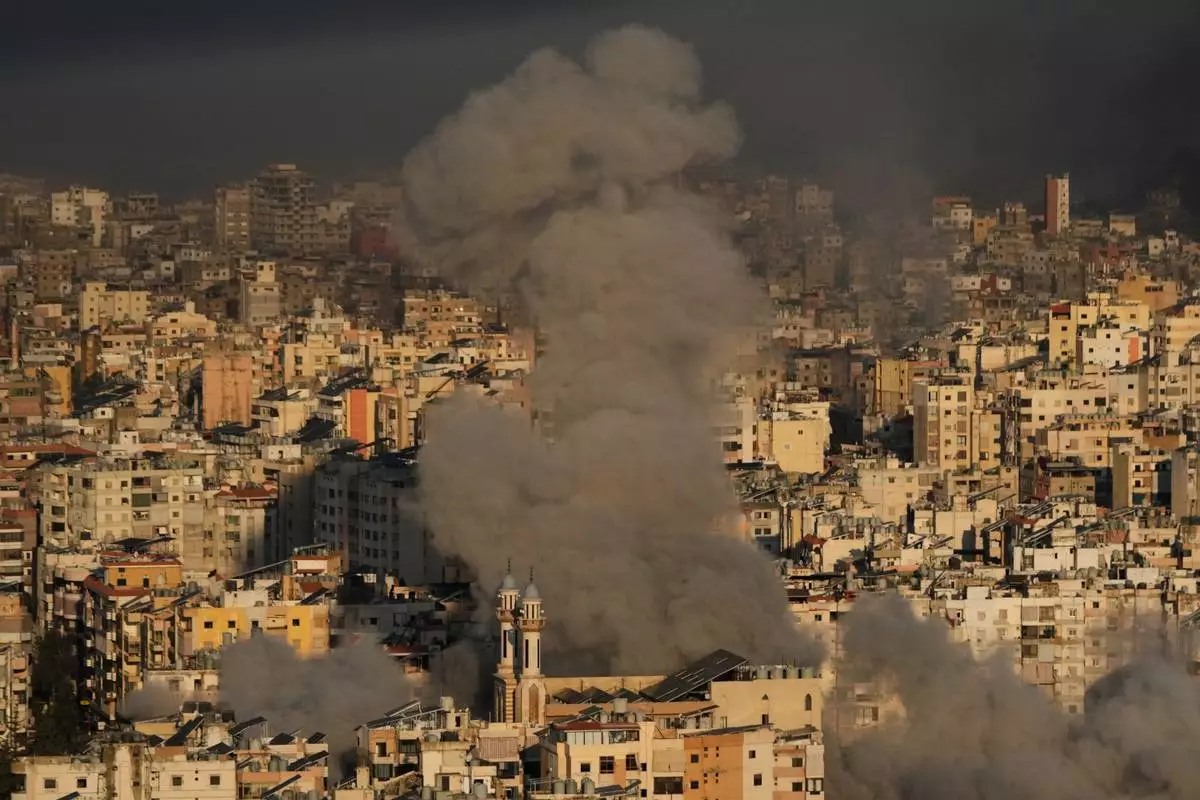
Smoke rises from Israeli airstrikes in Dahiyeh, a southern suburb of Beirut, Lebanon, Tuesday, March 3, 2026. (AP Photo/Hussein Malla)
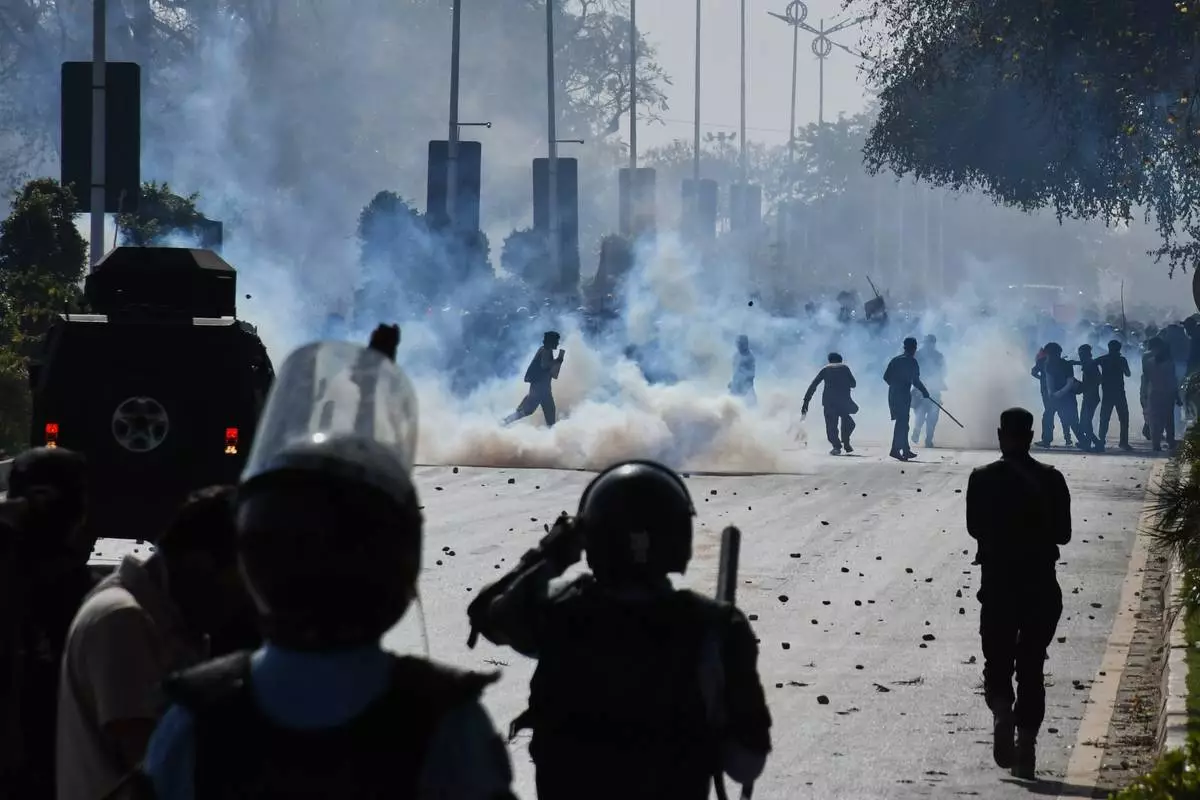
Police officers fire tear gas shells to disperse Shiite Muslims marching toward U.S. Embassy during a rally to condemn the killing of Iranian Supreme Leader Ayatollah Ali Khamenei, in Islamabad, Pakistan, Sunday, March 1, 2026. (AP Photo/M.A. Sheikh)

People arrive at the International Airport in Frankfurt, Germany, after being evacuated from Dubai on a commercial flight, Tuesday, March 3, 2026. (AP Photo/Michael Probst)

Security forces fire tear gas to disperse a protest against U.S. and Israeli attacks on Iran, at a bridge leading to the fortified Green Zone where the U.S. Embassy is located in Baghdad, Sunday, March 1, 2026. (AP Photo/Hadi Mizban)
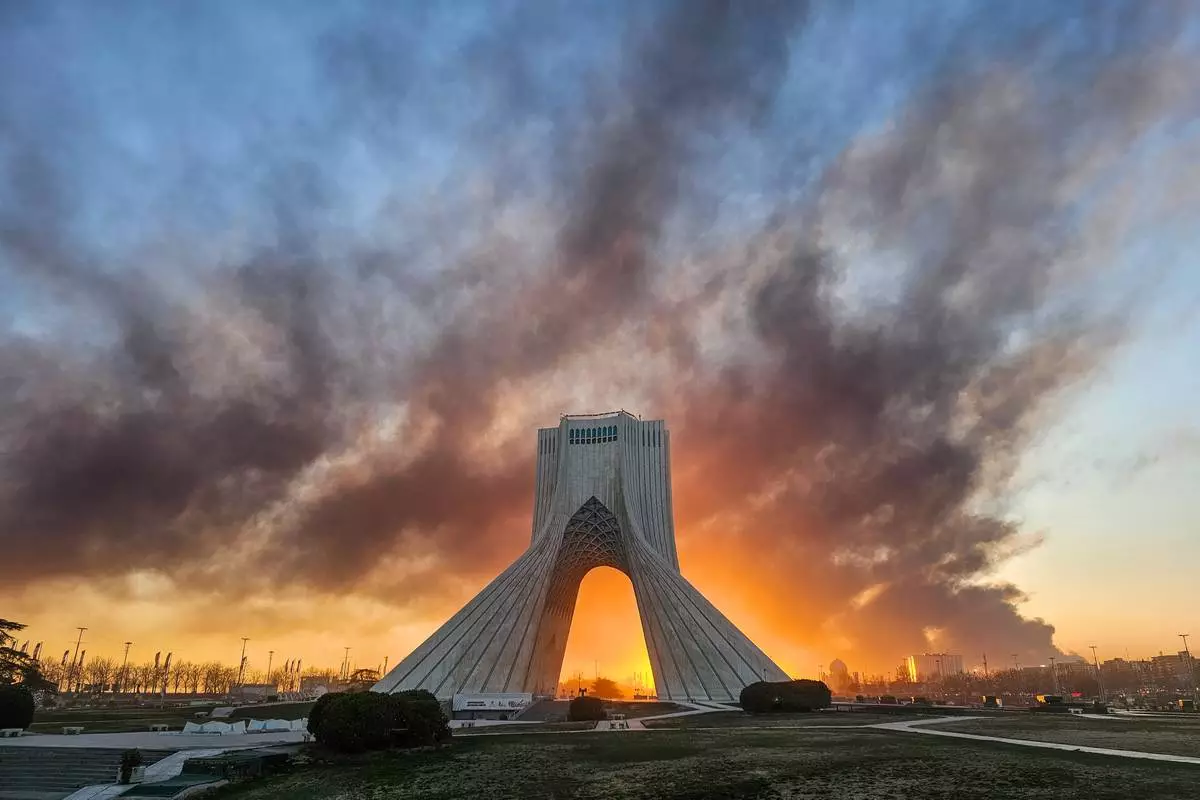
Smoke rises up behind Azadi, or freedom tower, following a U.S.-Israeli military strike in Tehran, Iran, Tuesday, March 3, 2026. ((Davoud Ghahrdar/ISNA via AP)