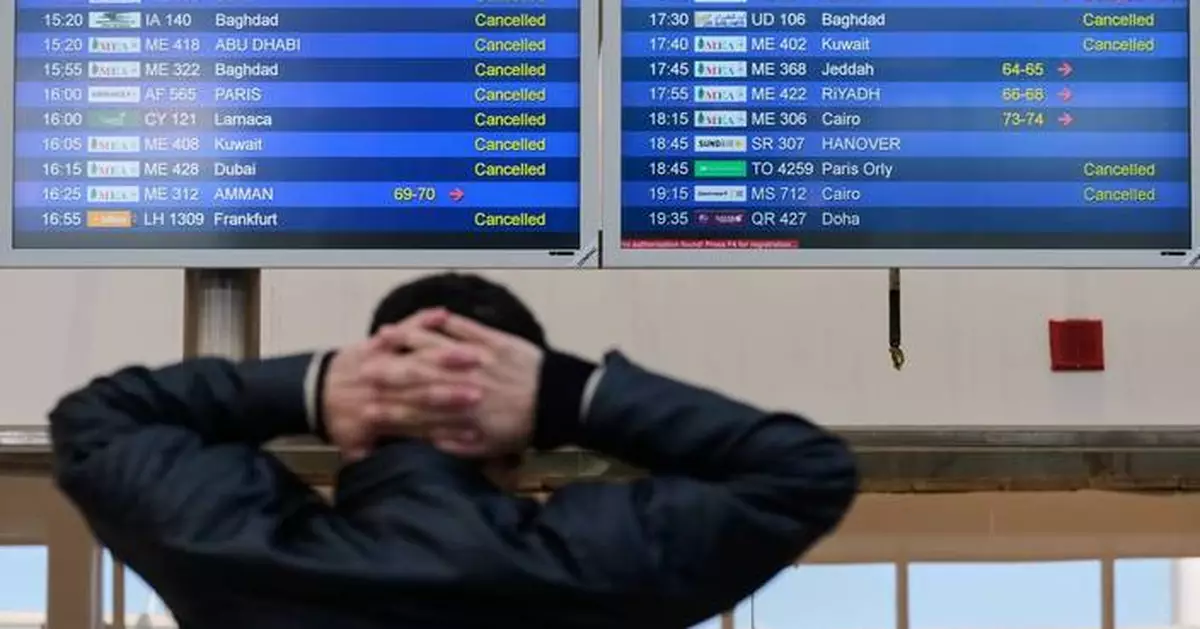
NEW YORK (AP) — The U.S. and Israel's joint war in Iran has already upended travel across the Middle East, stranding tens of thousands of people. And the future is anything but certain.
Experts stress that flights scheduled in the coming days and weeks could continue to see disruptions — causing ripple effects globally, especially as the war widens with retaliatory strikes in the Gulf states. Beyond the Middle East, airports in the Gulf serve as critical hubs connecting travelers going to Europe, Africa and Asia.
Amid airspace closures across the region, many carriers have been forced to either cancel flights or shift to longer routes. That's straining operating costs and ticket prices, both of which could become more expensive if airlines have to pay more for fuel the longer the war drags on. In the near future, experts recommend postponing unnecessary travel if possible, checking refund or insurance policies and, most importantly, monitoring safety advisories.
“This is not a normal delay story. This is a conflict zone airspace story,” said Hassan Shahidi, president and CEO of the Flight Safety Foundation — stressing that halted traffic and guidance from carriers, airports and governments may shift each day, if not by the hour. “Travelers should absolutely expect uncertainty.”
Here's what travelers should know about upcoming trips.
Since the U.S. and Israel launched attacks over the weekend, retaliatory strikes and other developments have unfolded rapidly. Iran says hundreds of people have been killed in the country. For travelers across the region, experts stress the importance of following safety guidance and updates from government officials.
A handful of governments have also issued travel advisories and emergency evacuation orders. The U.S. State Department on Monday urged all U.S. citizens to immediately leave Iran and Israel, as well as Qatar, Bahrain, Egypt, Iraq, Jordan, Kuwait, Lebanon, Oman, the Palestinian territories, Saudi Arabia, Syria, the United Arab Emirates and Yemen using any available commercial transportation — and Secretary of State Marco Rubio pleaded for the media to publicize ways to help Americans evacuate. Meanwhile, countries like China, Italy, France and Germany moved to organize evacuation efforts for their citizens.
Experts like Shahidi say travelers should monitor these travel advisories from governments and embassies to make sure they have the latest information. And because so many people are still stranded amid swaths of cancellations and airspace closures, he added that it’s wise to reconsider or rebook upcoming trips, if possible.
“If travel is optional, consider postponing it,” Shahidi said. “But if it’s necessary, then make sure that you get refundable or changeable fares.”
Travelers should also monitor updates from airports and airlines. Long-haul carriers Etihad Airways and Emirates, based in Abu Dhabi and Dubai, along with Doha-based Qatar Airways all temporarily suspended certain routes — citing airspace closures and safety requirements.
Many airlines are taking refund requests or offering free rebooking — but such options are often limited to specific dates or routes, so it's important for travelers to check carriers' individual websites for more information. For future trips, buying refundable tickets now may provide more flexibility.
Beyond what individual airlines can offer, some may also be seeking travel insurance. But it's important to read the fine print, particularly the exclusions listed under specific policies.
“Acts of war and civil unrest are typically excluded because they’re unpredictable," said Suzanne Morrow, CEO of travel insurance agency InsureMyTrip. Consumers could still buy coverage for delays, she added, but travel insurance is “designed to make you whole," and if an airline does everything to rebook you or offers a refund, you may not have an added claim.
Christina Tunnah, of World Nomads Travel Insurance, reiterates that the majority of her firm's policies excludes coverage for losses resulting from acts of war, although someone might be able to get compensation in certain scenarios — such as if they purchase a “cancel for any reason” plan. Still, the traveler would have to cancel within a certain time frame.
Tunnah adds that once an event is known, it's unlikely to be covered. So if a consumer has not already purchased traveler insurance, many insurers may have added restrictions to impacted destinations.
Beyond cancellations, many carriers are now taking longer routes to avoid closed airspace. Shahidi noted that includes not only closures stemming from this current war but also previous conflicts worldwide.
Navigating these different conflict zones has become increasingly difficult for airlines, because longer routes can be more expensive. It's industry standard for carriers to pay “overflight fees” when flying through other countries' airspace — which there could be more of now. And, of course, longer flights need more fuel.
“Those costs will be passed on to the passengers,” explained Bryan Terry, managing director at Alton Aviation Consultancy. If the conflict continues, he said, travelers should “anticipate that some carriers will likely impose fuel surcharges" or increase existing fees.
Passengers have already reported seeing sky-high ticket prices. Experts say those immediate hikes more likely reflect supply and demand as thousands of flights were canceled in recent days. But the costs of those longer routes — paired with oil prices that have already spiked since the U.S. and Israel launched their attacks — could trickle down to consumers further ahead.
The price of crude oil is a key component for jet fuel, which accounted for about 30% of airlines' operating costs as of 2024, according to research from the International Air Transport Association.
Many routes within the next week are completely sold out or have exorbitant prices for last remaining seats. The market currently shows those costs, while still elevated, are lower for trips booked further out, Terry notes — but, again, if the war drags on or worsens, “those conditions could change at a moment’s notice.”
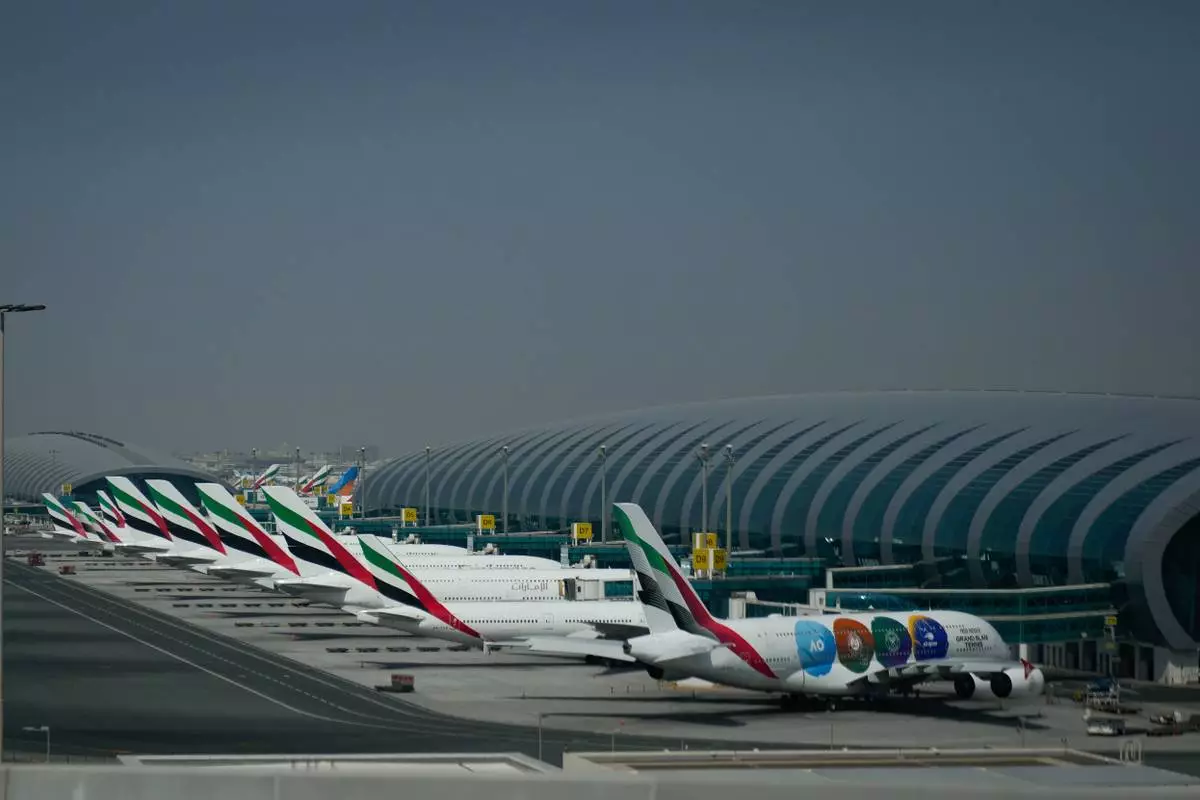
Emirates airplanes are parked at the Dubai International Airport after its closure in Dubai, United Arab Emirates, Sunday, March 1, 2026. (AP Photo/Altaf Qadri)
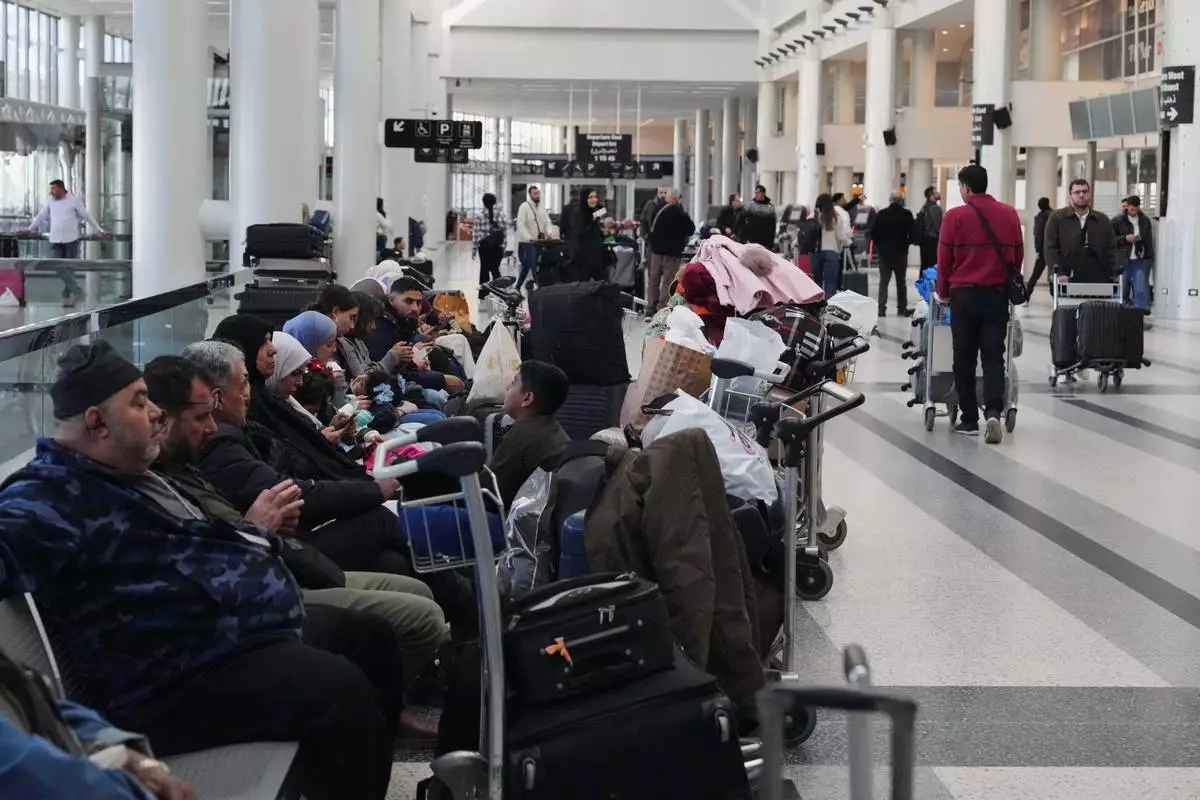
Passengers whose flights were cancelled, wait at the departure terminal of Rafik Hariri International Airport in Beirut, Lebanon, Saturday, Feb. 28, 2026, as many airlines canceled flights due to the conflict involving the United States, Israel and Iran. (AP Photo/Hassan Ammar)
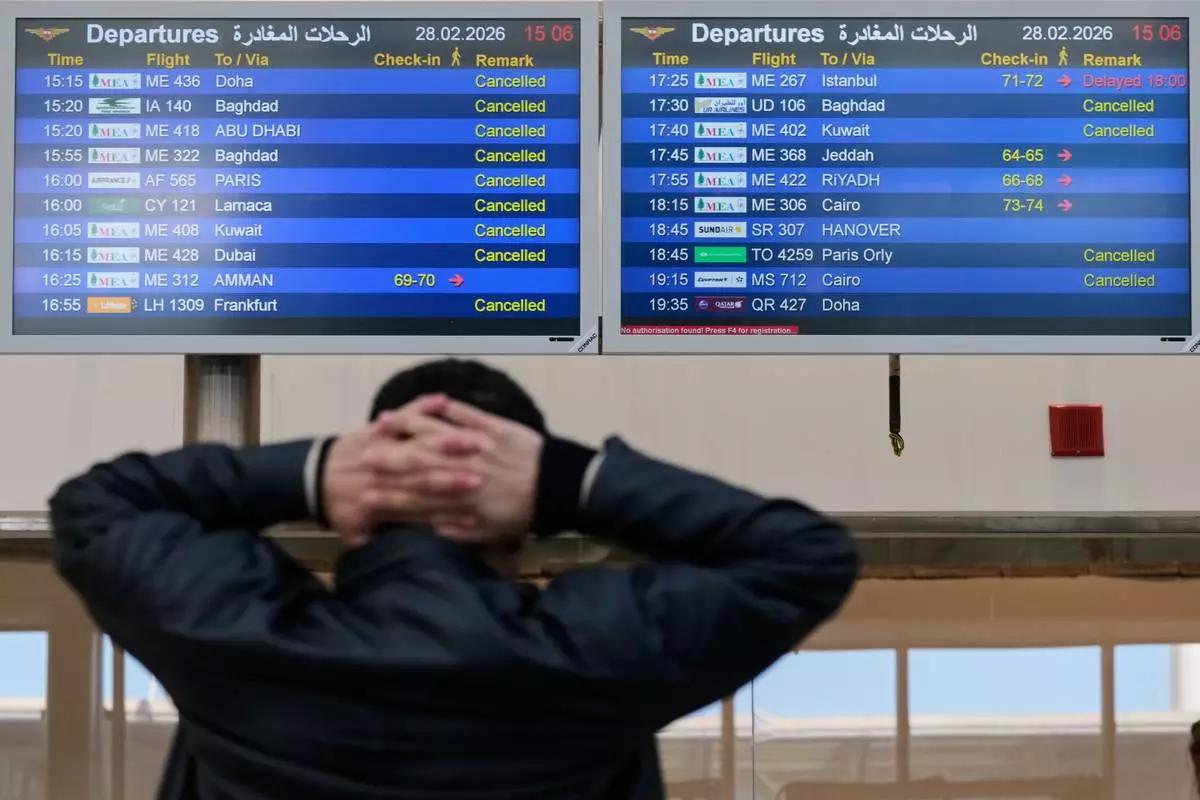
A traveler checks departure times as many flights are cancelled at Beirut Rafik Hariri International Airport in Beirut, Lebanon, Saturday, Feb. 28, 2026, as many airlines canceled flights due to the conflict involving the United States, Israel and Iran. (AP Photo/Hassan Ammar)
DUBAI, United Arab Emirates (AP) — Explosions sounded in Iran's capital on Wednesday as the war with the United States and Israel entered its fifth day, with Israel targeting the Iranian leadership and security forces and the Islamic Republic responding with missile barrages and drone attacks on Israel and across the Persian Gulf region.
The blasts in Tehran came at dawn, according to Iran state television. Israel's military said its air defenses had been activated to intercept Iranian missiles targeting Israel and explosions were heard around Jerusalem.
With Iran's stranglehold on tanker movement through the Strait of Hormuz, the narrow mouth of the Persian Gulf through which about a fifth of the world's oil is shipped, Brent crude prices rose to more than $82 a barrel, up more than 13% since the start of the conflict and at its highest price since July 2024. Global stock markets have been hammered over worries that the spike in oil prices may grind down the world economy and sap corporate profits.
The American Embassy in Saudi Arabia and the U.S. Consulate in the United Arab Emirates came under drone attacks Tuesday, and the U.S. State Department said Wednesday it had authorized non-emergency government personnel to evacuate the kingdom.
U.S. Navy Adm. Brad Cooper, the head of U.S. Central Command, said Iran has launched more than 500 ballistic missiles and 2,000 drones so far. He described the American strikes in the opening hours of the campaign as “nearly double the scale” of the initial attacks during the 2003 U.S.-led invasion of Iraq.
“We’ve already struck nearly 2,000 targets, with more than 2,000 munitions. We have severely degraded Iran’s air defenses and destroyed hundreds of Iran’s ballistic missiles, launchers and drones,” Cooper said in a prerecorded message shared online Wednesday.
“In simple terms, we are focused on shooting all the things that can shoot at us,” he added.
Five days into a war that U.S. President Donald Trump suggested could last a month or longer, nearly 800 people have been killed in Iran, including some Trump said he had considered as possible future leaders of the country.
Israel on Wednesday said it was conducting a series of strikes across Tehran targeting Iranian security forces, the day after it hit a building associated with the clerical panel that will pick Iran’s next supreme leader in the city of Qom.
Air sirens sounded in the morning across the island kingdom of Bahrain, home to the U.S. Navy’s 5th Fleet, and Qatar’s Ministry of Defense said Iran launched two ballistic missiles against it and one hit Al-Udeid Qatari Base, but didn’t cause casualties.
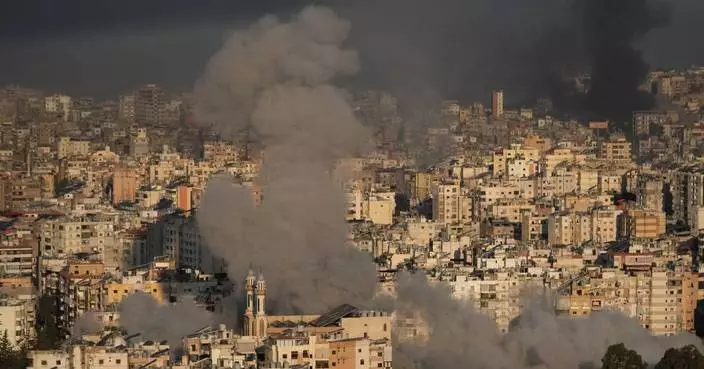
Lebanon was hit in multiple strikes, where Israel said it is retaliating against Hezbollah militants after the Iran-backed group fired on Israel. Lebanon's state-run media reported that at least five people were killed in an Israeli strike that hit a residential complex in the city of Baalbeck. More than 50 people have been killed in Lebanon and more than 300 wounded, according to the Health Ministry.
In addition to Hezbollah, Iranian-linked militant groups in Iraq have been launching attacks, with Saraya Awliya al-Dam claiming responsibility for a drone attack Wednesday on Jordan, where air raid sirens sounded across the country. The Shiite militia group one of several operating in Iraq, and claimed responsibility for attacks in the past days on American targets in Baghdad and Irbil.
Iran has fired regular salvoes of missiles and drones missiles at Israel, though most of the incoming fire has been intercepted. Eleven people in Israel have been killed since the conflict began.
The spiraling nature of the war raised questions about when and how it would end.
Trump's administration has offered various objectives, including destroying Iran’s missile capabilities, wiping out its navy, preventing it from obtaining a nuclear weapon and ensuring it cannot continue to support allied armed groups.
While the initial U.S.-Israeli strikes killed Iranian Supreme Leader Ayatollah Ali Khamenei and Trump urged Iranians to overthrow their government, senior administration officials have since said regime change was not the goal.
Trump on Tuesday seemed to downplay the chances of the war ending Iran's theocratic rule, saying that “someone from within” the Iranian regime might be the best choice to take power once the U.S.-Israel campaign is finished.
Israel’s defense minister said Wednesday on X that whoever Iran picks to be the country’s next supreme leader, he will be “a target for elimination.”
“Every leader appointed by the Iranian terror regime to continue and lead the plan to destroy Israel, to threaten the United States and the free world and the countries of the region, and to suppress the Iranian people — will be a target for elimination,” Israel Katz wrote.
The Israeli military also said it hit buildings in Tehran associated with the Basij, the all-volunteer force of Iran’s paramilitary Revolutionary Guard that conducted the bloody crackdown on protesters in January that killed thousands and saw tens of thousands detained in the country.
Israel and the U.S. have said they want to see the Iranian public overthrow its theocracy.
Iran’s leaders are scrambling to replace Khamenei, who ruled the country for 37 years. It’s only the second time since the 1979 Islamic Revolution that a new supreme leader is being chosen. Potential candidates range from hard-liners committed to confrontation with the West to reformists who seek diplomatic engagement.
Israeli military spokesman Brig. Gen. Effie Defrin said the Israeli military on Tuesday struck a building in the Iranian city of Qom where clerics were expected to meet to discuss selecting a new supreme leader. He said the army was still assessing whether anyone was hit.
The semiofficial Fars and Tasnim news agencies, both believed to be close to Iran’s paramilitary Revolutionary Guard, linked the building to Iran’s Assembly of Experts and said Wednesday there was no meeting ongoing there at the time of the attack. Fars said that the assembly was meeting remotely, without elaborating.
The U.S.-Israeli strikes have killed at least 787 people in Iran, according to the Red Crescent Society.
Kuwait, which had previously reported a single death, said Wednesday that an 11-year-old girl was killed by falling shrapnel as Kuwaiti forces were intercepting “hostile aerial targets.” In addition, three people were killed in the United Arab Emirates and one in Bahrain.
Six U.S. Army Reserve soldiers were killed by a drone strike Sunday on a command center in Port Shuaiba, Kuwait.
Rising reported from Bangkok, and Magdy from Cairo. Elena Becatoros in Athens, Greece, Melanie Lidman in Tel Aviv, Israel, and Giovanna Dell'Orto in Miami contributed to this report.

Andrew Coady and his daughter Keira, right, talk about his son, Sgt. Declan Coady, 20, of West Des Moines, Iowa, outside their home, Tuesday, March 3, 2026, in West Des Moines, Iowa. (AP Photo/Charlie Neibergall)
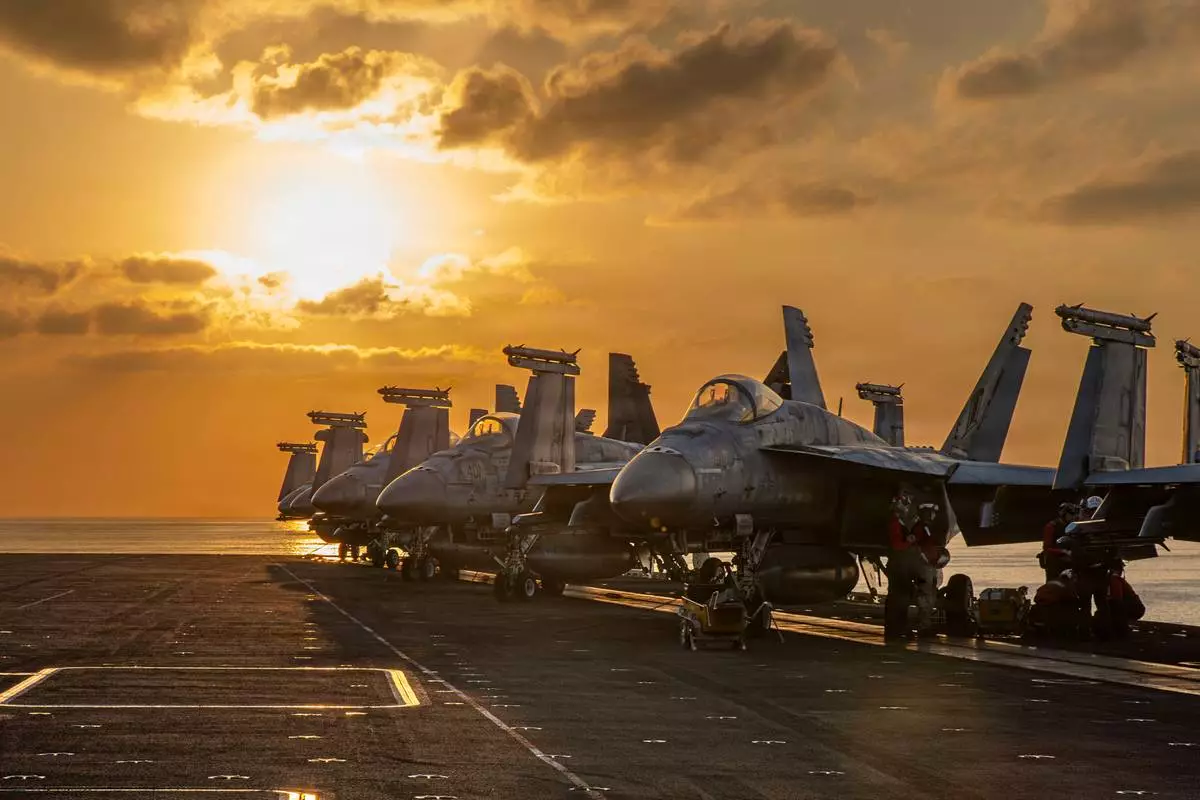
This image provided by U.S. Central Command shows aircraft on the flight deck of the USS Abraham Lincoln (CVN 72) that are operating in support of the war in Iran, on Tuesday, March 3, 2026. (U.S. Navy via AP)
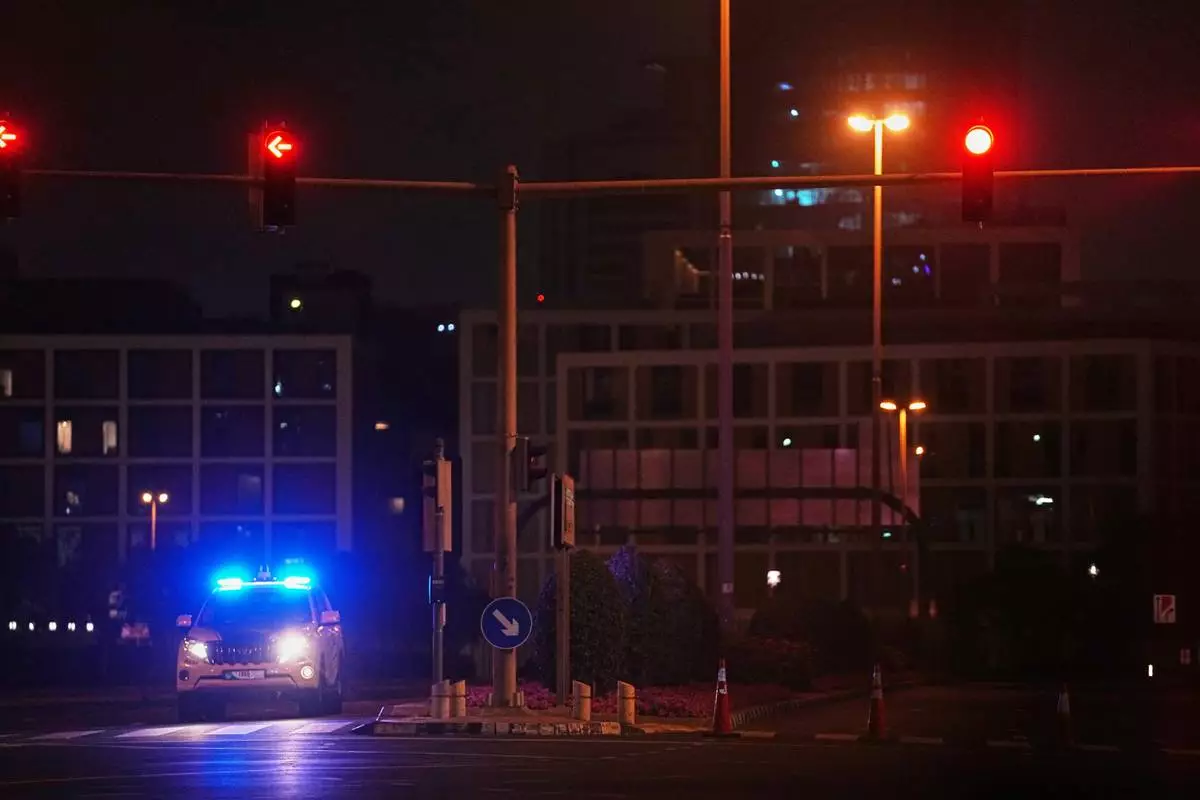
A police car blocks a street leading to the U.S. consulate after an Iranian drone struck a parking lot outside the compound, sparking a small fire in Dubai, United Arab Emirates, early Wednesday, March 4, 2026. (AP Photo/Fatima Shbair)