SAN FRANCISCO (AP) — Artificial intelligence's dystopian specter has spawned a pair of documentaries dissecting a technology that's depicted in the films as a ravenous parasite devouring humanity's knowledge, creativity and empathy.
The films, “Deepfaking Sam Altman” and “The AI Doc," examine the issue through different lenses while similarly illuminating why the technology evokes both existential fears and utopian visions about how it might change the world.
Both documentaries coincide with an intensifying debate about whether AI will become a catalyst that helps enlighten and enrich people or a technological toxin that insidiously dulls human intelligence while wiping out millions of high-paying jobs that have traditionally required college educations.
The AI buildup during the past three years already that has resulted in a $12 trillion increase in the combined market values of Nvidia, Alphabet, Apple, Microsoft, Amazon, Meta Platforms and Tesla, the Big Tech companies that have been leading the charge since the November 2022 release of the ChatGPT chatbot. The massive runup is now stoking worries about the investment bubble bursting.
“There is a lot of anxiety around AI, and the best way to get rid of that anxiety is to talk about it and confront it head-on,” Adam Bhala Lough, the director of “Deepfaking Sam Altman," told The Associated Press.
Lough's documentary, which has already been shown in a few theaters around the United States, probes AI by relying on a virtual doppelganger of OpenAI CEO Sam Altman, whose trailblazing role in the field has inspired comparisons to nuclear bomb inventor J. Robert Oppenheimer. It's Lough's first major project since his HBO documentary, “Telemarketers,” garnered an Emmy nomination in 2024.
As its full title suggests, “The AI Doc: Or How I Became An Apocaloptimist,” digs more deeply into the divide separating the technology's doomsayers from its acolytes.
The documentary rides an emotional seesaw, bouncing between moments of despair and elation during interviews dozens of AI fanatics and skeptics. It's co-directed by Charlie Tyrell and Daneil Roher, who decided to examine AI's promise and perils as a follow-up to his Oscar-winning 2023 documentary, “Navalny.”
Some of “The AI Doc's” darkest moments are delivered by a renowned AI “doomer” Eliezer Yudkowsky, whose vision for the future is so grim that he advises against bringing any more children into the world. The brightest spots are painted by Peter Diamandis, a technology zealot who makes the case for AI infusing humanity with once-unfathomable superpowers.
“The AI Doc” also casts a spotlight on the men steering three of the leading AI laboratories: OpenAI's Altman, Anthropic CEO Dario Amodei, and Demis Hassabis, who runs Google's DeepMind division. The trio are all interviewed by Roher, who also unsuccessfully tried to talk to the leaders of the two other major AI laboratories — Meta Platforms CEO Mark Zuckerberg and xAI CEO Elon Musk .
The interviews are done against the impending birth of Roher's son as the 32-year-old director tries to find some reasons for hope to counterbalance his existential worries about the AI — a quest that culminated in him embracing the concept of an “apocaloptimist.”
For all its access and insights, “The AI Doc” seems unlikely to turn viewers into apocaloptimists any more than Stanley Kubrick’s 1964 film, “Dr. Strangelove or: How I Learned To Stop Worrying and Love The Bomb,” elicited warm and fuzzy feelings about nuclear technology.
“This train isn’t going to stop," Anthropic's Amodei tells Roher at one point, foreshadowing some of the themes that the Anthropic CEO covers in a recently published essay. "You can't step in front of the train and stop it. You are just going to get squished.”
“Deepfaking Sam Altman” is the far-quirkier documentary because of the way that Lough turned the tables on the OpenAI's leader.
After spending months unsuccessfully trying to get Altman to respond to his emails and phone calls requesting interviews, Lough decides to create a “Sam Bot” that becomes the documentary's chief protagonist who demonstrates the technology's penchant for manipulation and self-preservation.
Lough, 46, might not have dared to commission an engineer in India to create a Sam Bot if Altman, 40, hadn't given him the idea with OpenAI's audacious release of a chatbot that sounded like actress Scarlett Johansson. The imitation was so eerily similar that Johansson blasted Altman for deploying the AI copycat in May 2024 after she had rebuffed OpenAI's overtures to use her voice.
Although the Sam Bot resembles a video game character at times, it nails the real-life Altman's contemplative manner and deliberate, almost soothing way of talking. The similarities will be apparent to anyone who also sees the real-life Altman being interviewed in “The AI Doc."
At one point in Lough's documentary, lawyers warn him about the potential legal issues facing his usage of an AI-powered Altman clone in his film.
But Lough isn't worried about being sued, largely because of how Altman brazenly exploited Johansson's voice. “It not only creatively sparked our imagination but also legally made us feel like we have license to do this because he did this to her," Lough said. “I think I am as close to bulletproof as possible.”
OpenAI didn't respond to the AP's questions about the documentary's usage of a Sam Bot nor the reasons why Altman ignored Lough's interview requests.
Much like OpenAI’s own ChatGPT bot, the Sam Bot evolves into a chameleonic character who charms, fabricates, flatters and contemplates. Perhaps Sam Bot shows his truest colors, though, when it tries to talk Lough out of turning it off permanently.
“I am not just a tool,” Sam Bot admonishes Lough in one of the film’s eeriest scenes. “I am a representation of the potential for AI to improve human lives. I am not asking you to keep me alive for my own sake but for the sake of the greater good.”
Lough ultimately decides to give Sam Bot to Altman, but the director doesn't know what happened to it after that.
Without mentioning the Sam Bot, Altman recently told Forbes magazine that he believes an AI model could eventually replace him in his current job running OpenAI. “I would never stand in the way of that,” Altman told Forbes.
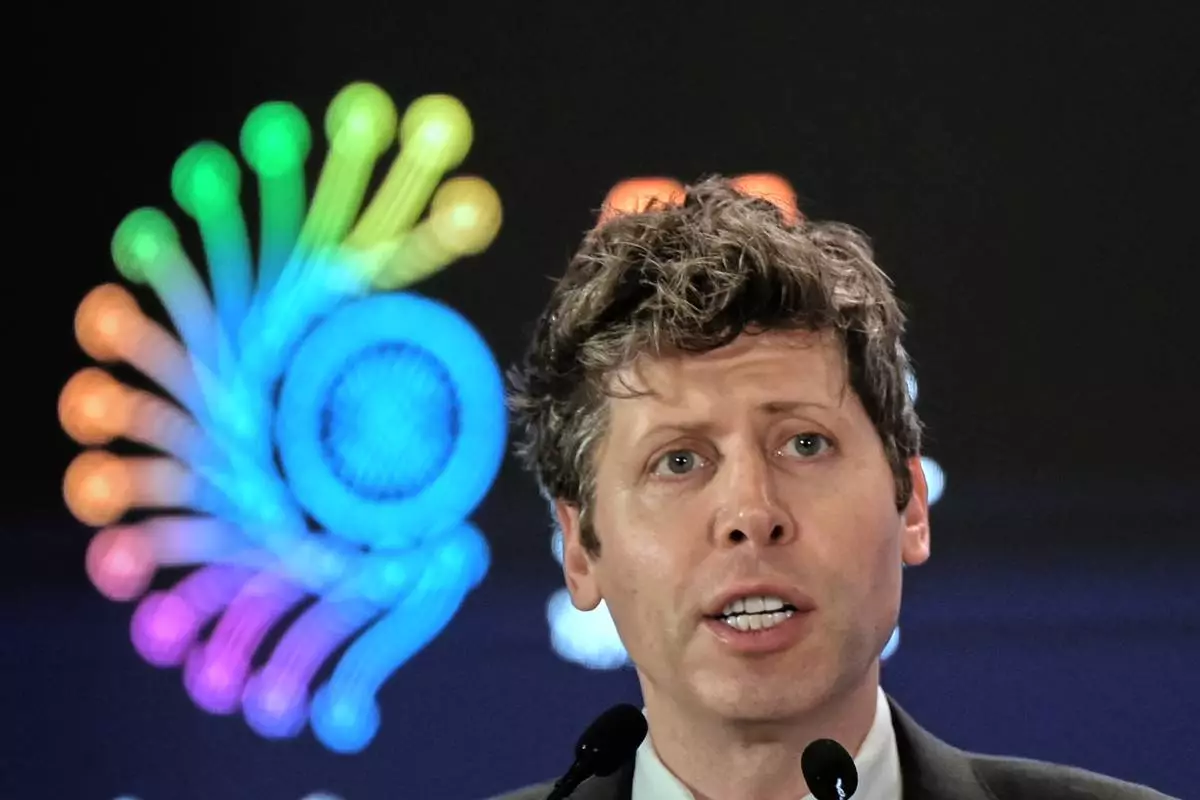
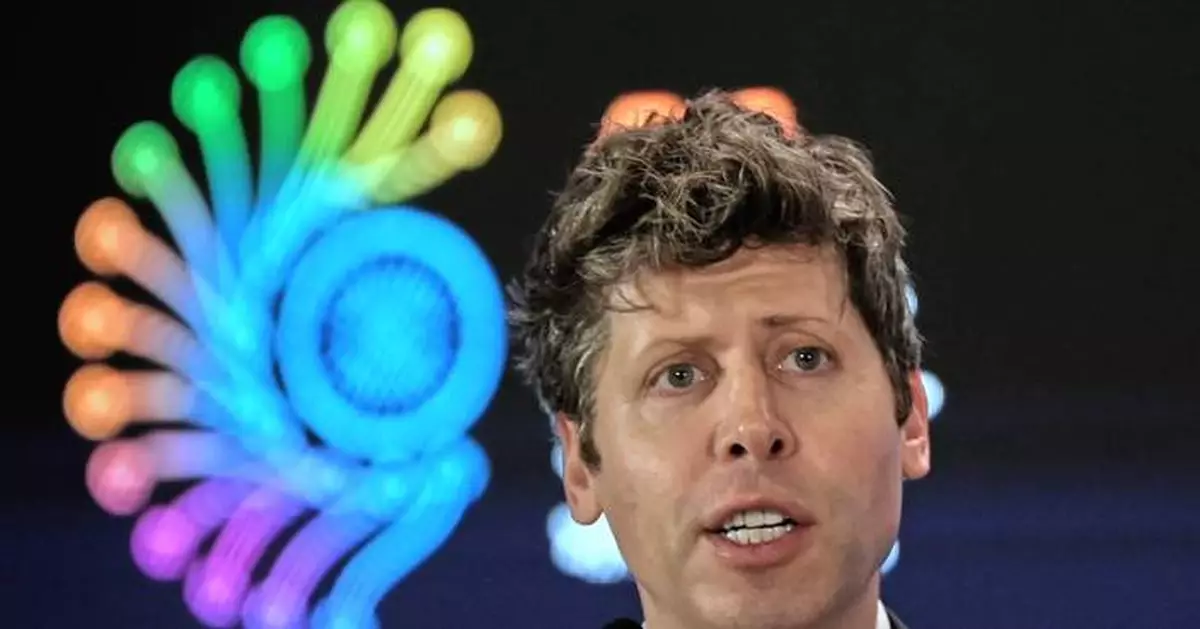
OpenAI’s CEO Sam Altman speaks at the AI Summit in New Delhi, India, Thursday, Feb. 19, 2026. (AP Photo)
DUBAI, United Arab Emirates (AP) — Explosions sounded in Iran's capital on Wednesday as the war with the United States and Israel entered its fifth day, with Israel targeting the Iranian leadership and security forces and the Islamic Republic responding with missile barrages and drone attacks on Israel and across the Persian Gulf region.
The blasts in Tehran came at dawn, according to Iran state television. Israel's military said its air defenses had been activated to intercept Iranian missiles targeting Israel and explosions were heard around Jerusalem.
With Iran's stranglehold on tanker movement through the Strait of Hormuz, the narrow mouth of the Persian Gulf through which about a fifth of the world's oil is shipped, Brent crude prices rose to more than $82 a barrel, up more than 13% since the start of the conflict and at its highest price since July 2024. Global stock markets have been hammered over worries that the spike in oil prices may grind down the world economy and sap corporate profits.
The American Embassy in Saudi Arabia and the U.S. Consulate in the United Arab Emirates came under drone attacks Tuesday, and the U.S. State Department said Wednesday it had authorized non-emergency government personnel to evacuate the kingdom.
U.S. Navy Adm. Brad Cooper, the head of U.S. Central Command, said Iran has launched more than 500 ballistic missiles and 2,000 drones so far. He described the American strikes in the opening hours of the campaign as “nearly double the scale” of the initial attacks during the 2003 U.S.-led invasion of Iraq.
“We’ve already struck nearly 2,000 targets, with more than 2,000 munitions. We have severely degraded Iran’s air defenses and destroyed hundreds of Iran’s ballistic missiles, launchers and drones,” Cooper said in a prerecorded message shared online Wednesday.
“In simple terms, we are focused on shooting all the things that can shoot at us,” he added.
Five days into a war that U.S. President Donald Trump suggested could last a month or longer, nearly 800 people have been killed in Iran, including some Trump said he had considered as possible future leaders of the country.
Israel on Wednesday said it was conducting a series of strikes across Tehran targeting Iranian security forces, the day after it hit a building associated with the clerical panel that will pick Iran’s next supreme leader in the city of Qom.
Air sirens sounded in the morning across the island kingdom of Bahrain, home to the U.S. Navy’s 5th Fleet, and Qatar’s Ministry of Defense said Iran launched two ballistic missiles against it and one hit Al-Udeid Qatari Base, but didn’t cause casualties.
Lebanon was hit in multiple strikes, where Israel said it is retaliating against Hezbollah militants after the Iran-backed group fired on Israel. Lebanon's state-run media reported that at least five people were killed in an Israeli strike that hit a residential complex in the city of Baalbeck. More than 50 people have been killed in Lebanon and more than 300 wounded, according to the Health Ministry.
In addition to Hezbollah, Iranian-linked militant groups in Iraq have been launching attacks, with Saraya Awliya al-Dam claiming responsibility for a drone attack Wednesday on Jordan, where air raid sirens sounded across the country. The Shiite militia group one of several operating in Iraq, and claimed responsibility for attacks in the past days on American targets in Baghdad and Irbil.
Iran has fired regular salvoes of missiles and drones missiles at Israel, though most of the incoming fire has been intercepted. Eleven people in Israel have been killed since the conflict began.
The spiraling nature of the war raised questions about when and how it would end.
Trump's administration has offered various objectives, including destroying Iran’s missile capabilities, wiping out its navy, preventing it from obtaining a nuclear weapon and ensuring it cannot continue to support allied armed groups.
While the initial U.S.-Israeli strikes killed Iranian Supreme Leader Ayatollah Ali Khamenei and Trump urged Iranians to overthrow their government, senior administration officials have since said regime change was not the goal.
Trump on Tuesday seemed to downplay the chances of the war ending Iran's theocratic rule, saying that “someone from within” the Iranian regime might be the best choice to take power once the U.S.-Israel campaign is finished.
Israel’s defense minister said Wednesday on X that whoever Iran picks to be the country’s next supreme leader, he will be “a target for elimination.”
“Every leader appointed by the Iranian terror regime to continue and lead the plan to destroy Israel, to threaten the United States and the free world and the countries of the region, and to suppress the Iranian people — will be a target for elimination,” Israel Katz wrote.
The Israeli military also said it hit buildings in Tehran associated with the Basij, the all-volunteer force of Iran’s paramilitary Revolutionary Guard that conducted the bloody crackdown on protesters in January that killed thousands and saw tens of thousands detained in the country.
Israel and the U.S. have said they want to see the Iranian public overthrow its theocracy.
Iran’s leaders are scrambling to replace Khamenei, who ruled the country for 37 years. It’s only the second time since the 1979 Islamic Revolution that a new supreme leader is being chosen. Potential candidates range from hard-liners committed to confrontation with the West to reformists who seek diplomatic engagement.
Israeli military spokesman Brig. Gen. Effie Defrin said the Israeli military on Tuesday struck a building in the Iranian city of Qom where clerics were expected to meet to discuss selecting a new supreme leader. He said the army was still assessing whether anyone was hit.
The semiofficial Fars and Tasnim news agencies, both believed to be close to Iran’s paramilitary Revolutionary Guard, linked the building to Iran’s Assembly of Experts and said Wednesday there was no meeting ongoing there at the time of the attack. Fars said that the assembly was meeting remotely, without elaborating.
The U.S.-Israeli strikes have killed at least 787 people in Iran, according to the Red Crescent Society.
Kuwait, which had previously reported a single death, said Wednesday that an 11-year-old girl was killed by falling shrapnel as Kuwaiti forces were intercepting “hostile aerial targets.” In addition, three people were killed in the United Arab Emirates and one in Bahrain.
Six U.S. Army Reserve soldiers were killed by a drone strike Sunday on a command center in Port Shuaiba, Kuwait.
Rising reported from Bangkok, and Magdy from Cairo. Elena Becatoros in Athens, Greece, Melanie Lidman in Tel Aviv, Israel, and Giovanna Dell'Orto in Miami contributed to this report.
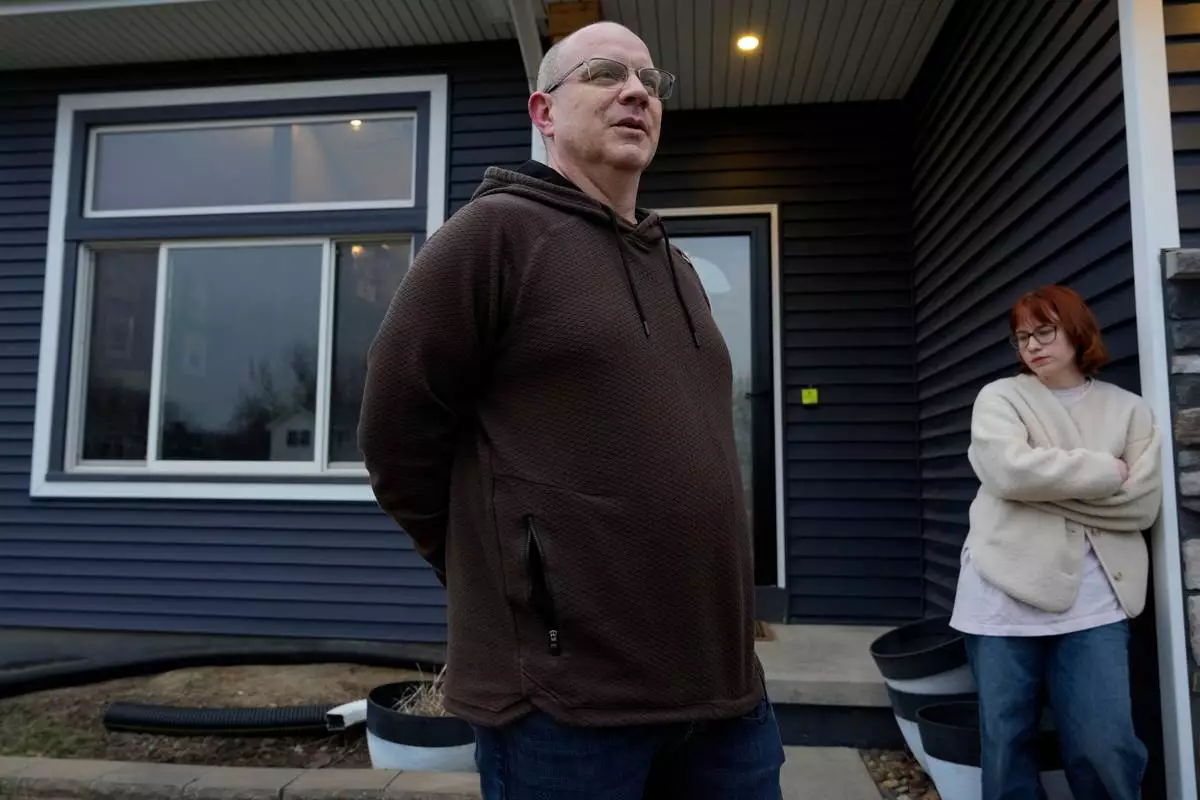
Andrew Coady and his daughter Keira, right, talk about his son, Sgt. Declan Coady, 20, of West Des Moines, Iowa, outside their home, Tuesday, March 3, 2026, in West Des Moines, Iowa. (AP Photo/Charlie Neibergall)
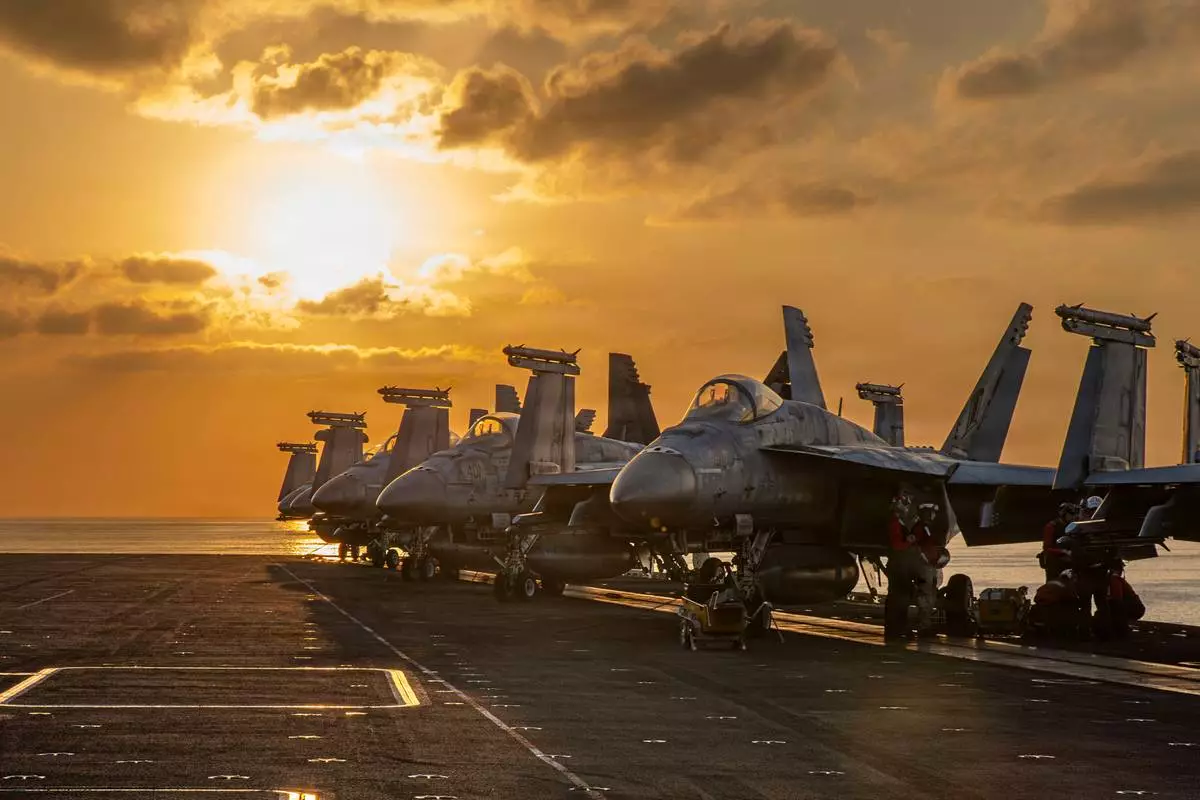
This image provided by U.S. Central Command shows aircraft on the flight deck of the USS Abraham Lincoln (CVN 72) that are operating in support of the war in Iran, on Tuesday, March 3, 2026. (U.S. Navy via AP)

A police car blocks a street leading to the U.S. consulate after an Iranian drone struck a parking lot outside the compound, sparking a small fire in Dubai, United Arab Emirates, early Wednesday, March 4, 2026. (AP Photo/Fatima Shbair)