ANAHEIM, Calif.--(BUSINESS WIRE)--Mar 4, 2026--
WISEcode™, the FoodTechAI™ company focused on ingredient clarity, today announced two major launches at Natural Products Expo West: the Non-UPF Shield™, a verification program for brands, and the redesigned WISEcode UPF Detector mobile app experience that gives consumers instant visibility if a product is ultra-processed or not.
This press release features multimedia. View the full release here: https://www.businesswire.com/news/home/20260304427921/en/
Both are powered by the company’s newly formalized WISEcode UPF™ Standard, an ingredient-level framework designed to bring clarity and consistency to how ultra-processed foods are defined and evaluated.
The WISEcode platform analyzes more than 840,000 packaged food products across 15,000 attributes, creating one of the most comprehensive food intelligence systems available today.
The Non-UPF Shield™: A Practical Pathway for Brands
The Non-UPF Shield™ is a verification mark for brands seeking to demonstrate that a product meets WISEcode’s non-ultra-processed threshold. Additionally, it is access to a platform that aims to elevate Non-UPF foods in the mobile consumer app and with retailers.
Unlike traditional certification programs that require extensive paperwork and manual reviews, the Non-UPF Shield is powered by WISEcode’s pre-built ingredient database and automated review system, using public ingredient lists and its scientific database to make verification faster, more transparent, and easier for brands, without relying on hidden paperwork or opaque audits. Most verifications can be completed instantly, with limited cases requiring additional review. To mark Expo West, WISEcode is extending a limited-time offer to a select number of brands on a first-come, first-served basis, providing the first SKU verified free for one year with three or more submissions, and 50% off additional SKUs at $100 per SKU for the first year, versus the standard $200 annual rate.
For brands, the Shield is more than a mark. When a product does not meet Non-UPF thresholds, WISEcode identifies the specific ingredients and processing techniques driving that outcome in order to assist brands in their reformulation efforts. The company works directly with CPG partners to assess individual SKUs and broader product portfolios, delivering structured reports that outline processing drivers, benchmarking insights, and clear pathways toward Non-UPF qualification.
Initial participants include Blue Zones Kitchen, OKO, and more, with broader enrollment open now.
A Consumer App That Makes Processing Visible
Beginning Wednesday, March 4th, the WISEcode mobile app will place ultra-processed food classification at the center of the user experience. When shoppers scan a product, the app immediately displays if the product is ultra-processed or not under the WISEcode Standard and explains the ingredients contributing to that classification in plain language.
Products that meet Non-UPF criteria display a clear verification badge within the app. Ingredient clarity and contextual summaries help consumers understand not just what is in their food, but how it was manufactured.
“Awareness of ultra-processed food is rising, but shoppers still struggle to identify it consistently,” said Dr. Richard Black, Chief Scientific Officer at WISEcode. “Our goal is to make processing visible and understandable in seconds.”
The WISEcode UPF™ Standard
At the core of both launches is the WISEcode UPF™ Standard, a structured framework designed to clearly define ultra-processed food.
While public discussions often rely on broad categories or simple ingredient exclusions, the WISEcode Standard evaluates individual ingredients, considers the degree of refinement, accounts for added sugar contribution, and flags industrial additives associated with heavy processing or potential health consequences. Products are classified across five levels: Minimal, Light, Moderate, Ultra, or Super-Ultra Processed.
“We believe food transparency requires clear standards that work in the real world,” said Peter Castleman, Founder and CEO of WISEcode. “Consumers need clarity. Brands need consistency. Our Standard was built to support both.”
Building Infrastructure for the Next Era of Food Transparency
As regulators and industry groups continue working toward shared definitions of ultra-processed food, WISEcode has introduced a framework designed for immediate use. By combining ingredient-level evaluation with scalable technology, the company is translating ultra-processed food classification into practical infrastructure for both consumers and manufacturers.
“Food systems are at a tipping point,” Castleman added. “The question is not whether ultra-processed foods matter. It is how we define them clearly and apply that definition consistently. That is what we are building.”
Attendees can experience the new app interface and learn more about the Non-UPF Shield™ at ACC Level 3, Booth 8813 at Natural Products Expo West in Anaheim. The updated WISEcode UPF Detector app will be available in the Apple App Store and Google Play beginning March 4th.
About WISEcode™
WISEcode™ is a Food Intelligence Platform™, analyzing more than 840,000 products across 15,000+ attributes to deliver precision transparency into what is in our food. The company is pioneering ingredient-level ultra-processed food classification for consumers, brands, and policymakers, transforming complex food data into clear, actionable insight.
Truth in Every Bite™
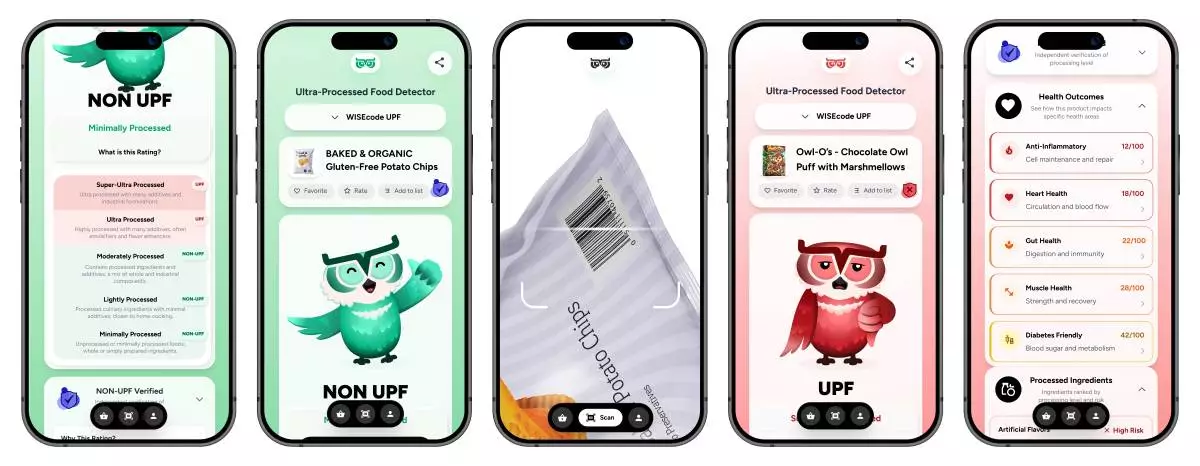
WISEcode App

WISEcode Non-UPF Shield™
WASHINGTON (AP) — The Senate is headed toward a vote Wednesday on President Donald Trump's decision to embark on a war against Iran, an extraordinary test in Congress for a conflict that has rapidly spread across the Middle East with no clear U.S. exit strategy.
The legislation, known as a war powers resolution, gives lawmakers an opportunity to demand congressional approval before any further attacks are carried out. The Senate resolution and a similar bill being voted on in the House later this week face unlikely paths through the Republican-controlled Congress and would almost certainly be vetoed by Trump even if they were to pass.
Nonetheless, the votes marked a weighty moment for lawmakers. Their decisions on the five-day-old war — which Trump entered without congressional approval — could determine the fates of U.S. military members, countless other lives and the future of the region.
“Today every senator — every single one — will pick a side," said Senate Democratic Leader Chuck Schumer during a floor speech. “Do you stand with the American people who are exhausted with forever wars in the Middle East or stand with Donald Trump and Pete Hegseth as they bumble us headfirst into another war?”
After launching a surprise attack against Iran on Saturday, Trump has scrambled to win support for a conflict that Americans of all political persuasions were already wary of entering. Trump administration officials have been a frequent presence on Capitol Hill this week as they try to reassure lawmakers that they have the situation under control.
Defense Secretary Pete Hegseth said Wednesday that the war could extend eight weeks, a longer time frame than has previously been floated by the Trump administration. He also acknowledged that Iran is still able to carry out missile attacks even as the U.S. tries to control the country's airspace.
U.S. service members “remain in harm’s way, and we must be clear-eyed that the risk is still high,” Gen. Dan Caine, chairman of the Joint Chiefs of Staff, said at the same press conference.
Six U.S. military members were killed over the weekend in a drone strike in Kuwait.
Trump has also not ruled out deploying U.S. ground troops. He has said he is hoping to end the bombing campaign within a few weeks, but his goals for the war have shifted from regime change to stopping Iran from developing nuclear capabilities to crippling its navy and missile programs.
Sen. John Barrasso, second in Senate Republican leadership, said GOP senators would send a message that Democrats are “wrong” for forcing a vote on the war powers resolution.
“Democrats would rather obstruct Donald Trump than obliterate Iran's national nuclear program,” he added.
Republican Sen. Joni Ernst of Iowa acknowledged the human costs of the war in her floor speech. One of the soldiers killed Sunday was from Iowa and a National Guard unit from her state was also attacked in Syria in December, resulting in the deaths of two other soldiers.
“But now is our opportunity to bring an end to the decades of chaos,” said Ernst, who herself served as an officer in the Iowa National Guard for two decades.
“The sooner the better,” she added.
Almost all Republican senators were readying to vote Wednesday against the war powers resolution to halt military action, but a number still expressed hesitation at the idea of troop deployments.
“I don’t think the American people want to see troops on the ground,” said Sen. Bill Cassidy, R-La., as he exited a classified briefing Tuesday. He added that Trump administration officials “left open that possibility,” but it wasn't an option they were emphasizing.
Republican Sen. Todd Young, who told reporters earlier this week he was undecided on the legislation, released a statement Wednesday morning saying that now that the U.S. has entered the war, the danger "will only grow if we limit the president's military options at this critical moment."
He called for lawmakers to conduct oversight and evaluate any requests from the administration for more wartime funding or authorities.
The votes in Congress this week represented potentially consequential markers of just where lawmakers stand on the war as they look ahead to midterm elections and the consequences of the conflict.
“Nobody gets to hide and give the president an easy pass or an end-run around the Constitution,” said Sen. Tim Kaine, the Virginia Democrat leading the war powers resolution. “Everybody's got to declare whether they're for this war or against it.”
Republican leaders have successfully, though narrowly, defeated a series of war powers resolutions pertaining to several other conflicts that Trump has entered or threatened to enter. This one, however, is different.
Unlike Trump's military campaigns against alleged drug boats or even Venezuelan leader Nicolás Maduro, the attack on Iran represents an open-ended conflict that is already ricocheting across the region. For Republicans who are used to operating in a political party dominated by Trump and his promises of keeping the U.S. out of foreign entanglements, the moment represented a bit of whiplash.
“War is ugly, it always has been ugly, but we're taking out a regime that has been trying to attack us for quite some time,” said Sen. Markwayne Mullin, an Oklahoma Republican.
Meanwhile, Sen. Lindsey Graham, a South Carolina Republican who has long pushed Trump to engage overseas, argued that the widening conflict represented an opportunity for Arab and European countries to join in the fight against Iran and the militant groups it supports.
“I don’t mind people being on record as to whether or not they think this is a good idea,” he told reporters, but also argued that too much power over the military was ceded to Congress in the War Powers Act, which mandates that presidents must withdraw troops from a conflict within 90 days if there is no congressional authorization.
On the other side of the Capitol, House leaders were also readying for an intense debate over the war followed by a vote Thursday.
“I do believe we have the votes to defeat it, I certainly hope we do,” House Speaker Mike Johnson said after an all-member briefing on Tuesday night. Republican leaders were pushing to the floor their own counter-programming resolution that asserts that Iran is ”the largest state sponsor of terrorism."
Meanwhile, House Democratic leader Hakeem Jeffries said he expected a strong showing from Democrats in favor of the war powers resolution. At a news conference Wednesday, several Democratic members who are veterans of the Iraq and Afghanistan wars spoke about the heavy costs of those conflicts.
One of them was Rep. Jason Crow, D-Colo. “I learned when I was fighting in Iraq and Afghanistan, that when elites in Washington bang the war drums, pound their chest, talk about the costs of war and act tough, they're not talking about them doing it, they're not talking about their kids,” Crow said. “They're talking about working class kids like us.”
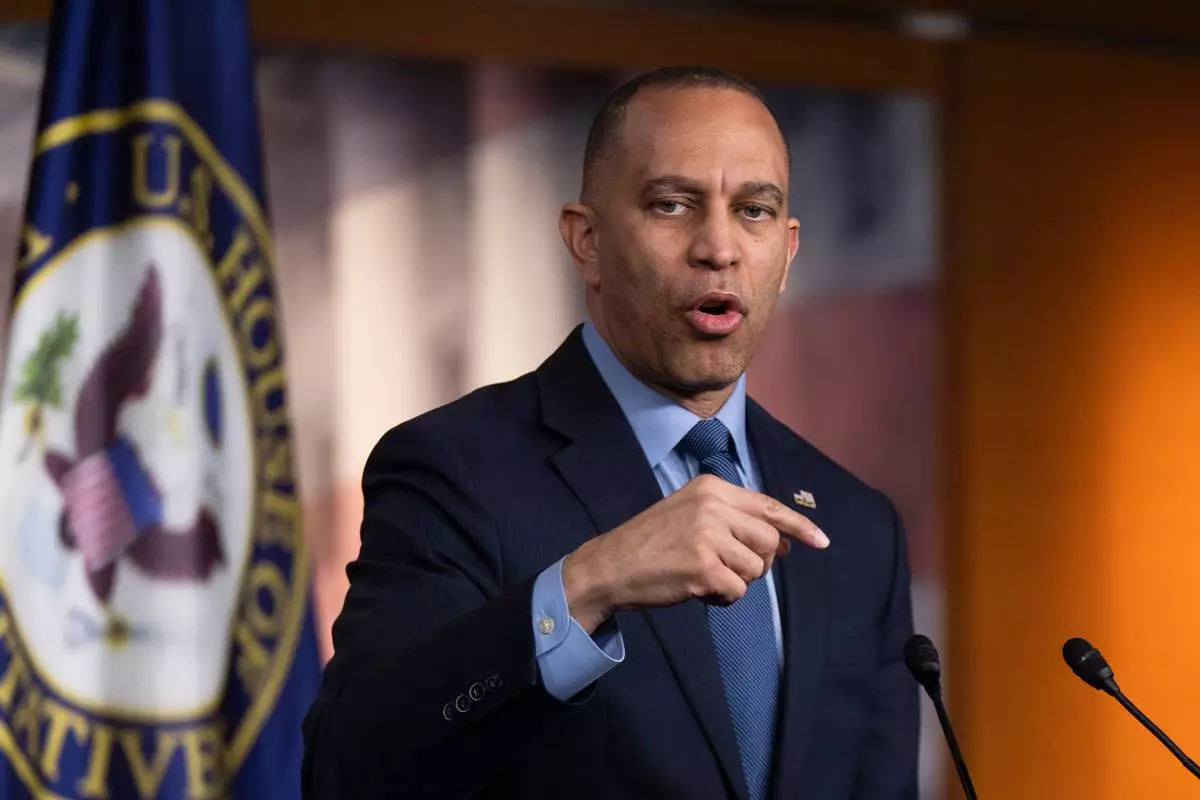
House Minority Leader Hakeem Jeffries, D-N.Y., speaks to reporters during a news conference on Capitol Hill in Washington, Tuesday, March 3, 2026. (AP Photo/Manuel Balce Ceneta)

Defense Secretary Pete Hegseth arrives for a briefing for lawmakers on Iran at a secure room in the basement of the Capitol in Washington, Tuesday, March 3, 2026. (AP Photo/J. Scott Applewhite)
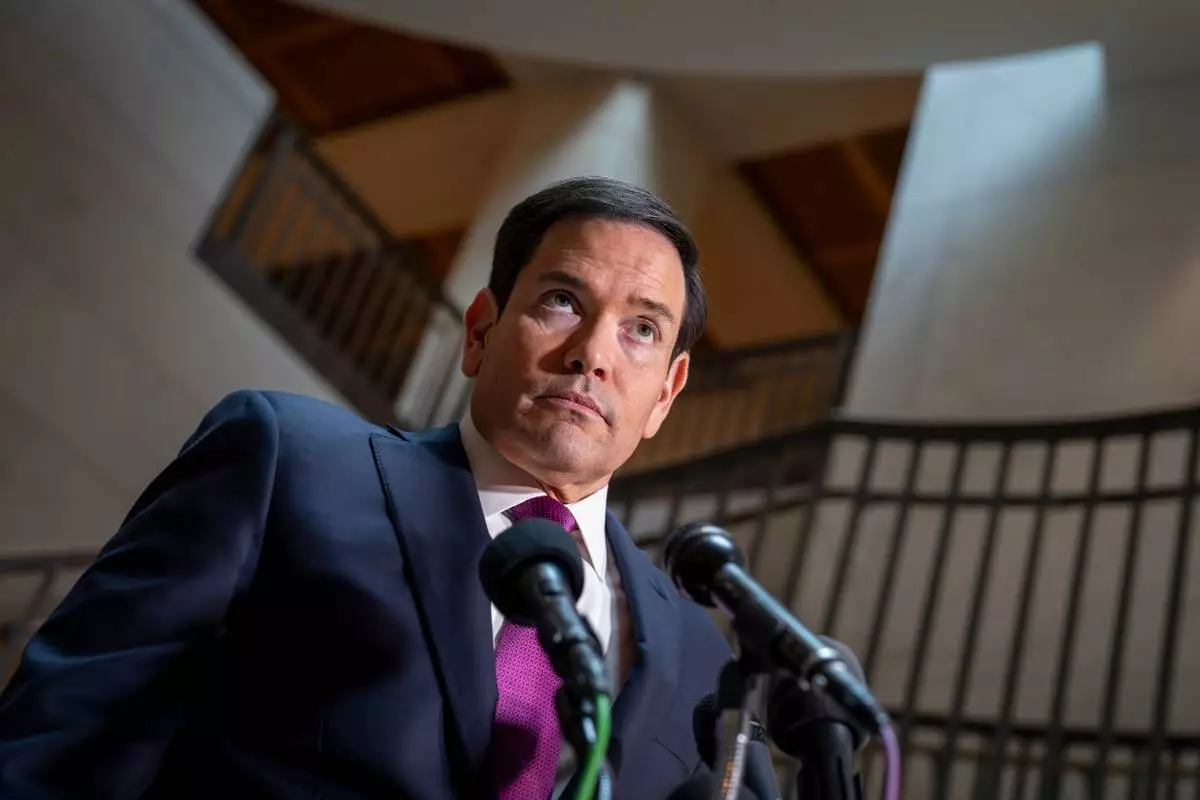
Secretary of State Marco Rubio speaks to reporters as he arrives for an intelligence briefing with top lawmakers on Iran, at the Capitol in Washington, Monday, Mar. 2, 2026. (AP Photo/J. Scott Applewhite)
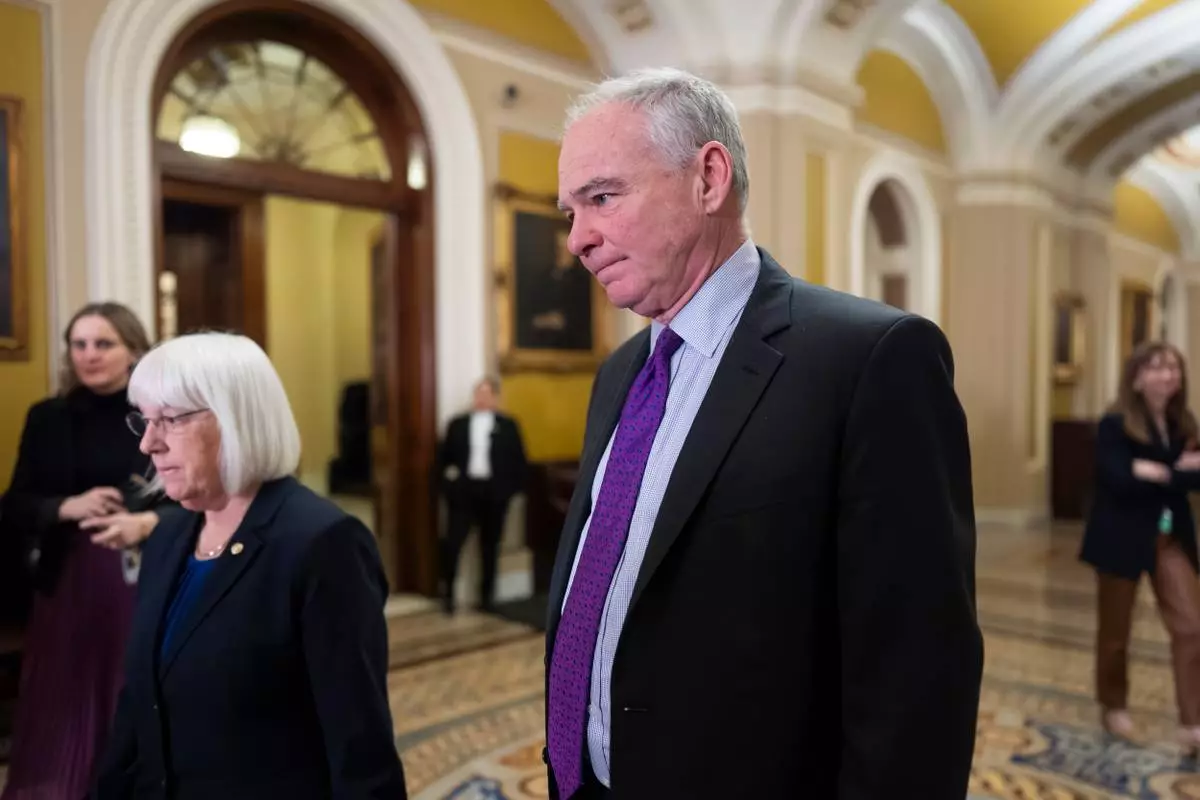
Sen. Tim Kaine, D-Va., center, and Sen. Patty Murray, D-Wash., left, arrive to speak with reporters at the Capitol in Washington, Tuesday, March 3, 2026. Kaine is leading an effort to advance a swift vote on a war powers resolution that would restrain President Donald Trump's military attack on Iran. (AP Photo/J. Scott Applewhite)
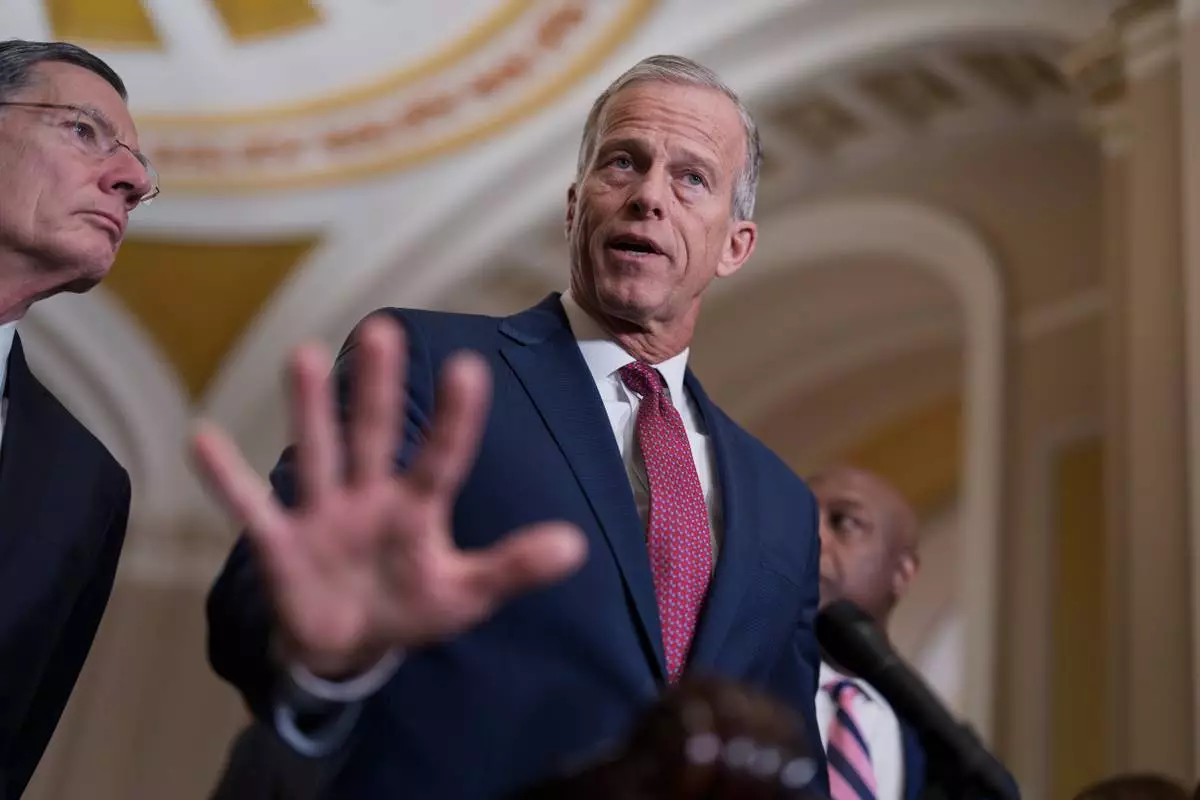
Senate Majority Leader John Thune, R-S.D., center, joined at left by Sen. John Barrasso, R-Wyo., the GOP whip, speaks to reporters at the Capitol in Washington, Tuesday, March 3, 2026. (AP Photo/J. Scott Applewhite)
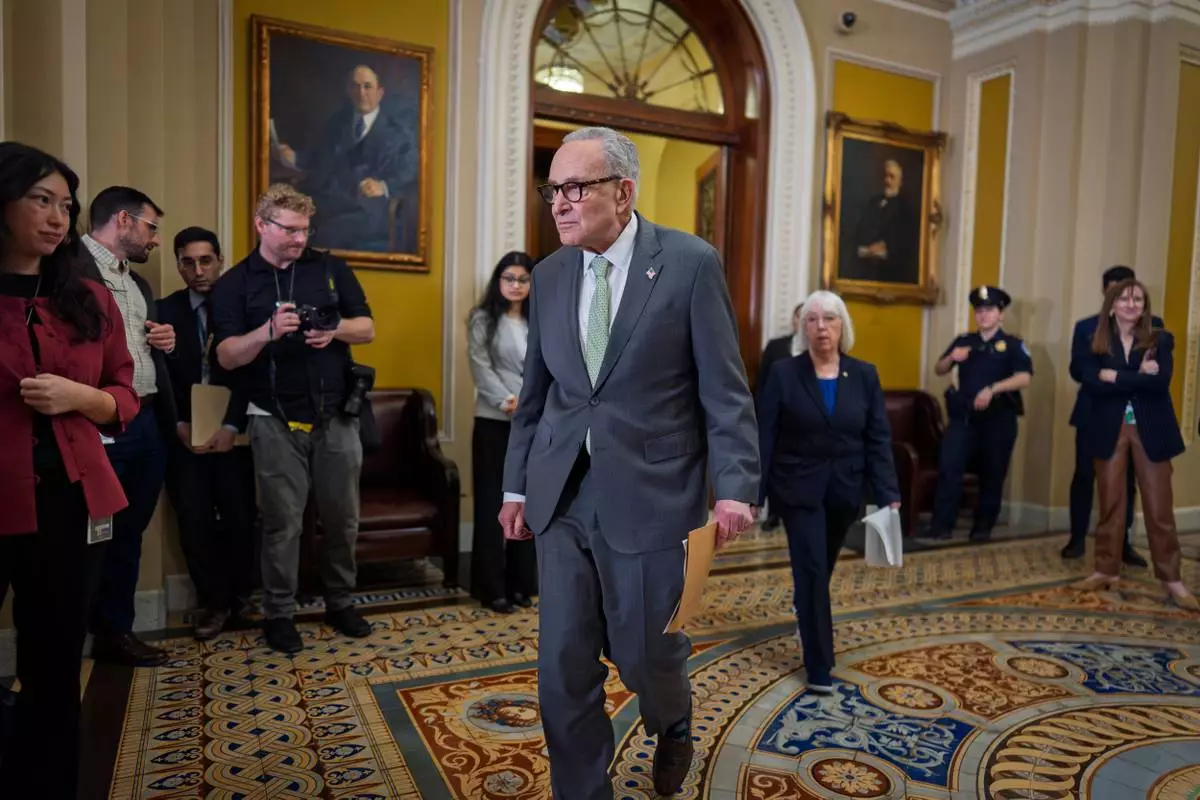
Senate Minority Leader Chuck Schumer, D-N.Y., arrives to speak with reporters at the Capitol in Washington, Tuesday, March 3, 2026. (AP Photo/J. Scott Applewhite)