LAUSANNE, Switzerland (AP) — American figure skater Ilia Malinin was awarded the Milan Cortina Olympics fair play award on Thursday for his sportsmanship after finishing off the podium.
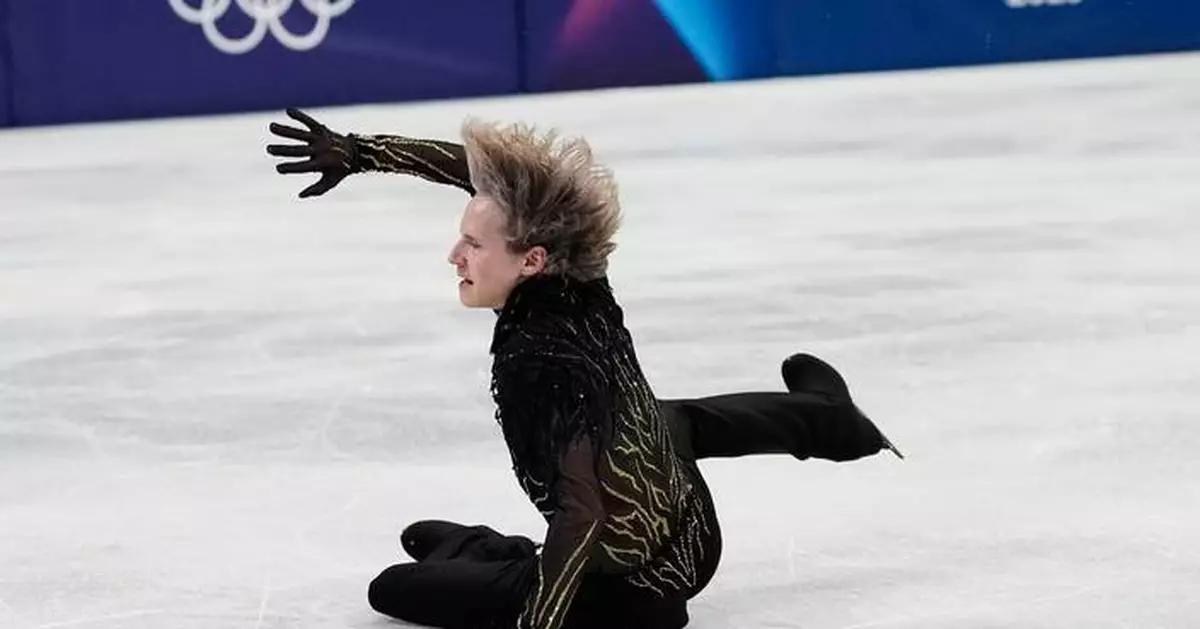
In one of the biggest upsets in figure skating history, the 21-year-old Malinin fell twice and made other big mistakes in the free skate and Kazakh Mikhail Shaidorov won the men's gold medal. Malinin later said the pressure leading up to the event and the abuse he received online was unbearable.
Despite his own despair at dropping from gold medal favorite to eighth place, he still took the time to congratulate and warmly embrace Shaidorov, who was only in fifth place after the short program led by Malinin.
“Congratulating Mikhail wasn’t about the results,” Malinin told the International Olympic Committee. “It was about the shared journey we take as athletes. Knowing that fans worldwide connected with that moment means more to me than any medal.”
Malinin’s grace in defeat was shortlisted alongside five other finalists by the International Fair Play Committee, in collaboration with the IOC, to recognise acts of sportsmanship, integrity and solidarity witnessed during the Games. The public then voted for Malinin as the winner.
The inaugural Fair Play Award was presented at the Innsbruck Games in 1964 to Italian bobsledder Eugenio Monti. He loaned British pair Tony Nash and Robin Dixon an axle bolt to replace one that broke and they won gold in the two-man event, while Monti collected bronze.
AP Winter Olympics: https://apnews.com/hub/milan-cortina-2026-winter-olympics
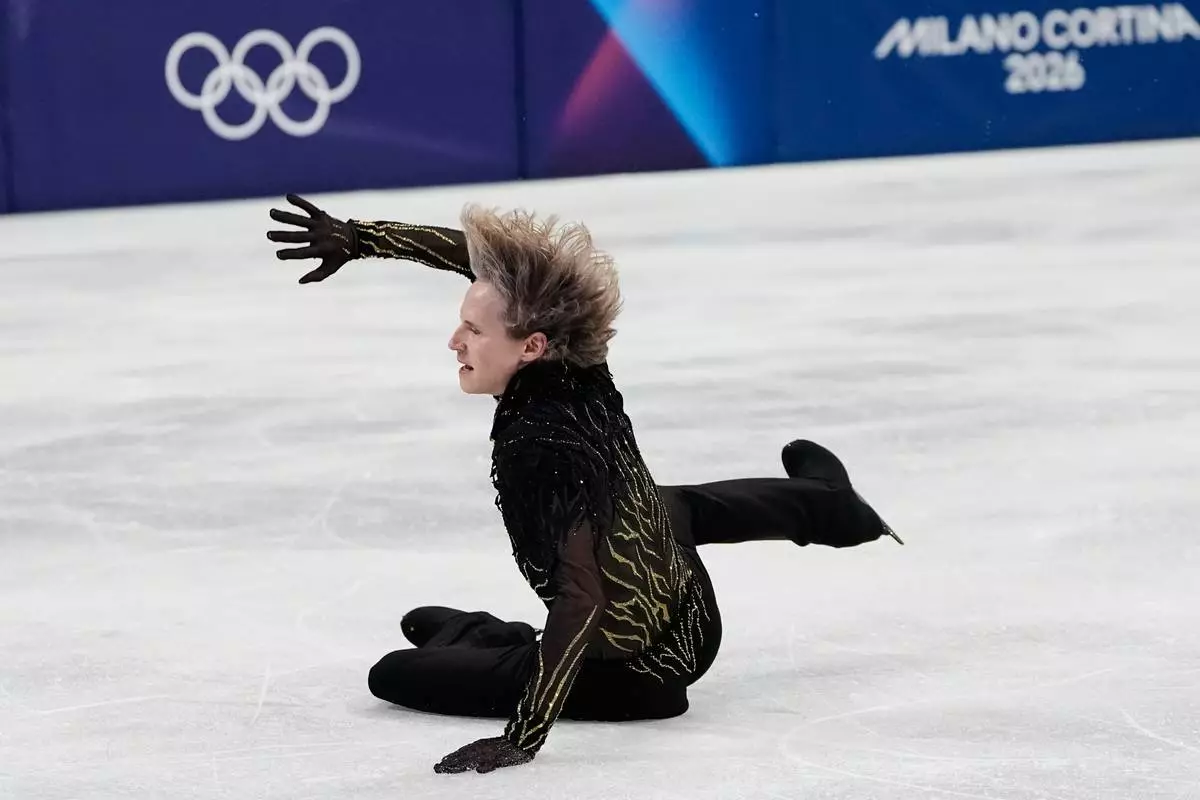
FILE - Ilia Malinin of the United States falls during the men's free skate program in figure skating at the Winter Olympics, in Milan, Italy, Feb. 13, 2026. (AP Photo/Natacha Pisarenko, File)
BARCELONA, Spain (AP) — Spain's Pedro Sánchez has once again emerged as Europe's most consistently vocal critic of U.S. President Donald Trump, drawing his ire for refusing to allow the American military to stage operations for its attacks on Iran from Spanish military bases.
Trump lashed out at the Spanish prime minister on Tuesday, saying he would “ cut off all trade with Spain " in retaliation for the affront. The spat intensified the next day when Spain's foreign minister contradicted a claim by the White House press secretary that Spain had heard Trump's message “loud and clear" and was cooperating with the U.S. military.
While denouncing the repressive regime in Tehran, Sánchez said he would not back a war that he said was an unjustified assault.
“We are not going to be complicit in something that is bad for the world and is also contrary to our values and interests, just out of fear of reprisals from someone,” Sánchez said, using the slogan “No to the war” in a speech this week.
The tussle over the Spanish military bases is likely more a diplomatic question than one of military consequence. The U.S. has bases across Europe and the Middle East, and other European countries have agreed to cooperate.
Madrid and Washington have had stable, friendly and mostly low-key relations for decades, starting in the 20th century when the U.S. began sharing military bases with Spain when the latter was still under the dictatorship of Francisco Franco.
Sánchez, 54, first took power in 2018 and is one of Europe's most prominent left-leaning leaders.
He has stuck by the pillars of progressive politics, defending feminism, authorized immigration, human rights, the rules-based international order and the importance of climate change — all topics that have become punching bags of Trump’s MAGA movement and far-right politicians in many European neighbors.
Even before the Iran war, Sánchez has stood out as an ideological rival to Trump on a number of issues.
Sánchez has been among the most vocal critics of Israel’s military action in Gaza. He has consistently criticized the massive civilian causalities from Israel's campaign following Hamas’ surprise attack on Israeli territory in 2023.
“This is not self-defense, it’s not even an attack — it’s the extermination of a defenseless people," he said, while touring Europe and the Middle East to try to broker a peace deal.
Among NATO members, Spain was the only country to refuse to agree to commit to increasing military spending to 5% of gross domestic product. Sánchez secured a last-minute exemption in a NATO meeting last year, saying that Spain will only spend up to 2.1%, which he called “sufficient and realistic.”
Trump responded by floating the idea that Spain should be kicked out of the military bloc. That has so far remained a veiled threat.
While many European countries raised barriers at their borders and the Trump administration broadened an immigrant crackdown in the U.S., Spain is in the process of granting work and residency permits to half a million foreigners already in Spain.
Sánchez has pointedly alluded to Trump as he extolled the benefits of migration for the country’s strong economy.
“MAGA-style leaders may say that our country can’t handle taking in so many migrants — that this is a suicidal move, the desperate act of a collapsing country," he wrote in a recent New York Times op-ed. "But don’t let them fool you. Spain is booming.”
Under Sánchez, Spain has joined countries like Australia and France in trying to curb the use of social media among younger teens. That’s in direct contrast to the Trump administration’s embrace of Big Tech companies and what they consider the defense of the freedom of speech on social media.
Elon Musk, X’s owner, lashed out at the Spanish leader last month, calling Sánchez “the true fascist totalitarian” after he announced a plan to prohibit under 16-year-olds from accessing social media accounts.
AP journalist Suman Naishadham contributed from Madrid.
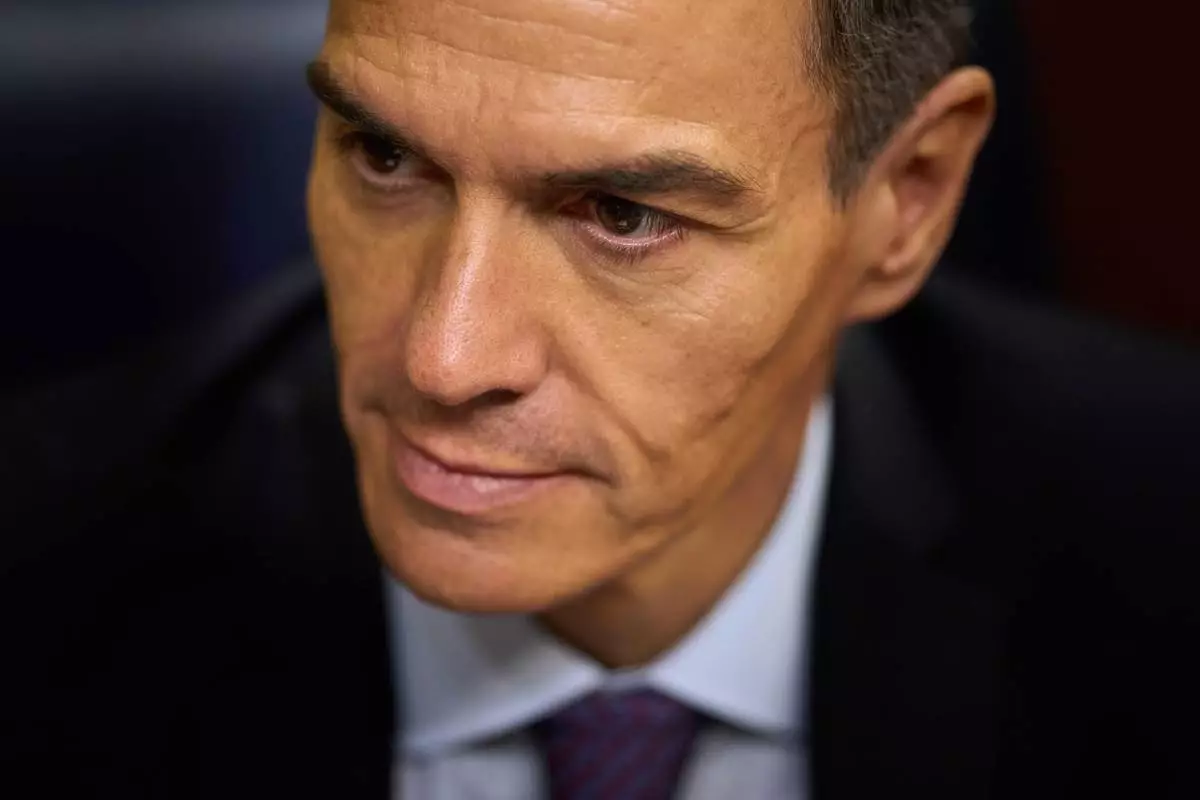
FILE - Spanish Prime Minister Pedro Sanchez attends a session of parliament in Madrid, Wednesday, July 9, 2025. (AP Photo/Bernat Armangue, File)