China is mobilizing all sectors of society - government, corporate, and community - to build a "childcare-friendly society" in recent years to grapple with a declining birth rate.
A series of initiatives has been launched as the government places greater emphasis on addressing the challenges of population aging and low fertility - issues now shared by many countries.
For example, every weekday, Wang Changming, an employee at JD.com, brings his two-year-old son to work, taking advantage of the company's in-house childcare center. The half-hour commute has become a cherished daily ritual for the family.
But for many other working parents in China, mornings are more like a race. They drop their children at daycare and rush straight back to work. Grandparents once helped, but as families move to big cities, that comfort no longer exists.
Wang appreciates the small but impactful service his company provides, making his daily life lighter.
"We really needed this. Balancing work and kids is hard," said Wang.
One is at school, the other at work, both growing under one roof. This sort of image is still rare in China, but quietly gaining ground.
In 2023, China saw around 9 million newborns, with a birth rate of roughly six per 1,000 people, less than half the rate recorded in 2016.
Behind the number lies the struggle young people face between self-fulfillment and starting a family.
To resolve this tension, the country is now weaving a new social fabric - one that makes raising children a shared effort, not a private struggle. Yet corporate childcare is only one part of the solution; another is community.
Educational pressures continue to be a major hurdle for families considering children. And nothing exposes that tension more sharply than homework time.
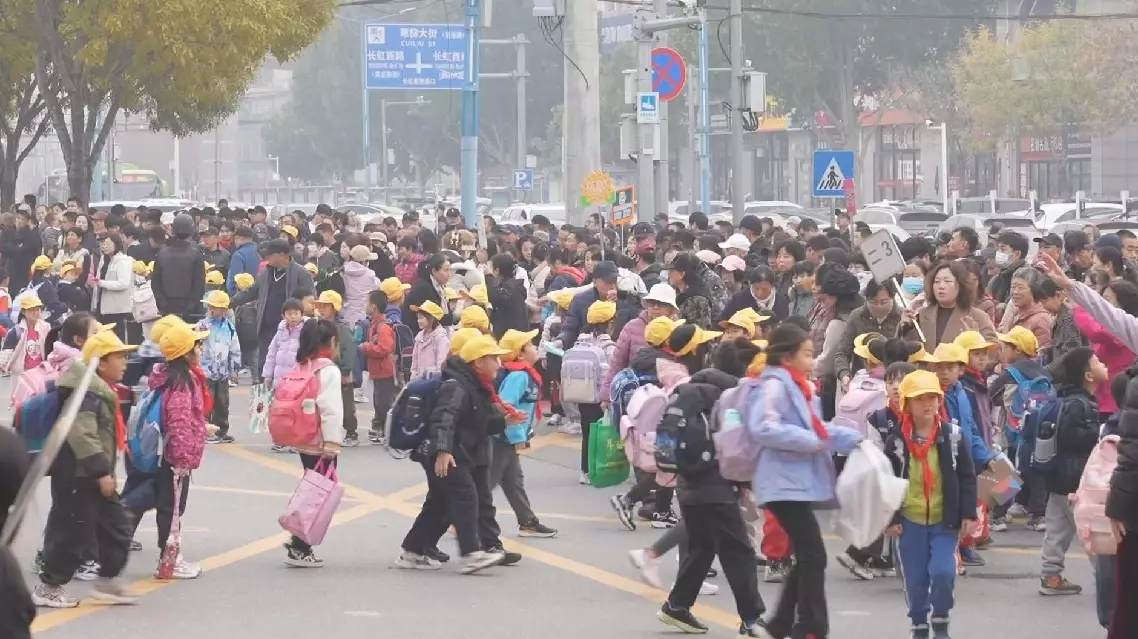
Song Zhihe runs an after-school tutoring center next to a local primary school. Every weekday, his staff picks up the children, serves dinner, and supervises homework until their parents finish work.
Song says the challenge is straightforward: after a long workday, many parents simply don't have the energy or experience to guide their children effectively.
"School teachers already shoulder most of the academic work. What we do in the community here is fill the gap that families can't always cover. A child's growth depends on more than parents and schools - it's a shared effort across the whole community," said Song, owner of after-school tutor Realmwise.
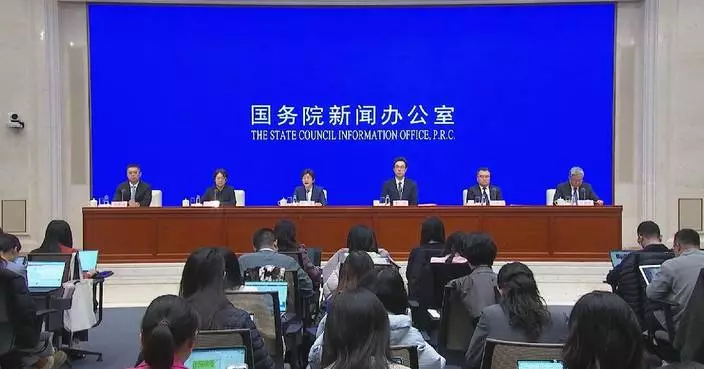
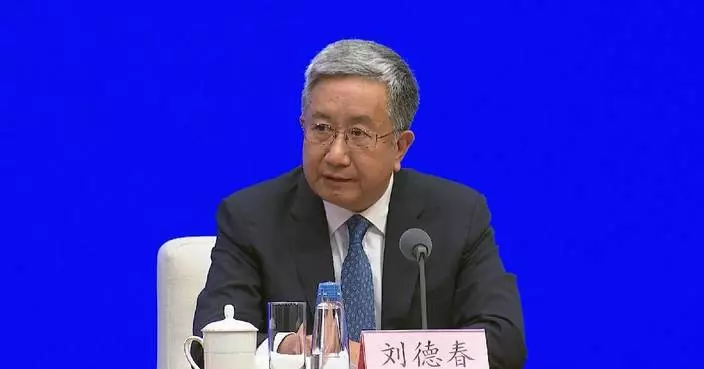
Beyond corporate and community initiatives, the government is driving China toward a more child-friendly society.
Starting in 2025, every family with a child under three will receive an annual childcare subsidy of 3,600 yuan (about 522 U.S. dollars) - regardless of region or income.
Meanwhile, from 2021 to 2024, China invested around 5 billion yuan (nearly 725 million U.S. dollars) to expand public childcare nationwide.
Housing and healthcare have also introduced more family-friendly policies.
"We can feel that the policy direction is very positive," said Wang.
These measures signal a move from managing population size to improving family growth and well-being.
Step by step, the nation is seeking a new balance among work, caregiving, and aspirations for the next generation.
China strives to build "childcare-friendly society" to address declining birth rate