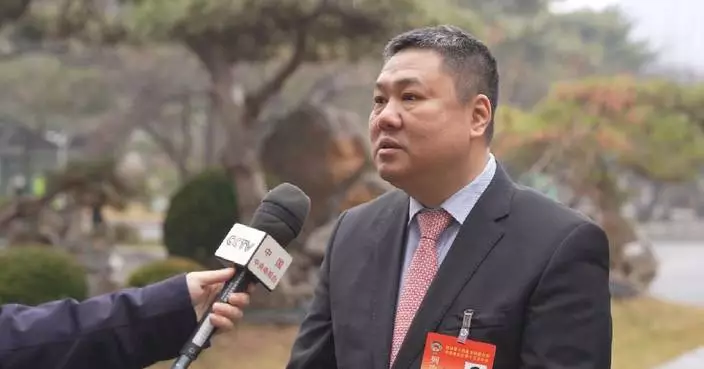
Liu Qingfeng, a deputy to the 14th National People's Congress (NPC) and a leading figure in China's tech industry, has called for a strategic overhaul of China's artificial intelligence (AI) sector to maintain the country's competitive advantage globally.
Liu, also chairman of iFlytek Co., Ltd., a Chinese information technology company, shared his insights with China Global Television Network (CGTN) and other news media in Beijing on the sidelines of the ongoing annual political "two sessions." He emphasized the significance of achieving complete autonomy in AI development and expressed confidence in China's ability to attain this goal.
"The most important thing is to achieve full-stack, self-reliance. From computing power and algorithms to data and application scenarios, the entire chain must be under our own control. A truly self-reliant model should be trained on our own computing power. Only then can we form a more complete, independent ecosystem and ensure a safer future," Liu said.
"I am very confident. With our own computing power continuously developing, our algorithms constantly adapting and innovating, combined with our vast application scenarios and the advantage of integrated software and hardware, China's AI can not only achieve self-reliance during the 15th Five-Year Plan period (2026-2030) [for national socioeconomic development], but also has an incredibly broad future," he said.
The "two sessions" are the annual meetings of China's supreme organ of state power, the NPC, and its top political advisory body, the National Committee of the Chinese People's Political Consultative Conference (CPPCC). Both bodies serve five-year terms and hold a plenary session each year.
The fourth session of the 14th NPC and the fourth session of the 14th National Committee of the CPPCC kicked off in Beijing on Thursday and Wednesday, respectively.
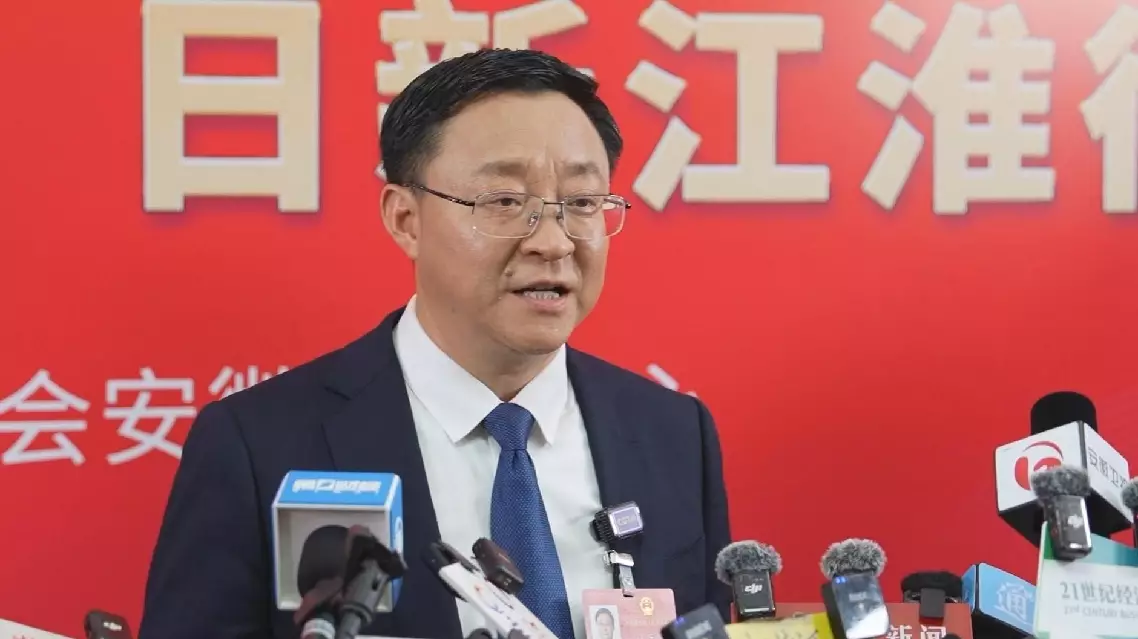
Full-stack AI autonomy essential for China's global competitive edge: NPC deputy