Skip to Content Facebook Feature Image

Uruguay seeks closer cooperation with China during 15th Five-Year Plan period: ambassador

HotTV

HotTV

HotTV

Uruguay seeks closer cooperation with China during 15th Five-Year Plan period: ambassador

2026-03-08 16:57 Last Updated At:03-09 11:56

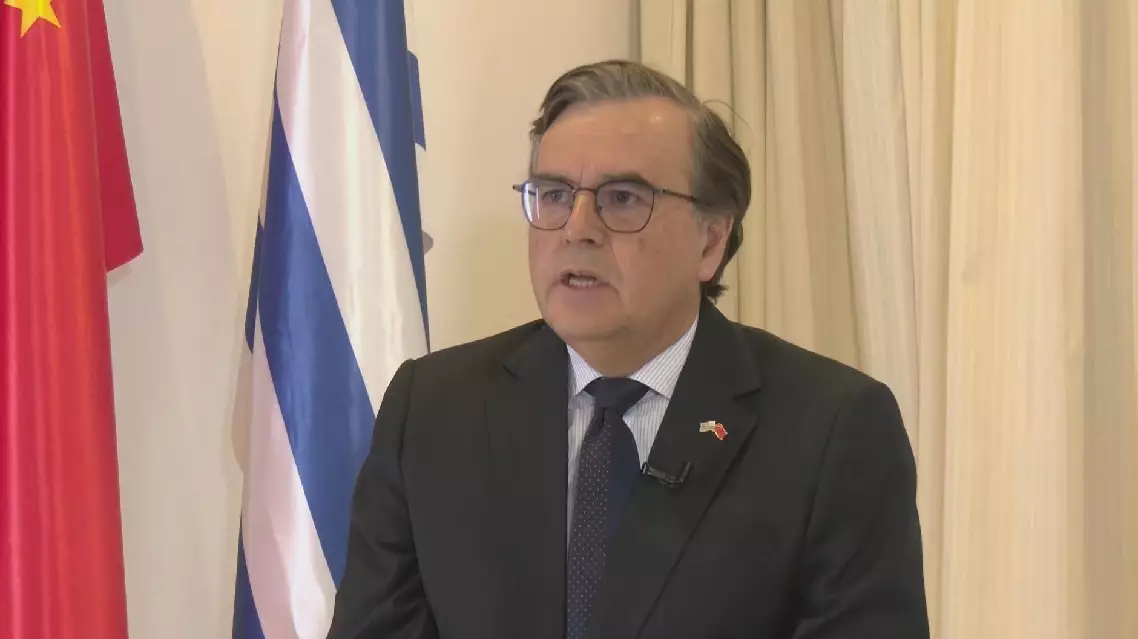
Uruguay's ambassador to China Anibal Cabral Segalerba acknowledged China’s crucial role in bringing stability to the world amid growing uncertainty, emphasizing the country's commitment to pursuing closer cooperation with China during its 15th Five-Year Plan period (2026-2030).

As an observer, the ambassador attended the opening of the "two sessions" for the first time since taking up his position last October. The “two sessions” are a major event in China's political calendar, being the annual meetings of the National People's Congress (NPC), the country's highest organ of state power, and the National Committee of the Chinese People's Political Consultative Conference (CPPCC), the top political advisory body.

"It is a privilege and an honor to witness this historic moment in China and to see how its democratic system works. I am deeply impressed by the process and the content of the meetings. In a time of global uncertainty, China offers stability to the world. Within this context, the 15th Five-Year Plan is especially important. I believe Uruguay and the whole world will study it closely to find new opportunities for cooperation," said the ambassador in a recent interview with China Central Television (CCTV).

He particularly highlighted China’s commitment to expanding high-level openness in its development blueprint, viewing this as an important avenue for deepening bilateral ties.

According to official data from Uruguay XXI, China remained Uruguay’s largest export market in 2025, with bilateral trade reaching 3.493 billion U.S. dollars, accounting for 26 percent of Uruguay’s total exports. The export value increased by about 12 percent compared to 2024.

The ambassador revealed plans to participate in major trade events, including the China International Consumer Products Expo and the China International Import Expo, aiming to strengthen trade ties.

"For the past 14 years, China has been Uruguay's main trading partner. Uruguay has taken part in the CIIE from the very beginning, and we will keep doing so. After President Yamandu Orsi's state visit, we expect our participation in this year to reach a new record. The expo will remain a key part of the embassy's annual agenda. I have also confirmed my attendance at the Hainan expo to find new possibilities for Uruguayan exporters, as the island is now a free trade port. We plan to grow Uruguay's presence in other trade fairs across Chinese provinces to explore new opportunities," he said.
Uruguay seeks closer cooperation with China during 15th Five-Year Plan period: ambassador
Uruguay seeks closer cooperation with China during 15th Five-Year Plan period: ambassador
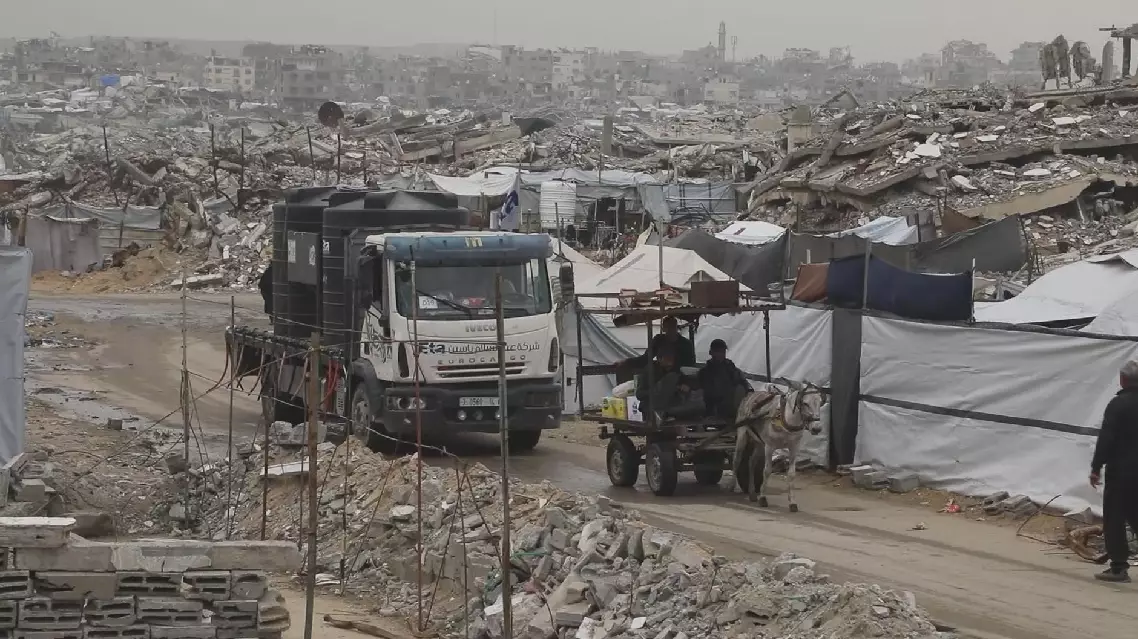
Due to the pressure on essential services caused by prolonged power shortages, Gaza residents are facing limited access to water, healthcare and sanitation, further deteriorating the already fragile humanitarian situation.

In Gaza, power cuts have become a daily reality. With electricity available only intermittently, many civilians are struggling to carry out even the most basic tasks.

The consequences are widespread, affecting everything from water supply systems to critical infrastructure. As outages persist, maintaining essential services is becoming increasingly unsustainable.

"I carry water in small containers. We don't have a large water tank, not even 500 liters, so we have to keep going back and forth, and water is not always available. Sometimes my son returns without being able to fill it," Mohammad Habib, a displaced Palestinian, told China Global Television Network (CGTN).

This ongoing energy crisis has also had a severe impact on critical hospitals, which rely heavily on generators to continue operating.

"If the generators stop, it will be a catastrophe and a real danger to everyone in the hospital, especially premature babies, dialysis patients and those in intensive care, as well as blood banks. Most departments would shut down. We are sounding the alarm that hospitals will stop functioning if fuel and oil are not allowed in as soon as possible," said Mohammad Abu Salmiya, director of Al-Shifa Hospital.

International humanitarian organizations have warned of a potential collapse of essential services in Gaza if electricity supplies are disrupted. "Hospitals and medical centers in Gaza that are still able to function work under immense pressure and at risk of collapse. These hospitals work with shortages in energy, medical supplies and equipment," said Amani Al-Naouq, spokesperson for International Committee of Red Cross in Gaza.

According to Gaza's municipality, about 75 water wells rely on electricity and are at risk of shutting down, which would worsen conditions for displaced families whose homes have been destroyed.

Power shortages intensify humanitarian crisis in Gaza

Power shortages intensify humanitarian crisis in Gaza

Recommended Articles