China's exports of machinery and electronic products reached 2.89 trillion yuan (around 418 billion U.S. dollars) in the first two months of 2026, up 24.3 percent year on year, data from the General Administration of Customs showed on Tuesday.
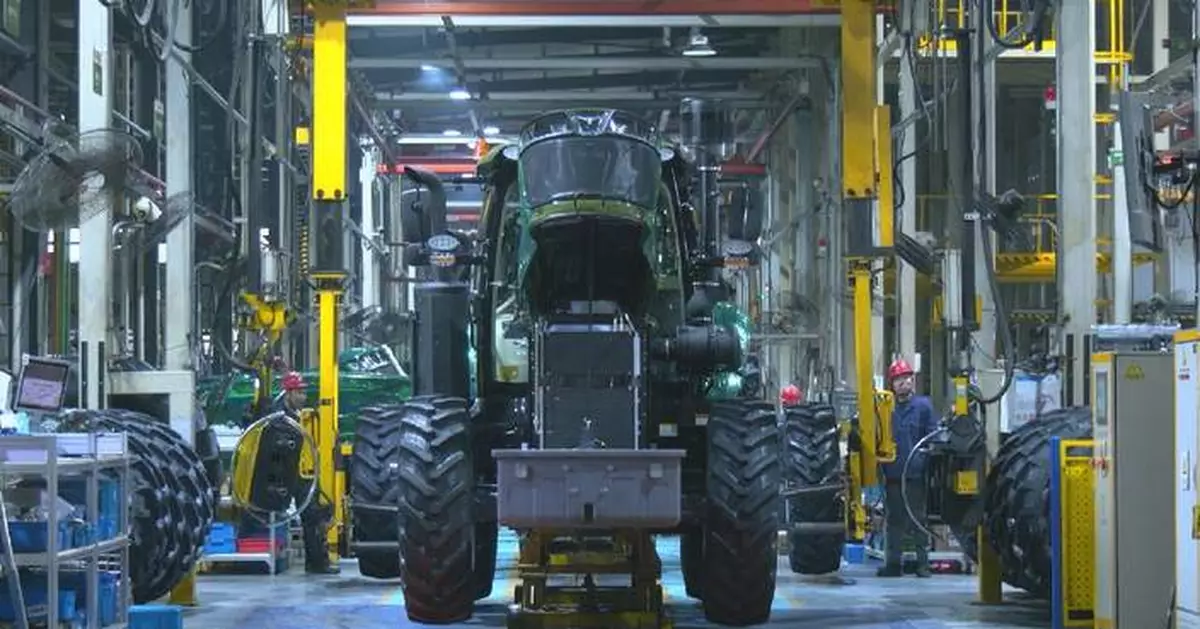
Industrial robots, high-end machine tools and agricultural machinery were among the noteworthy contributors to this growth.
At an engine manufacturing company located in Changzhou City of east China's Jiangsu Province, a representative highlighted design adjustments made for global customers.
"For instance, in Ecuador, where aquaculture like raising shrimp and fish is prevalent, there is a demand for oxygenation equipment. In Africa, especially in dust-prone areas, three-stage air filters are required. These are examples of the fine-tuned modifications we have made," said Zhuang Jun, assistant to general manager of Changchai Co., Ltd.
This adaptable design approach has enabled Chinese agricultural machinery to accelerate its global reach. In the first two months of 2026, Changzhou City alone saw agricultural machinery exports surpass 600 million yuan (around 86.8 million U.S. dollars), marking a growth of more than 12 percent year on year.
"Exports of agricultural machinery are mainly tractors, mowers, and farming and livestock equipment. The primary export markets are Belt and Road countries, while demand for agricultural machinery is also expanding in the European Union and Central Asia," said Wang Xiaoqian, a senior official of Changzhou Customs.
Experts said that Chinese agricultural machinery is rapidly advancing towards higher-end, intelligent, and environmentally friendly technologies, significantly enhancing its international competitiveness. Meanwhile, the global modernization of agriculture is accelerating, providing huge opportunities for agricultural machinery companies in China.
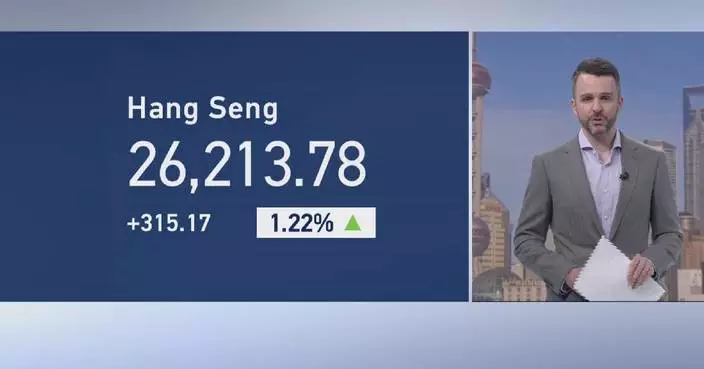
China's foreign trade grew 18.3 percent year on year in the first two months of 2026, according to the data. Total goods trade volume reached 7.73 trillion yuan (about 1.12 trillion U.S. dollars) during the period, the data showed.
Exports rose 19.2 percent from the same period last year to 4.62 trillion yuan, while imports went up 17.1 percent to 3.11 trillion yuan, according to the data.
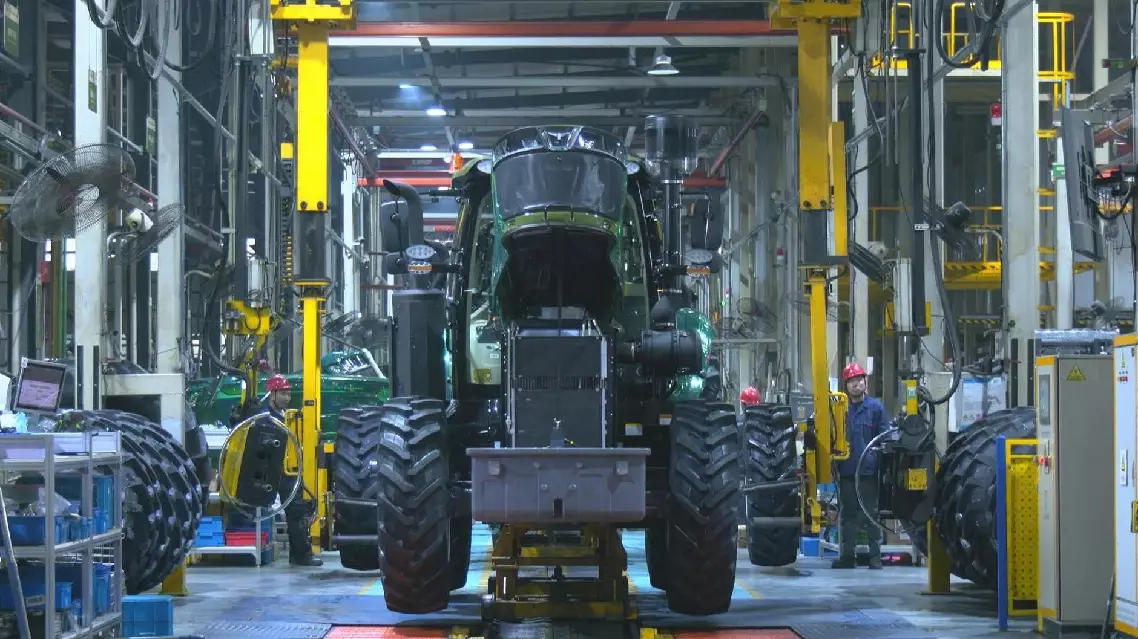
China's export of machinery, electronic products up 24.3 pct in Jan-Feb
Analysts have warned of more significant economic pain for Lebanon after its conflict with Israel reignited this month amid wider Middle East tensions, with many expecting the new flare up to have a devastating impact on the country's economy.
Joint U.S.-Israeli strikes on Iran starting on Feb 28 have since spiraled into a wider conflict as Iran fired back with retaliatory strikes on numerous targets across the region, with fears growing over mounting casualties, continued disruption, and far-reaching political and security repercussions.
Lebanon became directly involved in the conflict after Hezbollah fired rockets at Israel last week, prompting Israeli airstrikes and the capture of several positions in southern Lebanon.
The death toll from Israeli attacks in Lebanon since March 2 has risen to 486, with more than 1,300 others injured, Lebanon's Ministry of Public Health said on Monday.
Israel is increasing its deployment of troops and tanks near its border with Lebanon as it intensifies its battle against Hezbollah. Meanwhile, Hezbollah has pledged that it will not back down, despite the Lebanese government's declaration that its military activities are illegal.
The ongoing fighting has already displaced over half a million people, and analysts are now concerned that the Israeli airstrikes and the resulting exodus will severely impact the Lebanese economy.
"The conflict has erupted, and no one knows its full impact for now because we don't know how long it will last. If it continues for a long time, our economy can fall to figures below zero because we will lose all activity we have recovered. This means someone holding the Lira currency will hesitate to spend it because no one knows how this conflict will end," said Mohamed Shams Eldin, an author and researcher for Information International, an independent regional research and consultancy firm based in Beirut.
"All companies and traders prefer cash payments for their goods and services on the spot. The cash economy has deepened amid the current crisis, and the country is in a standstill. Foreign investors are avoiding Lebanon. I think they stay away because of the lack of trust. They fear they will lose their money, and if we face a crisis every year or year and a half, investors will prefer to put their money into other countries," said economic analyst Nadim Al Sabeh.
Lebanon has been grappling with numerous challenges in recent years, beginning with a wide-ranging financial crisis which plunged the country into severe debt. This was then exasperated by the COVID-19 pandemic and a catastrophic explosion at Beirut's port in 2020, before a series of conflicts between Hezbollah and Israel starting in 2023 brought more misery.
The current conflict with Israel has disrupted many economic operations, leading to widespread displacement and putting pressure on the government to cover the costs. For a services-oriented economy like Lebanon's, this now threatens an economic collapse.
"Given the current circumstances, Lebanon doesn't have millions of tourists like Egypt or Türkiye. Therefore, remittances are the foundation of our economy. One million Lebanese citizens, or 250,000 families rely on these remittances. It's why the U.S. dollar cash flow in the market here surpasses that of any other country -- people have lost trust in banks," said Eldin.
Renewed fighting with Israel threatens to collapse Lebanese economy: analysts