NEW YORK--(BUSINESS WIRE)--Mar 11, 2026--
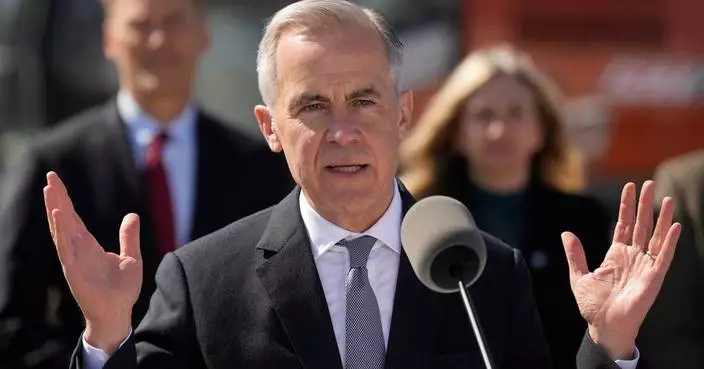
Star Mountain Capital, LLC ("Star Mountain"), a rapidly growing, employee-owned investment firm with approximately $4.5 billion in assets under management ("AUM"), is pleased to announce that Christopher Babcock has joined as Managing Director. Mr. Babcock will leverage approximately 30 years of asset management experience to advance the firm's investor relations efforts and deepen relationships across institutional and wealth channels.
This press release features multimedia. View the full release here: https://www.businesswire.com/news/home/20260310697692/en/
Mr. Babcock has built a distinguished career partnering with pensions, endowments, foundations, consultants, family offices and wealth platforms to help them achieve their investment objectives. He has extensive experience advising on private credit, private equity and secondaries investment strategies.
"Chris has extensive experience working with institutional and family office investors to help them optimize their investment objectives, analyzing a broad range of private market investment opportunities," said Brett Hickey, Founder & CEO of Star Mountain Capital. "Chris will further help Star Mountain deliver exceptional client service including assisting investors and accessing products and strategies that best achieve their objectives."
Mr. Babcock spent approximately 25 years at BNY Mellon Asset Management, most recently as Director of North American Institutional Distribution. During his tenure, he raised assets in alternative and long-only public and fixed income strategies and stewarded relationships with major institutional clients, including the largest Taft-Hartley 401(k) plan. He also oversaw communications for key accounts, designed bespoke institutional investment solutions and mentored colleagues who advanced into senior roles. Mr. Babcock originally joined BNY Mellon as a Senior Vice President and Institutional Wholesaler at Dreyfus Investment Management, where he led firm wide sales efforts.
Mr. Babcock also served on the Capital Formation team for North American Institutional and Wealth at LSV Advisors. He began his career at Fidelity Investments as an Internal Wholesaler supporting the financial intermediary market, developing foundational expertise in advisor engagement, product positioning and distribution strategy across asset classes.
"Star Mountain has built something truly distinctive: a firm that combines sophisticated investment strategies with a genuine commitment to partnership and employee ownership," said Mr. Babcock. "I'm excited to educate investors on the opportunity to diversify their portfolios and generate alpha from the large and underserved lower middle-market where Star Mountain specializes."
Mr. Babcock’s board and nonprofit involvement include serving as a Corporation Member of the Perkins School for the Blind, Secretary of the Children’s Glaucoma Foundation, Board Member of Adaptive Sports New England and Board Member and volunteer with Guide Dogs of America. He holds a BS from Northeastern University and is FINRA Series 7, 63 and 3 licensed.
About Star Mountain Capital
With ~$4.5 billion in AUM (committed capital including debt facilities as of 2/28/2026), Star Mountain specializes in providing scalable and data-driven investment solutions across two core strategies:
Star Mountain’s investors include public and private pensions, insurance companies, commercial banks, endowments, foundations, family offices and high-net-worth individuals. Employee-owned and sharing profits with 100% of its U.S. full-time employees, the firm prioritizes alignment of interests to maximize value for stakeholders.
Since 2010, Star Mountain has completed over 100 direct platform investments and 50 secondary/fund investments in the North American lower middle-market. The firm has been recognized as one of the Inc. 5000 fastest-growing private companies and a Best Place to Work by Crain’s New York Business and Pensions & Investments.
For more information, visit www.starmountaincapital.com.
Legal Disclaimer:
This press release does not constitute an offer to sell or a solicitation of an offer to purchase interests in any investment product. Awards and recognitions by third-party rating agencies, companies or publications should not be interpreted as a guarantee of future results or performance. They should not be considered as an endorsement, recommendation or referral of Star Mountain Capital or its representatives by any client or third party. Rankings published by media and industry organizations are based on information provided by the recognized advisor. Additionally, readers should understand that past performance is not indicative of future results. Award descriptions and selection methodologies may vary.
Awards and Recognition Disclosure:
Star Mountain Capital's awards and recognitions are based on third-party evaluations and criteria, which may be subjective. These honors do not imply a guarantee of future performance or an endorsement by current or past clients.
Ranking Methodologies:

Star Mountain Capital is pleased to announce that Christopher Babcock has joined as Managing Director.
DUBAI, United Arab Emirates (AP) — Israel and Iran exchanged fire early Wednesday, with Tehran keeping up pressure on the region's oil industry, targeting infrastructure and ships as global energy concerns mounted and the war in the Middle East showed no signs of abating.
Two Iranian drones hit near Dubai International Airport, home to the long-haul carrier Emirates, and the world’s busiest for international travel. Four people were wounded but flights continued, the Dubai Media Office said.
Early Wednesday, a projectile hit a container ship off the coast of Oman in the Strait of Hormuz, setting it ablaze and forcing the crew to abandon the vessel, the British military said. Kuwait said its defenses downed eight Iranian drones and Saudi Arabia said it intercepted five drones heading toward the kingdom’s Shaybah oil field.
Iran has effectively stopped cargo traffic in the narrow strait through which about a fifth of all oil is shipped from the Persian Gulf toward the Indian Ocean. It has also targeted oil fields and refineries in Gulf Arab nations, aiming at generating enough global economic pain to pressure the United States and Israel to end their strikes.
Also Wednesday, Iran's joint military command said banks and financial institutions would now be a target in the Middle East. The Khatam al-Anbiya Headquarters statement followed Iranian media reports that staff at a bank in Tehran had been killed in Israeli-American airstrikes.
The U.N. Security Council was to vote later in the day on a resolution sponsored by the Gulf Cooperation Council demanding Iran stop attacking its Arab neighbors.
Israel said it renewed attacks on Tehran, Iran's capital, following multiple strikes Tuesday that residents described as some of the heaviest during the war. Explosions were also heard in Beirut and in southern Lebanon after Israel said it was hitting targets connected to the Iran-linked militant Hezbollah group.
The attacks set a building ablaze in central Beirut's densely populated Aicha Bakkar area, engulfing the top two floors. There were no immediate reports of casualties.
An earlier Israeli strike killed five people in the Nabatieh district in southern Lebanon, while two more were killed in strikes in the Tyre and Bint Jbeil districts, Lebanon's Health Ministry said. A Red Cross worker also died Wednesday of wounds sustained Monday, when his team was hit by an Israeli strike while they were rescuing people from an earlier attack.
Nearly 500 people have been killed so far in Lebanon since Hezbollah triggered the latest round of fighting with Israel after the American and Israeli attacks on Iran started.
Israel warned of three Iranian attacks early Wednesday, with sirens heard in Tel Aviv and elsewhere but no immediate reports of casualties.
In addition to Iranian attacks targeting Saudi Arabia's oil fields, the kingdom's defense ministry said it had destroyed six ballistic missiles launched toward Prince Sultan Air Base, a major U.S.- and Saudi-operated air facility in eastern Saudi Arabia. The ministry also said it intercepted and destroyed two drones over the eastern city of Hafar al-Batin.
In the Strait of Hormuz north of Oman, a cargo ship was hit with a projectile and set on fire, according to the United Kingdom Maritime Trade Operations center, run by the British military.
Iran did not immediately claim the attack though it has been targeting ships in and around the strait.
The UKMTO earlier reported on another attack targeting a container ship off Ras al-Khaimah in the United Arab Emirates. In that case, it said the “extent of the damage is currently unknown but under investigation by the crew.”
Another ship came under attack in the Persian Gulf, the monitoring group said. The crew was reported safe after it was hit by a projectile.
The United Arab Emirates said early Wednesday that its air defenses were working to intercept incoming Iranian fire. The wealthy nation — home to the business and travel hub of Dubai — said Iranian attacks have killed six people and wounded 122 others there.
Bahrain sounded sirens early Wednesday, warning of an incoming Iranian attack. The warnings came a day after an Iranian attack hit a residential building in the capital, Manama, and killed a 29-year-old woman and wounding eight people.
At the United Nations, the Security Council was to vote Wednesday afternoon on the Gulf Cooperation Council resolution, according to three diplomats speaking on condition of anonymity ahead of an official announcement.
The council, a six-nation regional bloc, said its own facilities were targeted in an Iranian attack last week on Bahrain.
The draft resolution, obtained by The Associated Press, condemns Iran’s attacks on Bahrain, Kuwait, Oman, Qatar, Saudi Arabia, the United Arab Emirates and Jordan. The measure calls for an immediate end to all strikes and threats against neighboring states, including through proxies.
It would be the first Security Council resolution considered since the start of the war.
Oil prices remained well below the peaks Monday but the price of Brent crude, the international standard, was still up some 20% Wednesday from when the war began, and consumers around the world are already feeling the pain at the pump.
The spike in oil prices has been rocking financial markets worldwide because of worries that the war could block the global flow of oil and natural gas for a long time.
The U.S. military said Tuesday it had destroyed 16 Iranian minelayers near the Strait of Hormuz, though U.S. President Donald Trump said in social media posts that there were no reports yet of Iran mining the passage, a prospect that experts warned of preceding the war.
If the strait is mined, it could take at least weeks to clean it up once the conflict is over.
Some tankers, believed linked to Iran, are continuing to get through the strait making so-called “dark” transits -- meaning they aren’t turning on their Automatic Identification System tracks, which show where vessels are. Vessels carrying sanctioned Iranian crude often turn off their AIS trackers.
The security firm Neptune P2P Group said Wednesday there had been seven ships pass through the strait since March 8. Of them, five were linked to Iranian-associated shipping, it said. In ordinary times the strait typically sees 100 ships or more transit daily from the Persian Gulf into the Gulf of Oman.
Meanwhile, the commodity-tracking firm Kpler said Iran has restarted crude exports through its Jask oil terminal on the Gulf of Oman. A tanker loaded roughly 2 million barrels at Jask on March 7, it said.
Meanwhile, concerns grew over the health of Iran’s new Supreme Leader Ayatollah Mojtaba Khamenei after comments about him “being injured.”
The 56-year-old Khamenei — the son of the late Supreme Leader Ayatollah Ali Khamenei — has not been seen since since becoming supreme leader on Monday. His father and wife both were killed in an Israeli airstrike Feb. 28 that started the war.
In addition to the nearly 500 people killed in Lebanon, Iran has said more than 1,300 people have been killed there and Israel has reported 12 people dead.
The U.S. has lost seven soldiers while another eight have suffered severe injuries.
Many foreign nationals have been getting out of the Persian Gulf region since the war began, including over 45,000 U.K. citizens, the British Foreign Office said. Some 40,000 people returned to the United States, according to the State Department.
Magdy reported from Cairo, and Rising from Bangkok. Associated Press writers Sally Abou AIJoud in Beirut, Giovanna Dell’Orto in Miami, Julie Watson in San Diego, and Edith M. Lederer at the United Nations contributed to this story.
People take shelter in an underground metro station as air raid sirens warn of incoming Iranian missile strike, in Ramat Gan, Israel, Tuesday, March 10, 2026. (AP Photo/Oded Balilty)
A man passes in front of a destroyed building that housed a branch of Al-Qard Al-Hassan, a non-bank financial institution run by Hezbollah, which was hit by an Israeli airstrike in Dahiyeh, Beirut's southern suburbs, Lebanon, Tuesday, March 10, 2026. (AP Photo/Hussein Malla)
People walk past closed shops at the nearly empty traditional main bazaar in Tehran, Iran, Tuesday, March 10, 2026. (AP Photo/Vahid Salemi)
Motorbikes drive past a billboard depicting Iran’s late Supreme Leader Ayatollah Ali Khamenei, center, handing the country’s flag to his son and successor Ayatollah Mojtaba Khamenei, right, as the late revolutionary founder Ayatollah Ruhollah Khomeini stands at left, in a square in downtown Tehran, Iran, Tuesday, March 10, 2026. (AP Photo/Vahid Salemi)
Smoke rises from an Israeli airstrike in Dahiyeh, Beirut's southern suburbs, Lebanon, Tuesday, March 10, 2026. (AP Photo/Bilal Hussein)