SAN FRANCISCO (AP) — Microsoft said Monday it will no longer pay a share of its revenue to ChatGPT maker OpenAI, the latest move to untether a close partnership that helped unleash an artificial intelligence boom.
OpenAI relied exclusively on Microsoft's investments in cloud computing services to build the technology that helped make ChatGPT a household name. Microsoft, in turn, relied on OpenAI's technology to build its own AI assistant Copilot.
But the partnership has evolved as San Francisco-based OpenAI, founded as a nonprofit, has shifted to a capitalistic enterprise on a path toward an initial public offering on Wall Street and has balanced its reliance on Microsoft with other cloud partners like Amazon, Google and Oracle.
OpenAI said Monday it will continue to pay Microsoft a share of its revenue through 2030.
The two companies said Microsoft remains the primary cloud computing partner for OpenAI, and products made by the AI company will ship first on Microsoft's cloud platform, called Azure, “unless Microsoft cannot and chooses not to support the necessary capabilities.”
Amazon CEO Andy Jassy described it as a “very interesting announcement” in a social media post Monday and said that Amazon will soon be making OpenAI’s models “available directly" on Amazon's AI platform called Bedrock.
Wedbush Securities analyst Dan Ives said in a note to investors Monday that the new agreement “puts OpenAI on a strong path forward to going public through IPO given its clearer opportunity in the cloud environment while reducing significant barriers from its original partnership with Microsoft.”
Ives said it's also important for Microsoft as it “looks to develop tech independence from OpenAI” in advancing Copilot's capabilities and partnering with other AI providers such as OpenAI rival Anthropic, maker of the chatbot Claude.
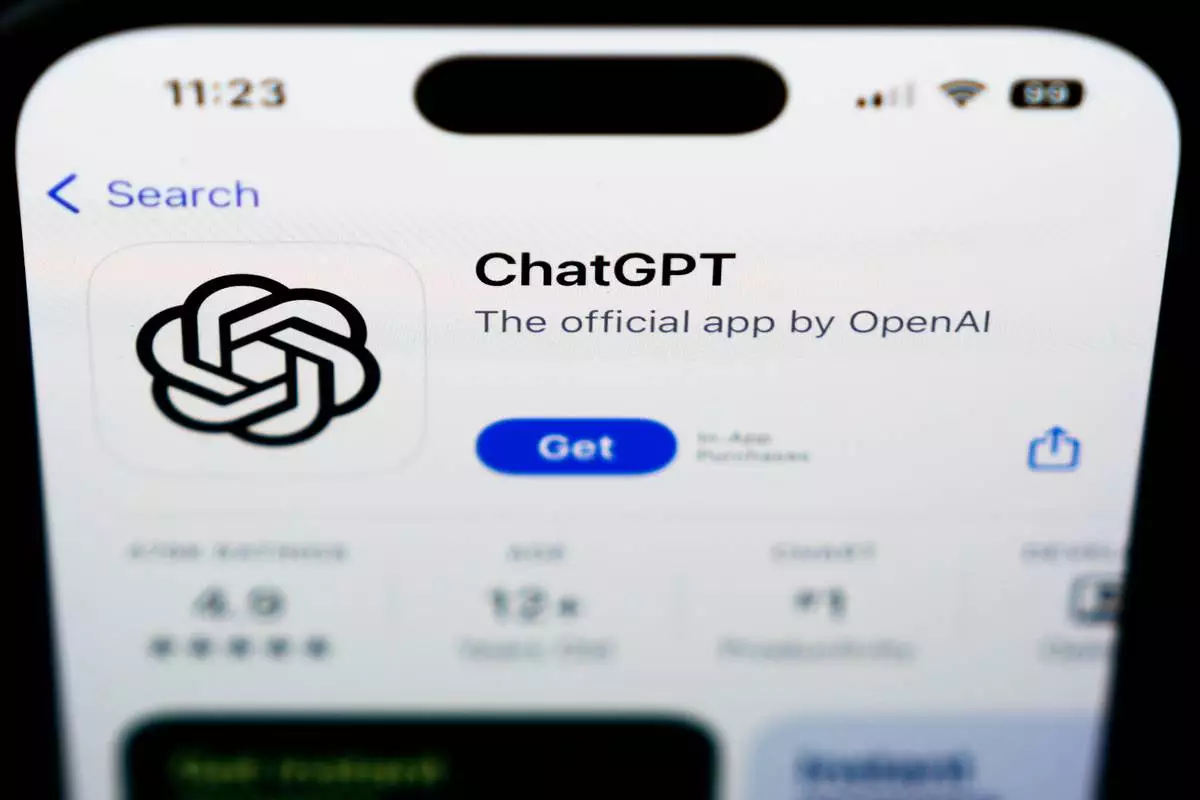
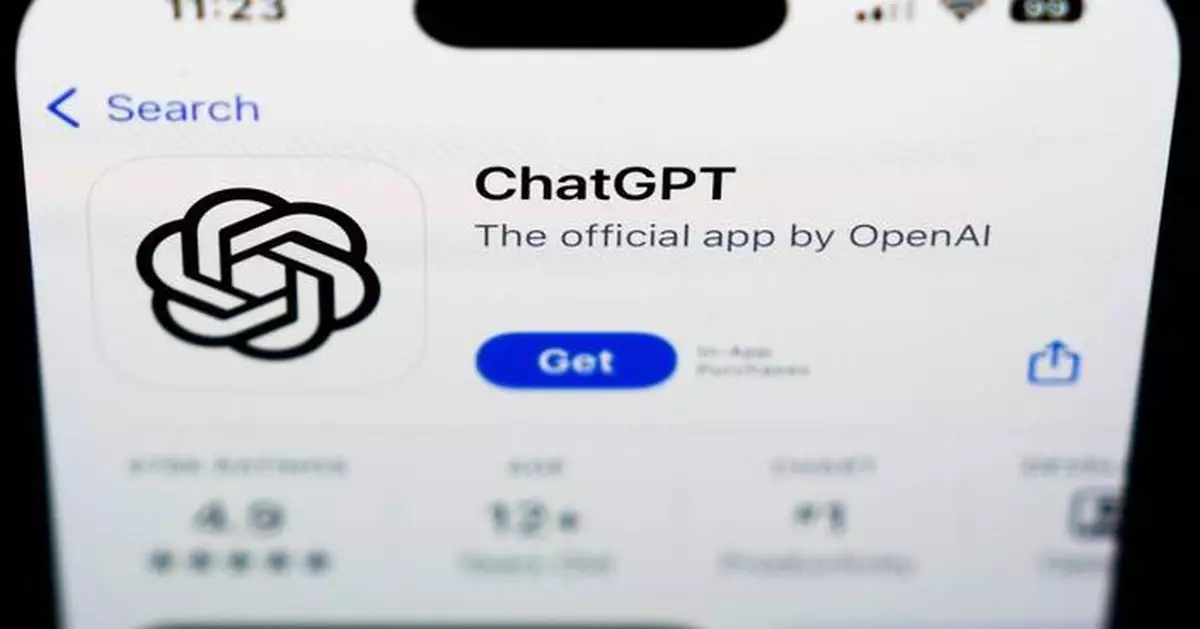
FILE - A ChapGPT logo is seen in West Chester, Pa., Wednesday, Dec. 6, 2023. (AP Photo/Matt Rourke, File)
PHILADELPHIA (AP) — Ivory Coast got goals from Nicolas Pépé in each half and advanced to the World Cup knockout round for the first time in the West African team’s history with a 2-0 victory over Curaçao on Thursday.
Les Éléphants have crashed the party and made it out of their group for the first time in four World Cup appearances.
Ivory Coast beat Ecuador 1-0 in its tournament opener — at the same Philadelphia stadium as Thursday’s game — and lost to Germany in its Group E second game.
Ivory Coast will play June 30 against either France or Norway — whichever is the runner-up in Group I.
Curaçao needed to win and instead failed to become the smallest nation to qualify for the knockout stages.
Pépé, who plays for the Spanish club Villarreal, wiped out all the suspense in this one early, scoring in just the seventh minute and the lead held the rest of the game in front of an enthusiastic crowd that made Les Éléphants feel at home. Ivory Coast held its training base in nearby Delaware and practiced at the Philadelphia suburban home of Major League Soccer’s Philadelphia Union.
Throw in a friendly (against the Union’s second team), and the thrilling win in the 90th minute against Ecuador, and Les Éléphants found their adoptive fans among the crowd of 68,324 — about 40% of the population of Curaçao — at the home of the NFL's Eagles.
The fans in Ivory Coast orange went wild when Pépé scored again on a left-footed shot from the far corner in the 64th minute to seal the win. He was subbed out three minutes later to earn just a bit more rest for the June 30 game that will serve as the biggest one for the national team in World Cup history.
Ivory Coast needed only a draw to advance yet played with a competitive fire the rest of the game and never let Curaçao seem close to getting even in this one.
Ivory Coast pounced when 19-year-old Yan Diomande, who came to America four years earlier as soccer prospect who couldn’t speak any English, snared the ball when Curaçao failed to clear it and fed it to Pépé for the easy goal past Eloy Room.
The 37-year-old Room had made 15 saves against a relentless Ecuador attack and helped The Blue Wave earn their first-ever point with a 0-0 draw on Saturday.
Curaçao is an autonomous territory of about 156,000 people in the Caribbean within the Netherlands kingdom. The team relies almost entirely on players born and raised in the Netherlands.
Ivory Coast striker Elye Wahi, who is under investigation for alleged betting-related offenses while playing for Nice, came on as a substitute in the second half after he sat out against Germany.
The historic clincher belonged to Pépé, and he received tons of applause after he was named the player of the game.
See more of AP’s World Cup coverage here
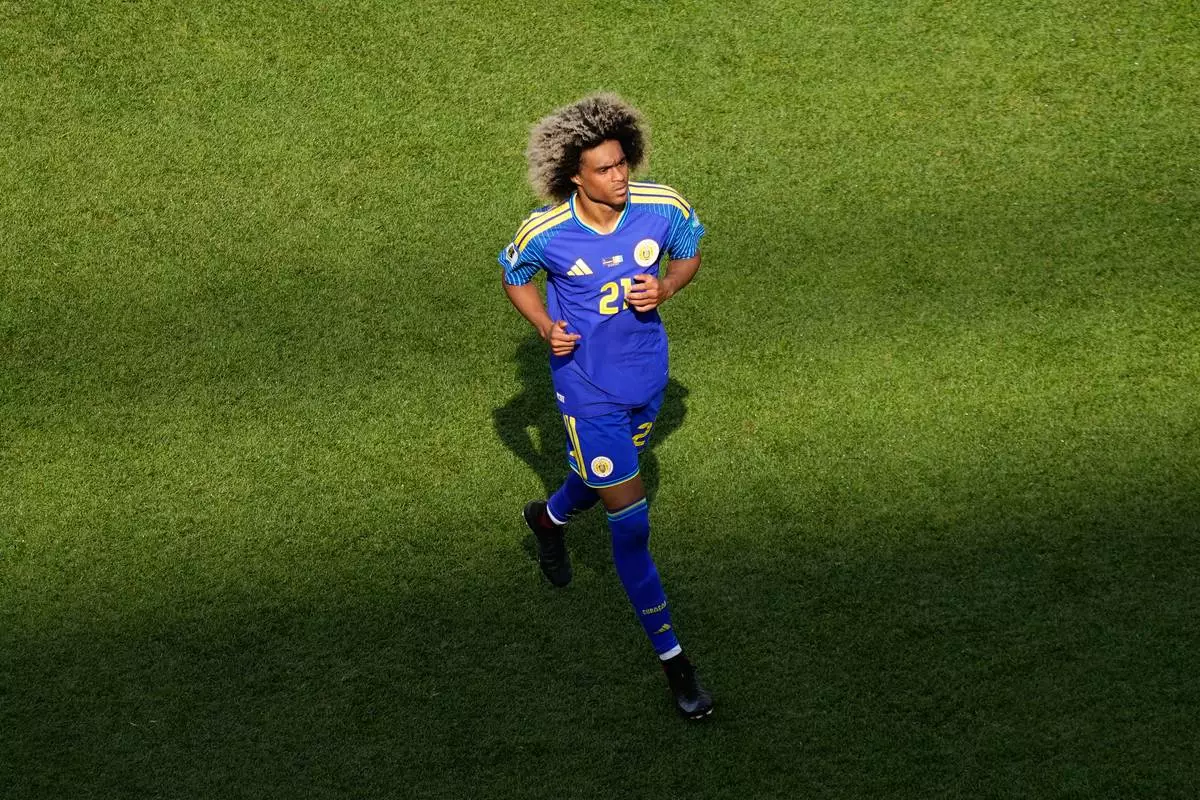
Curaçao's Tahith Chong (21) runs on the pitch during the World Cup Group E soccer match between Curacao and Ivory Coast in Philadelphia, Thursday, June 25, 2026. (AP Photo/Matt Slocum)
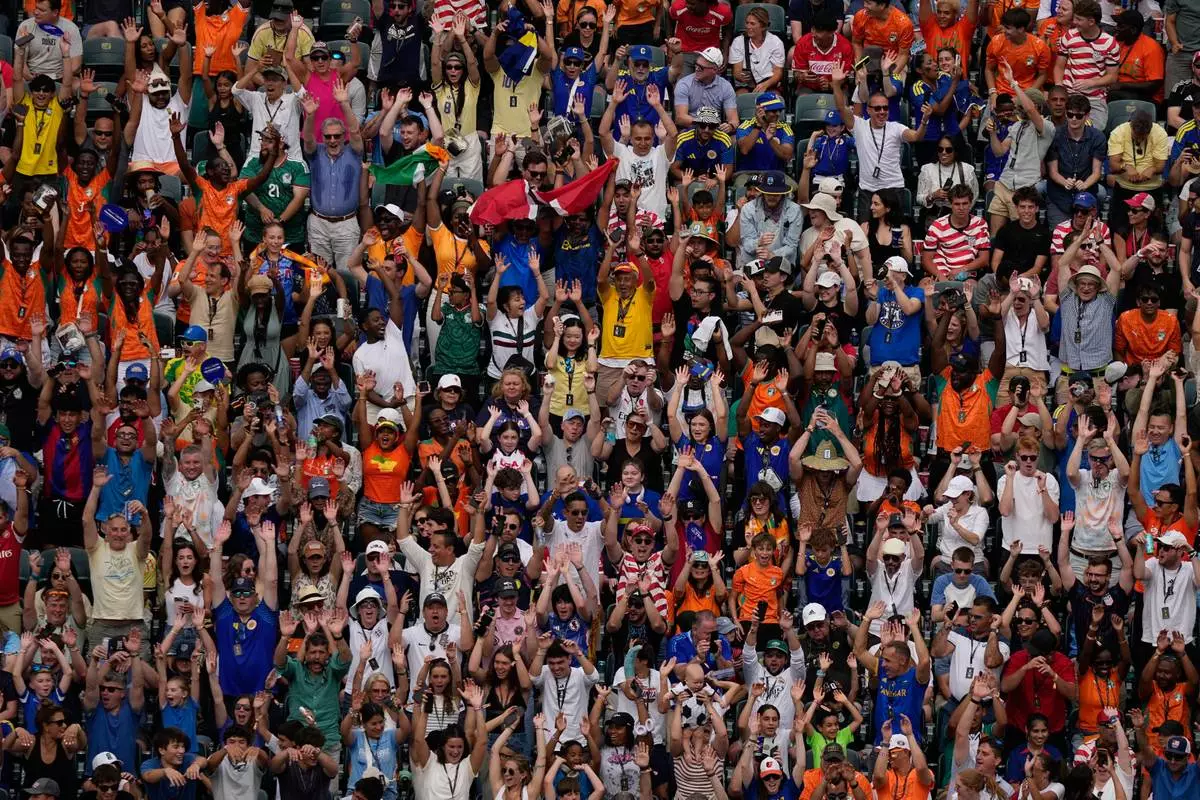
Fans do the wave during the World Cup Group E soccer match between Curacao and Ivory Coast in Philadelphia, Thursday, June 25, 2026. (AP Photo/Matt Slocum)
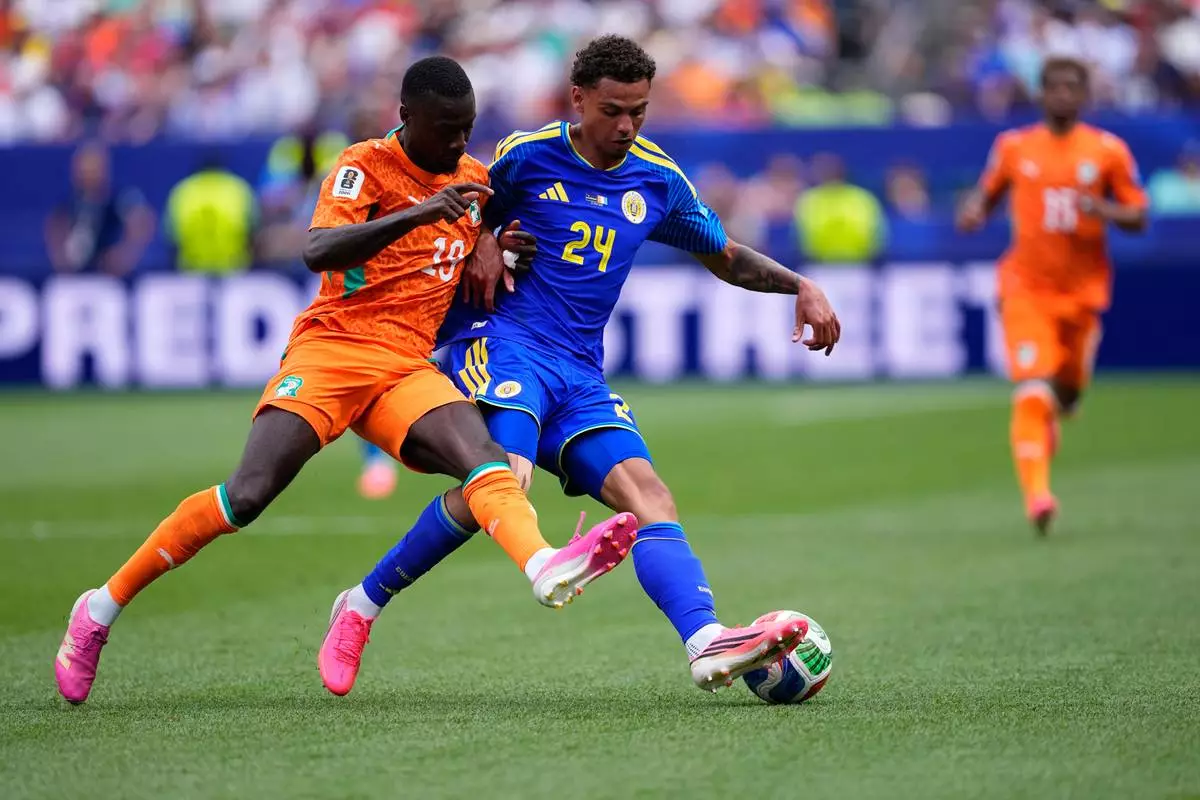
Ivory Coast's Nicolas Pepe (19) and Curaçao's Deveron Fonville (24) fight for the ball during the World Cup Group E soccer match between Curacao and Ivory Coast in Philadelphia, Thursday, June 25, 2026. (AP Photo/Petr David Josek)
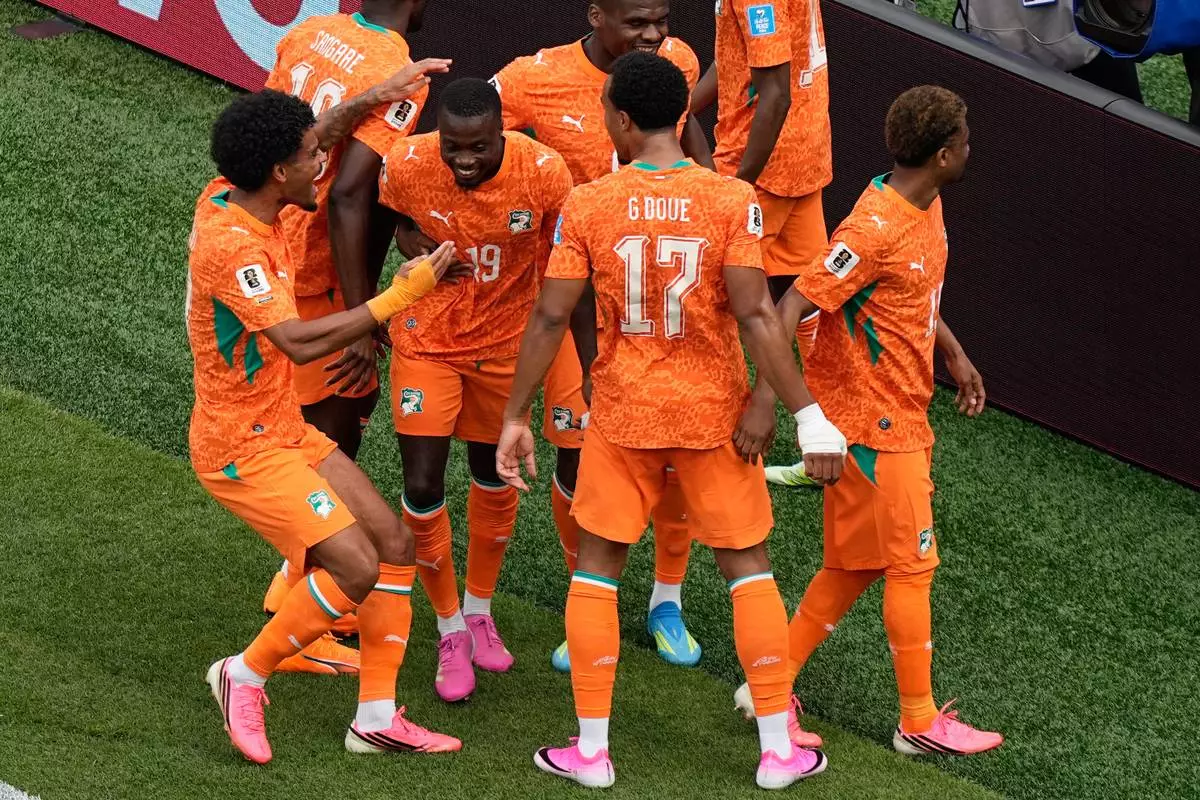
Ivory Coast's Nicolas Pepe (19) celebrates after scoring the opening goal during the World Cup Group E soccer match between Curacao and Ivory Coast in Philadelphia, Thursday, June 25, 2026. (AP Photo/Matt Slocum)
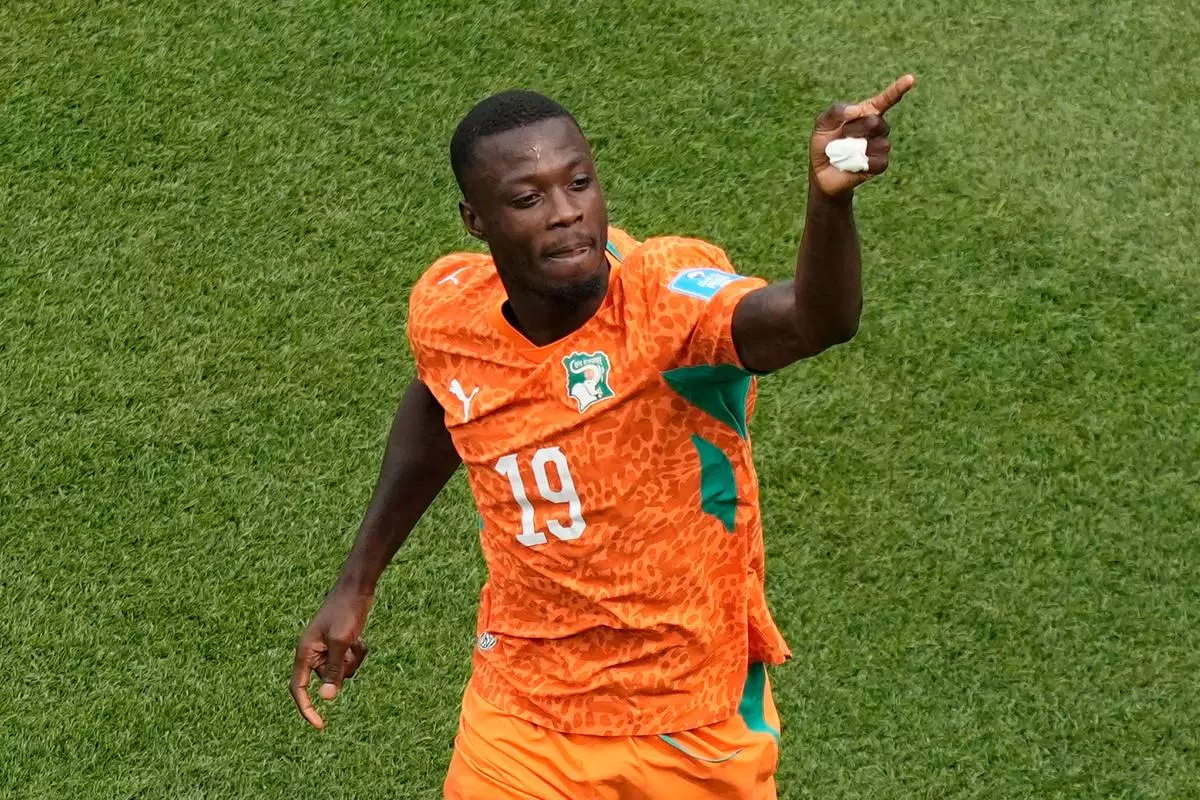
Ivory Coast's Nicolas Pepe (19) celebrates after scoring the opening goal during the World Cup Group E soccer match between Curacao and Ivory Coast in Philadelphia, Thursday, June 25, 2026. (AP Photo/Matt Slocum)