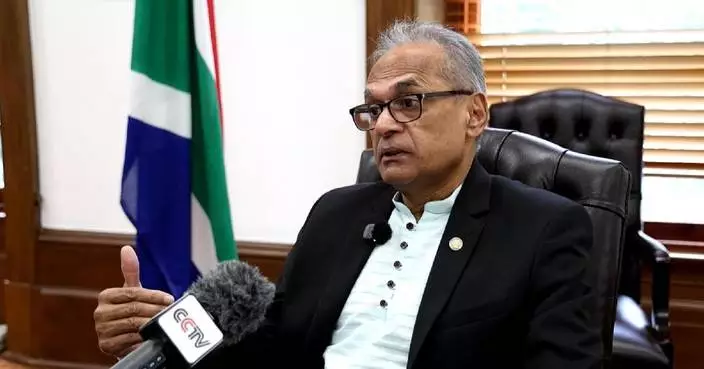
Kazakhstan's Minister of Science and Higher Education Sayasat Nurbek has praised China's advances in education and technology, calling them a model of strategic planning that is driving deeper academic cooperation between the two countries.
Speaking in an exclusive interview with China Global Television Network (CGTN), Nurbek highlighted how China's long-term investment in human capital has fueled what he described as the Chinese miracle.
"I think China in the last two decades at least, has been this really good showcase of how this strategic thinking, strategic planning, very careful execution, well, compared to countries like our country, it's huge investments. The Chinese miracle, we see at the moment, is actually fueled by this clear focus on human capital. It's fueled by clear focus on education, research and careful, focused approach I would say," said the official.
Kazakhstan is emerging as a regional education hub in Central Asia. Nearly 30 international universities and branch campuses now operate in the country, including China's Beijing Language and Culture University and Northwestern Polytechnical University.
Around 35,000 international students study in Kazakhstan, including about 2,000 from China. Nurbek emphasized the expanding academic and scientific cooperation between the two countries.
"We are now negotiating with the very famous, Xi'an Jiaotong (University) and Xi'an Polytechnic University. Very strong, very solid, research-intensive university, Nanjing University, several other universities. And, of course, City University of Hong Kong. It's the very first university from Hong Kong to come to Kazakhstan two years ago in partnership with Satbayev University. The second Lu Ban model workshop is opening here in April in just a few weeks in Astana, based on Eurasian National University, with big focus on robotics and AI. We now have over 2,000 students from China studying in Kazakhstan. Because we said hey, we have some really good universities," he said.
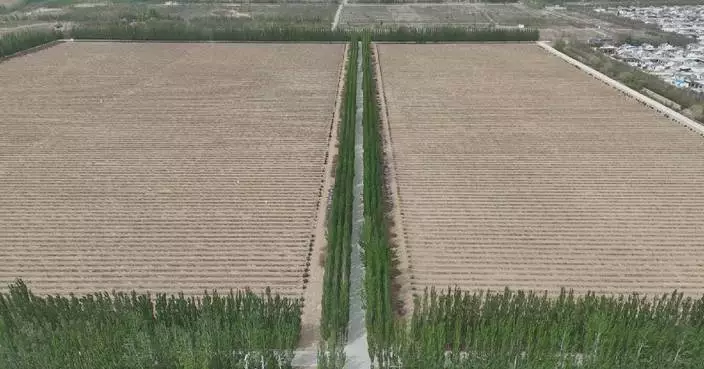
As China's annual "two sessions" opened in Beijing, Nurbek pointed to Kazakhstan's afforestation drive as a parallel to China's five‑year planning approach, highlighting shared priorities in strategic development.
"There were large, forest fires last year and several years ago in Kazakhstan. So we lost a lot of forests. So now we are having partnership with Kozybayev University in Petropavlovsk, Shakarim University in Semey in Abai region, working with this University of Forestry to create a program to recover our forests as fast as we can. Our President launched similar programs several years ago to plant two billion trees. The draft of the new constitution declares human capital research, innovation, science, education and culture as new key values and strategic priorities of Kazakhstan. And it actually resonates with big sessions in China. Same story, human capital, research, innovation. More and more budget and resources allocated to push that new breakthrough innovation agenda to make China become this cutting-edge country of research and innovation," he said.
The "two sessions," referring to the annual gatherings of the National People's Congress (NPC) and the Chinese People's Political Consultative Conference (CPPCC), opened in Beijing on March 4 and 5. The blueprint of the 15th Five‑Year Plan (2026‑2030), which maps China's priorities for the coming years, has been placed firmly in the spotlight.

Kazakh minister hails China’s education strategy as model for bilateral cooperation