|
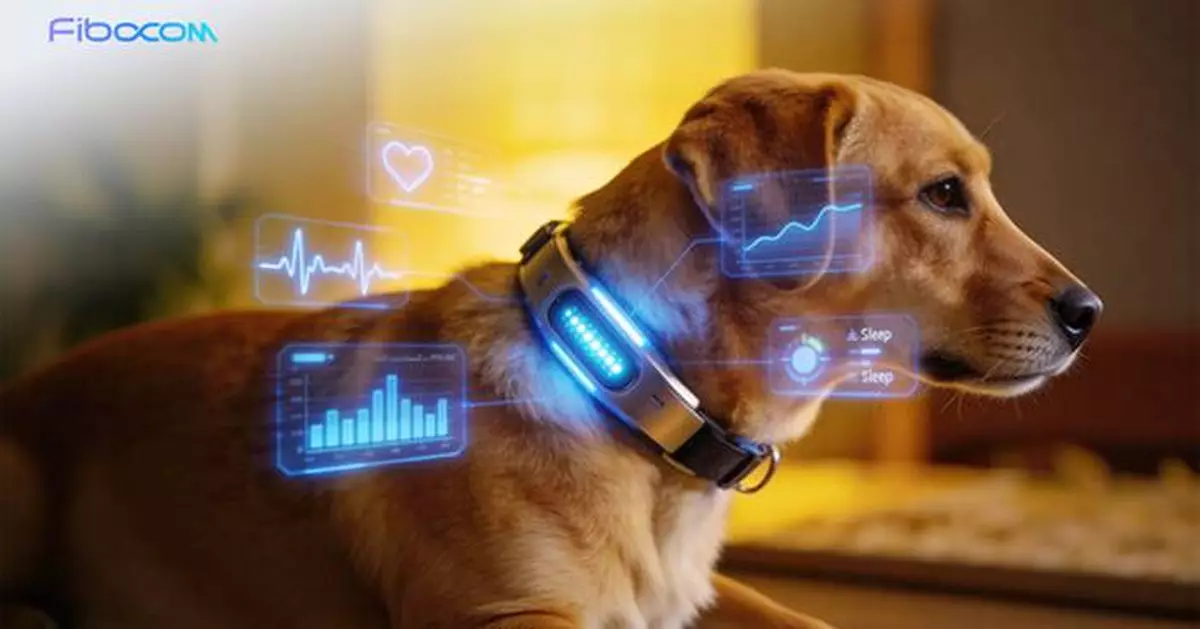
NUREMBERG, Germany, March 11, 2026 /PRNewswire/ -- As pet owners increasingly pursue data-driven and scientific pet care, pet collars are evolving beyond simple identification tools into intelligent devices integrating positioning, health monitoring, and behavior analysis.
Fibocom's MQ771-GL addresses the demanding requirements of this vertical market with multiple key advantages.
Ultra-Low Power in a Compact Design: Ending Battery Life Anxiety
For pet owners, size and power consumption remain the biggest challenges for smart collars. The MQ771-GL is deeply optimized in both aspects.
- Ultra-compact form factor (17.7 mm × 15.8 mm) enables manufacturers to maximize device design flexibility.
- PSM current as low as 1 μA significantly reduces power consumption during deep sleep, delivering 70–90% improvement compared with the previous generation.
- eDRX technology dramatically lowers standby current, ensuring extremely low power consumption when the collar is idle. In real-world scenarios, device battery life can be extended from days to several months, enabling long-lasting companionship for pets.
Global Connectivity: Keeping Pets Connected Everywhere
The MQ771-GL supports global Cat.M / NB-IoT frequency bands, ensuring reliable connectivity across regions.
- Multi-mode network switching allows the module to automatically select the optimal network whether pets are in dense urban areas, remote outdoor environments, or even traveling internationally.
Comprehensive Health Monitoring and Behavior Insights
With strong processing capabilities, MQ771-GL supports integration of multiple sensors, enabling developers to build advanced monitoring features.
- Behavior analysis: accurately detects barking patterns and activity frequency.
- Physiological monitoring: supports efficient transmission of heart rate and respiratory data, enabling data-model analysis of sleep quality and early detection of potential health issues.
Sunzhi Liu, General Manager of Wireless Communications at Fibocom, commented:
"MQ771-GL represents a milestone product in our LPWA portfolio. By combining Qualcomm's advanced chipset capabilities with Fibocom's extensive communication expertise, we aim to deliver a highly integrated, cost-effective, and high-performance platform for the pet technology market. We look forward to collaborating with more partners to further expand the pet tech ecosystem."
About Fibocom
Fibocom, founded in 1999, is China's first wireless communication module company listed on both the A-share and H-share markets (300638.SZ, 0638.HK). As a global leading provider of wireless communication modules and AI solutions, Fibocom leverages wireless communication and artificial intelligence as its core technologies to provide integrated hardware and software solutions that empower industry applications. These solutions accelerate the transformation from "Connect Everything" to "Intelligent Connectivity" across diverse industries.
Fibocom's one-stop solutions encompass cellular communication, AI, automotive, and GNSS modules, as well as AI toolchains, supporting industry-side and mainstream large model integration, and providing AI Agent, global connectivity, and cloud services, driving the digital intelligence upgrades in industries such as robotics, consumer electronics, low-altitude economy, intelligent transportation, smart retail, and smart energy.
NUREMBERG, Germany, March 11, 2026 /PRNewswire/ -- As pet owners increasingly pursue data-driven and scientific pet care, pet collars are evolving beyond simple identification tools into intelligent devices integrating positioning, health monitoring, and behavior analysis.
Fibocom's MQ771-GL addresses the demanding requirements of this vertical market with multiple key advantages.
Ultra-Low Power in a Compact Design: Ending Battery Life Anxiety
For pet owners, size and power consumption remain the biggest challenges for smart collars. The MQ771-GL is deeply optimized in both aspects.
- Ultra-compact form factor (17.7 mm × 15.8 mm) enables manufacturers to maximize device design flexibility.
- PSM current as low as 1 μA significantly reduces power consumption during deep sleep, delivering 70–90% improvement compared with the previous generation.
- eDRX technology dramatically lowers standby current, ensuring extremely low power consumption when the collar is idle. In real-world scenarios, device battery life can be extended from days to several months, enabling long-lasting companionship for pets.
Global Connectivity: Keeping Pets Connected Everywhere
The MQ771-GL supports global Cat.M / NB-IoT frequency bands, ensuring reliable connectivity across regions.
- Multi-mode network switching allows the module to automatically select the optimal network whether pets are in dense urban areas, remote outdoor environments, or even traveling internationally.
Comprehensive Health Monitoring and Behavior Insights
With strong processing capabilities, MQ771-GL supports integration of multiple sensors, enabling developers to build advanced monitoring features.
- Behavior analysis: accurately detects barking patterns and activity frequency.
- Physiological monitoring: supports efficient transmission of heart rate and respiratory data, enabling data-model analysis of sleep quality and early detection of potential health issues.
Sunzhi Liu, General Manager of Wireless Communications at Fibocom, commented:
"MQ771-GL represents a milestone product in our LPWA portfolio. By combining Qualcomm's advanced chipset capabilities with Fibocom's extensive communication expertise, we aim to deliver a highly integrated, cost-effective, and high-performance platform for the pet technology market. We look forward to collaborating with more partners to further expand the pet tech ecosystem."
About Fibocom
Fibocom, founded in 1999, is China's first wireless communication module company listed on both the A-share and H-share markets (300638.SZ, 0638.HK). As a global leading provider of wireless communication modules and AI solutions, Fibocom leverages wireless communication and artificial intelligence as its core technologies to provide integrated hardware and software solutions that empower industry applications. These solutions accelerate the transformation from "Connect Everything" to "Intelligent Connectivity" across diverse industries.
Fibocom's one-stop solutions encompass cellular communication, AI, automotive, and GNSS modules, as well as AI toolchains, supporting industry-side and mainstream large model integration, and providing AI Agent, global connectivity, and cloud services, driving the digital intelligence upgrades in industries such as robotics, consumer electronics, low-altitude economy, intelligent transportation, smart retail, and smart energy.
** This press release is distributed by PR Newswire through automated distribution system, for which the client assumes full responsibility. **

Embedded world 2026 | Leading the Pet Tech Revolution: MQ771-GL Redefines Smart Pet Collars
|
Insights from Agoda's latest report show deeper, integrated localization is linked to stronger commercial outcomes as hotels in India adapt to rising intra-Asia demand
SINGAPORE, March 12, 2026 /PRNewswire/ -- Digital travel platform Agoda in its latest report "Tailored to Win: Capturing the High-Value Asian Traveler for Hotels in India" spotlights India as a robust travel market, revealing that nearly 98% of Indian hotels employing advanced localization strategies reported a positive impact on revenue. By comparison, 91% of hotels with basic localization strategies also report positive revenue impact, underscoring that while localization efforts are paying off, a more holistic approach maximises the likelihood of commercial success.
As India looks to increasingly compete in the global travel landscape, localization is becoming even more important. The Ministry of Tourism reported nearly 10 million foreign tourists in 2024[1], with spending projected to reach INR 3.2 trillion in 2025[2], driven by both long-haul interest and a growing demand from key Asian markets.
"Indian hotels have built strong domestic businesses, but many are still learning how to reel in the international guest," shared Gaurav Malik, Country Director, Indian Subcontinent & Indian Ocean Islands at Agoda. "To win them over, localization can't be treated as a marketing exercise. It has to show up in payments, communication, amenities and service so that it's apparent at every touchpoint starting from discovery to check out. The data is unequivocal: hotels that go deeper see results with up to 98% reporting a positive revenue impact. The question isn't whether to localize; it's how quickly you can move from basics to best-in-class."
Agoda's report emphasizes that effective localization goes beyond translation. It involves holistically adapting marketing, booking processes, payment options and on-site services to match the cultural and practical expectations of travelers from different source markets. A more integrated approach allows hotels to better meet traveler expectations at every touchpoint and unlock greater value for inbound demand.
Despite the potential, Indian hotels face a dual challenge in driving tailor-made strategies: a strategy gap in knowing whom to target and an execution gap in knowing how to deliver. These challenges are reflected in the top barriers cited by hoteliers: A majority (56%) of hoteliers surveyed cite both a limited awareness of cultural norms and uncertainty around which tailoring efforts will have the most impact. This is compounded by 44% who report a lack of both guest data insights and dedicated personnel to drive the initiatives.
As India's robust tourism looks to define itself by its ability to capture the high-value Asian traveler, the need to deliver culturally attuned and localized guest experiences has become critical. To help hoteliers navigate this, Agoda's report includes an "Origins Playbook" that dissects traveler motivations across key source markets:
- Malaysian travelers tend to blend family needs with an eye for deals
- Singaporeans are independent planners, booking accommodation separately from flights
- Japanese are a fast-growing market defined by short trips and increasing search interest
- Thai travelers are tech-forward, frequently utilizing AI for travel planning
Agoda's digital suite for localization includes over 6 million accommodations, support for 39 languages, multi-currency payment options and 24/7 customer support. Dedicated programs such as the Agoda Growth Program for visibility in priority markets, country-specific promotions and Agoda Media Solutions for native-language campaigns are just some of the ways Agoda helps partners localize effectively. Through Agoda's platform and expertise, hotels can overcome barriers, reach new segments and optimize their returns from international demand.
To explore how practical localization tips and actionable insights can help hotels capture more value from Asia's diverse traveler base, download the full report at https://ago-da.co/4rgJZpf.
Insights from Agoda's latest report show deeper, integrated localization is linked to stronger commercial outcomes as hotels in India adapt to rising intra-Asia demand
SINGAPORE, March 12, 2026 /PRNewswire/ -- Digital travel platform Agoda in its latest report "Tailored to Win: Capturing the High-Value Asian Traveler for Hotels in India" spotlights India as a robust travel market, revealing that nearly 98% of Indian hotels employing advanced localization strategies reported a positive impact on revenue. By comparison, 91% of hotels with basic localization strategies also report positive revenue impact, underscoring that while localization efforts are paying off, a more holistic approach maximises the likelihood of commercial success.
As India looks to increasingly compete in the global travel landscape, localization is becoming even more important. The Ministry of Tourism reported nearly 10 million foreign tourists in 2024[1], with spending projected to reach INR 3.2 trillion in 2025[2], driven by both long-haul interest and a growing demand from key Asian markets.
"Indian hotels have built strong domestic businesses, but many are still learning how to reel in the international guest," shared Gaurav Malik, Country Director, Indian Subcontinent & Indian Ocean Islands at Agoda. "To win them over, localization can't be treated as a marketing exercise. It has to show up in payments, communication, amenities and service so that it's apparent at every touchpoint starting from discovery to check out. The data is unequivocal: hotels that go deeper see results with up to 98% reporting a positive revenue impact. The question isn't whether to localize; it's how quickly you can move from basics to best-in-class."
Agoda's report emphasizes that effective localization goes beyond translation. It involves holistically adapting marketing, booking processes, payment options and on-site services to match the cultural and practical expectations of travelers from different source markets. A more integrated approach allows hotels to better meet traveler expectations at every touchpoint and unlock greater value for inbound demand.
Despite the potential, Indian hotels face a dual challenge in driving tailor-made strategies: a strategy gap in knowing whom to target and an execution gap in knowing how to deliver. These challenges are reflected in the top barriers cited by hoteliers: A majority (56%) of hoteliers surveyed cite both a limited awareness of cultural norms and uncertainty around which tailoring efforts will have the most impact. This is compounded by 44% who report a lack of both guest data insights and dedicated personnel to drive the initiatives.
As India's robust tourism looks to define itself by its ability to capture the high-value Asian traveler, the need to deliver culturally attuned and localized guest experiences has become critical. To help hoteliers navigate this, Agoda's report includes an "Origins Playbook" that dissects traveler motivations across key source markets:
- Malaysian travelers tend to blend family needs with an eye for deals
- Singaporeans are independent planners, booking accommodation separately from flights
- Japanese are a fast-growing market defined by short trips and increasing search interest
- Thai travelers are tech-forward, frequently utilizing AI for travel planning
Agoda's digital suite for localization includes over 6 million accommodations, support for 39 languages, multi-currency payment options and 24/7 customer support. Dedicated programs such as the Agoda Growth Program for visibility in priority markets, country-specific promotions and Agoda Media Solutions for native-language campaigns are just some of the ways Agoda helps partners localize effectively. Through Agoda's platform and expertise, hotels can overcome barriers, reach new segments and optimize their returns from international demand.
To explore how practical localization tips and actionable insights can help hotels capture more value from Asia's diverse traveler base, download the full report at https://ago-da.co/4rgJZpf.
[1] PIB (2025), "Foreign Tourist Arrivals (FTAs) in India and Indian Nationals' Departures (INDs) during 2019, 2022, 2023 and 2024.
Available at: https://www.pib.gov.in/PressReleasePage.aspx?PRID=2153606
[2] World Travel & Tourism Council (2024), "India international visitor spend soars to record highs".
Available at: https://wttc.org/news/india-international-visitor-spend-soars-to-record-highs
** This press release is distributed by PR Newswire through automated distribution system, for which the client assumes full responsibility. **

Holistic Localization Lifts Guest Spend for Nearly 98% of Indian Hotels, Agoda Survey Finds

Holistic Localization Lifts Guest Spend for Nearly 98% of Indian Hotels, Agoda Survey Finds