China's first female astronaut Liu Yang, who is also a deputy to the 14th National People's Congress (NPC) has called for coordinated efforts to unleash greater innovation in China's space sector, which is emerging as a key engine for high-quality development.
This year's government work report -- which was delivered by Chinese Premier Li Qiang last Thursday -- highlighted the numerous achievements made in China's space sector, while the draft outline of the 15th Five-Year Plan (2026-2030), a blueprint which maps out China's socioeconomic development priorities through to the end of the decade, stressed the importance of fostering emerging pillar industries such as aviation and aerospace.
Deputies have been convening in Beijing over the past week for the annual session of the 14th NPC, which concludes on Thursday. Among those who participated in the gathering was Liu, who made history back in 2012 as she became China's first woman in space during her first mission aboard the Shenzhou-9 spacecraft.
A decade later, Liu undertook a six-month stint in space as part of the Shenzhou-14 mission, which saw the completion of the basic configuration assembly of China's Tiangong space station.
In an interview on the sidelines of the NPC session, Liu highlighted the important role of the space industry in fostering 'new quality productive forces', a new growth model stressing sci-tech innovation, and driving high-quality development.
While China presses ahead with its ambitious space program -- including plans for a manned moon mission by 2030 -- Liu called for greater efforts to promote the sector through advances in industry, technology and talent development, which can bring wider benefits to more fields.
"The draft outline of the 15th Five-Year Plan (2026–2030) for national economic and social development identifies the space industry as a strategic emerging industrial cluster and sets out major tasks such as accelerating China's journey toward a stronger space presence, and advancing crewed lunar exploration and routine deep-space missions. From in-orbit utilization of the Tiangong space station to the development of low-Earth-orbit satellite internet, from the rapid rise of commercial space activities to forward-looking plans for space resource exploration, the space industry is becoming a key engine for fostering new quality productive forces and driving high-quality development," Liu said.
As a crew member, Liu witnessed China's mastery of key technologies for manned spaceflight and played a vital role in the construction of the country's space station.
She noted how the space industry is a crucial endeavor which brings together the best of the scientific and engineering communities, and said the breakthroughs being made through China's space exploration can also have a positive impact across multiple sectors. "My experience in orbit has also made me realize that integrating science and technological innovation with industry is key to unlocking development momentum. For the space sector, this means linking the entire chain from laboratories and launch sites to the space station and end applications. Hundreds of scientific experiments conducted aboard the space station, covering fields such as new materials, life sciences and microgravity physics, have produced results that can not only advance space technologies but also help drive the development of civilian industries. The draft outline supports the participation of private space companies in the industrial chain, forming a structure led by state institutions with private companies contributing additional dynamism. This will further unleash the vitality of innovation in the space sector," she said.
Liu added that talent is the foundation of technological innovation and a cornerstone for long-term development, stressing the importance of strengthening the training of interdisciplinary professionals with expertise in both engineering and operational practice.
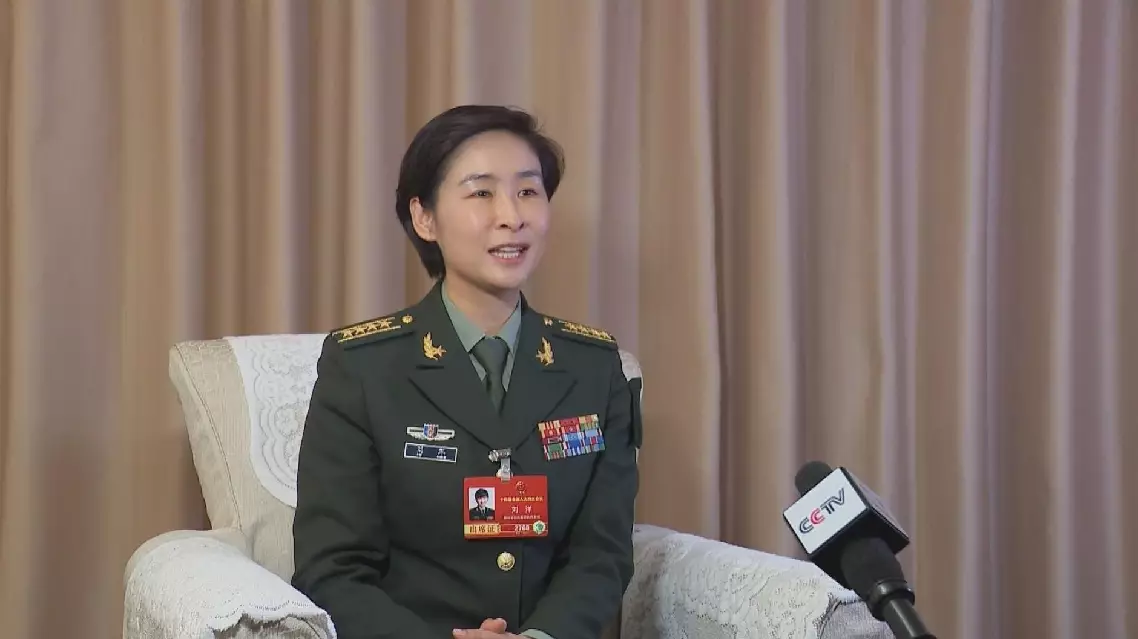
China's first female astronaut highlights role of space industry as growth driver