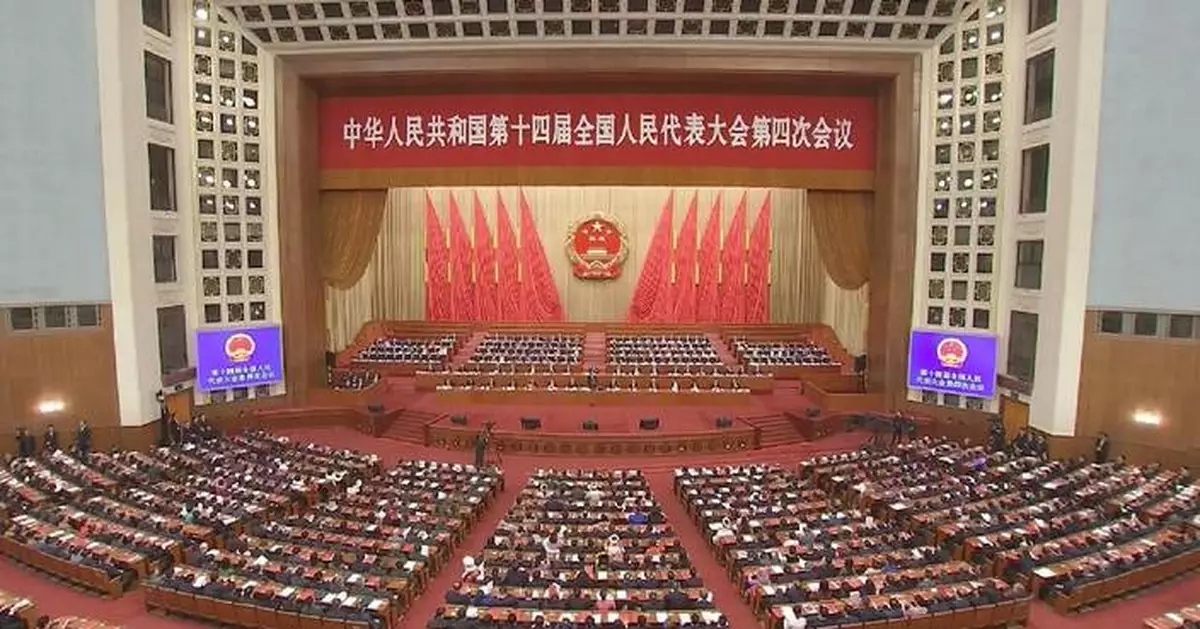
The 14th National People's Congress (NPC), China's national legislature, concluded its fourth session on Thursday.
Chinese President Xi Jinping, also general secretary of the Communist Party of China (CPC) Central Committee and chairman of the Central Military Commission, and other Party and state leaders attended the closing meeting at the Great Hall of the People in Beijing.
Zhao Leji, executive chairperson of the session's presidium, presided over the closing meeting attended by 2,762 NPC deputies.
At the meeting, Lawmakers approved the government work report and the outline of the 15th Five-Year Plan (2026-2030) for national economic and social development.
They passed the Ecological and Environmental Code, the Ethnic Unity and Progress Promotion Law and the National Development Planning Law.
Lawmakers approved a report on the implementation of the 2025 plan for national economic and social development and on the 2026 draft plan, and approved the 2026 plan.
They approved a report on the execution of the central and local budgets for 2025 and on the draft central and local budgets for 2026, and approved the central budget for 2026.
Lawmakers approved the work reports of the NPC Standing Committee, the Supreme People's Court and the Supreme People's Procuratorate.
They also adopted a decision on approving the report of the NPC Standing Committee on the work of the overhaul of laws and the proposed handling of certain laws and decisions.
Addressing the meeting, Zhao, who is also the chairman of the NPC Standing Committee, said that the annual session has completed its agenda.
He noted that the 15th Five-Year Plan period is a crucial stage for reinforcing the foundations and pushing ahead on all fronts toward basically realizing socialist modernization by 2035, and that the effective implementation of the plan is of great significance.
Zhao stressed the need to stay focused on managing the country's own affairs well and strive for a strong start to the 15th Five-Year Plan period.
He added that the people's congresses should fulfill their duties and provide the legal guarantee for achieving the goals and tasks of the 15th Five-Year Plan.
"We must rally more closely around the Party Central Committee with Comrade Xi Jinping at its core, and continue to enrich our mind, guide our practice, and advance our work with Xi Jinping Thought on Socialism with Chinese Characteristics for a New Era. We must be more conscious of the need to maintain political integrity, think in big-picture terms, follow the leadership core, and keep in alignment with the central Party leadership; stay confident in the path, theory, system, and culture of socialism with Chinese characteristics; uphold Comrade Xi Jinping's core position on the Party Central Committee and in the Party as a whole, and uphold the Party Central Committee's authority and its centralized, unified leadership. With one mind and one heart, we will forge ahead with determination, seek truth and be pragmatic, strive to deliver achievements for the people, and continuously open up new horizons for Chinese modernization through solid work," said Zhao.
This year's session of the NPC opened on March 5.
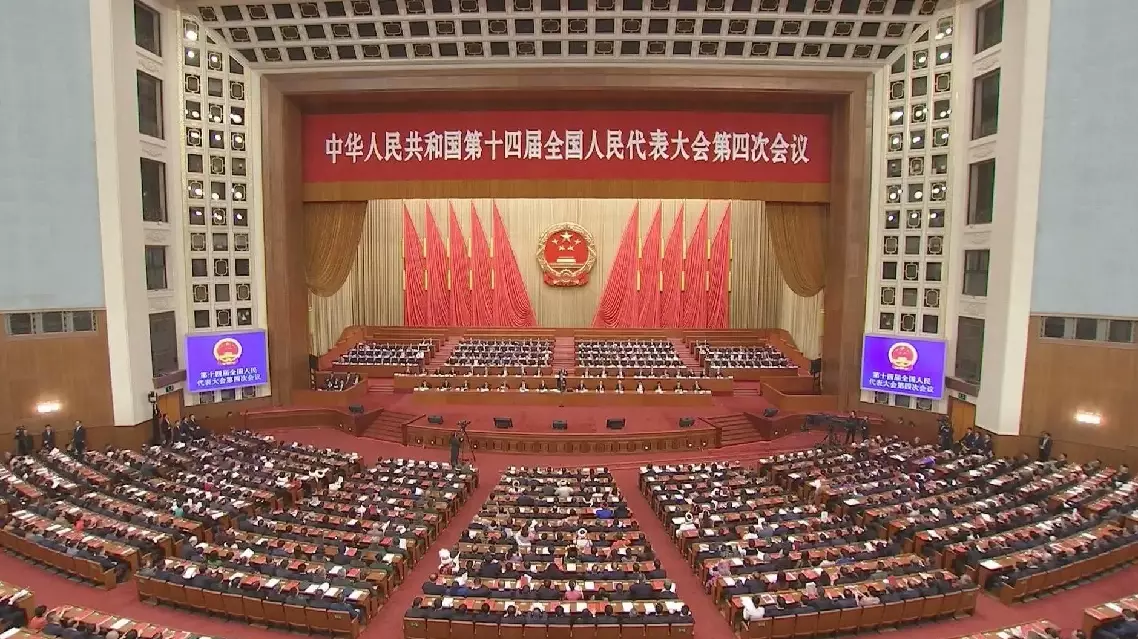
China's national legislature concludes annual session in Beijing
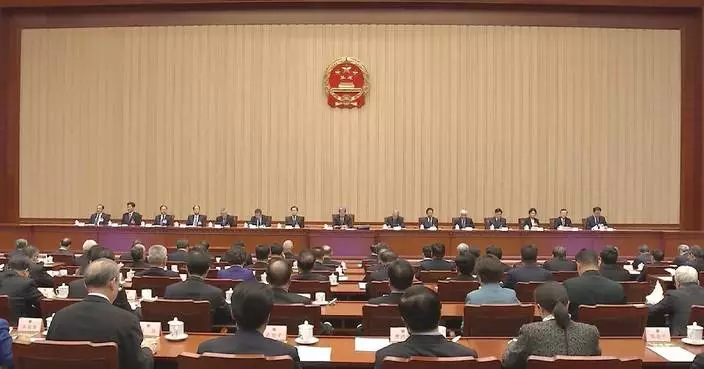
The Ecological and Environmental Code solidifies China's successful reform experiences in the form of law, transforming ecological conservation into a long-term national goal for the sustainable development of the Chinese nation, said a member of the Standing Committee of the 14th National People's Congress (NPC) on Thursday.
Chinese lawmakers voted to adopt the Ecological and Environmental Code at the closing meeting of the fourth session of the 14th National People's Congress in Beijing earlier in the day.
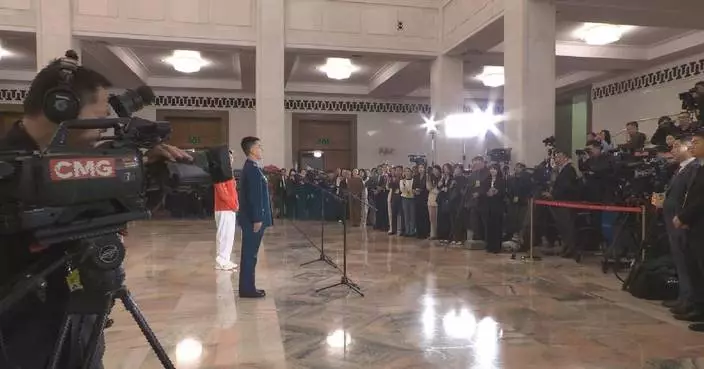
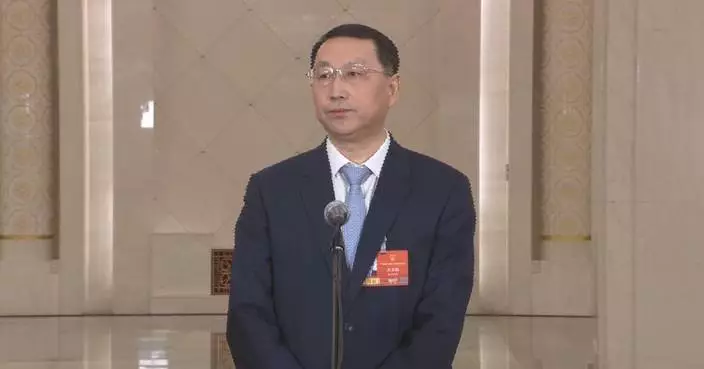
Lyu Zhongmei, also vice chair of the NPC Environmental Protection and Resources Conservation Committee, who first proposed the drafting of the code, said in an interview with China Global Television Network (CGTN) that the adoption of the code represents a milestone in transforming the country's successful reform policies into a stable legal framework, with profound implications on both national ecological governance and people's daily lives.
"I think this actually sends a very strong signal to the world. Many of our past achievements in ecological civilization system reform were reflected through policies, with numerous reform measures introduced. This time, we are institutionalizing the successful experience of those reforms in the form of law, the most authoritative and stable way to solidify them. This shows that our efforts are not just a one-off campaign. Rather, ecological and environmental protection and the building of an ecological civilization are national goals that reflect the people’s aspiration for a better life and serve the ultimate purpose of ensuring the sustainable development of the Chinese nation," said Lyu.
Lyu highlighted that the code directly enshrines China's greenhouse gas pledge and dual-carbon goals into law, demonstrating the country's concrete actions to fulfill its international responsibilities and uphold its image as a responsible major country.
"We have directly written the commitment to fully meet greenhouse gas targets into the code, and incorporated pledges to use the 'dual carbon' goals as a driving force to advance a comprehensive green transformation of economic and social development. I think this reflects our concrete actions to honor our commitments and take responsibility to the international community, demonstrating China’s image as a responsible major country," she said.
On the topic of global trade, she explained how the code will help safeguard China's interests.
"On the one hand, we are raising standards for the green and low-carbon transition and adopting market-based measures. Some of the standards we have established based on China's actual situation and the methodologies we have created can contribute China's experience and expertise to the world. On the other hand, the Ecological and Environmental Code also includes provisions on extraterritorial application and establishes China’s own system of environmental protection standards," Lyu said.
Looking to the future, she discussed the code's role in the 15th Five-Year Plan period (2026-2030).
"During the 15th Five-Year Plan period, I believe our ecological and environmental protection will undergo fundamental changes. In the past, it relied more on strict administrative enforcement and control. But now, while not lowering strict control standards or reducing strict control measures, we must also introduce more incentive-based measures. Strict regulation will push enterprises to transform and encourage them to pursue environmental protection. The code will provide a clear, long-term and stable norm. In my view, the Ecological and Environmental Code is not only a 'tightening band' that constrains corporate behavior, but also an 'engine' that opens up new tracks for enterprises’ future development," she said.

China's ecological environmental code represents milestone in environmental rule of law