Skip to Content Facebook Feature Image

China-Netherlands mutually beneficial cooperation in line with common interests: Chinese FM

China

China

China

China-Netherlands mutually beneficial cooperation in line with common interests: Chinese FM

2026-03-14 04:14 Last Updated At:12:47

Chinese Foreign Minister Wang Yi said on Friday that both China and the Netherlands being committed to promoting mutually beneficial cooperation in an open and pragmatic spirit is in line with the shared interests of the two sides.

This is also conducive to the sound development of China-European Union (EU) relations as well as the security and stability of the global industrial and supply chains, he said.

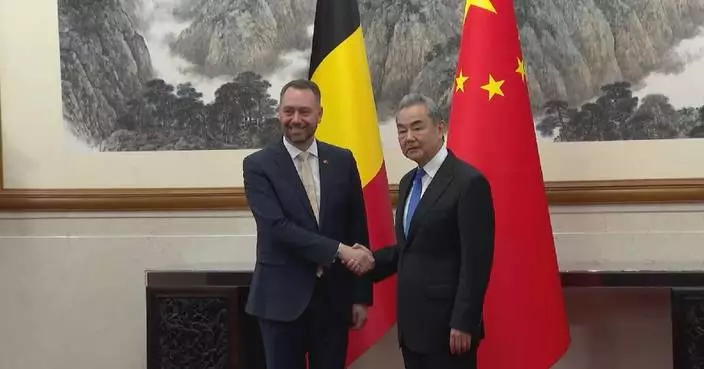
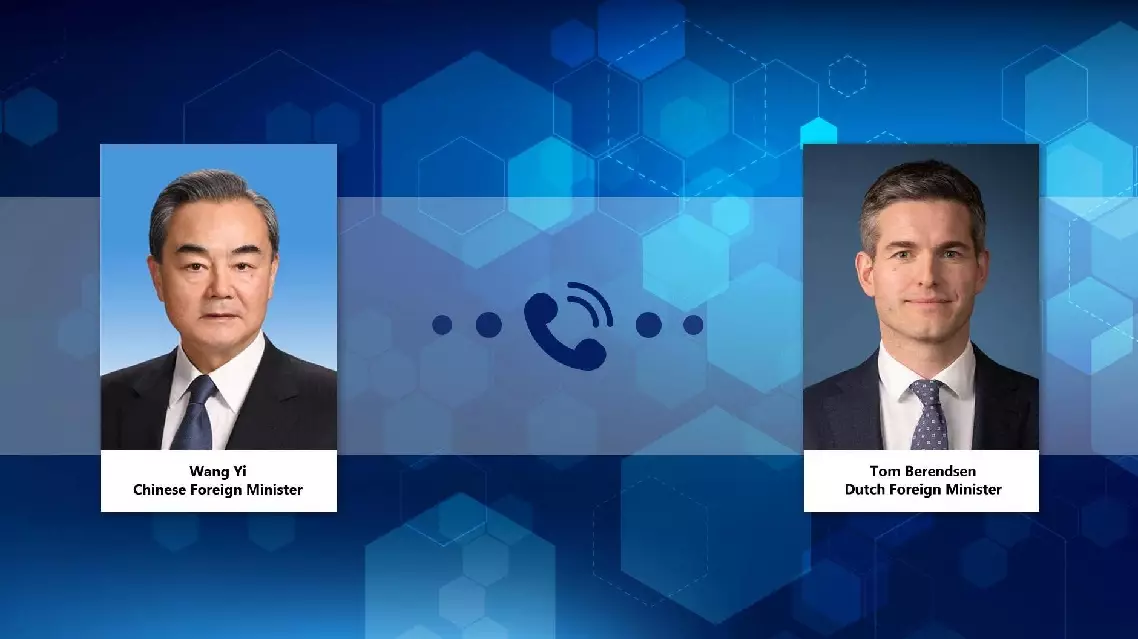
Wang, also a member of the Political Bureau of the Communist Party of China Central Committee, made the remarks in a phone conversation with Dutch Foreign Minister Tom Berendson at the latter's request.

Wang congratulated Berendson on his assuming office as the Netherlands' new foreign minister and said that China and the Netherlands are important partners of cooperation to each other.

China appreciates the positive signal released by the new Dutch government of valuing its relations with China, he said, noting that China's foreign policy maintains coherence and stability, and that China is willing to work with the Netherlands to strengthen exchanges and communication, promote mutual understanding and trust, and consistently deepen their open and pragmatic partnership for comprehensive cooperation.

Wang briefed his Dutch counterpart on the outcomes of China's just concluded "two sessions," noting that China will remain committed to opening wider to the outside world and expanding institutional opening-up, bringing more opportunities to countries around the world, including the Netherlands.

China-Netherlands economic and trade cooperation enjoys mutual complementarity of advantages, mutual benefit and win-win results, Wang noted.

He expressed hope that the new government of the Netherlands will take on a new look and new challenges, adhere to independence and self-autonomy, and support the normal economic and trade exchanges between enterprises of the two countries.

It is hoped that the Dutch side would push EU institutions to understand China in an objective and rational manner, and adhere to the positioning of partnership and open cooperation between China and the EU, Wang said.

For his part, Berendson said the new government of the Netherlands speaks highly of the achievements China has made in its rapid development, and regards the relations with China as one of its most important bilateral relationships.

Berendson said his country is willing to keep high-level exchanges with China, leverage bilateral mechanisms such as the political consultation between foreign ministries and the mixed economic and trade committee, increase dialogue and exchanges at all levels, deepen the pragmatic cooperation in climate change, water resource management and other areas, and jointly defend multilateralism, consistently advancing the bilateral open and pragmatic partnership for comprehensive cooperation to new levels.

The Dutch side is willing to play a constructive role for the sound and steady development of EU-China relations, he said.

The two sides also exchanged views on issues including the Ukraine crisis.
China-Netherlands mutually beneficial cooperation in line with common interests: Chinese FM

China-Netherlands mutually beneficial cooperation in line with common interests: Chinese FM
A member of the Political Bureau of Ansar Allah (the Houthi military group) on Thursday warned of an escalation in conflicts in the Middle East as Israel continued to carry out deadly strikes in Lebanon.

Talking to China Global Television Network (CGTN), Houthi political bureau member Ali Al-Dailami emphasized the group's support for other members of the Iran-led "Axis of Resistance," a regional coalition committed to countering Israel and includes militant groups like Hezbollah and Hamas.

"Coordination within the 'Axis of Resistance' is ongoing, especially since we are talking about American and Zionist hegemony, and this axis is based on resisting imperialism and resisting the Zionist occupation, so it continues. This coordination has already appeared in many moves, most recently what was announced by the military spokesperson Yahya Saree regarding joint operations between Iran, Hezbollah, and Yemen," said Al-Dailami.

"We are with the Islamic Republic of Iran, we are with the resistance, we are with Lebanon, we are with Palestine. This is a principled stance we cannot waver from, and it is also considered a red line. And this red line -- whoever tries to cross it, we will certainly confirm the other direction, which is the direction of the resistance: with Lebanon, with Palestine, with the Islamic Republic of Iran, with Iraq, and with all who resist American imperialism and Zionist occupation," said the official.

His remarks echoed the statement by Houthi leader Abdul-Malik al-Houthi, who said on Thursday that military operations would escalate in the coming period, warning of potential "surprise actions" in line with developments on the ground.

In a televised speech broadcast by the Houthi-run Al-Masirah TV, al-Houthi indicated that the group's campaign would enter a new phase marked by intensified activity and evolving tactics.

The Houthi leader highlighted his group's military role within what he described as coordinated regional efforts, stating that the Yemeni front had contributed to "joint operations with the Axis of Resistance," including missile and drone strikes targeting Israel.

A two-week ceasefire was announced early Wednesday by the United States and Iran. The office of Israeli Prime Minister Benjamin Netanyahu said Israel would comply with the truce but would continue military operations in Lebanon.

Prior to the ceasefire, the Houthis had launched missile and drone attacks against Israel starting on March 28 -- one month after the United States and Israel launched the current massive attacks on Iran -- in what they described as support for allied forces in Iran, Iraq, Lebanon and Palestine.

The group, which has controlled Sanaa and much of northern Yemen since late 2014, previously supported Iran during last year's 12-day conflict with the United States and Israel.

Houthi official warns of military escalation amid regional tensions

Houthi official warns of military escalation amid regional tensions

Recommended Articles