NEW YORK (AP) — More than 30 states will resume their antitrust trial against Live Nation and Ticketmaster on Monday after negotiations this week failed to result in many states joining a tentative settlement reached by the Justice Department.
Lawyers told the judge Friday at a hearing in New York that seven states — Arkansas, Iowa, Mississippi, Nebraska, Oklahoma, South Carolina and South Dakota, all of which have Republican attorneys general — were joining the Justice Department in settling with the live music giant.
The other 32 states, along with the District of Columbia, plan to continue trying to convince a jury that Live Nation Entertainment and its ticketing subsidiary, Ticketmaster, are squelching competition and driving up prices for fans. They say this was done through threats, retaliation and other tactics to control virtually every aspect of the industry, from concert promotion to ticketing.
The companies say they do not monopolize their industry and that artists, sports teams and venues set prices and decide how tickets are sold.
A jury had already begun hearing testimony in the trial when the U.S. Justice Department, which had taken the lead in suing Live Nation, said it had reached a deal with the company that would save the public money by letting competitors of Live Nation into some ticket markets where they are currently excluded.
Many states criticized the deal, saying the federal government failed to get enough concessions from the company.
Testimony was put on hold for a week for more settlement negotiations, but with no breakthrough in sight, Judge Arun Subramanian said Friday the trial would resume.
The judge also ruled against Live Nation's objection to trial exhibits in which a company employee several years ago tells another worker that the prices Live Nation charges to access the VIP area of a Tampa, Florida, amphitheater are “outrageous,” that customers paying the fees "are so stupid” and that “I almost feel bad taking advantage of them” before writing, “BAHAHAHAHAHA.”
Live Nation had argued against their inclusion in the trial, saying the employees were making “passing references to non-ticket ancillary products — such as VIP club access, premier parking, or lawn chair rentals — sold to concertgoers at two amphitheaters” in Florida and Virginia.
The judge said the overall fan experience is relevant to the relationship between performers and their customers and some artists might not want to perform if fans were being charged too much for lawn chairs or other amenities.
Subramanian said it was no different than the harm that might occur to the film industry if movie theaters began charging $50 for concessions such as soda, candy and popcorn.
In a statement issued Thursday, Live Nation said it had just learned about the private conversation between the employees and planned to look into it promptly because the conversation “absolutely does not reflect our values or how we operate.”
At a hearing on Tuesday, Live Nation attorney Dan Wall told the judge that the chance all states would settle their claims this week was “about zero.”
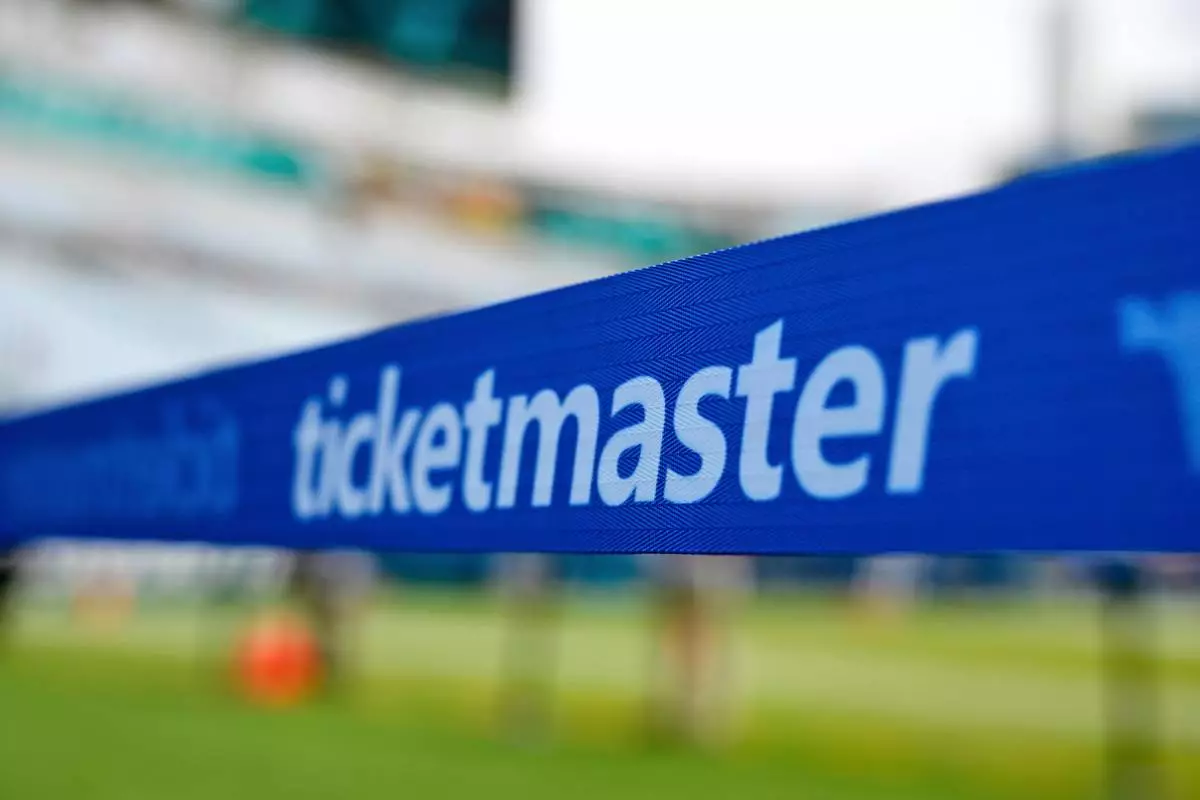
FILE - The Ticketmaster logo is seen along the sideline of the field before an NFL football game, Sept. 15, 2024, in Jacksonville, Fla. (AP Photo/Phelan M. Ebenhack, File)
BEIRUT (AP) — Ahed Badawi lived for more than a decade in Bahrain, a small Gulf country that — unlike her native Syria — rarely made headlines.
It provided a refuge for her, her sister and their elderly mother during Syria’s 14 years of civil war.
“Nothing at all ever happened there,” she said. “I mean, the Bahrainis don’t even know what war is.”
But after the U.S. and Israel attacked Iran, sparking a regional war, Bahrain and neighboring Gulf countries found themselves in Iran's crosshairs. So the family fled back to their home in Aleppo, which was once the site of some of the civil war's fiercest battles but now offered a safe haven.
War-battered Syria has stood out as one of the few spots of calm in the region’s latest conflagration. Its leaders have been working to rebuild relations with Arab and Western countries that had shunned Syria under former President Bashar Assad, who was ousted in December 2024 by rebels, who then installed a new government.
Since the outbreak of the U.S.-Israeli war with Iran and the closure of the Strait of Hormuz, Damascus has seized on the opportunity to strengthen those relationships by staying neutral.
Syria has “presented itself as the solution to strategic crises in the region,” said Obayda Ghadban, an official with the Syrian Foreign Ministry.
After the U.S.-Israeli attacks, Iran rained missiles not only on Israel but on Gulf countries hosting U.S. bases. In Lebanon, the dormant war between Israel and the Iran-backed militant group Hezbollah reignited. And Iraq — which is home to both Iran-backed militias and U.S. bases — found itself in the crosshairs of both sides.
Despite missiles flying overhead — and occasionally falling on Syrian territory — Syria managed to stay on the sidelines and positioned itself as an alternative transport route for oil exports that could no longer be sent through the strait.
“Syria, which was once an arena for others’ conflicts, has today chosen, through the will of its people and institutions, to be a bridge to security and a fundamental pillar of the solution,” interim Syrian President Ahmad al-Sharaa said last week at a meeting of European leaders in Cyprus.
He touted his country as “the alternative and secure artery connecting Central Asia and the Gulf to the heart of the European continent.”
Since Iran blocked access to the strait, oil shipments have been trucked from Iraq into Syria and shipped to European markets via Syria’s Baniyas port, bypassing the Hormuz route. A key border crossing between northern Iraq and Syria reopened last month after being closed for more than a decade, with officials touting it as an additional route for energy exports.
The overland route is less efficient and more expensive than shipping exports through the strait, but it provides a workaround as long as Iran maintains its stranglehold on the channel.
Ghadban said his country had no interest in allying with either side in the war.
“The parties participating in it are strategic enemies of Syria, whether we talk about Iran and its affiliates, or if we talk about Israel and its aggressive expansionist policy in Syria,” he said. “Both parties have an interest in weakening Syria.”
Iran was a key ally of Assad and came to his aid during the civil war, as did Hezbollah and allied Iraqi militias. That put them in conflict with the groups that are now ruling in Damascus.
Israel, meanwhile, has been suspicious of and sometimes openly hostile toward Syria's new Islamist-led authorities. After Assad’s fall, the Israeli military seized control of a U.N.-patrolled buffer zone in southern Syria and has been occupying it.
In the early weeks of the U.S.-Israeli war against Iran, some had speculated that Syria might join the fray to settle scores against Hezbollah.
But the Syrian military made no such move, and al-Sharaa and other officials insisted they had no interest in intervening in Lebanon.
Noah Bonsey, senior adviser on Syria with the International Crisis Group, said that while “Damascus was really clear from the beginning that it wanted no part of this war and signaled to everyone accordingly,” its ability to actually stay out of the fray was in part due to fortuitous timing.
Eastern Syria had for years hosted bases housing U.S. troops, but the U.S. had drawn down its presence before the war with Iran started.
After fighting broke out between forces of the central Syrian government and the Kurdish-led Syrian Democratic Forces in northeastern Syria in January, the U.S. military moved thousands of suspected Islamic State militants held in detention centers in Syria to Iraq. The military also scaled down its own presence in Syria, where the main mission was to prevent a resurgence of IS.
“Because the withdrawal had gone so far by the time the war (with Iran) started, there were very few U.S. assets and personnel still in the country” that could have drawn Iranian fire, Bonsey said.
Syria may have gained politically from its neutral positioning in the regional war, but it will still suffer from the conflict economically, Bonsey said.
Damascus had counted on Syria’s postwar reconstruction receiving investment from wealthy Gulf Arab countries once known for their shopping malls and skyscrapers.
But now those countries will have fewer resources and "less bandwidth to spare for lower-priority issues” as they focus on “shoring up their own defense and getting their own economies back up to speed” after the war, Bonsey said.
While Syria could benefit in the long term from infrastructure projects such as proposed rail lines and gas pipelines that would link the Gulf to Turkey and to European markets, those projects will take years, if they happen at all.
In the meantime, Syria’s new government faces increasing discontent from the population over the country’s flagging economy.
But Badawi, for now at least, is happy to be back home, despite the difficulties.
“There’s nothing like being in your own country," she said. "When you’re in your own country, you feel a different kind of security.”
Associated Press journalist Ghaith AlSayed in Damascus, Syria, contributed to this report.
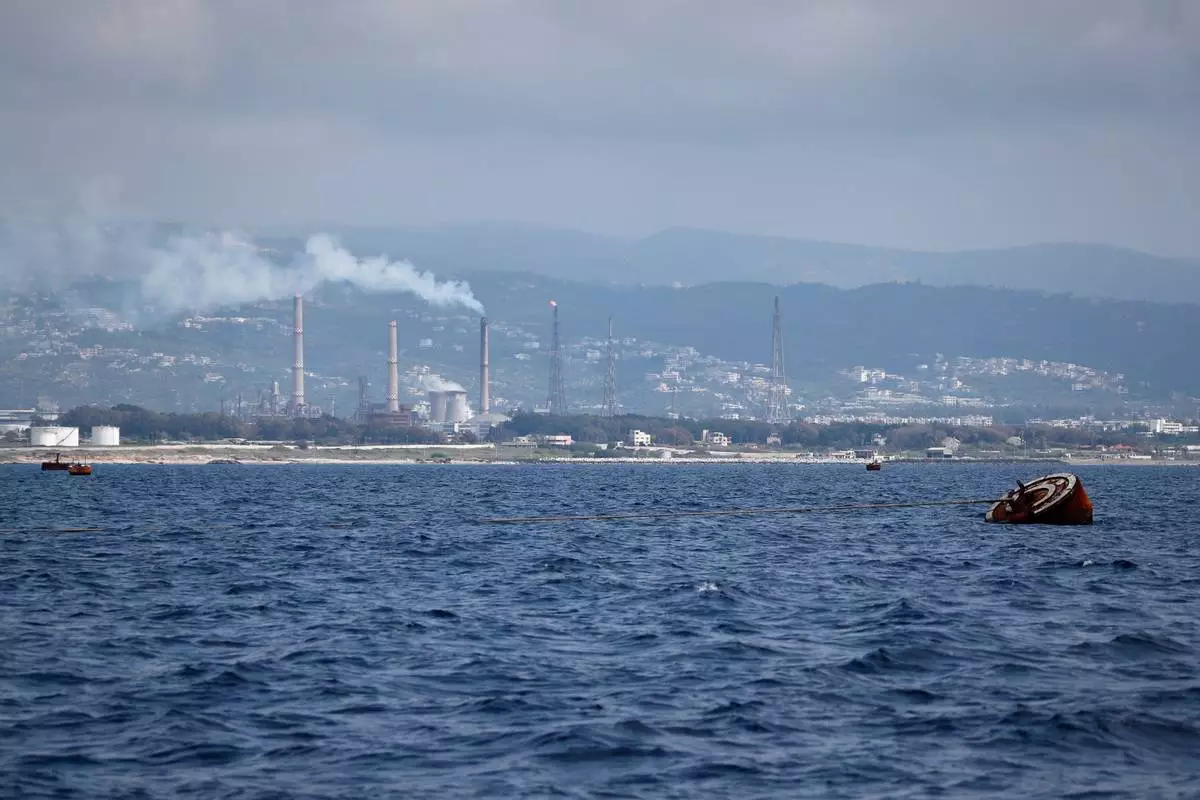
The Baniyas refinery, north of the Mediterranean coastal city of Baniyas in Tartus Governorate, western Syria, Friday, May 1, 2026. (AP Photo/Omar Sanadiki)
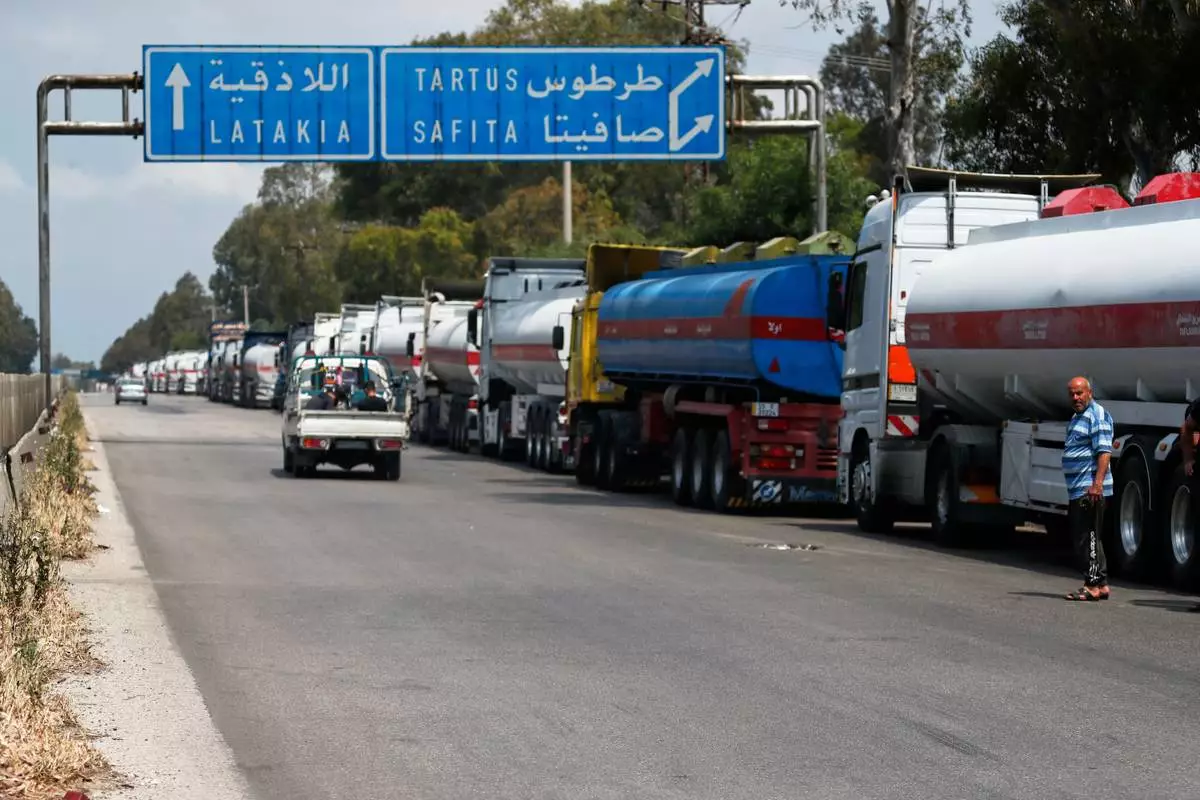
Iraqi trucks loaded with oil wait to drive toward the Baniyas oil refinery along a highway in Tartus Governorate, western Syria, Friday, May 1, 2026. (AP Photo/Omar Sanadiki)
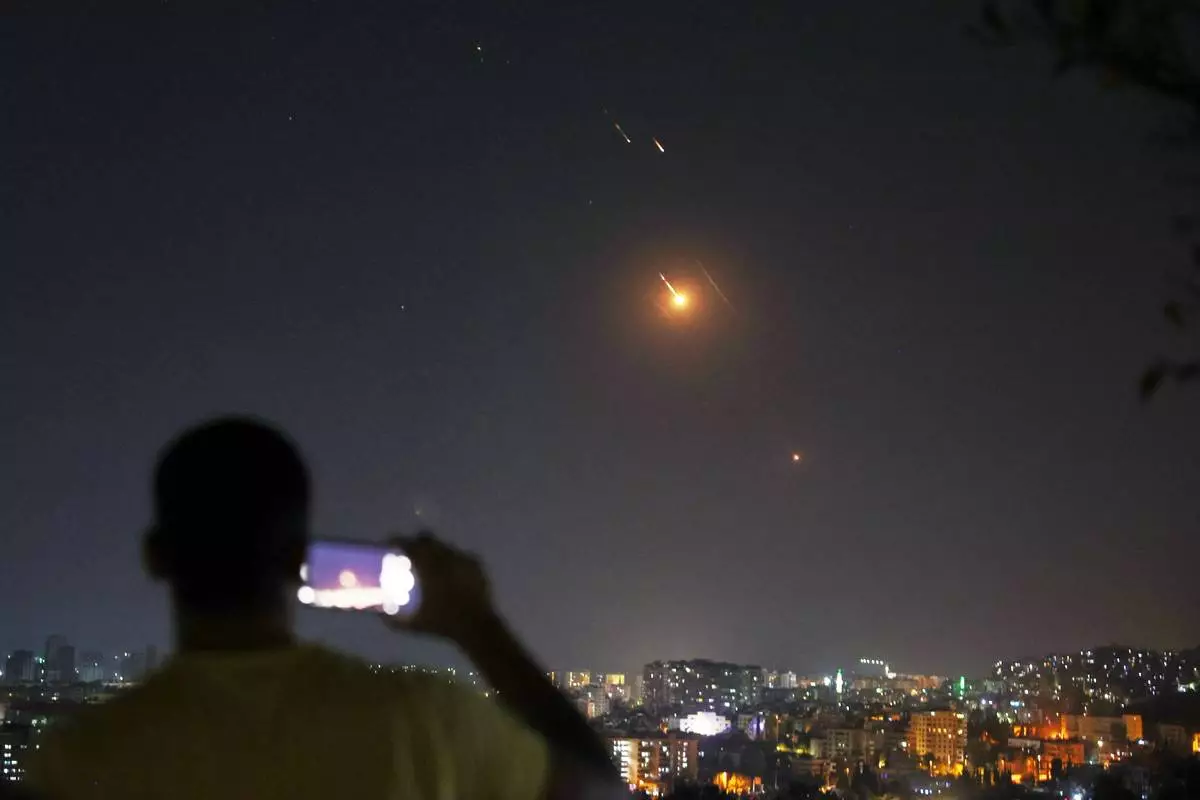
FILE — A man takes a cellphone photo as missiles fired from Iran toward Israel fly over Syrian territory in Damascus, Syria, early Wednesday, June 18, 2025. (AP Photo/Ghaith Alsayed, File)
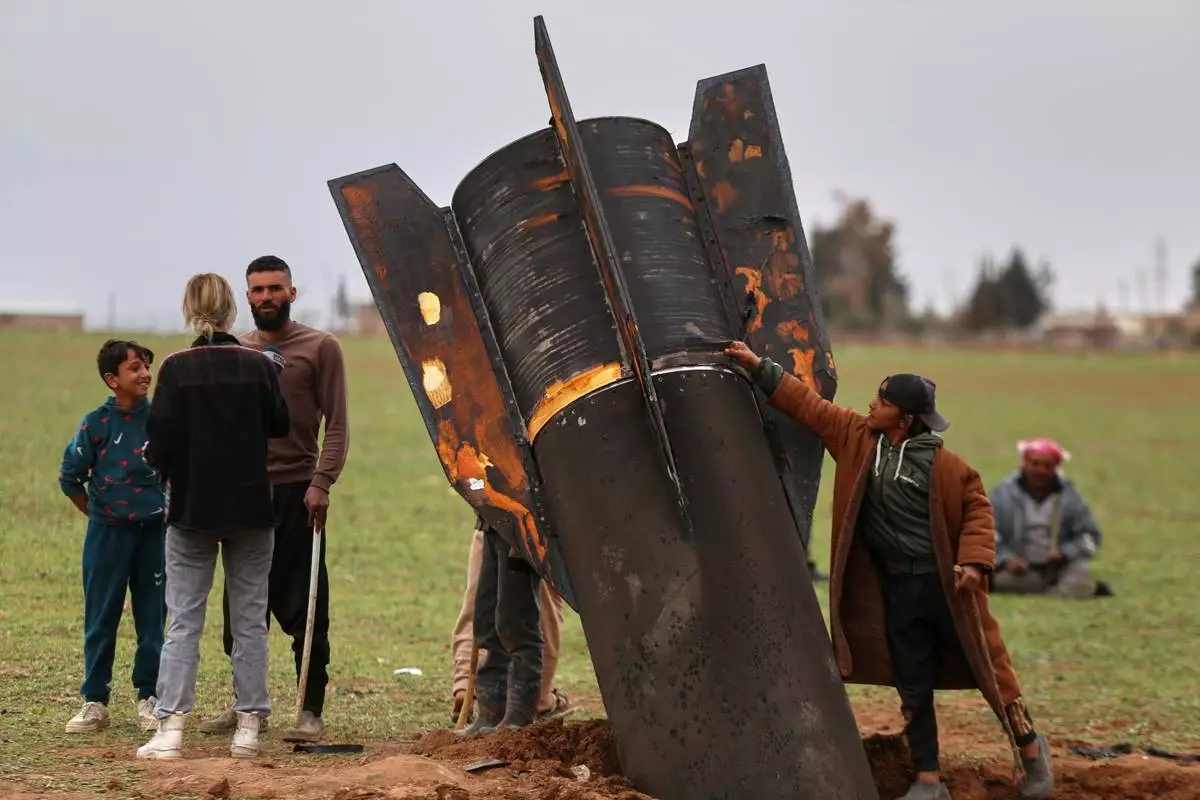
FILE — Exposing himself to the danger of unexploded ordnance, a boy touches an unexploded Iranian projectile that landed in an open field in the outskirts of Qamishli, eastern Syria, March 4, 2026.(AP Photo/Baderkhan Ahmad, File)
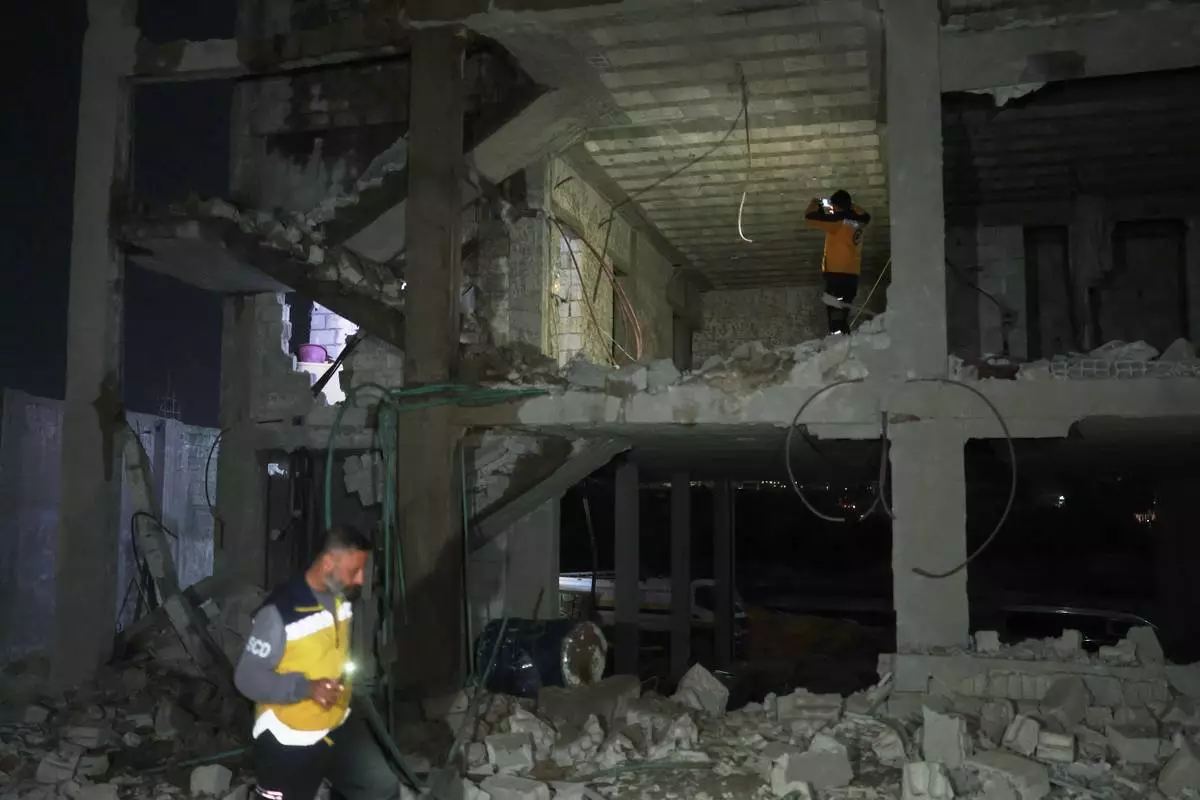
FILE — Members of the Syrian Civil Defense inspect a building after debris from an Iranian missile fell, injuring at least four people, including three children, according to Syria's state news agency SANA, in the town of Ain Terma, near Damascus, Syria, March 1, 2026. (AP Photo/Ghaith Alsayed, File)