Skip to Content Facebook Feature Image

Trump seeks to close $1.6 trillion revenue gap with raft of new tariffs

News

Trump seeks to close $1.6 trillion revenue gap with raft of new tariffs
News

News

Trump seeks to close $1.6 trillion revenue gap with raft of new tariffs

2026-03-14 21:00 Last Updated At:21:11

WASHINGTON (AP) — The Trump administration this week stepped up its ambitious effort to replace about $1.6 trillion in lost tariff revenue that was eliminated by the Supreme Court's decision to strike down a range of the president's import taxes.

Recovering that lost revenue, which the White House was counting on to help offset the steep, multi-trillion dollar cost of its tax cuts, is possible but will be challenging, experts say. The administration has to use different legal provisions to impose new duties, and those provisions require longer, complex processes that U.S. companies can use to seek exemptions. It could be months or more before it is clear how much revenue the replacement tariffs will yield.

“I wouldn't bet against this administration being able to get back on paper the same effective tariff rate they had before," said Elena Patel, co-director of the Urban-Brookings Tax Policy Center. But the new approach will “make it easier for people to contest the tariffs, which is going to put a big asterisk on the revenue until all that is settled.”

On Wednesday, U.S. Trade Representative Jamieson Greer said the administration will investigate 16 economies — including the European Union — over whether their governments are subsidizing excessive factory capacity in a way that disadvantages U.S. manufacturing. The investigation will also cover China, South Korea, and Japan, Greer said.

In addition, he said there would be a second investigation of dozens of countries to see if their failure to ban goods made by forced labor amounts to an unfair trade practice that harms the United States. That investigation will also cover the EU and China, as well as Mexico, Canada, Australia, and Brazil.

Both investigations are being conducted under Section 301 of the 1974 Trade Act, which requires the administration to consult with the targeted countries, as well as hold public hearings and allow affected U.S. industries to comment. A hearing as part of the factory capacity investigation will be held May 5, while a hearing on the forced labor investigation will occur April 28.

It's a far cry from the emergency law that President Donald Trump relied on in his first year in office, which allowed him to immediately impose tariffs on any country, at nearly any level, simply by issuing an executive order.

Moments after the Supreme Court's ruling, Trump imposed a 10% tariff on all imports under a separate legal authority, but that duty can only last for 150 days. The president has said he would raise it to 15%, the maximum allowed, but has yet to do so. Some two dozen states have already challenged the new tariffs. The administration is aiming to complete its Section 301 investigations before the 10% duties expire.

The effort underscores the importance that the Trump White House has placed on tariffs as a revenue-raiser at a time when the federal government is facing huge annual budget deficits for decades into the future. Previous administrations, by contrast, used tariffs more sparingly to narrowly protect specific industries.

Erica York, vice president of federal tax policy at the Tax Foundation, noted that the first investigation covers roughly 70% of imports, while the second would cover nearly all of them.

“That breadth suggests the goal isn’t to address the issues at hand, but instead to recreate a sweeping tariff tool,” she said.

Trump sees tariffs as a way to force foreign countries to essentially help pay the cost of U.S. government services, even though all recent economic studies find that American companies and consumers are paying the duties, including ones from the Federal Reserve Bank of New York and economists at Harvard University. In his state of the union address last month, Trump even touted his tariffs as a potential replacement for the income tax, which would return the United States’ tax regime to the late 19th century.

Trump also wants tariffs to help pay for the tax cuts he extended in key legislation last year. The tax cut legislation is expected, according to the most recent estimates by the nonpartisan Congressional Budget Office, to add $4.7 trillion to the national debt over a decade, while all Trump's duties, including ones not struck down by the court, were projected to offset about $3 trillion — or two-thirds of that cost.

The court’s ruling Feb. 20 that he could no longer impose emergency tariffs eliminated about $1.6 trillion in expected revenue over the next decade, according to the CBO.

Some of Trump's tariffs remain place, including previous duties on China and Canada that were imposed after earlier 301 investigations. The administration has also slapped tariffs on some specific products, including steel, lumber, and cars. Those, combined with the 10% tariff for part of this year, should yield about $668 billion over the next decade, the Tax Foundation estimates.

“It’s going to take a really big patchwork of these other investigations to make up for the (lost) tariffs,” York said.

The administration's efforts are also unusual because they reflect an overreliance on tariffs to bring in more government revenue. Trump has also said the duties are intended to return manufacturing to the United States, and he has used them to leverage trade deals.

“What makes this really different,” said Kent Smetters, executive director of the Penn Wharton Budget Model, “it is really the first time tariffs have been mainly used as a revenue raiser.”

Patel, meanwhile, argues that raising revenue can be done more reliably and straightforwardly by Congress. Laws like Section 301 are traditionally intended to be used to address specific trade policy concerns in particular countries.

“It’s not supposed to be there to raise revenue,” she said. “If we want to raise revenue through tariffs, then Congress should impose a broad based tariff.”
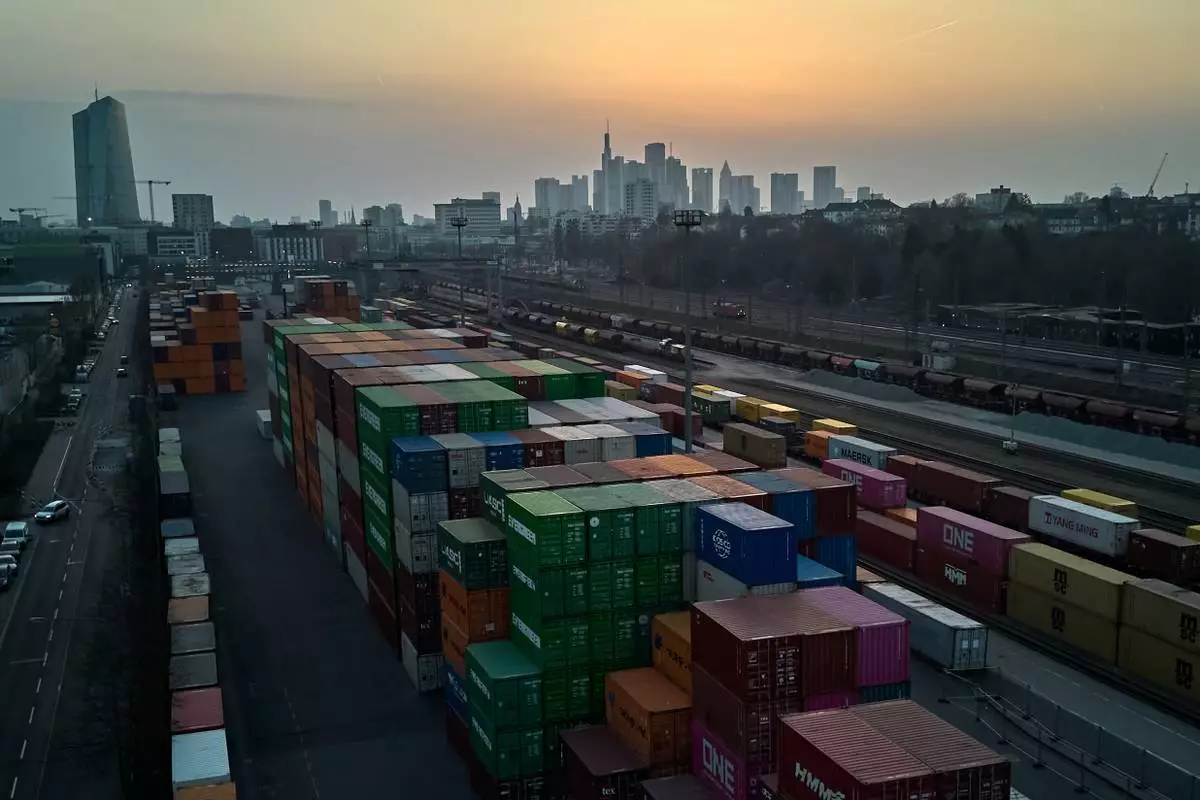
Containers are piled up at a cargo terminal in Frankfurt, Germany, Monday, March 9, 2026. (AP Photo/Michael Probst)
Containers are piled up at a cargo terminal in Frankfurt, Germany, Monday, March 9, 2026. (AP Photo/Michael Probst)

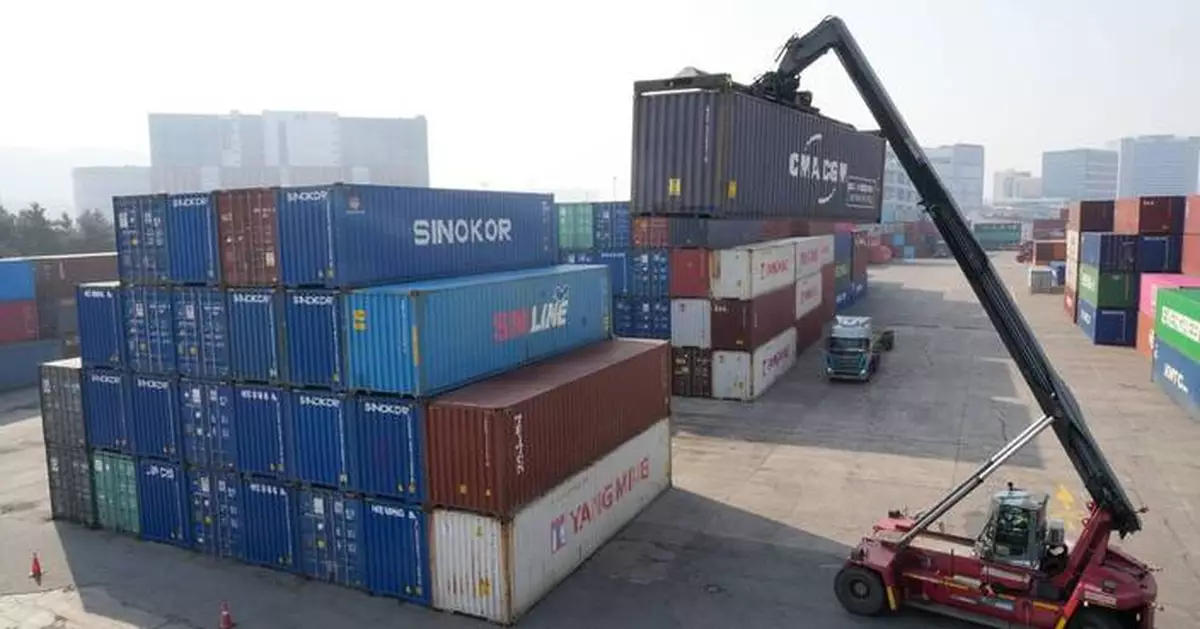
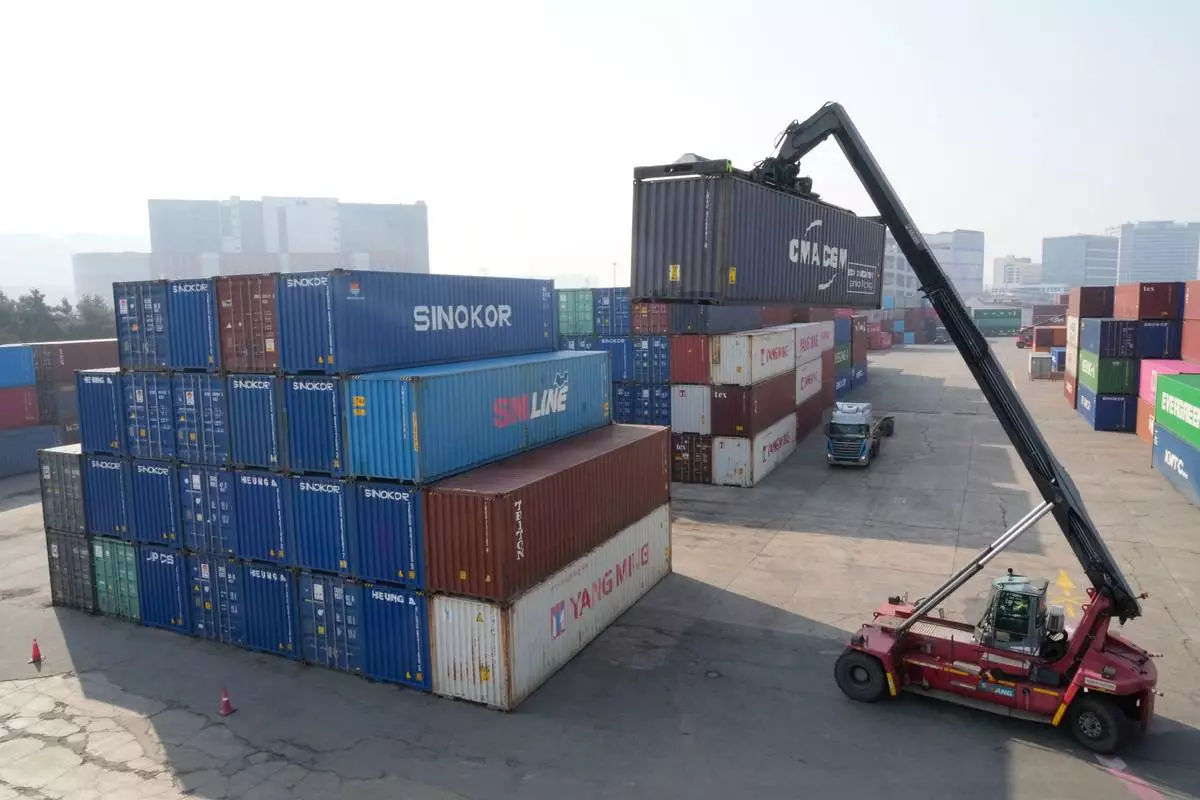
A crane unloads a container at the Uiwang ICD Terminal in Uiwang, South Korea, Thursday, March 12, 2026. (AP Photo/Ahn Young-joon)
A crane unloads a container at the Uiwang ICD Terminal in Uiwang, South Korea, Thursday, March 12, 2026. (AP Photo/Ahn Young-joon)

KYIV, Ukraine (AP) — A combined missile and drone attack on the Kyiv region killed at least four people and wounded at least 15 overnight into Saturday, according to the head of the regional administration.

Three of the wounded were in critical condition, of whom two were undergoing surgery, Mykola Kalashnyk reported on Saturday. The attack hit four districts, damaging residential buildings, educational institutions, enterprises and critical infrastructure, Kalashnyk added in a social media post.

Ukrainian President Volodymyr Zelenskyy said the main target for the overnight strikes was "the energy infrastructure of the Kyiv region.” He said Russia launched around 430 drones of various types during the night, as well as 68 missiles.

Russia’s Defense Ministry on Saturday said the nighttime strikes targeted energy and industrial facilities serving Ukraine's armed forces, as well as military airfields.

The strikes came days after the U.S. postponed peace talks between Russia and Ukraine scheduled for this week, citing the war in the Middle East.

As U.S. and Israeli missiles and bombs rain on Iran, Russia has responded with words of indignation but no action to support its ally. Moscow’s failure to help another ally, after the 2024 ouster of former Syrian ruler Bashar Assad and January’s U.S. arrest of Venezuelan leader Nicolas Maduro, highlighted the limits of its influence — but the Kremlin expects to reap benefits from the Iran war.

Russia is already profiting from a surge in global energy prices, and could hope that the Mideast war will detract attention from Ukraine, deplete Western arsenals and force NATO allies to reduce military support for Kyiv.

Zelenskyy on Saturday called on Kyiv's Western partners to pay “one hundred percent attention” to the need to boost the production of air defense missiles.

“Russia will try to exploit the war in the Middle East to cause even greater destruction here in Europe, in Ukraine," he said in a post on social media.

"We must be fully aware of the real level of the threat and prepare accordingly, namely: in Europe, we need to develop the production of air defense missiles — especially those capable of countering ballistic threats — as well as all other systems necessary to truly protect lives,” he said.

Kyiv is also awaiting White House approval for a major drone production agreement proposed by Ukraine last year, Zelenskyy said Thursday, as countries scramble to modernize their air defenses after the Iran war exposed shortcomings.

Also on Thursday, Zelenskyy criticized the 30-day U.S. waiver on Russian oil sanctions amid the war in the Middle East, saying it is “not the right decision” and won’t help bring a stop to Russia’s more than 4-year-old invasion of Ukraine.

“This easing alone by the United States could provide Russia with about $10 billion for the war,” Zelenskyy said. “This certainly does not help peace.”

Overnight into Saturday, Ukrainian drones hit an oil refinery and port in Russia’s southern Krasnodar region, local Russian officials reported.

Krasnodar authorities said three people were hurt in a strike on Port Kavkaz, a port opposite Crimea used to ship liquefied natural gas and grains. A service vessel and pier infrastructure were damaged, they said in a social media post. One person was hospitalized, they added in a separate post later.

Falling drone debris also sparked a fire at the region’s Afipsky oil refinery, authorities said in a separate Telegram post. They said no one was hurt, but did not immediately comment on damage.

Russia's Defense Ministry said its forces shot down 87 Ukrainian drones during the night, including 16 over the Krasnodar region and 31 over the nearby Sea of Azov.

Moscow mayor Sergei Sobyanin said that 16 drones had been downed on the approach to the Russian capital as of early afternoon on Saturday.

Earlier this week, Russian and Ukrainian officials both claimed front-line progress, with Ukraine saying it pushed Moscow’s forces back across places on the front line and the Kremlin insisting Russia’s invasion of its neighbor is making progress.

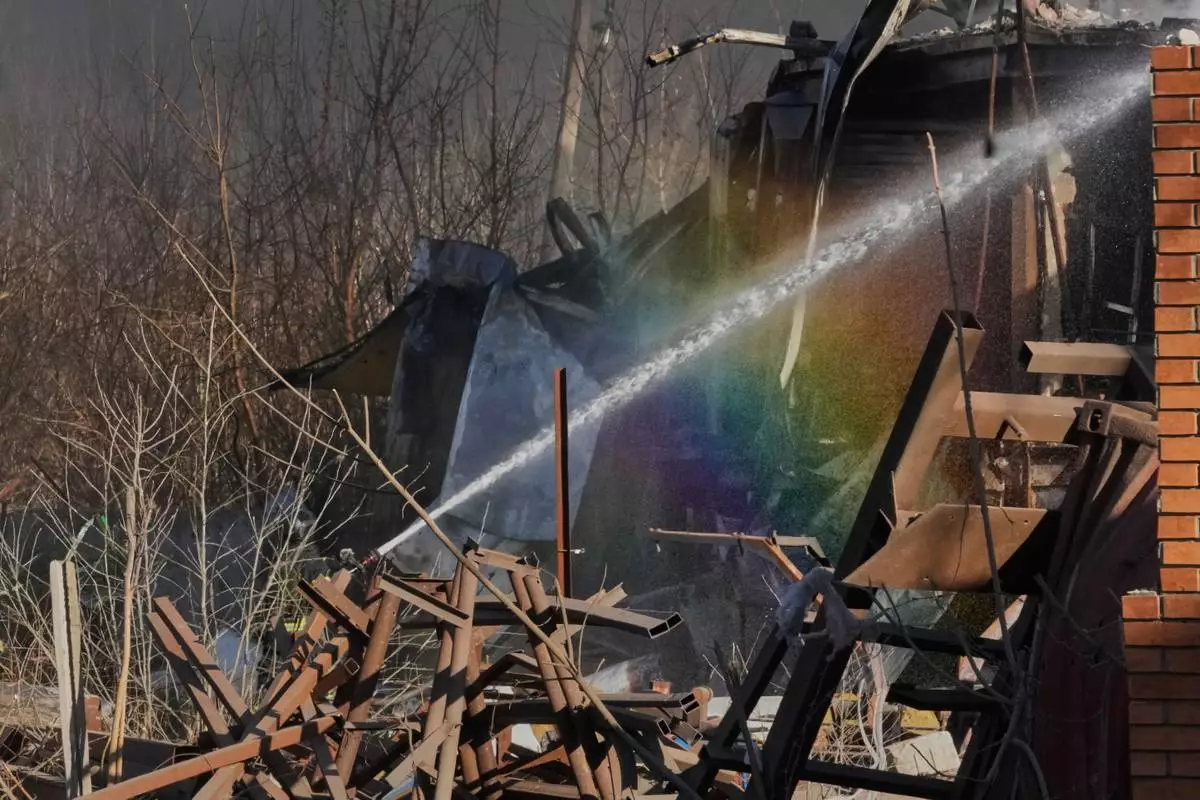
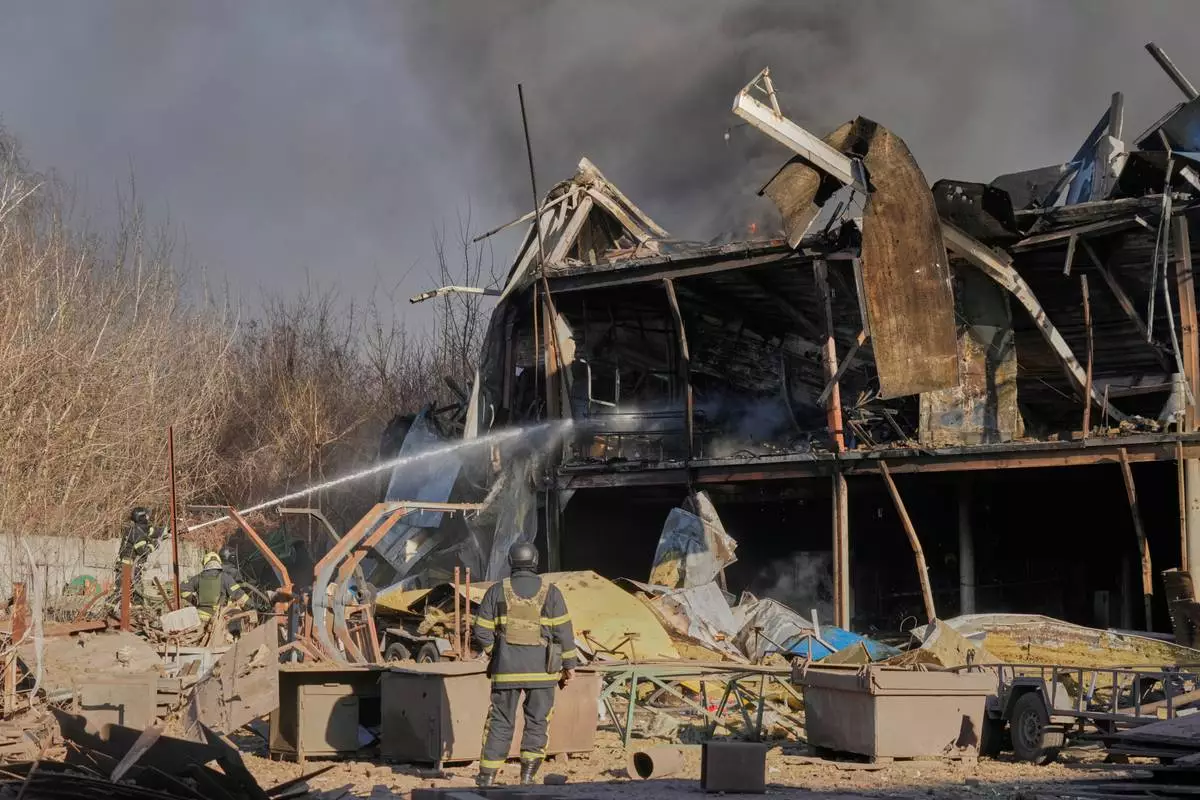
Firefighters put out the fire at railway workshops following a Russia missile and drone attack, in Brovary close to Kyiv, Ukraine, Saturday, March 14, 2026. (AP Photo/Efrem Lukatsky)

Firefighters put out the fire at railway workshops following a Russia missile and drone attack, in Brovary close to Kyiv, Ukraine, Saturday, March 14, 2026. (AP Photo/Efrem Lukatsky)

Firefighters put out the fire at railway workshops following a Russia missile and drone attack, in Brovary, close to Kyiv, Ukraine, Saturday, March 14, 2026. (AP Photo/Efrem Lukatsky)

Firefighters put out the fire at railway workshops following a Russia missile and drone attack, in Brovary, close to Kyiv, Ukraine, Saturday, March 14, 2026. (AP Photo/Efrem Lukatsky)

Firefighters put out the fire at a residential neighbourhood following a Russia missile and drone attack, in Brovary, close to Kyiv, Ukraine, Saturday, March 14, 2026. (AP Photo/Efrem Lukatsky)

Firefighters put out the fire at a residential neighbourhood following a Russia missile and drone attack, in Brovary, close to Kyiv, Ukraine, Saturday, March 14, 2026. (AP Photo/Efrem Lukatsky)

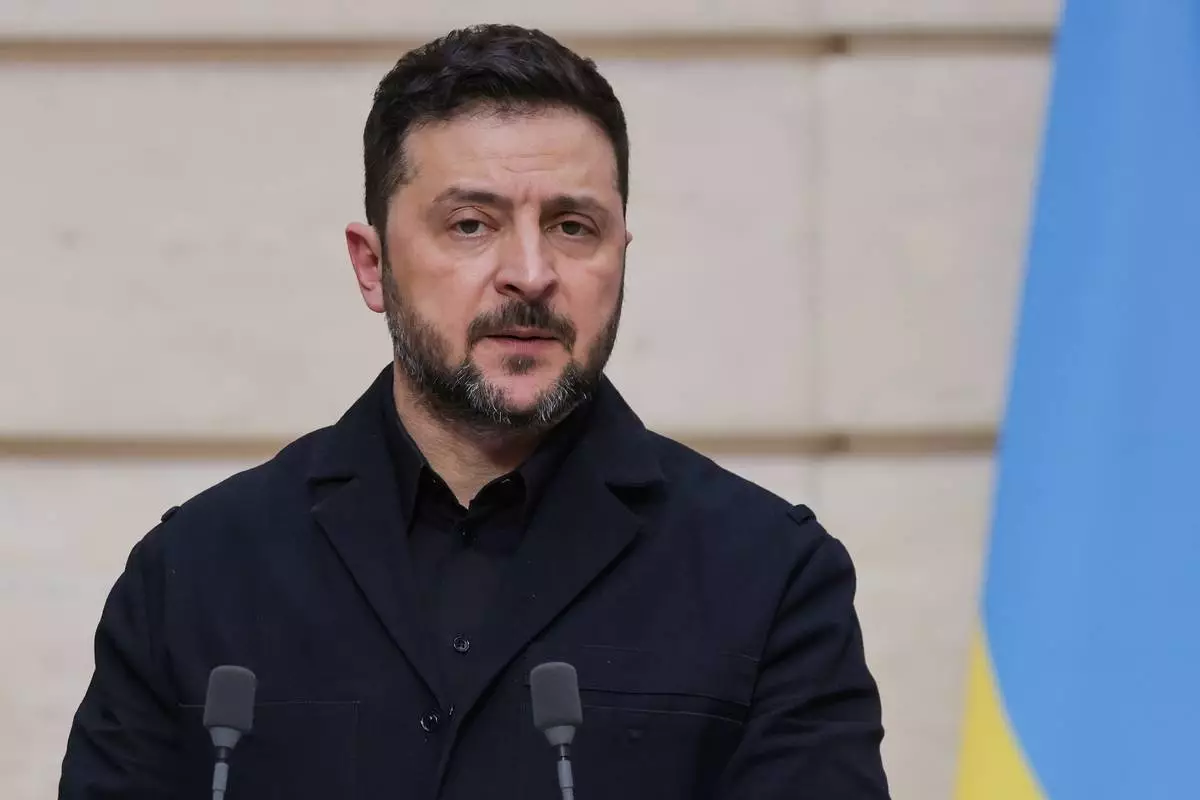
Ukraine's President Volodymyr Zelenskyy speaks during a joint presser with France's President Emmanuel Macron, not pictured, following a bilateral meeting at the Elysee Presidential Palace in Paris, Friday March 13, 2026. (Ludovic Marin/Pool Photo via AP)

Ukraine's President Volodymyr Zelenskyy speaks during a joint presser with France's President Emmanuel Macron, not pictured, following a bilateral meeting at the Elysee Presidential Palace in Paris, Friday March 13, 2026. (Ludovic Marin/Pool Photo via AP)

Recommended Articles