HARRISBURG, Pa. (AP) — Hundreds of thousands of people were left without power Saturday after high winds raked eastward from the Great Lakes region, leaving trees down and substantial property damage in their wake. Farther west, at least one person died in a massive wind-driven wildfire in Nebraska.
About 346,00 customers were still without electricity as of the late afternoon in Ohio, Pennsylvania and Michigan, according to PowerOutage.us, which tracks outages nationwide.
A 66 mph (106 kph) gust at Pittsburgh International Airport on Friday was deemed its fourth-strongest on record that was not caused by a thunderstorm, according to the National Weather Service. Cleveland Burke Lakefront Airport saw winds hit 85 mph (137 km) that afternoon.
Winds took down a gas station canopy in New Franklin, Ohio, and an auto parts store sign in Baldwin, Pennsylvania. Trees and tree limbs fell into or onto homes and cars from Cleveland to Pittsburgh. The roof of a school building in the Chicago suburb of Niles, Illinois, was severely damaged by wind.
High winds fueled multiple wildfires across a broad swath of Nebraska’s range and grassland, causing one death in Arthur County, officials said. The victim was not immediately identified, and the sheriff’s office did not disclose other details about the death.
What state officials have dubbed the Morrill County fire has burned at least 735 square miles (about 1,880 square kilometers) so far across four counties. At least 12 structures have been destroyed, according to the Nebraska Emergency Management Agency.
Chelle Ladely of Sidney said her home was currently safe, about 40 miles (64 kilometers) south of the nearest fire. But she worries for other friends and family in the area.
“Smoke is filling the air, and at night I can see the burn of the fires on the horizon,” Ladely said. “My father is a crop agronomist, and his company as well as other local farmers are all gathering their water trucks to help aid with the fires, and truckloads of bottled water and food is being supplied by our good patrons for our volunteer firemen trying to extinguish the blazes.”
Several other wildfires pushed by winds of up to 65 mph (105 kph) burned another 225 square miles (about 580 square kilometers) for a total of nearly 938 square miles (about 2,430 square kilometers) by midday Saturday. The strong winds have kept firefighters from containing any of the fires, the Nebraska Emergency Management Agency said. Gov. Jim Pillen toured areas burned by the Morrill County fire.
In Chicago, thousands of revelers turned out to see the city's namesake river dyed bright green and a downtown parade celebrating the St. Patrick's Day holiday, despite the threat of snow and stiff winds that drove the feels-like temperature well below freezing.
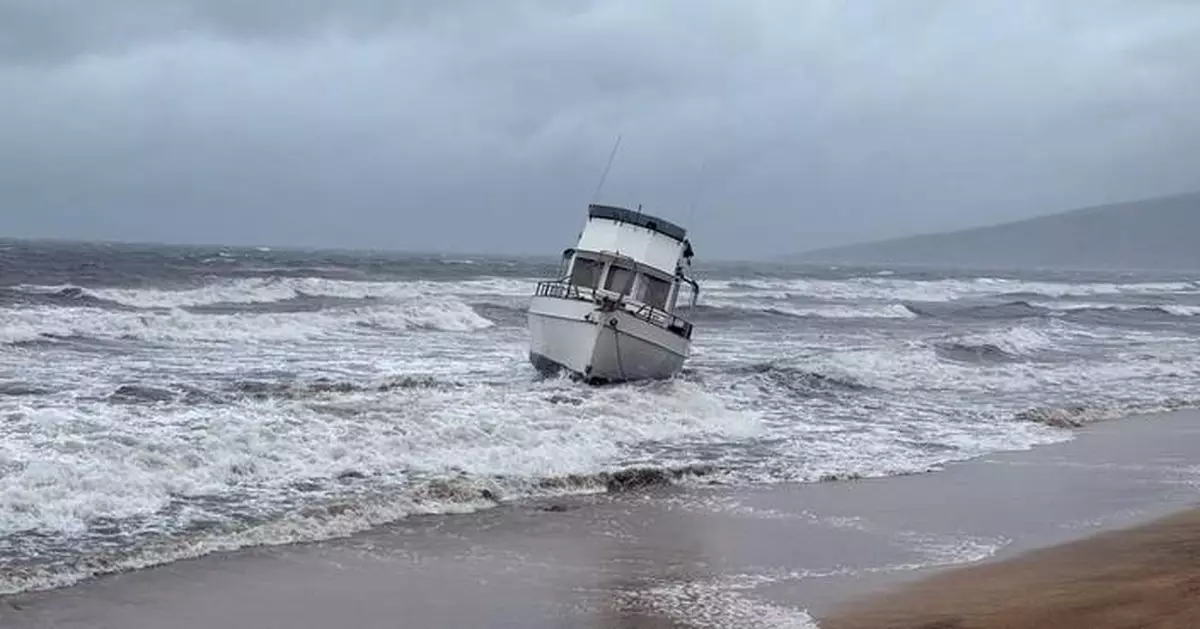
Dangerous winds were but one piece of a wild weather mosaic that included heavy rains in Hawaii, triple-digit heat coming next week in Phoenix and a return of winter cold to the Midwest and Northeast. Chicago was forecast to approach the single digits Fahrenheit by Tuesday, with Minneapolis seeing lows around zero (minus 18 C).
Several Minnesota cities have already declared snow emergencies starting Sunday, when what could be the season’s largest snowfall is expected to hit. Wisconsin and Michigan's Upper Peninsula are also in the crosshairs.
AccuWeather warned of a “potent triple-threat March megastorm” from Sunday into Monday.
“It’s definitely a very active weather weekend, that’s for sure,” AccuWeather senior meteorologist John Feerick said. “It’s a highly amplified pattern, which means you get a lot of extremes. Also, not just the Lower 48, but Hawaii’s getting hit hard right now with some very heavy rain.”
Feerick said people along the Wisconsin-Iowa border might see some ice as travel conditions become dangerous in large parts of the Upper Midwest.
Beck reported from Omaha, Nebraska.
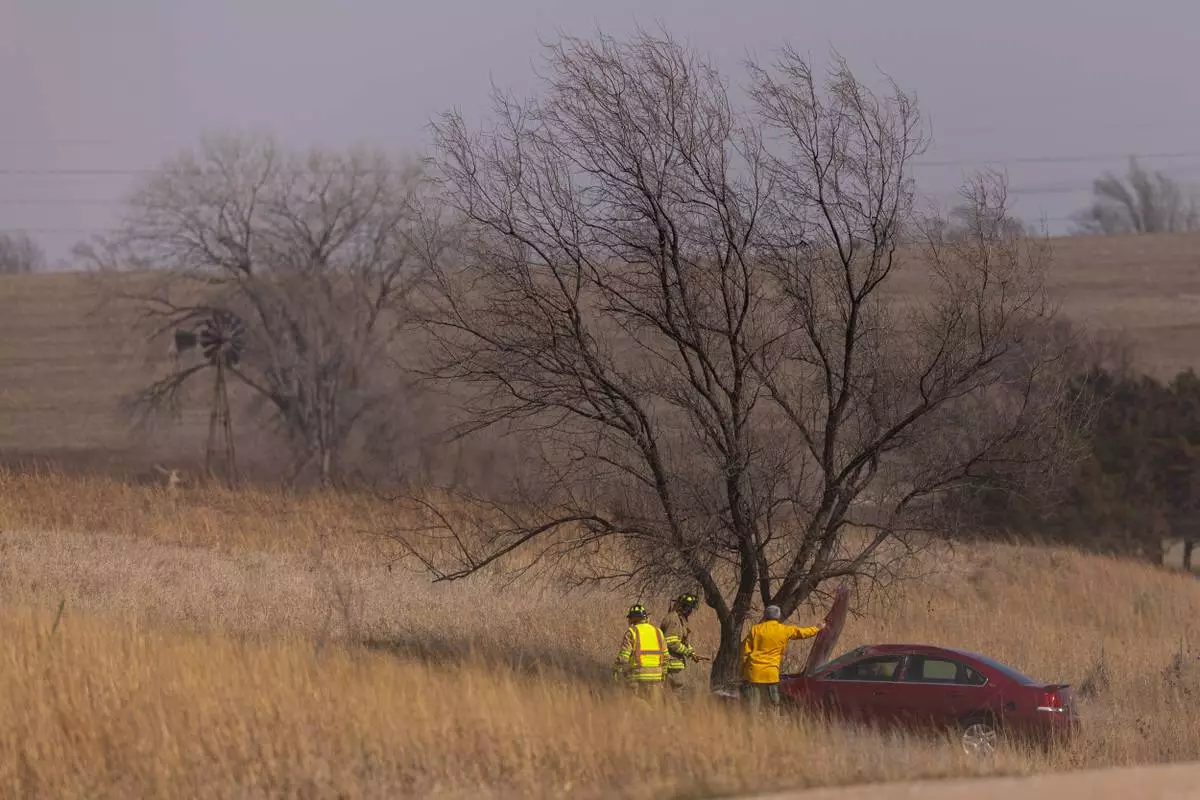
Malcolm and Lincoln firefighters respond to a wildfire in Denton, Neb., on Thursday, March 12, 2026. (Kenneth Ferriera/Omaha World-Herald via AP)
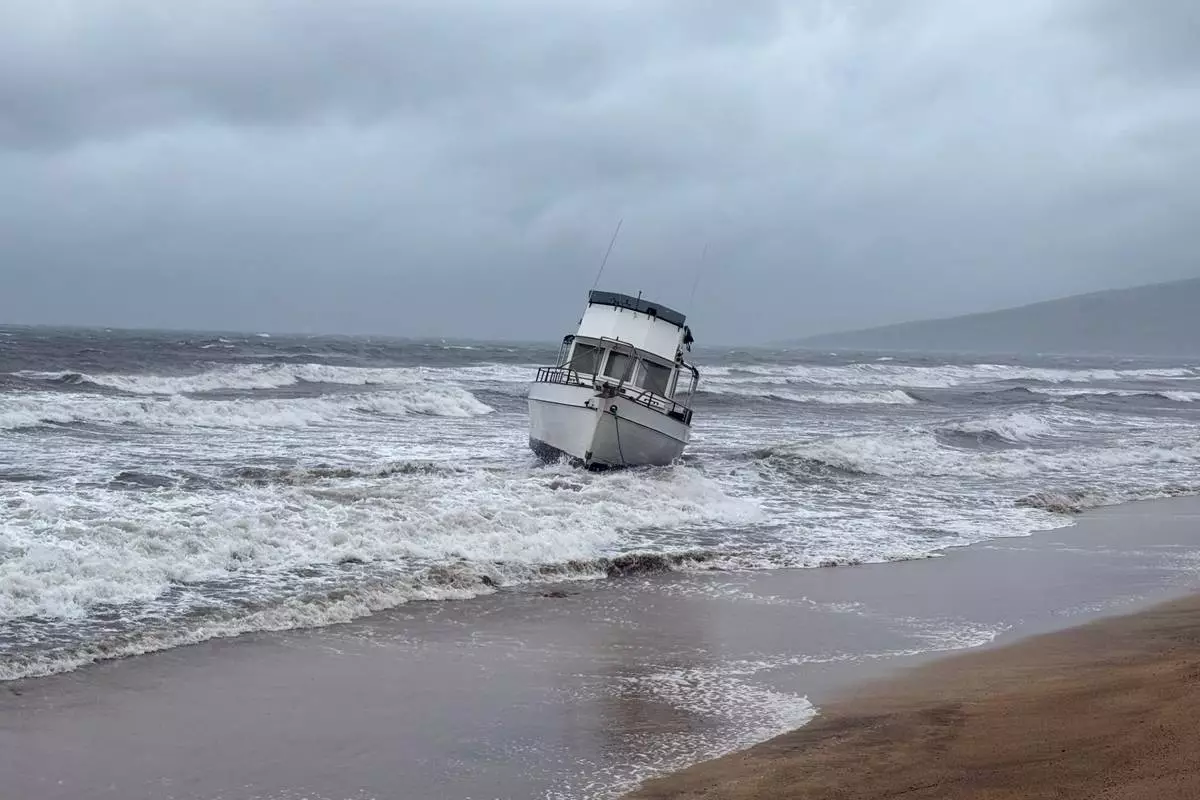
In this photo provided by Maui County, a boat is grounded on a beach off Kihei, Hawaii, during heavy rain on Friday, March 13, 2026. (Maui County via AP)
YEREVAN, Armenia (AP) — European leaders on Monday said that U.S. President Donald Trump’s snap decision to pull thousands of U.S. troops out of Germany came as a surprise but is a fresh sign that Europe must take care of its own security.
The Pentagon announced last week that it would pull some 5,000 troops out of Germany, but Trump told reporters on Saturday that “we’re going to cut way down. And we’re cutting a lot further than 5,000.”
He offered no reason for the move, which blindsided NATO, but his decision came amid an escalating dispute with German Chancellor Friedrich Merz over the U.S-Israeli war on Iran, and Trump’s anger that European allies have been reluctant to get involved in the conflict in the Middle East.
Asked about the decision to pull out 5,000 troops from Germany, Norwegian Prime Minister Jonas Gahr Støre said: “I wouldn’t exaggerate that because I think we are expecting that Europe is taking more charge of its own security.
“I do not see those figures as dramatic, but I think they should be handled in a harmonious way inside the framework of NATO,” he told reporters in Yerevan, Armenia, where European leaders are holding a summit.
The European Union’s foreign policy chief, Kaja Kallas, said “there has been a talk about withdrawal of U.S. troops for a long time from Europe. But of course, the timing of this announcement comes as a surprise.”
“I think it shows that we have to really strengthen the European pillar in NATO,” she said.
Asked whether she believes that Trump is trying to punish Merz, who said that the U.S. has been humiliated by Iran in talks to end the war, Kallas said: “I don’t see into the head of President Trump, so he has to explain it himself.”
Over the weekend, NATO spokesperson Allison Hart said that officials at the 32-nation military alliance “are working with the U.S. to understand the details of their decision on force posture in Germany.”
European allies and Canada have known since just after he came to office again last year that Trump would pull troops out of Europe — indeed some left Romania in October — but U.S. officials had pledged to coordinate any moves with their NATO allies to avoid creating a security vacuum.
NATO Secretary-General Mark Rutte played down the move, saying that “there has been at this point disappointment on the U.S. side” about European support for the war on Iran.
Notably France, Spain and the U.K. have declined to give U.S. forces free rein to use bases on their territory to attack Iran. Spain has denied them the use of its airspace and bases there for the war.
But Rutte, who has championed Trump’s leadership at NATO despite the U.S. president's criticism of the majority of the allies, said: “I would say the Europeans have heard a message. They are now making sure that all the bilateral basing agreements are being implemented.”
Rutte added that European nations “have decided to pre-position assets, key assets, close to the theater for the next phase.”
He provided no details, but the Europeans have insisted they would not help police the Strait of Hormuz, a key energy trade route, until the war is over.
French President Emmanuel Macron said “if the United States is ready to reopen Hormuz, that’s great. That’s what we’ve been asking for since the beginning.” But he underlined that the Europeans are not ready to get involved in any operation “that does not seem clear to us.”
In another sign of friction with Merz, Trump has accused the EU of not complying with its U.S. trade deal and announced plans to increase tariffs next week on cars and trucks produced in the bloc to 25%, a move that would be particularly damaging to Germany, a major automobile manufacturer.
Without mentioning Trump or the United States, European Commission President Ursula von der Leyen listed recent trade deals that the bloc has sealed with Australia and India, and is now working on with Mexico.
“With like-minded friends, you have stable, reliable supply chains and Europe has the biggest network of free trade agreements,” von der Leyen, who is from Germany, told reporters.
Cook reported from Brussels.
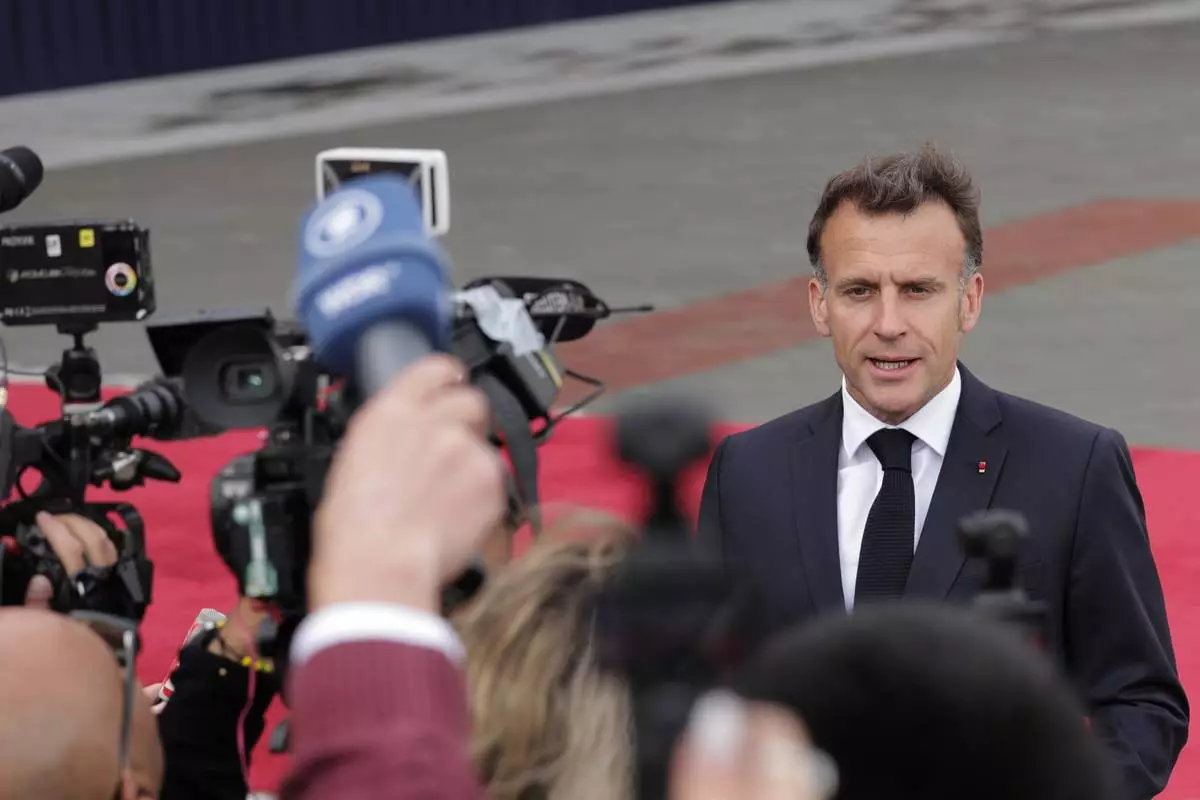
French President Emmanuel Macron speaks with the media as he arrives for a meeting of the European Political Community in Yerevan, Armenia, Monday, May 4, 2026. (AP Photo/Anthony Pizzoferrato)
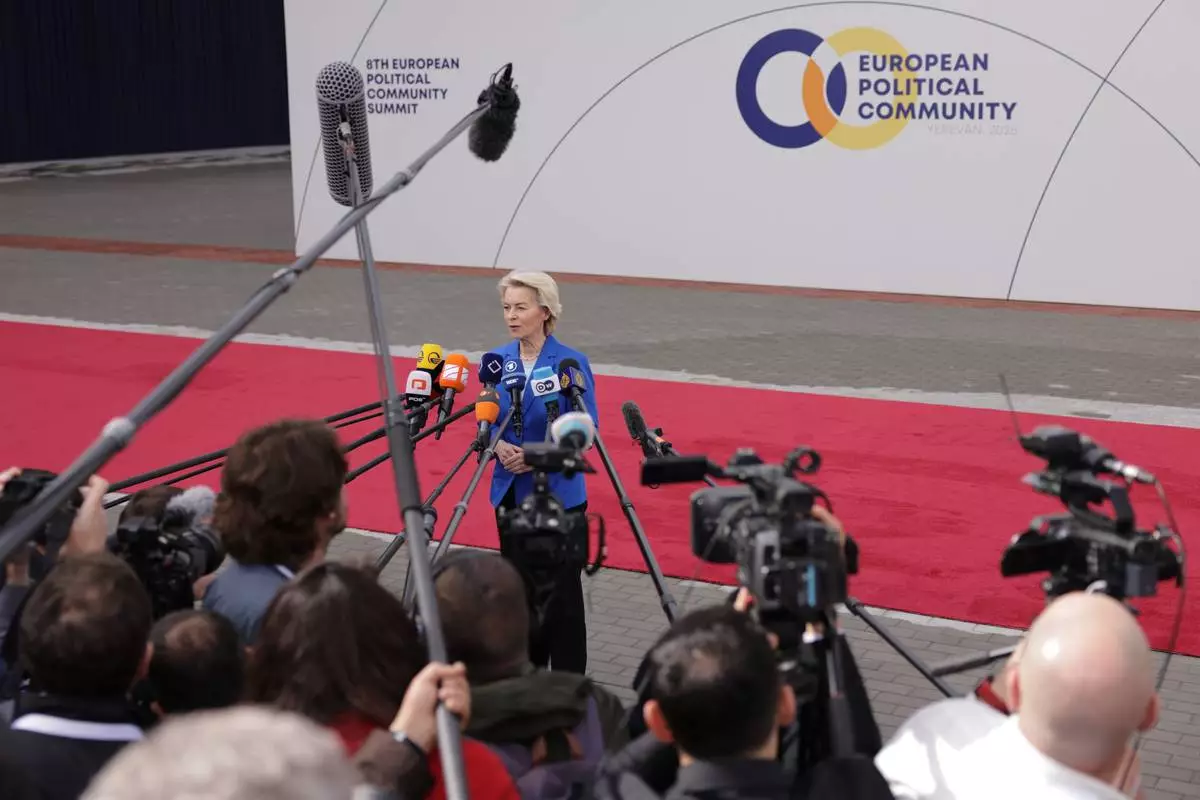
European Commission President Ursula von der Leyen speaks with the media as she arrives for a meeting of the European Political Community in Yerevan, Armenia, Monday, May 4, 2026. (AP Photo/Anthony Pizzoferrato)
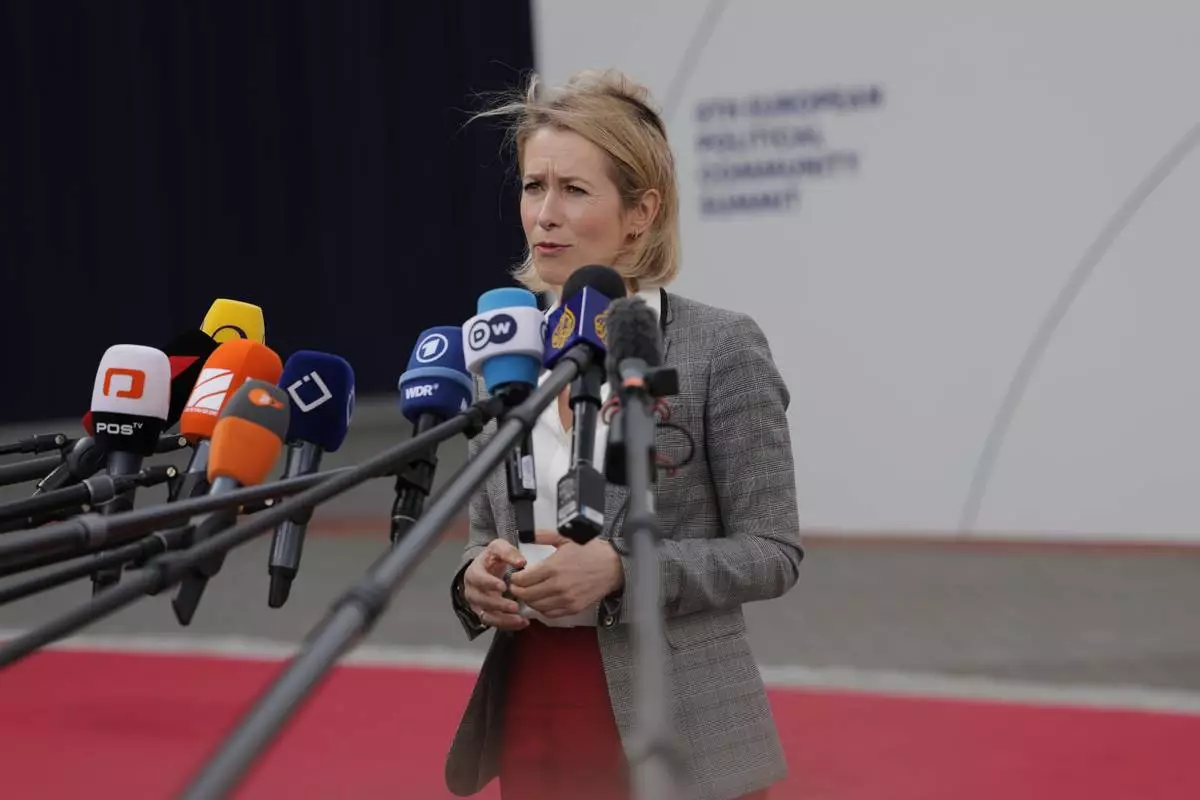
European Union foreign policy chief Kaja Kallas speaks with the media as she arrives for a meeting of the European Political Community in Yerevan, Armenia, Monday, May 4, 2026. (AP Photo/Anthony Pizzoferrato)
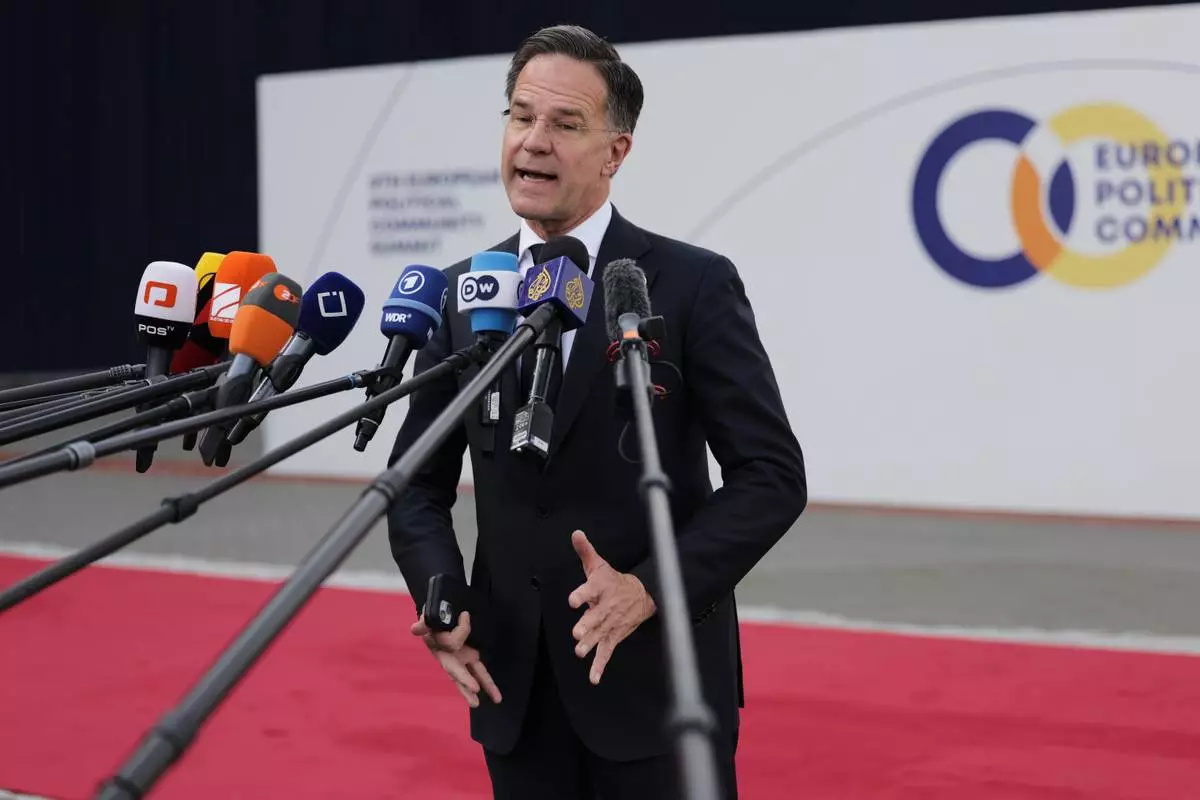
NATO Secretary General Mark Rutte speaks with the media as he arrives for a meeting of the European Political Community in Yerevan, Armenia, Monday, May 4, 2026. (AP Photo/Anthony Pizzoferrato)
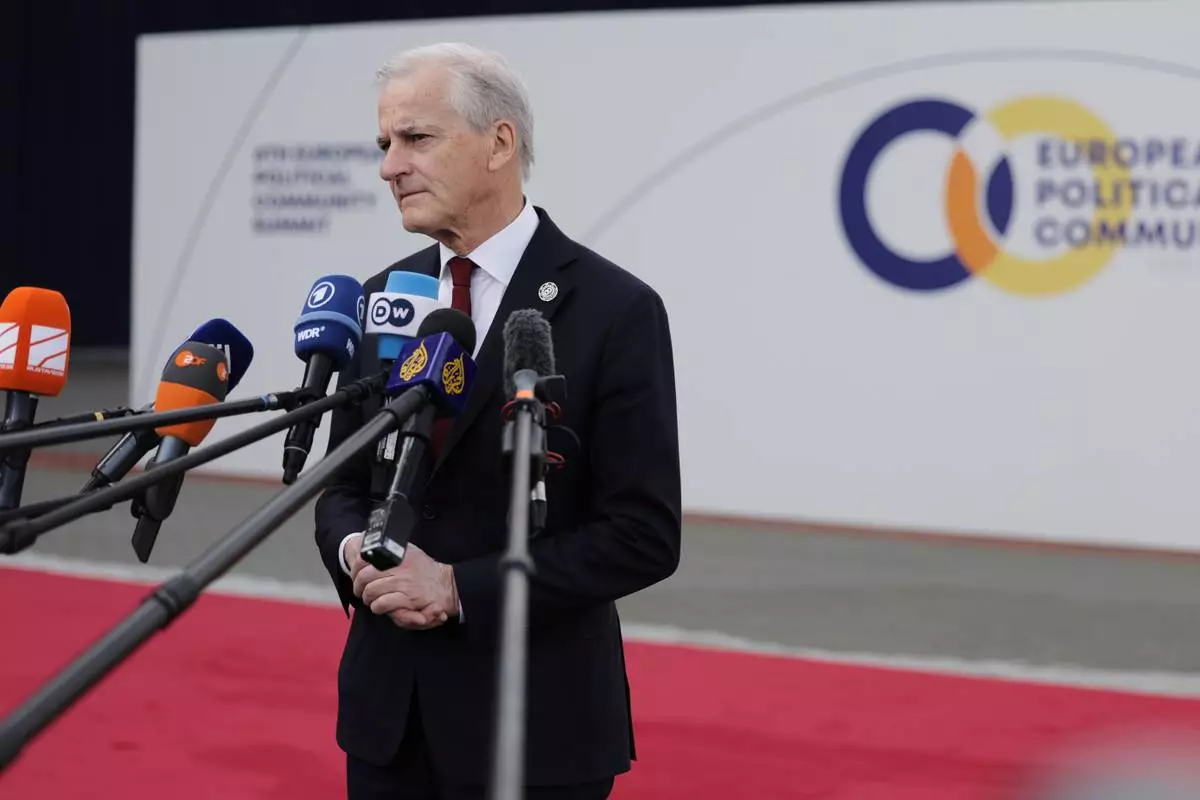
Norway's Prime Minister Jonas Gahr Store speaks with the media as he arrives for a meeting of the European Political Community in Yerevan, Armenia, Monday, May 4, 2026. (AP Photo/Anthony Pizzoferrato)

Britain's Prime Minister Keir Starmer arrives for a meeting of the European Political Community in Yerevan, Armenia, Monday, May 4, 2026. (AP Photo/Anthony Pizzoferrato)