U.S. President Donald Trump said Saturday that he's not ready to make a deal to end the military campaign against Iran "because the terms aren't good enough yet."
"Iran wants to make a deal, and I don't want to make it because the terms aren't good enough yet," he said of ending the war against Iran in an interview with NBC News, adding that any terms will have to be "very solid."
Trump, though declining to tell what his terms would be, said that a commitment from Iran to completely abandon any nuclear ambitions would be part of those terms for a ceasefire.
His remarks came two weeks after the United States and Israel started massive attacks on Iran on Feb. 28, which are disrupting global shipping, sending oil prices soaring and shaking the global economy.
Trump said that the strikes have greatly weakened Iran's military capabilities, noting that the U.S. military has destroyed most of Iran's missiles, drones and relevant production facilities, and that the relevant capabilities will be completely destroyed within two days.
Trump also confirmed that U.S. forces had carried out heavy strikes on Kharg Island, Iran's principal oil export terminal, while deliberately sparing its oil facilities to avoid reconstruction, which would take years.
Kharg Island lies in the Persian Gulf about 25 km off Iran's coast and accounts for about 90 percent of Iran's crude exports.
The U.S. forces "successfully struck more than 90 Iranian military targets on Kharg Island" on Friday night, the U.S. Central Command (CENTCOM) said on Saturday in a post on X. The strike destroyed naval mine storage facilities, missile storage bunkers, and multiple other military sites, the post said.
As the U.S.-Israel-Iran conflict entered its 15th day Saturday, senior Iranian official Mohsen Rezaei outlined Tehran's conditions for ending the conflict, demanding full compensation for damage and a complete U.S. military withdrawal from the Gulf.
Israeli Defense Minister Israel Katz said Saturday that "the global and regional struggle against Iran is escalating" and that Israel is entering the final decisive phase, vowing it "will last as long as necessary."
Since Israel and the United States launched the large-scale military operations against Iran two weeks ago, the Israeli military has carried out more than 7,600 air strikes on Iranian territory.
The Islamic Revolutionary Guard Corps (IRGC) said Saturday it had conducted the 51st round of Operation True Promise-4 with the launch of missiles towards the Prince Sultan Air Base in Saudi Arabia.

Trump says Iran's terms "not good enough" for ceasefire deal, Tehran outlines conditions for ending conflict
China's zero-tariff policy is widely seen as a major opportunity for African countries, supporting their efforts to improve livelihoods, advance trade upgrading and promote regional stability, African officials and economic stakeholders said.
On Friday, China officially expanded its zero-tariff policy to cover all 53 African nations with which it maintains diplomatic relations. The move aims to create new pathways for African exports and industrialization at a time when global trade faces mounting pressures from protectionism.
The policy builds upon earlier measures: since Dec 1, 2024, China has already eliminated tariffs on 100 percent of tariff lines for 33 least developed countries in Africa. The latest expansion now includes economies that are relatively more developed, such as Kenya, Egypt and Nigeria, opening doors for a broader range of African products to enter the Chinese market duty-free.
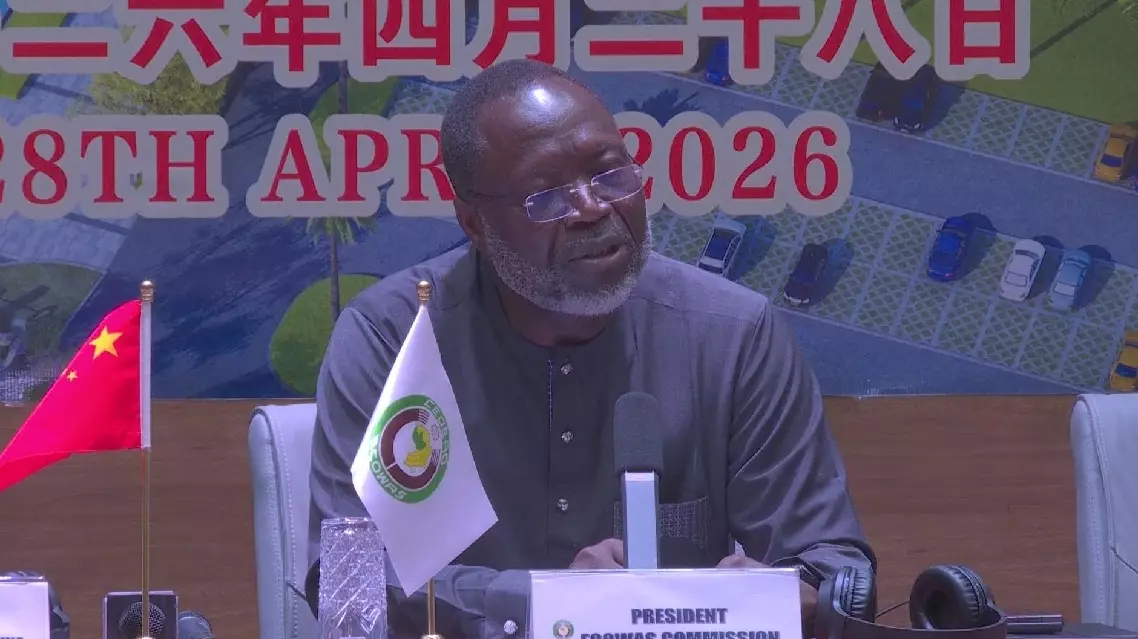
Omar Toure, president of the Economic Community of West African States (Ecowas) Commission, noted that economic growth and poverty reduction can contribute to greater stability and peace in the region.
"For us, this is a major opportunity for our countries because China is a massive market and having access to such a massive market for our produce and products is a major opportunity that we must all seize. It will have impact on overall development of our countries through enhanced productivity because as you know, poverty is a key driver of insecurity in our region. The zero tariff policy is likely to advance our development, to support our development, as well as help us entrench peace and security in our region and on the continent," he said.
Beyond expanding market access, the initiative is expected to strengthen Africa's industrialization and help upgrade regional industries, spurring ambitions to pursue global economic involvement.
"It will enhance trading relations between China and the rest of its partners. I think to a large extent, also within Africa itself, it's going to act as a great catalyst for improving trade, for enhancing the economic relations and also for industrialization," said Bianca Ojukwu, Minister of State for Foreign Affairs of Nigeria.
"China is a very big market, and if you supply to China, it means you will enhance the value of trade or the volume of your exports. And that in itself is monumental. In the sense that, apart from just the value of the export, you get more and more people getting higher incomes and also being able to upgrade their production facilities. So it's really going to benefit Africa in a way that Africa can also begin to participate in a global trade," said David Chewe, Fund Manager of Zambia Export Development Fund.
China‘s zero-tariff policy on Africa applauded as catalyst for boosting bilateral trade, peace