Skip to Content Facebook Feature Image

After attacks on Iran's oil facilities, toxic black rain endangers the public

News

After attacks on Iran's oil facilities, toxic black rain endangers the public
News

News

After attacks on Iran's oil facilities, toxic black rain endangers the public

2026-03-15 14:15 Last Updated At:14:20

Clouds of toxic smoke unleashed into the atmosphere by U.S.-Israeli airstrikes on Iranian oil facilities made a dangerous return to Earth in the form of “black rain,” prompting international health officials to warn of serious risks to the public.

Residents in Tehran complained last week of burning eyes and difficulty breathing when the dark and oily precipitation fell near the Iranian capital after several fuel oil depots and a refinery were struck.

More Images
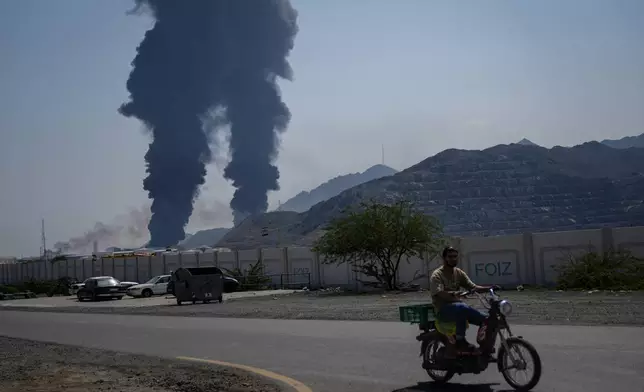
A man rides a bike as fires and plumes of smoke rise after debris from an intercepted Iranian drone struck an oil facility, according to authorities, in Fujairah, United Arab Emirates, Saturday, March 14, 2026. (AP Photo/Altaf Qadri)
A man rides a bike as fires and plumes of smoke rise after debris from an intercepted Iranian drone struck an oil facility, according to authorities, in Fujairah, United Arab Emirates, Saturday, March 14, 2026. (AP Photo/Altaf Qadri)

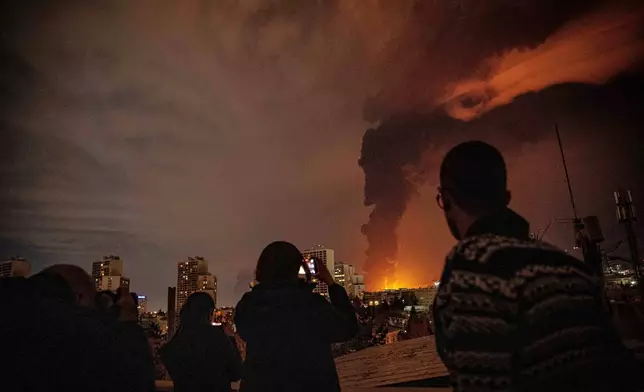
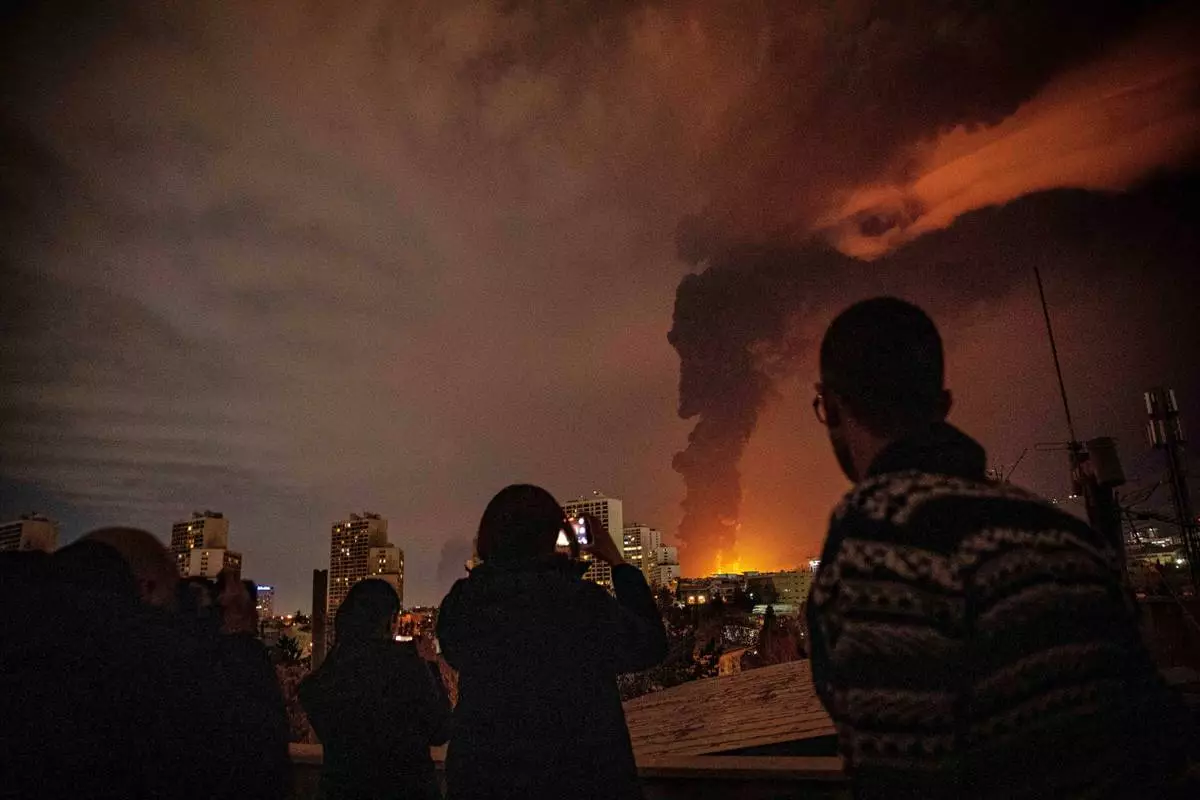
Residents look on and take pictures as flames and smoke rise from an oil storage facility struck as attacks hit the city during the U.S.–Israeli military campaign in Tehran, Iran, Saturday, March 7, 2026. (Alireza Sotakbar/ISNA via AP)
Residents look on and take pictures as flames and smoke rise from an oil storage facility struck as attacks hit the city during the U.S.–Israeli military campaign in Tehran, Iran, Saturday, March 7, 2026. (Alireza Sotakbar/ISNA via AP)

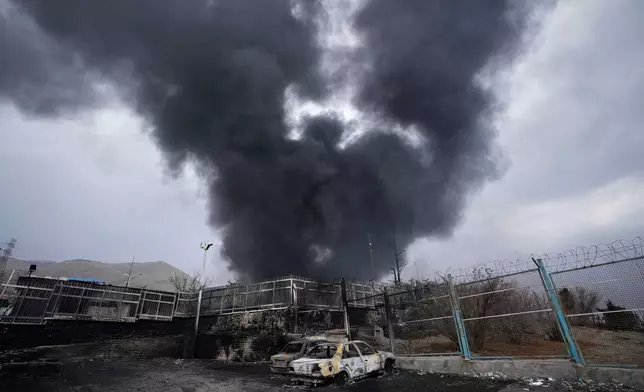
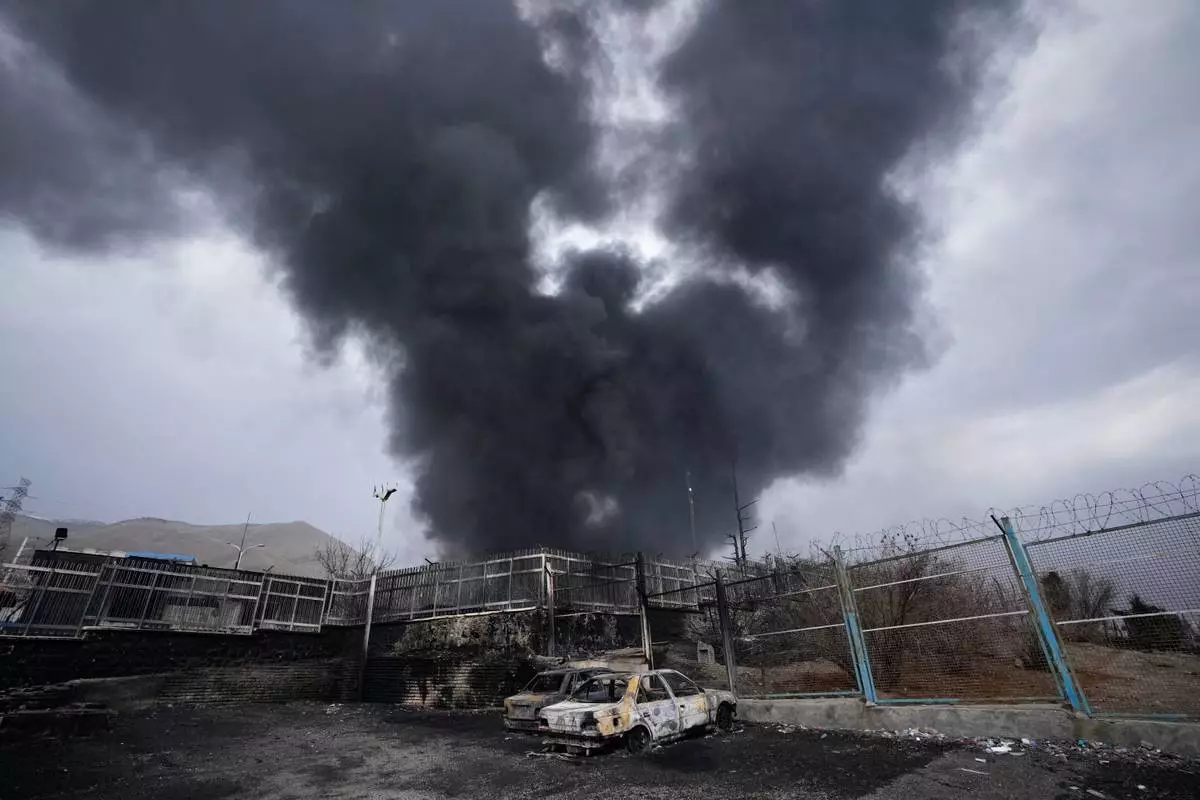
FILE - A thick plume of smoke rises from an oil storage facility hit by a U.S.-Israeli strike in Tehran, Iran, March 8, 2026. (AP Photo/Vahid Salemi, file)
FILE - A thick plume of smoke rises from an oil storage facility hit by a U.S.-Israeli strike in Tehran, Iran, March 8, 2026. (AP Photo/Vahid Salemi, file)

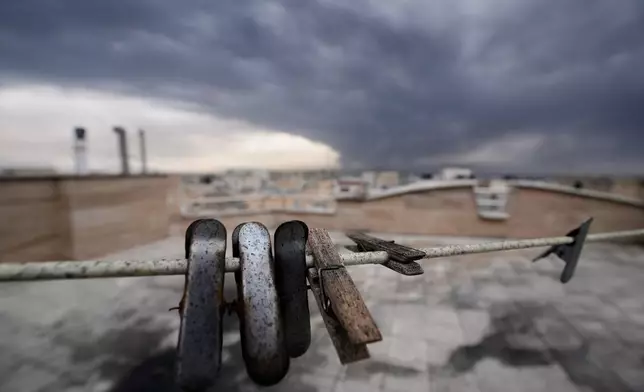
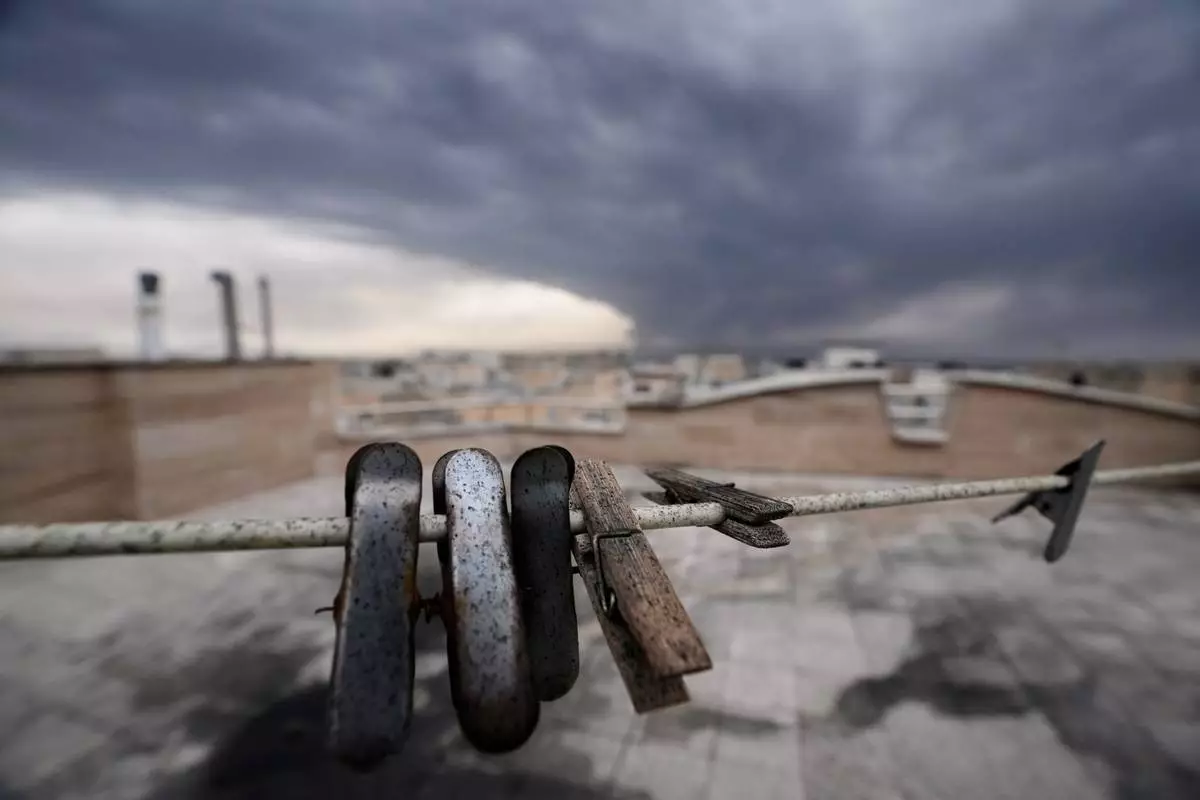
Clothes clips covered in soot from burned fuel are seen as smoke from a U.S.-Israeli strike on an oil facility late Saturday lingers in the cloudy sky over Tehran, Iran, Sunday, March 8, 2026. (AP Photo/Vahid Salemi)

Clothes clips covered in soot from burned fuel are seen as smoke from a U.S.-Israeli strike on an oil facility late Saturday lingers in the cloudy sky over Tehran, Iran, Sunday, March 8, 2026. (AP Photo/Vahid Salemi)

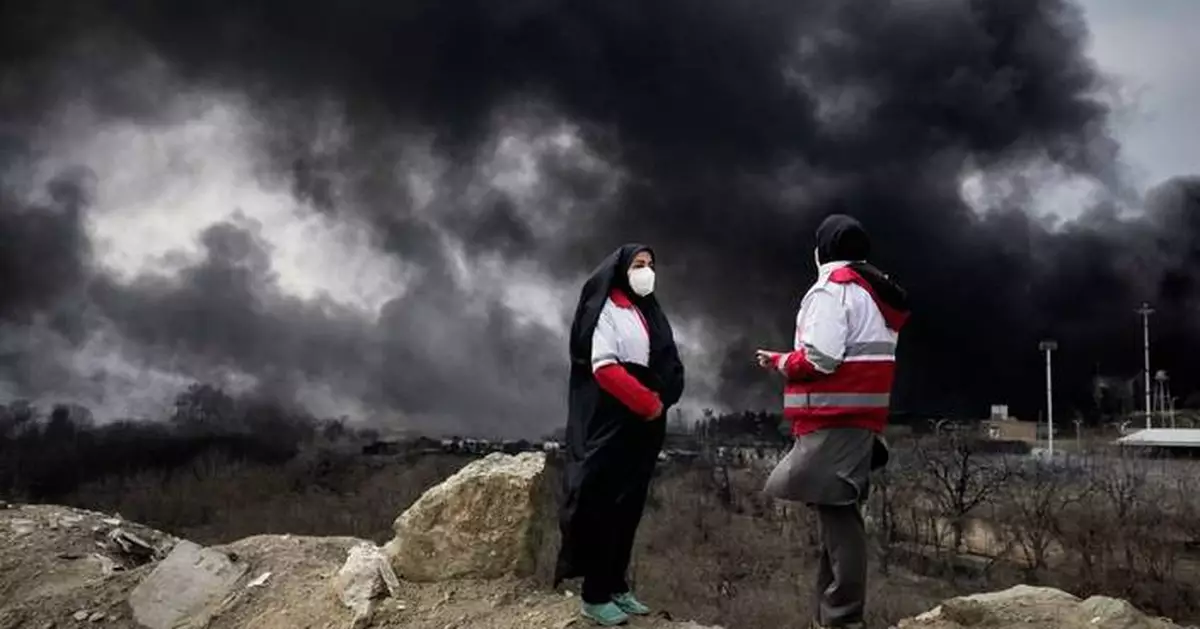
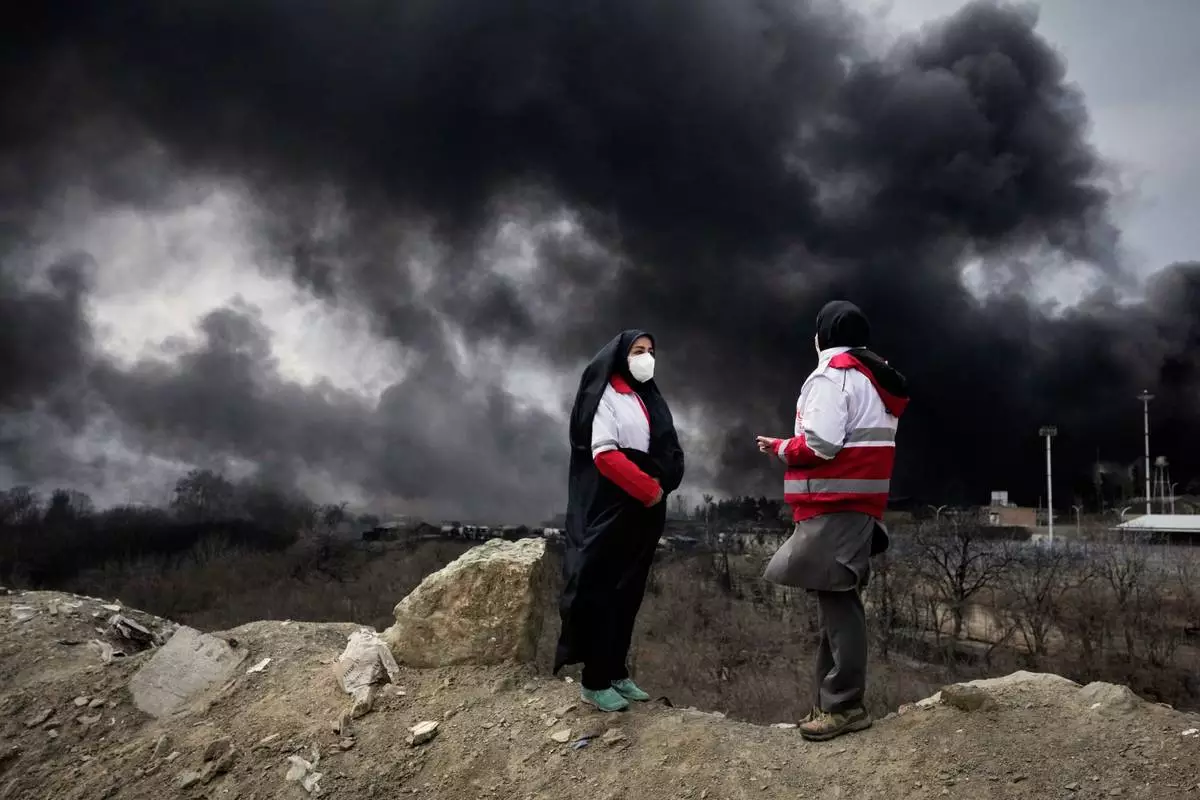
Two women from the Iranian Red Crescent Society stand as a thick plume of smoke from a U.S.-Israeli strike on an oil storage facility late Saturday rises in the sky in Tehran, Iran, Sunday, March 8, 2026. (AP Photo/Vahid Salemi)

Two women from the Iranian Red Crescent Society stand as a thick plume of smoke from a U.S.-Israeli strike on an oil storage facility late Saturday rises in the sky in Tehran, Iran, Sunday, March 8, 2026. (AP Photo/Vahid Salemi)

Plumes of dark smoke have also been seen across other parts of the region over two weeks of war, as Iran retaliates against U.S.-Israeli airstrikes by firing drones and missiles at the oil and natural gas facilities of its Persian Gulf neighbors.

Rain washes hazardous chemicals out of the atmosphere in a relatively short period of time, experts said, but people exposed to black rain should take precautions to avoid short- and long-term health risks.

Here's what to know:

It occurs when soot, ash and toxic chemicals combine with water droplets in the atmosphere, then fall back to Earth when it rains. It's common after oil refineries or oil fields catch fire, and also can be caused by wildfires, volcanic eruptions and industrial pollution.

In Iran, microscopic soot formed when hydrocarbons in the fuel oil burned incompletely, experts said. Burning oil also forms compounds called polycyclic aromatic hydrocarbons, or PAHs, as well as toxic gases such as sulfur dioxide and nitrogen oxides, which cause acid rain, said Peter Adams, a civil and environmental engineering professor at Carnegie Mellon University.

Microscopic soot, whose particles are about 40 times smaller than the width of a human hair, can lodge deep in the lungs and enter the bloodstream, causing breathing and heart problems that can lead to premature death, experts said. Exposure to PAHs can increase cancer risk.

In Iran, the World Health Organization and the country's health and environmental officials advised people to stay indoors and wear masks. They warned that the rainfall was highly acidic and could burn the skin and cause lung damage.

“We can definitely expect acute health effects from an event like this,” said V. Faye McNeill, a chemical engineering professor at Columbia University who specializes in atmospheric chemistry.

Even regular air pollution events can trigger health problems and lead to more hospitalizations, especially among the elderly, children and people who already had health problems, she said. “But this is a higher level, so there likely are health problems going on right now because of it.”

Some Iranians fear the polluted rain, which also contains heavy metals, could contaminate drinking-water reservoirs and waterways.

It usually takes only hours for fuel tanks to burn out. But — as happened in Kuwait during the Gulf War 25 years ago — oil fields can burn for months, said Adams.

For fires that burn out more quickly, most of the soot and chemicals will disperse on the wind and wash out of the atmosphere in about three to seven days, Adams said.

“So if we don’t create more problems, at least what’s in the atmosphere is going to go away,” even if long-term health risks haven't, Adams said.

“But we don’t know what’s going to happen with future strikes and whether other tanks will be struck or whether oil fields will be struck,” he added. “I'm less concerned about longer-term or regional stuff, but it's a real mess for the people in the immediate vicinity.”

The Associated Press’ climate and environmental coverage receives financial support from multiple private foundations. AP is solely responsible for all content. Find AP’s standards for working with philanthropies, a list of supporters and funded coverage areas at AP.org.
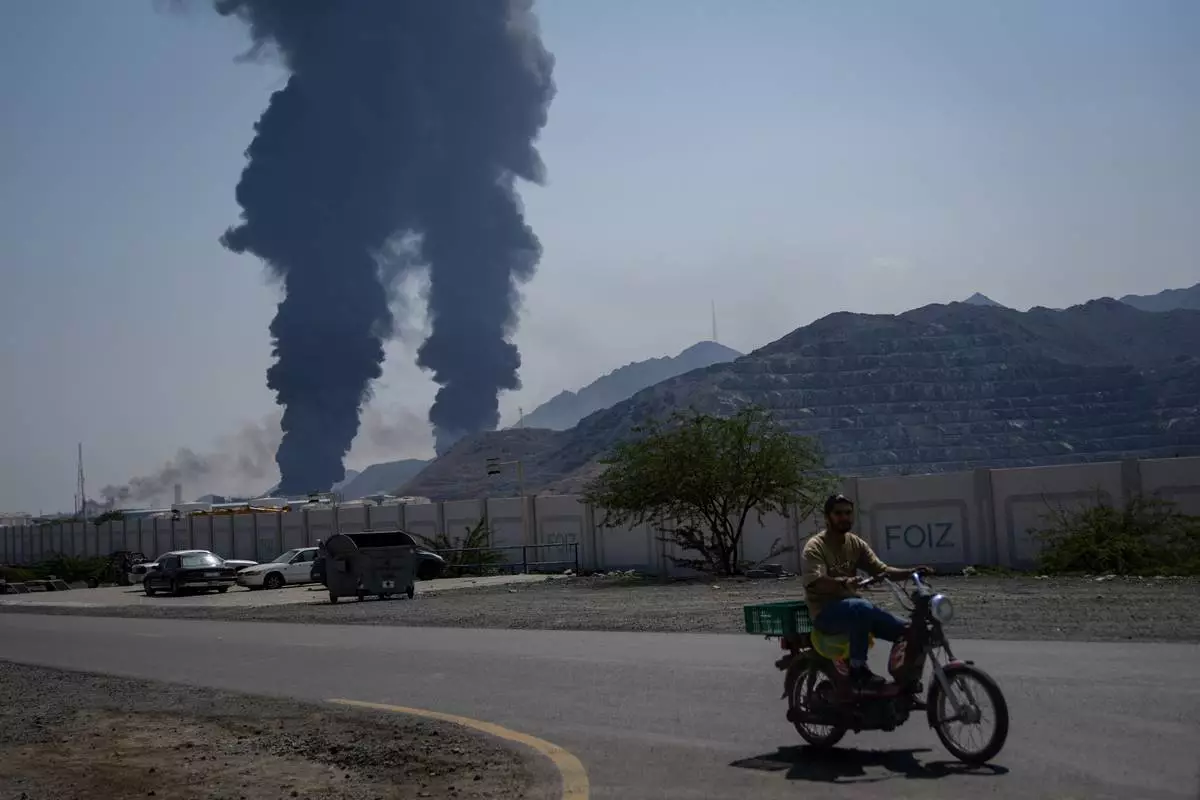
A man rides a bike as fires and plumes of smoke rise after debris from an intercepted Iranian drone struck an oil facility, according to authorities, in Fujairah, United Arab Emirates, Saturday, March 14, 2026. (AP Photo/Altaf Qadri)
A man rides a bike as fires and plumes of smoke rise after debris from an intercepted Iranian drone struck an oil facility, according to authorities, in Fujairah, United Arab Emirates, Saturday, March 14, 2026. (AP Photo/Altaf Qadri)

Residents look on and take pictures as flames and smoke rise from an oil storage facility struck as attacks hit the city during the U.S.–Israeli military campaign in Tehran, Iran, Saturday, March 7, 2026. (Alireza Sotakbar/ISNA via AP)
Residents look on and take pictures as flames and smoke rise from an oil storage facility struck as attacks hit the city during the U.S.–Israeli military campaign in Tehran, Iran, Saturday, March 7, 2026. (Alireza Sotakbar/ISNA via AP)

FILE - A thick plume of smoke rises from an oil storage facility hit by a U.S.-Israeli strike in Tehran, Iran, March 8, 2026. (AP Photo/Vahid Salemi, file)
FILE - A thick plume of smoke rises from an oil storage facility hit by a U.S.-Israeli strike in Tehran, Iran, March 8, 2026. (AP Photo/Vahid Salemi, file)

Clothes clips covered in soot from burned fuel are seen as smoke from a U.S.-Israeli strike on an oil facility late Saturday lingers in the cloudy sky over Tehran, Iran, Sunday, March 8, 2026. (AP Photo/Vahid Salemi)
Clothes clips covered in soot from burned fuel are seen as smoke from a U.S.-Israeli strike on an oil facility late Saturday lingers in the cloudy sky over Tehran, Iran, Sunday, March 8, 2026. (AP Photo/Vahid Salemi)

Two women from the Iranian Red Crescent Society stand as a thick plume of smoke from a U.S.-Israeli strike on an oil storage facility late Saturday rises in the sky in Tehran, Iran, Sunday, March 8, 2026. (AP Photo/Vahid Salemi)


Two women from the Iranian Red Crescent Society stand as a thick plume of smoke from a U.S.-Israeli strike on an oil storage facility late Saturday rises in the sky in Tehran, Iran, Sunday, March 8, 2026. (AP Photo/Vahid Salemi)

The United Arab Emirates reported a new missile attack Sunday morning, a day after Iran called for the evacuation of three major UAE ports, threatening for the first time a neighboring country’s non-U.S. assets.

Tehran accused the United States of using “ports, docks and hideouts” in the UAE to launch strikes on Kharg Island, home to the main terminal handling Iran’s oil exports, without providing evidence, as the war showed no signs of ending.

U.S. President Donald Trump said he hoped allies would send warships to secure the vital Strait of ​Hormuz.

Meanwhile, Israeli strikes have deepened Lebanon's humanitarian crisis, with about 800 people killed and more than 850,000 displaced.

Here is the latest:

“This reflects a confused policy that missed the point, lost its direction, and lacked wisdom,” Anwar Gargash, adviser to the president of the United Arab Emirates, wrote on social media late Saturday.

Gargash was referring to Iranian Foreign Minister Abbas Araghchi’s comments in which he accused the U.S. of using the UAE as a base for its attacks on Iran's Kharg Island.

Iran’s joint military command accused in a statement Sunday "the enemy” of using copycat Iranian drones to attack neighboring countries and pin the blame on Tehran, state media reported.

Tehran usually uses “the enemy” as a reference to the United States and Israel.

The statement said copies of Iran's Shahed-136 drone, known as LUCAS, were used to hit “irrelevant targets in the regional states," including attacks on Turkey, Iraq and Kuwait. No evidence was provided.

The military command also said Iran openly shares its targets, which it describes as U.S. and Israeli interests, and urged trust and cooperation from regional countries.

The United Arab Emirates reported a missile attack Sunday morning.

Authorities urged residents to remain in safe locations.

The U.S. Department of Defense on Saturday identified six service members who died when the military refueling aircraft they were aboard crashed Thursday while supporting operations against Iran.

The service members were Maj. John A. Klinner, 33; Capt. Ariana G. Savino, 31; Tech. Sgt. Ashley B. Pruitt, 34; Capt. Seth R. Koval, 38; Capt. Curtis J. Angst, 30; and Tech. Sgt. Tyler H. Simmons, 28, according to U.S. officials.

The crash in western Iraq followed an unspecified incident involving two aircraft in “friendly airspace,” according to U.S. Central Command. The other plane landed safely.

Israel’s military said early Sunday that Iran launched another round of missiles toward Israel.

Sirens sounded in Tel Aviv and loud booms were heard.

Israeli security forces inspect damage at the site of an Iranian missile strike in Holon, central Israel, Sunday, March 15, 2026. (AP Photo/Ohad Zwigenberg)

Israeli security forces inspect damage at the site of an Iranian missile strike in Holon, central Israel, Sunday, March 15, 2026. (AP Photo/Ohad Zwigenberg)

Two men ride their motorbike past a billboard of the Iranian Supreme Leader Ayatollah Mojtaba Khamenei in downtown Tehran, Iran, Saturday, March 14, 2026. (AP Photo/Vahid Salemi)

Two men ride their motorbike past a billboard of the Iranian Supreme Leader Ayatollah Mojtaba Khamenei in downtown Tehran, Iran, Saturday, March 14, 2026. (AP Photo/Vahid Salemi)

A man chants slogan while the body of Gen. Ali Shamkhani, secretary of Iran's Defense Council and a senior adviser to the Supreme Leader who was killed in a strike, is being buried at the courtyard of the Imamzadeh Saleh shrine in Tehran, Iran, Saturday, March 14, 2026. (AP Photo/Vahid Salemi)

A man chants slogan while the body of Gen. Ali Shamkhani, secretary of Iran's Defense Council and a senior adviser to the Supreme Leader who was killed in a strike, is being buried at the courtyard of the Imamzadeh Saleh shrine in Tehran, Iran, Saturday, March 14, 2026. (AP Photo/Vahid Salemi)

Rescue workers inspect an apartment damaged in an Israeli airstrike as thick smoke fills the building in the southern port city of Sidon, Lebanon, Saturday, March 14, 2026. (AP Photo/Mohammad Zaatari)

Rescue workers inspect an apartment damaged in an Israeli airstrike as thick smoke fills the building in the southern port city of Sidon, Lebanon, Saturday, March 14, 2026. (AP Photo/Mohammad Zaatari)

Fire and plumes of smoke rise from an oil facility in Fujairah, United Arab Emirates, Saturday, March 14, 2026. (AP Photo/Altaf Qadri)

Fire and plumes of smoke rise from an oil facility in Fujairah, United Arab Emirates, Saturday, March 14, 2026. (AP Photo/Altaf Qadri)

Recommended Articles