China's Dayang-95 ocean expedition team, currently on a research mission in the Indian Ocean, successfully rescued two exhausted white wagtails, according to the Ministry of Natural Resources.
White wagtails are small migratory birds widely distributed across Eurasia and Africa. The two rescued birds likely fell into distress due to the monsoon winds that blew them out over the vast Indian Ocean, leaving them with nowhere to land until they encountered the Chinese expedition vessel.
When the second bird was discovered, it was completely soaked by seawater, visibly exhausted and shivering from the cold. Crew members immediately used tissue to gently dry its feathers and employed a hairdryer to help restore its body temperature. Fresh water and food were also provided.
After several days of care, the bird was able to walk on its own and fly freely within the ship.
The research team released them back into the wild after they had fully regained their energy.

Chinese expedition team rescues exhausted migratory birds in Indian Ocean
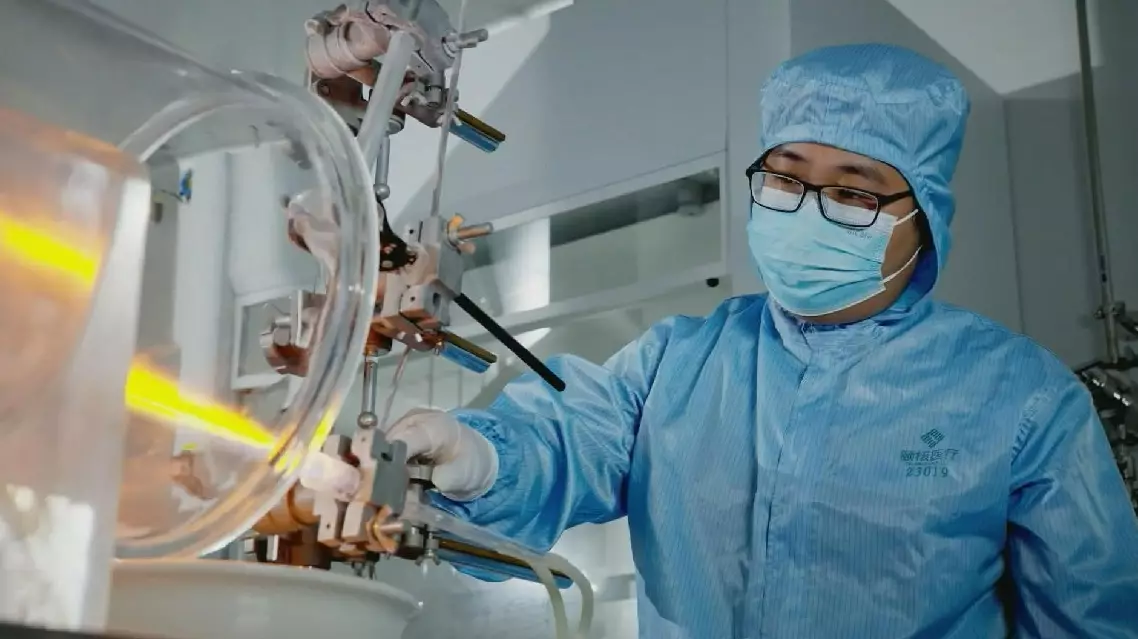
China's outline of the 15th Five-Year Plan (2026-2030), adopted on Thursday, maps out a systematic path toward high-quality development by building new growth drivers through the fostering of emerging and future industries.
In the latest five-year blueprint, the emerging strategic industries China will nurture have been expanded to include new sectors like intelligent connected new-energy vehicles (NEVs) and robotics. It also outlines plans to establish emerging strategic industry clusters tailored to local conditions, each with its own distinctive features and complementary strengths.
Experts suggested that this marks a shift for emerging industries -- from isolated breakthroughs to scaled, clustered development.
"During the 15th Five-Year Plan period, we aim to further promote and expand emerging industries in both scale and quality. The development of industrial clusters is a clear reflection of economies of scale. Building on the existing foundation, this will further sharpen the international competitiveness of our emerging industries. The blueprint's emphasis on new application scenarios and innovative business models will also help steer these industries toward a higher quality of development," said Wei Qijia, a researcher at the State Information Center, which is under China's National Development and Reform Commission.
The plan also identifies key frontiers to reach, including quantum technology, biomanufacturing, hydrogen and nuclear fusion energy, brain-computer interfaces, embodied artificial intelligence (AI) and 6G. Moving beyond mere technological roadmaps, it also stresses the need to build a full-chain incubation system for future industries.
"This forward-looking approach reflects a keen sense of foresight. The plan introduces mechanisms for identifying and monitoring emerging industries and making dynamic adjustments accordingly. If a particular new area or arena shows potential to foster emerging future technologies, it needs to be identified as early as possible. The blueprint's specific references to initiatives such as pilot zones for future industries and research institutes dedicated to their development also signal an important direction in terms of working methodology -- providing clear guidance on how to nurture the industries of the future," he said.
China's five-year blueprint set to foster emerging, future industries