WASHINGTON (AP) — The Trump administration likes to promote its immigration enforcement agenda through numbers, with ambitious goals to deport 1 million people, report zero releases at the U.S.-Mexico border and arrest thousands of alleged gang members.
For all the boasting, the administration has been releasing less reliable, carefully vetted data than its predecessors on a signature policy that has become one of the most contentious of Trump's second term.
The gap in information and a loss of figures from an office that has tracked immigration data back to the 1800s have left researchers, advocates, lawyers and journalists without important statistics to hold the Republican administration to account.
“They aren’t publishing the data,” said Mike Howell, who heads the conservative Oversight Project, an advocacy group pushing for more deportations. Instead, Howell said, the Department of Homeland Security has put out numbers in news releases “that purport to be statistics with no statistical backup and the numbers have jumped all over the place.”
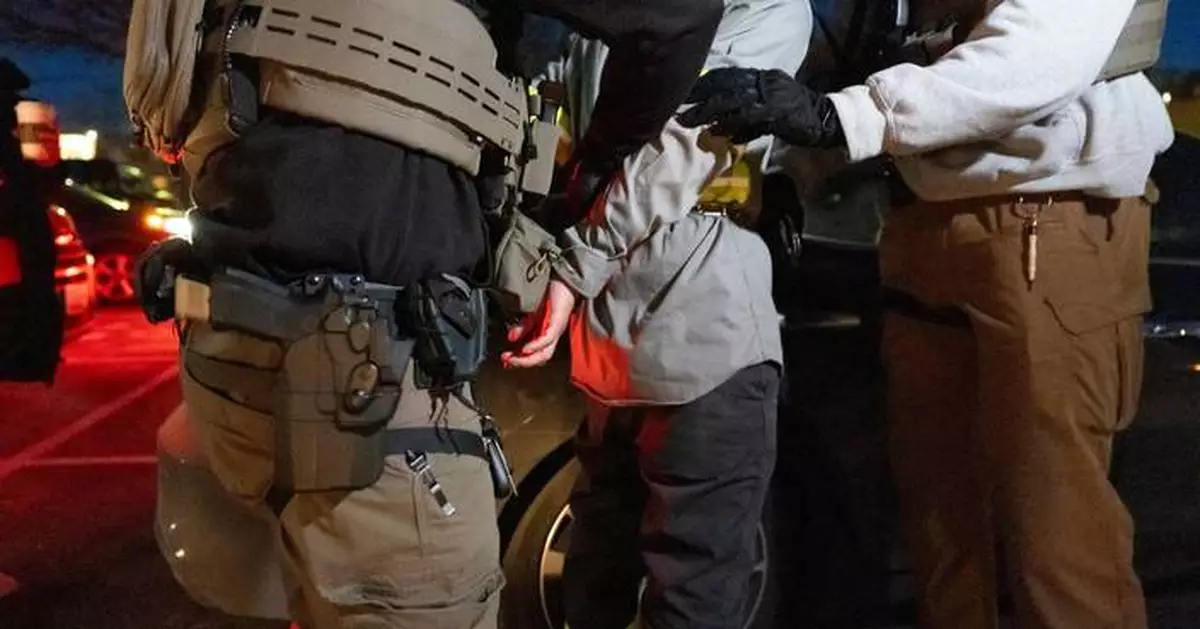
With mass deportations a priority, new restrictions and increased enforcement have led to a surge in immigration arrests, detentions and deportations.
But finding the metrics that once measured those changes can be hard. It is an extension of earlier administration moves to limit the flow of government information by scrubbing or removing federal datasets or by the firing last year of the top official overseeing jobs data.
The Office of Homeland Security Statistics is responsible for publishing figures from Homeland Security agencies, including removals and the nationalities of those deported, to provide a comprehensive picture of immigration trends at the border and inside the United States.
Originally known as the Office of Immigration Statistics, it tracked such data since 1872. In its current form, created under the Biden administration, it also started publishing monthly reports that allowed researchers to track developments almost in real time.
But key enforcement metrics on its website have not been updated since early last year. A note on the page where the monthly reports were says it "is delayed while it is under review.”
“It’s the most timely data. It’s the most reliable data,” Austin Kocher, research professor at Syracuse University who closely follows immigration data trends, said about the monthly reports. “It has the most omniscient view of immigration enforcement across the entire agency.”
An interactive dashboard launched by U.S. Immigration and Customs Enforcement in December 2023 once let users examine whom the agency was arresting, their nationalities, criminal histories and removal numbers. ICE called it a “new era in transparency.”
Though intended for quarterly updates, the latest data is from January 2025. The agency’s annual report, typically released in December, had not been published as of mid-March.
Other agencies also publish data that touches on immigration, and parts of it do continue to roll out, such as U.S. Customs and Border Protection statistics detailing border encounters or data from the Department of Justice’s immigration courts.
But experts say other data has slowed.
The State Department’s most recent visa issuance data is from August. Key statistics from U.S. Citizenship and Immigration Services have not been updated since October.
The now-missing data had helped researchers study the effects of different policies. Lawyers could cite the figures to support their litigation. Journalists saw in them a powerful tool to hold the government to account on public claims or to report on important trends.
“We’re all a little bit in the dark about exactly how immigration enforcement is operating at a time when it’s taking new and unprecedented forms,” said Julia Gelatt, associate director of the U.S. Immigration Policy Program at the Migration Policy Institute.
DHS did not respond to detailed questions about why it was no longer releasing specific data.
“This is the most transparent Administration in history, we release new data multiple times a week and upon reporter request,” the department said in a statement.
Figures the administration has released are inconsistent and unverifiable.
In a Jan. 20 news release, DHS said it had deported more than 675,000 people since Trump returned to the White House. A day later, in a second release, the department put the figure at 622,000. In congressional testimony March 4, Homeland Security Secretary Kristi Noem said the figure was 700,000.
But ICE, an agency within DHS, also releases figures on how many people it has removed from the country, part of a large data release mandated by Congress. An Associated Press analysis of the figures put that number at roughly 400,000 over Trump's first year.
DHS has said 2.2 million people who were in the U.S. illegally have gone home on their own, but the department has given no explanation for the count. Experts have questioned the source of that figure, saying this was not something that DHS historically has tracked.
The department did not respond to questions about where that data came from.
With key sources of data halted, researchers, advocates and others have had to rely on information the administration is obliged to report or that has come to light through legal action.
The publication of ICE detention figures — how many people are detained, for how long and whether they have committed a crime — is required by Congress and is generally released every two weeks. But the figures' release has faced some delays and its data gets overwritten with every new publication, complicating the work of people who need access to it.
The University of California, Berkeley’s Deportation Data Project, a research initiative, successfully sued through the Freedom of Information Act to access data about ICE arrests including nationalities, conviction status and whether arrests occurred at jails or in the community.
Graeme Blair, co-director of the project, said every administration has struggled with transparency in immigration enforcement, and given the Trump administration’s ambitious enforcement goals, the team wanted to secure and verify information that the government might not publicly release.
“Given the scale of what they were talking about doing, it seemed really important to be able to understand, to be able to double check those numbers,” he said.
But there are limitations, he said. The data obtained through the lawsuit only runs through Oct. 15. It does not cover recent operations such as the Minneapolis enforcement surge, when federal immigration officers fatally shot two protesters, leading to widespread demonstrations and scrutiny of enforcement tactics.
The absence of data is one of the few issues that has drawn bipartisan criticism.
“We deserve to know the numbers, just like we deserve to know who’s in our country and who needs to leave,” Howell said.
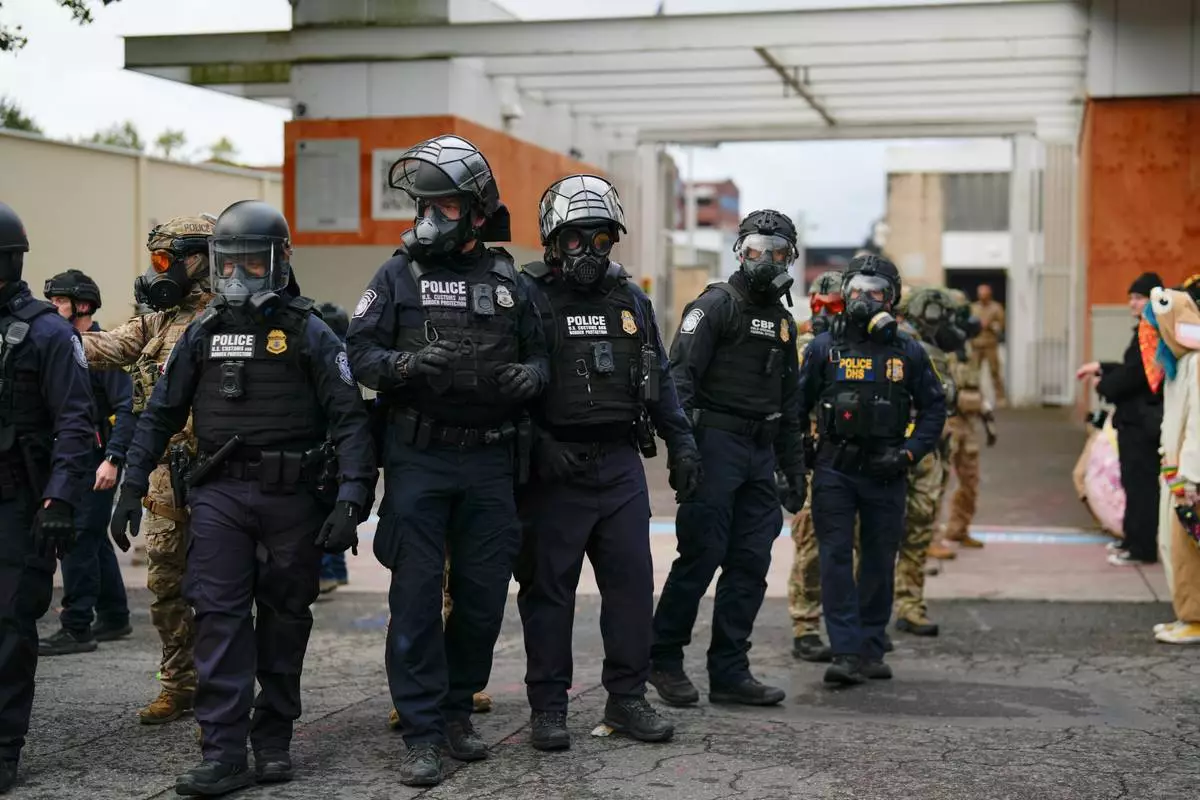
FILE - Law enforcement officers walk out of a U.S. Immigration and Customs Enforcement facility, Oct. 11, 2025, in Portland, Ore. (AP Photo/Jenny Kane, File)

FILE - U.S. Immigration and Customs Enforcement officers detain a person, Jan. 27, 2025, in Silver Spring, Md. (AP Photo/Alex Brandon, File)
CAIRO (AP) — Gulf Arab states reported new missile and drone attacks on Sunday after Iran threatened to widen its campaign and called for the evacuation of three major ports in the United Arab Emirates as the war in the Middle East, now in its third week, expands further.
Israel and the United States attacked Iran on Feb. 28, saying they were striking nuclear and military sites and encouraging the Iranian people to rise against their leaders. Iran has responded with attacks against Israel and neighboring countries in the Persian Gulf.
The war, which shows no signs of ending soon, has upended global air travel, disrupted oil exports from the region and sent fuel prices rising across the world.
U.S. President Donald Trump said he hoped allies would send warships to secure the Strait of Hormuz. None of the countries, which rely more heavily than the U.S. on oil and gas that passes through the strait, responded with firm commitments by Sunday though some said they were considering action.
Bahrain, Saudi Arabia and the UAE warned residents on Sunday that they were working to intercept incoming projectiles, a day after Iran threatened the Emirati ports, the first time it has done so against a neighboring country’s non-U.S. assets.
Iran had earlier accused the U.S. of using “ports, docks and hideouts” in the UAE to launch strikes on Kharg Island, home to the main terminal handling Iran’s oil exports, without providing evidence for the claim. The UAE and other Gulf countries that host U.S. bases have denied allowing their land or airspace to be used for military operations against Iran.
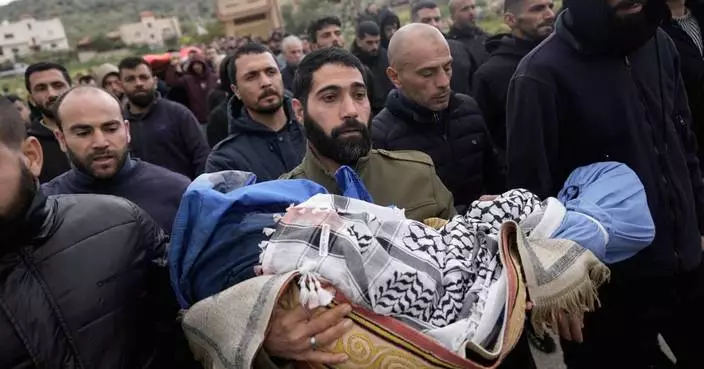
Since the start of the war, Iranian strikes have killed at least a dozen civilians in the Gulf states, most of them migrant workers. In Iran, the International Committee for the Red Cross said more than 1,300 people have been killed so far. Iran's Health Ministry says 223 women and 202 children are among those killed, according to Mizan, the judiciary's official news agency.
In Israel, 12 people have been killed by Iranian missile fire since the war started and more have been injured, including three on Sunday. At least 13 members of the U.S. military have also been killed since the war began; six of them died in a plane crash in Iraq last week.
Meanwhile, Lebanon’s humanitarian crisis deepened, with over 820 people killed there, according to the Ministry of Health, and 850,000 displaced since Iran-backed Hezbollah started hitting Israel and Israel responded with strikes and sent additional troops into southern Lebanon.
Iran’s foreign minister, Abbas Araghchi, said the U.S. attacked Kharg and Abu Musa islands from two locations in the UAE — Ras Al Khaimah and a place “very close to Dubai." He called the escalation dangerous and said Iran “will try to be careful not to attack any populated area” there.
U.S. Central Command said it had no response to Iran’s claim.
Anwar Gargash, a diplomatic adviser to the UAE president, rejected Iranian claim that the U.S. used Emirati land or air space for its attacks on Kharg Island.
Iran has fired hundreds of missiles and drones at Gulf neighbors — Bahrain, UAE, Saudi Arabia, Qatar and Oman — during the war.
It says it targets U.S. assets, even as Iranian strikes are reported at civilian sites such as airports and oil fields. Though their air defenses have intercepted most, the war has caused significant damage and rattled economies in the Gulf.
Araghchi also told the London-based Al-Araby al-Jadeed on Sunday that Iran is ready to consider any proposal that includes “a complete end” to the war and said mediation efforts were ongoing between Iran and its neighbors to de-escalate.
He gave no indication on whether progress has been made.
As global anxiety soars over oil prices and supplies, Trump said Saturday that he hopes China, France, Japan, South Korea, the United Kingdom and others send warships to keep the Strait of Hormuz “open and safe.” It was unclear if any planned to answer his appeal.
In Europe, which relies heavily on oil and gas imports from the Gulf, Britain responded by saying it was discussing with allies a “range of options” to secure shipping.
Araghchi, in a social media post, urged neighbors to “expel foreign aggressors” and described Trump’s call as “begging.”
Iran’s joint military command has reiterated its threat to attack U.S.-linked “oil, economic and energy infrastructures” in the region if the Islamic Republic’s oil infrastructure is hit.
The U.N. migration agency said Sunday that deteriorating conditions in Iranian cities were pushing many Iranians to northern provinces for safety.
The International Organization for Migration said Iranians are also fleeing to neighboring countries, including nearly 32,000 to Afghanistan and nearly 4,000 to Pakistan, even though airports and most border crossings — especially with Iraq — are closed.
After earlier wars — including in Syria and Afghanistan — sparked refugee crises that stretched resources and polarized politics in Europe, Turkey and North Africa, neighboring states worry the Iran war could again force large numbers of people from their homes.
Iran fired barrages of missiles toward Israel on Sunday, sending residents rushing to shelters as sirens sounded and several strikes hit central Israel and the Tel Aviv area.
Magen David Adom, Israel’s rescue service, released video showing a large crater in a street and shrapnel damage to an apartment building.
Strikes in the Tel Aviv region caused damage at 23 sites and sparked a small fire Sunday.
Multi-site impacts have become a hallmark of the war, as Israel’s military says Iran is firing cluster bombs that can evade some air defenses and scatter submunitions across multiple locations.
Metz reported from Ramallah, West Bank, and Magdy from Cairo. Associated Press writers Sally Abou AlJoud in Beirut and Tia Goldenberg in Washington contributed to this report.
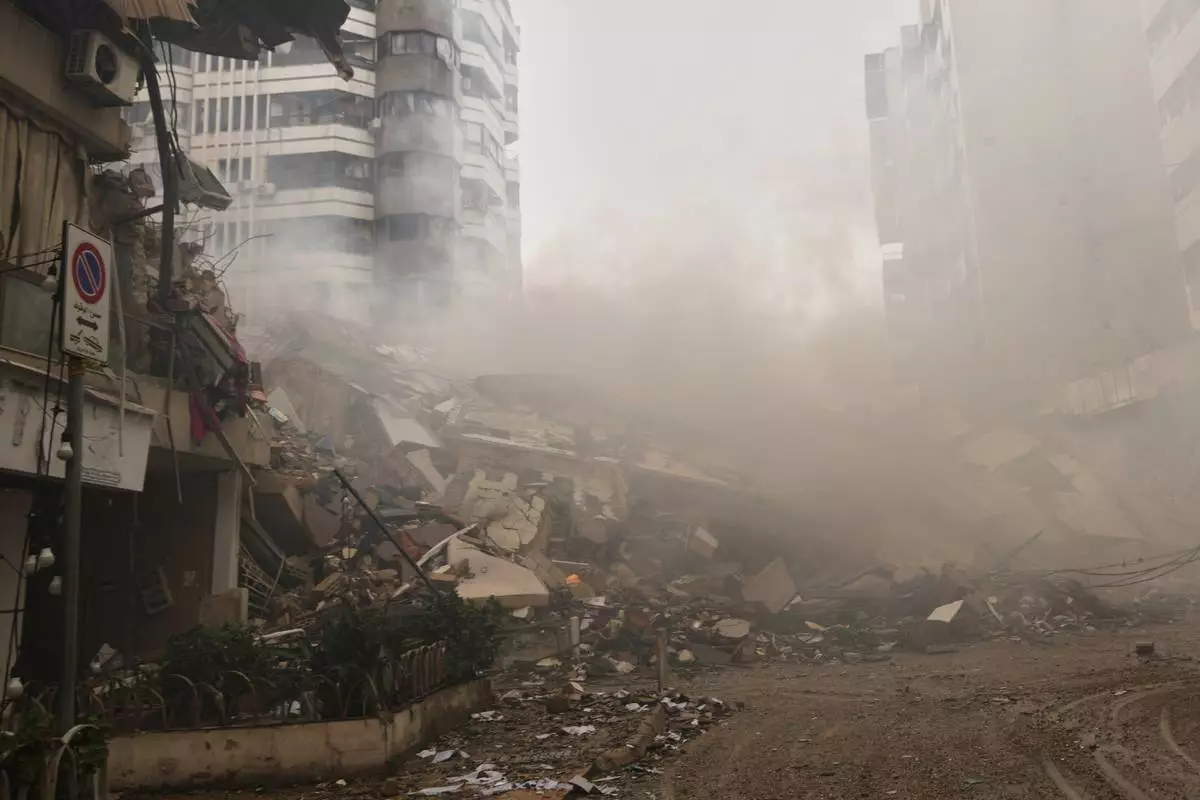
Smoke rises from the rubble of buildings destroyed in an Israeli airstrike in Dahiyeh, Beirut's southern suburbs, Lebanon, Sunday, March 15, 2026. (AP Photo/Hassan Ammar)
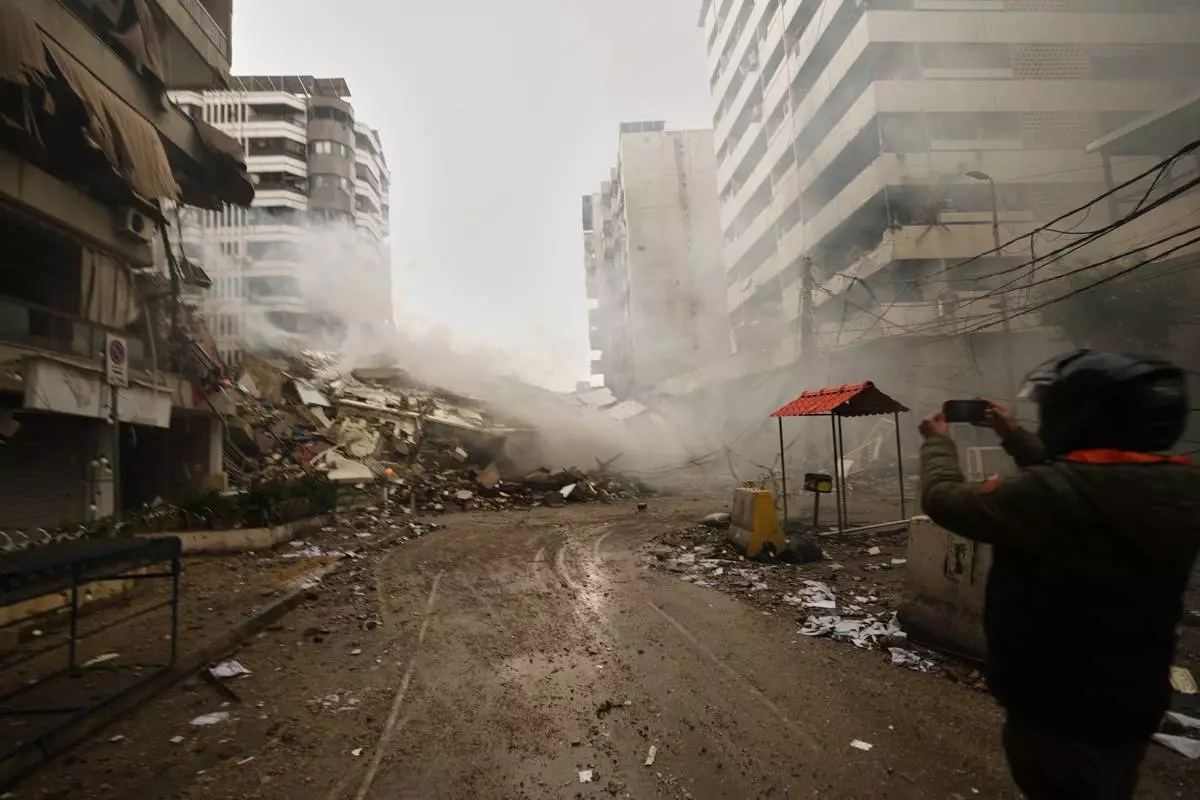
A man photographs the rubble of buildings destroyed in an Israeli airstrike in Dahiyeh, Beirut's southern suburbs, Lebanon, Sunday, March 15, 2026. (AP Photo/Hassan Ammar)

Israeli air defense system fires to intercept missiles during an Iranian attack over Tel Aviv, Israel, early Sunday, March 15, 2026. (AP Photo/Ohad Zwigenberg)
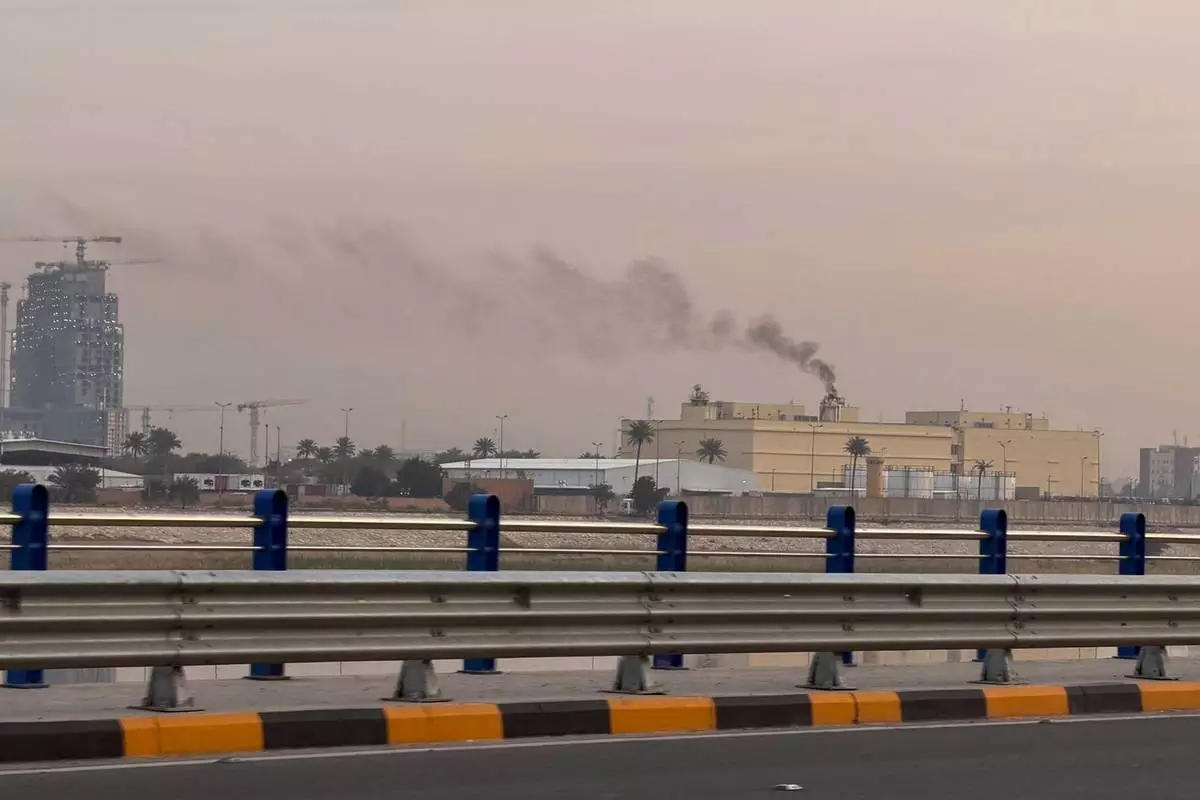
Smoke rises from the U.S. embassy building in Baghdad, Iraq, Saturday, March 14, 2026. (AP Photo/Ali Jabar)

Mourners react during the funeral ceremony for Gen. Ali Shamkhani, secretary of Iran's Defense Council and a senior adviser to the Supreme Leader who was killed in a strike, at the courtyard of the Imamzadeh Saleh shrine in Tehran, Iran, Saturday, March 14, 2026. (AP Photo/Vahid Salemi)
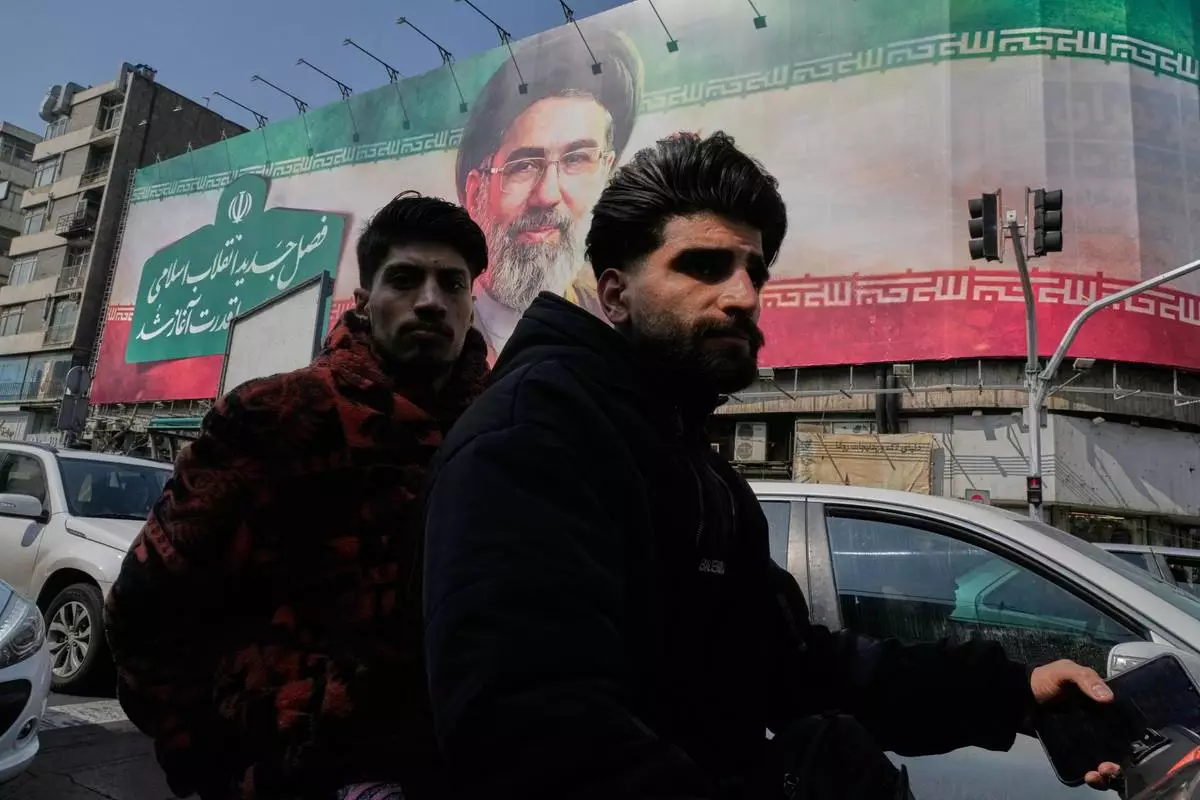
Two men ride their motorbike past a billboard of the Iranian Supreme Leader Ayatollah Mojtaba Khamenei in downtown Tehran, Iran, Saturday, March 14, 2026. (AP Photo/Vahid Salemi)
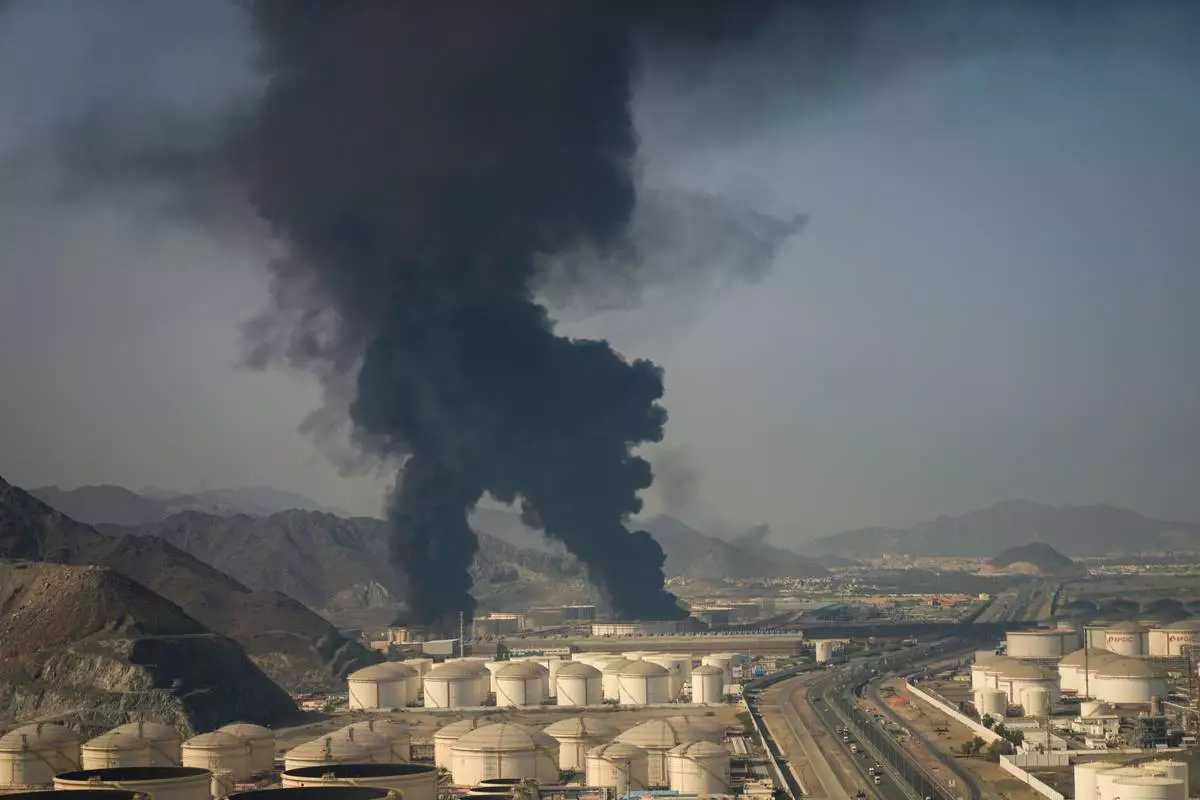
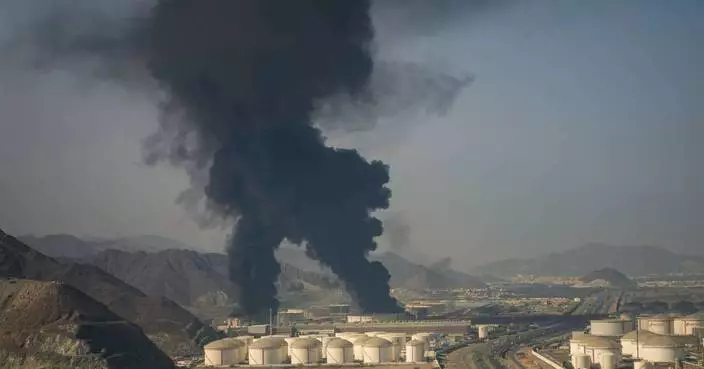
Fire and plumes of smoke rise from an oil facility in Fujairah, United Arab Emirates, Saturday, March 14, 2026. (AP Photo/Altaf Qadri)

A man chants slogan while the body of Gen. Ali Shamkhani, secretary of Iran's Defense Council and a senior adviser to the Supreme Leader who was killed in a strike, is being buried at the courtyard of the Imamzadeh Saleh shrine in Tehran, Iran, Saturday, March 14, 2026. (AP Photo/Vahid Salemi)