ATLANTA--(BUSINESS WIRE)--Mar 16, 2026--
PulteGroup (NYSE: PHM), the nation’s third-largest homebuilder, today announced the nomination of Benjamin (“Ben”) Schall for election as a new independent director to its Board of Directors (“Board”). Mr. Schall is Chief Executive Officer and President of AvalonBay Communities Inc. (NYSE: AVB), a leading multifamily real estate investment trust (REIT). Mr. Schall’s appointment would be effective immediately if elected by PulteGroup shareholders at its annual meeting scheduled for April 29, 2026.
This press release features multimedia. View the full release here: https://www.businesswire.com/news/home/20260316429990/en/
“Mr. Schall brings more than two decades of senior executive experience leading large, diversified real estate platforms and overseeing nationwide operating portfolios,” said Thomas J. Folliard, Chairman of the Board of PulteGroup. “His expertise in capital allocation, operational oversight, corporate strategy, and stakeholder engagement, built through leadership roles across multiple publicly traded real estate companies, will bring tremendous value to the company and the Board.”
Prior to AvalonBay, he served as Chief Executive Officer, President, and Trustee of Seritage Growth Properties, where he led a national mixed-use and retail redevelopment platform. Earlier, he served as Chief Operating Officer of Rouse Properties, overseeing a large portfolio of regional malls across 21 states, and as Senior Vice President at Vornado Realty Trust, contributing to the management and development of office and retail assets in major U.S. markets.
A graduate of Swarthmore College with an MBA from Harvard Business School, Mr. Schall also serves as an industry leader in national real estate organizations, including Nareit, NMHC, and The Real Estate Roundtable, and is Co-Chair of the Board of University Settlement in New York.
About PulteGroup
PulteGroup, Inc. (NYSE: PHM), based in Atlanta, Georgia, is one of America’s largest homebuilding companies with operations in more than 45 markets throughout the country. Through its brand portfolio that includes Pulte Homes, Centex, Del Webb, DiVosta Homes, and John Wieland Homes and Neighborhoods, the company is one of the industry’s most versatile homebuilders able to meet the needs of multiple buyer groups and respond to changing consumer demand. PulteGroup’s purpose is building incredible places where people can live their dreams.
For more information about PulteGroup, Inc. and PulteGroup brands, go to pultegroup.com; pulte.com; centex.com; delwebb.com; divosta.com; and jwhomes.com. Follow PulteGroup, Inc. on X: @PulteGroupNews.
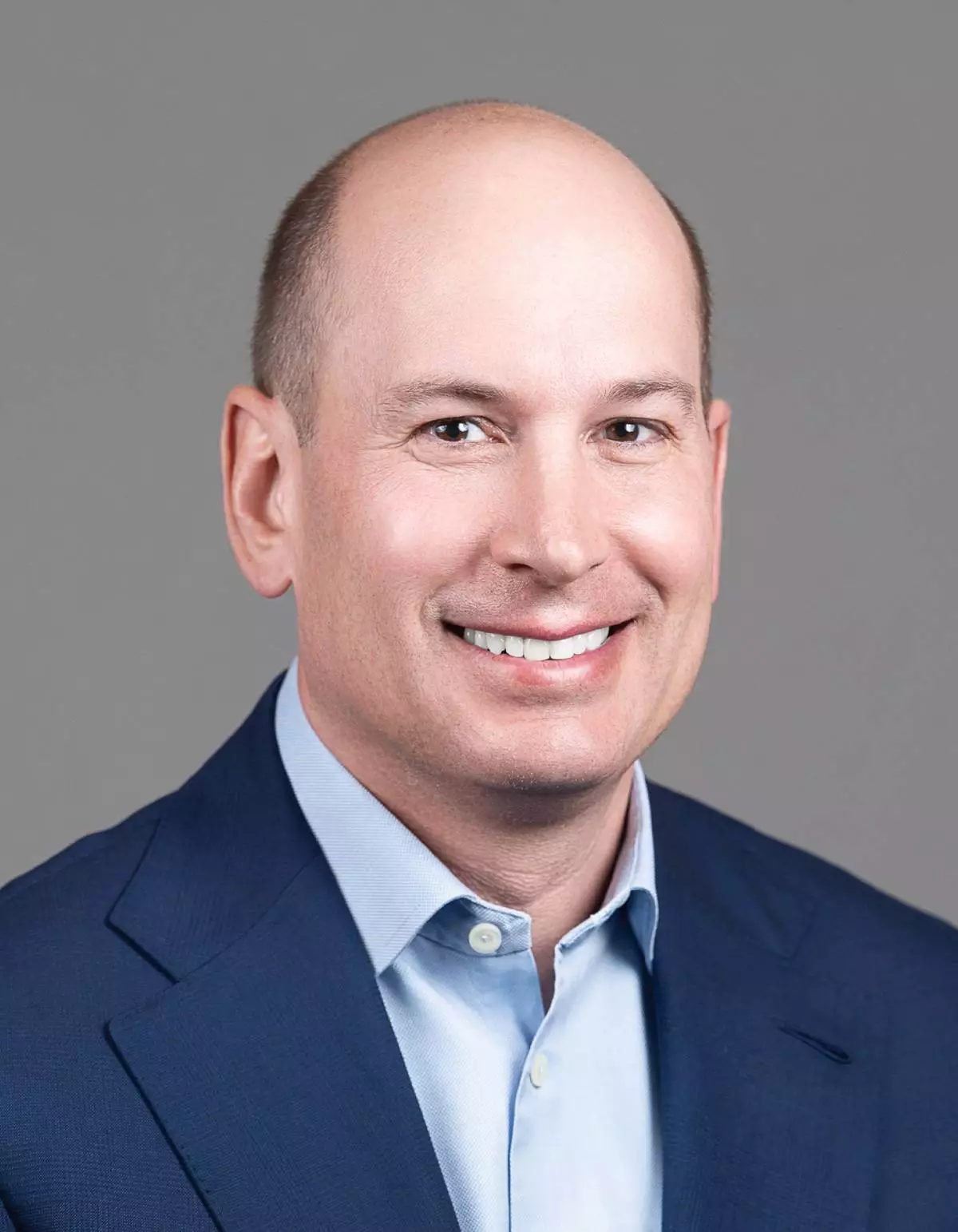
Ben Schall
BRUSSELS (AP) — The European Union is seeking more strategic clarity about the U.S. and Israel’s plans for Iran and when the conflict might end as the bloc weighs whether to send ships to help shore up security in the Persian Gulf.
“It is in our interest to keep the Strait of Hormuz open, and that’s why we are also discussing what we can do in this regard from the European side,” Kaja Kallas, the EU’s foreign policy chief, said Monday ahead of a meeting of the 27-nation bloc’s foreign ministers in Brussels.
U.S. President Donald Trump has asked allies — including France, China, Japan, South Korea and Britain — to help secure the strait for global shipping.
Kallas said the EU could expand its Operation Aspides naval mission to protect shipping in the Red Sea up into the Persian Gulf, or it could form a “coalition of the willing” with member nations contributing military capacity on an ad hoc basis.
The war in Iran, sparked on Feb. 28 airstrikes by Israel and the U.S., has driven up energy prices worldwide, with brent crude up more than 40%. But the conflict has also disrupted the wider global supply chain beyond oil, affecting everything from pharmaceuticals from India, semiconductors from Asia and oil-derived products like fertilizers that come from the Middle East.
Cargo ships are stuck in the Gulf or making a much longer detour around the southern tip of Africa. Planes carrying air cargo out of the Middle East are grounded. And the longer the war drags on, the more likely that there will be shortages and price increases on a wide range of goods.
France has said it is working with countries — President Emmanuel Macron mentioned partners in Europe, India and Asia — on a possible international mission to escort ships through the strait but has stressed it must be when “the circumstances permit,” when fighting has subsided.
French senior officials, speaking anonymously on ongoing talks, said The Netherlands, Italy, and Greece had shown interest and that Spain might be involved in some way.
Outside the EU, the U.K. may also be part of it if they have some capabilities available, the officials said. They mentioned the Red Sea-focused Operation Aspides as a possible model for a naval mission to the Persian Gulf.
German Foreign Minister Johann Wadephul said it will be important for the U.S. and Israel to define “when they consider the military aims of their deployment to have been reached.”
He said before meeting his EU colleagues in Brussels that “we need more clarity here” from the U.S. and Israel.
At the same time, Wadephul said the Iranian government poses a significant danger to the region, the freedom of shipping and the global economy, and “this danger definitely must not continue.” He said he would back sanctions against those responsible for blocking the Strait of Hormuz, without elaborating.
Once there’s clarity on the U.S.-Israeli aims, Wadephul said it will be time to enter a phase in which “a security architecture for this whole region” is defined. He said that will also entail speaking to Iran.
Luxembourg Foreign Minister Xavier Bettel said the EU remains uncommitted to any military action.
“The fact is, for the moment, the EU is not directly part of the situation. So we need to decide if we are going to be part or not. That’s an important decision," Bettel said.
Operation Aspides was formed to thwart attacks to shipping in the Red Sea by Somali pirates and Yemen’s Iran-backed Houthi rebels, who have yet to join the current fray. Saudi Aramco manages a pipeline network that bypasses the Strait of Hormuz to deliver oil to the Red Sea port city of Yanbu.
“If we want to have security in this region, then it would be easiest to actually already use the operation that we have in the region and maybe change a bit,” Kallas she said. “There is also talk of coalition of the willing in this regard, but we also need to see what could be the fastest to provide this opening for the Strait of Hormuz, but of course, as you can see, it’s not easy.”
The EU is anxious that a potential refugee crisis in Iran will develop if the war continues.
“Although for now, the conflict has not translated into immediate migratory flows toward the EU, what the future holds remains unclear and necessitates the full mobilization of every migration diplomacy tool we have at our disposal,” said European Commission President Ursula von der Leyen in a statement Sunday.
Estonian Foreign Minister Margus Tsahkna said that his country has been a staunch supporter of the U.S., but that it needs to “know as well what are the plans...in the region.”
He said U.S. allies in Europe want to understand Trump’s “strategic goals. What will be the plan?”
-
Associated Press writers Geir Moulson in Berlin and Sylive Corbet in Paris contributed to this report.
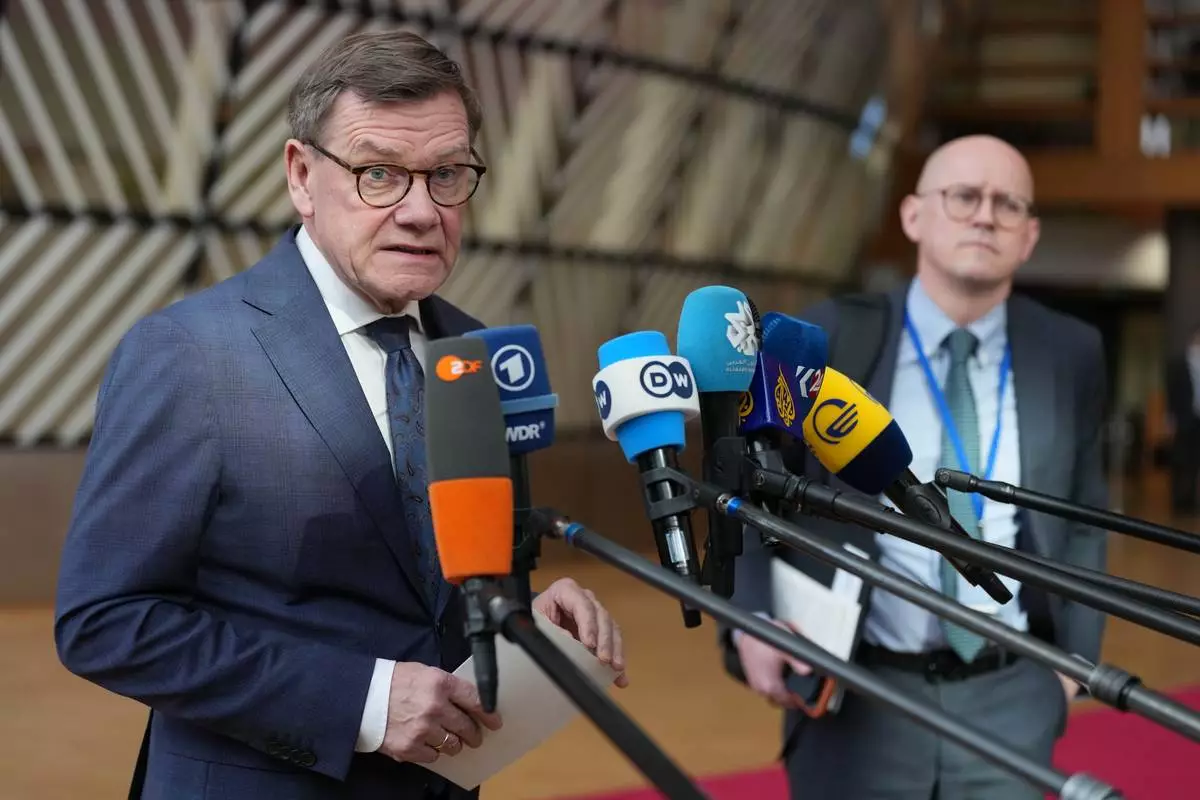
Germany's Foreign Minister Johann Wadephul speaks with the media as he arrives for a meeting of EU foreign ministers at the European Council building in Brussels, Monday, March 16, 2026. (AP Photo/Virginia Mayo)

European Union foreign policy chief Kaja Kallas speaks with the media as she arrives for a meeting of EU foreign ministers at the European Council building in Brussels, Monday, March 16, 2026. (AP Photo/Virginia Mayo)