BRUSSELS (AP) — Top European Union officials said Tuesday they have offered to pay Ukraine to repair a damaged pipeline meant to carry crude oil to Hungary, in a bid to persuade the government in Budapest to lift its veto on a massive aid package to the war-wracked country.
Ukraine and Hungary have been locked in an escalating feud since Russian oil deliveries to Hungary and Slovakia were halted in January due to damage to the Druzhba pipeline, which crosses Ukrainian territory. Ukrainian officials have blamed the damage on Russian drone attacks.
Hungary's nationalist prime minister, Viktor Orbán, has accused Ukrainian President Volodymyr Zelenskyy of deliberately holding up oil supplies — claims that Zelenskyy denies. In retaliation, Orbán has vetoed a major 90-billion-euro ($106 billion) EU loan to cover Ukraine’s military and economic needs for two years. Hungary is also blocking a new round of EU sanctions against Russia.
EU officials said in a statement Tuesday that the bloc “has offered Ukraine technical support and funding” to fix the pipeline.
“The Ukrainians have welcomed and accepted this offer. European experts are available immediately,” European Council President António Costa and European Commission President Ursula von der Leyen said.
Zelenskyy is vehemently opposed to allowing Russian energy to transit through Ukraine. Energy revenue has fueled the four-year war waged by President Vladimir Putin on his country, and Russian forces have relentlessly targeted Ukraine's energy infrastructure throughout the conflict.
But he wrote Tuesday that Ukraine is “undertaking all possible efforts to repair the damage and restore operations.”
Costa and von der Leyen wrote to Zelenskyy Monday, saying that they hope the EU offer of funding and technical help “can pave the way for overcoming the current blockage and ensure for the rapid repair of the pipeline.”
But Orbán said Tuesday that he would continue to block the loan as long as oil shipments to Hungary remain interrupted.
“If there’s no oil, there’s no money,” Orbán said in a video posted to social media. “If President Zelenskyy wants to get his money from Brussels, he needs to open the Druzhba oil pipeline.”
Orbán added that he believed Ukraine was deliberately holding up oil flows in order to tip the scales in favor of his political opponent ahead of Hungarian elections next month, but provided no evidence for his claim.
EU leaders have lashed out at Orbán for agreeing to the loan to Ukraine at a summit in December and then reneging on that deal.
They accuse him of undermining the fundamental EU principle of “sincere cooperation” between the 27 member countries.
Ukraine is desperate for money and Zelenskyy said that it is important for his country to receive at least a first tranche of funding next month.
Orbán, who is trailing in opinion polls ahead of elections next month, has leaned heavily on an election campaign that portrays Zelenskyy as an existential threat to Hungary.
He has alleged that the Ukrainian leader, along with von der Leyen, seeks to drag Hungary into the war, and claimed that his reelection is the only guarantee of Hungary’s peace and security.
The EU mostly weaned itself off Russian oil and natural gas after Putin used the bloc's dependence on it in 2022 as leverage to undermine European support for Ukraine. However, Hungary and Slovakia were given exemptions to keep using Russian oil as they are landlocked and have no easy access to other suppliers.
Associated Press writer Justin Spike in Budapest, Hungary contributed to this report.

France's President Emmanuel Macron, right, welcomes Ukrainian President Volodymyr Zelenskyy prior to a meeting at the Elysee Palace, Friday, March 13, 2026, in Paris, France. (AP Photo/Michel Euler)
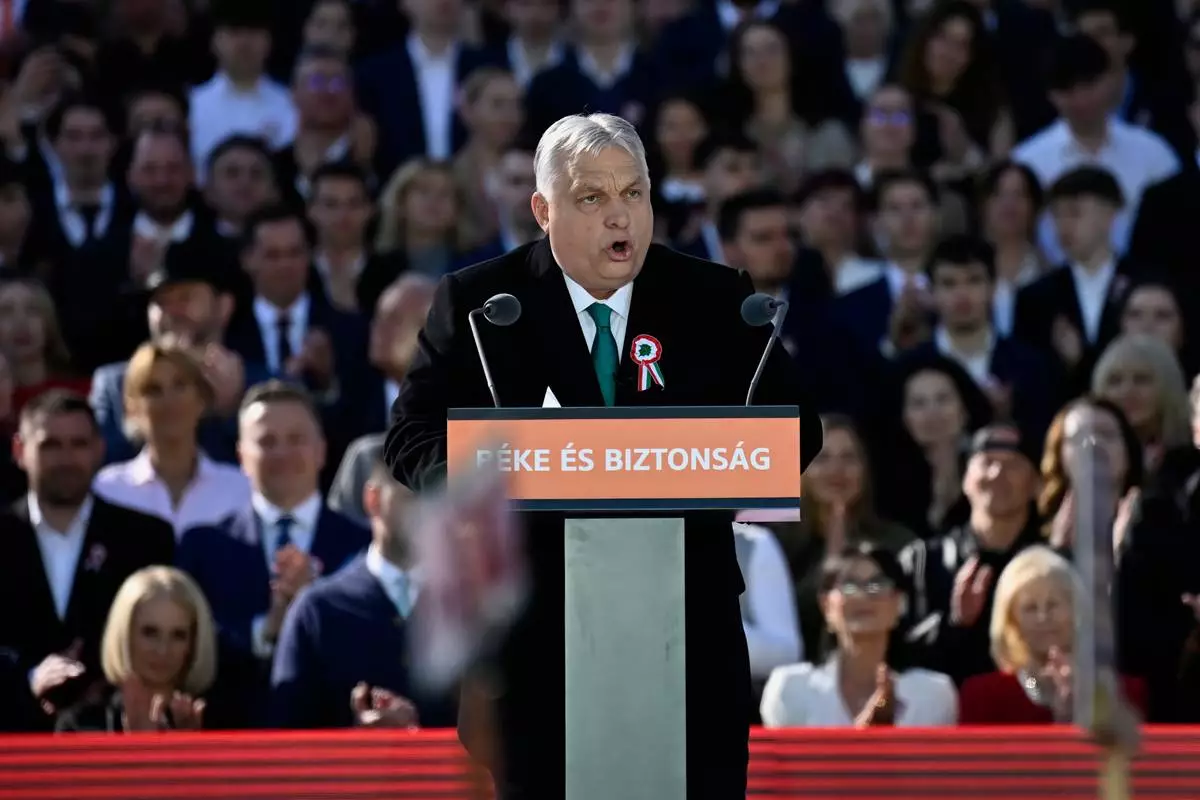
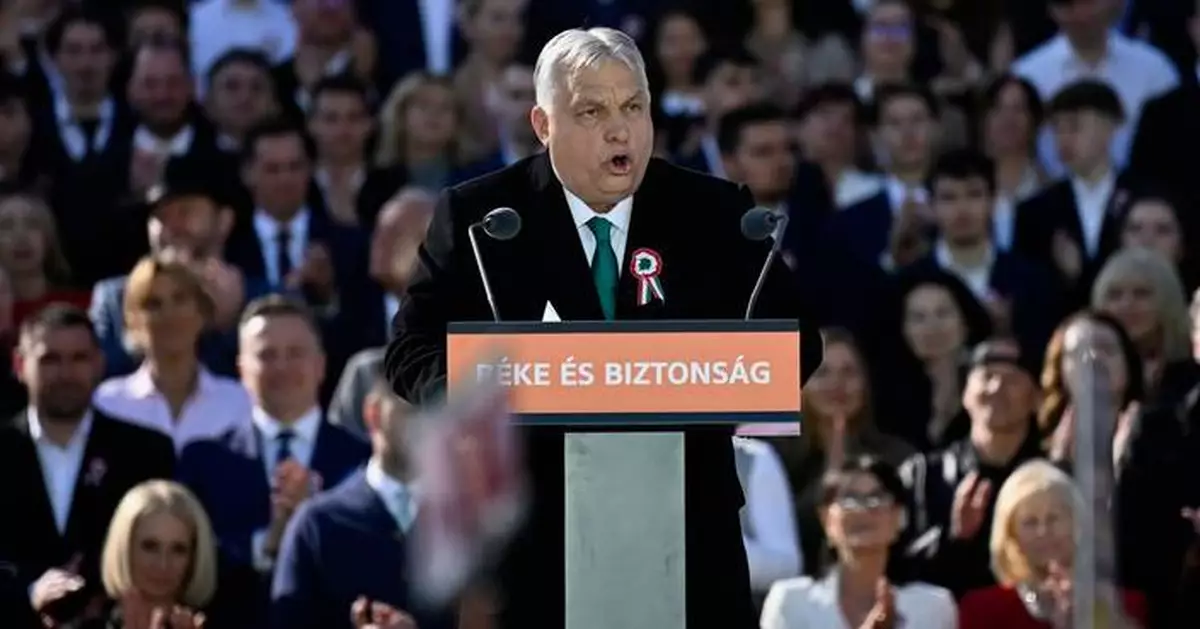
Hungary's Prime Minister Viktor Orban addresses his supporters during a march in Budapest, Hungary, Sunday, March 15, 2026. (AP Photo/Denes Erdos)
DUBAI, United Arab Emirates (AP) — Israel said Tuesday it killed two senior Iranian security officials in overnight strikes in a major blow to the country’s leadership. Iran, which did not immediately confirm either death, fired new salvos of missiles and drones at its Gulf Arab neighbors and Israel in a war that showed no signs of abating.
Ali Larijani, secretary of Iran’s Supreme National Security Council, and Gen. Gholam Reza Soleimani, the head of the Revolutionary Guard’s all-volunteer Basij force, were “eliminated last night," Israeli Defense Minister Israel Katz said. Larijani was considered one of the most powerful figures in the country since Supreme Leader Ayatollah Ali Khamenei was killed in an airstrike on the first day of the war.
Both men were key to Iran’s violent crackdown on protests in January that challenged the theocracy’s 47-year rule. The killings would strip Iran of important leaders during a war that presents that greatest test for the Islamic Republic in recent decades.
With concerns growing about a global energy crisis, Iran launched fresh attacks against several of its Gulf Arab neighbors and oil infrastructure throughout the region. Dubai, a major transit hub for international travel, briefly shut its airspace, the second disruption to flights in the city in as many days. An Iranian official said Tehran had no intention of relinquishing its tight grip on shipping through the Strait of Hormuz, a crucial waterway for oil.
On Tuesday, President Donald Trump said NATO and most other allies have rejected his calls to help secure the strait as the war rages on. Trump, who has been pressing allies to help safeguard the critical waterway, fumed that the U.S. is not getting support “despite the fact that almost every country strongly agreed with what we are doing, and that Iran cannot” be allowed to secure a nuclear weapon.
The Israeli military also said it had begun a “wide-scale wave of strikes” across Iran’s capital and was stepping up strikes on Iran-backed Hezbollah militants in Lebanon.
Larijani hails from one of Iran’s best-known political families. A former parliamentary speaker and senior policy adviser, he advised the late Khamenei on strategy in nuclear talks with the Trump administration.
Larijani was sanctioned by the U.S. Treasury in January as Tehran violently suppressed nationwide protests. It identified him as being “responsible for coordinating the response to the protests on behalf of the supreme leader of Iran.”
Soleimani also was sanctioned by the U.S., as well as the European Union and other nations, over his role in helping suppress dissent for years through the Basij.
Israeli Prime Minister Benjamin Netanyahu said the killings were aimed at weakening Iran's government. “We are undermining this regime to give the Iranian people the opportunity to remove it. It won’t happen quickly or easily, but if we persist, they will have the chance to take their destiny into their own hands,” he said.
There have been no signs of anti-government protests since the war began, as many Iranians are sheltering from the American and Israeli strikes.
The reported killings of Larijani and Soleimani came on the eve of “Chaharshanbe Souri,” or the Festival of Fire, in Iran on Tuesday night and shortly before the Persian new year.
State media aired footage Tuesday of pro-government demonstrations, including images of some men in plainclothes branding assault rifles and shotguns on the back of motorcycles — a sign of the government wanting to prevent renewed protests against the theocracy.
Iran kept up the pressure on the energy infrastructure around the region, hitting an oil facility in Fujairah, an emirate in the United Arab Emirates that has been repeatedly targeted. State-run WAM news reported that no one had been injured in the blast from the drone strike.
A man was killed by the debris of a missile intercepted over Abu Dhabi, the eighth person to die in the UAE since the start of the war, authorities said.
Iran’s attacks on Gulf nations and its grip on the Strait of Hormuz, through which a fifth of the world’s oil is transported, have sparked increasing concerns of a global energy crisis and are unnerving the world economy.
A handful of ships have crossed through the strait, and Iran has said the vital waterway technically remains open — just not for the United States, Israel and their allies. About 20 vessels have been struck since the war began.
With oil prices rising, U.S. President Donald Trump said he had demanded that roughly a half-dozen countries send warships to ensure ships can pass through the Strait of Hormuz. But his appeals brought no immediate commitments, with many saying they are hesitant to get involved in a war with no defined exit plan and skeptical that they could do more than the U.S. Navy.
The UAE shut down its airspace early Tuesday as its military reported it was “responding to missile and drone threats from Iran.” The closure was soon lifted but it underscored the balancing act Emirati authorities face in trying to keep their long-haul carriers, Emirates and Etihad, flying as Iran continues to target the country. The UAE said its air defenses responded to 10 ballistic missiles and 45 drones Iran fired Tuesday at the country.
Countries around the region also came under fire: Saudi Arabia said it intercepted drones, while air defenses could be heard targeting incoming fire over Qatar's capital, Doha. Attacks from Iran-linked proxy forces continued in Iraq, where the U.S. Embassy in Baghdad was hit with shrapnel from intercepted drones.
The Israeli military early Tuesday said it had launched new attacks across Tehran and targeted Hezbollah militants in the Lebanese capital. Hezbollah began firing rockets into the northern Israel after the U.S. and Israel attacked Iran last month.
In Iran, it said it hit command centers, missile launch sites and air defense systems. There was no immediate confirmation from Iran, where little information has been coming out due to internet outages, round-the-clock airstrikes and tight restrictions on journalists.
More than 1,300 people have been killed in Iran since the start of the conflict, according to the Iranian Red Crescent.
Israel did not immediately release details of its attacks on Lebanon, but the Lebanese army said that one of its soldiers died and four more were wounded in an airstrike on the village of Kfar Sir. Two more soldiers were killed in another Israeli strike near the southern city of Nabatiyeh, the army said, and an airstrike near Beirut’s international airport killed one person and wounded nine, according to the Lebanese Health Ministry.
Israel’s strikes have displaced more than 1 million Lebanese — or roughly 20% of the population — according to the Lebanese government, which says some 850 people have been killed.
Israel reported two Iranian salvos early Tuesday fired toward Tel Aviv and an area south of the Sea of Galilee, and then more later in the day. More launches from Lebanon were also reported.
In Israel, 12 people have been killed by Iranian missile fire. At least 13 U.S. military members have been killed.
A top U.S. counterterrorism official resigned Tuesday, citing concerns about the justification for military strikes in Iran. Joe Kent, the director of the National Counterterrorism Center, said he “cannot in good conscience” back the Trump administration’s war.
His resignation reflects unease about the war within Trump’s political base just as midterm election races start to heat up. Trump’s MAGA coalition is splintering over what it sees as the president’s failure to keep his “America First” campaign promise by leading the U.S. into a war that is driving up gas prices.
Rising reported from Bangkok, Corder from The Hague, Netherlands, and Magdy from Cairo. Associated Press writers Qassim Abdul-Zahra in Baghdad; and Bassem Mroue in Beirut contributed to this report.
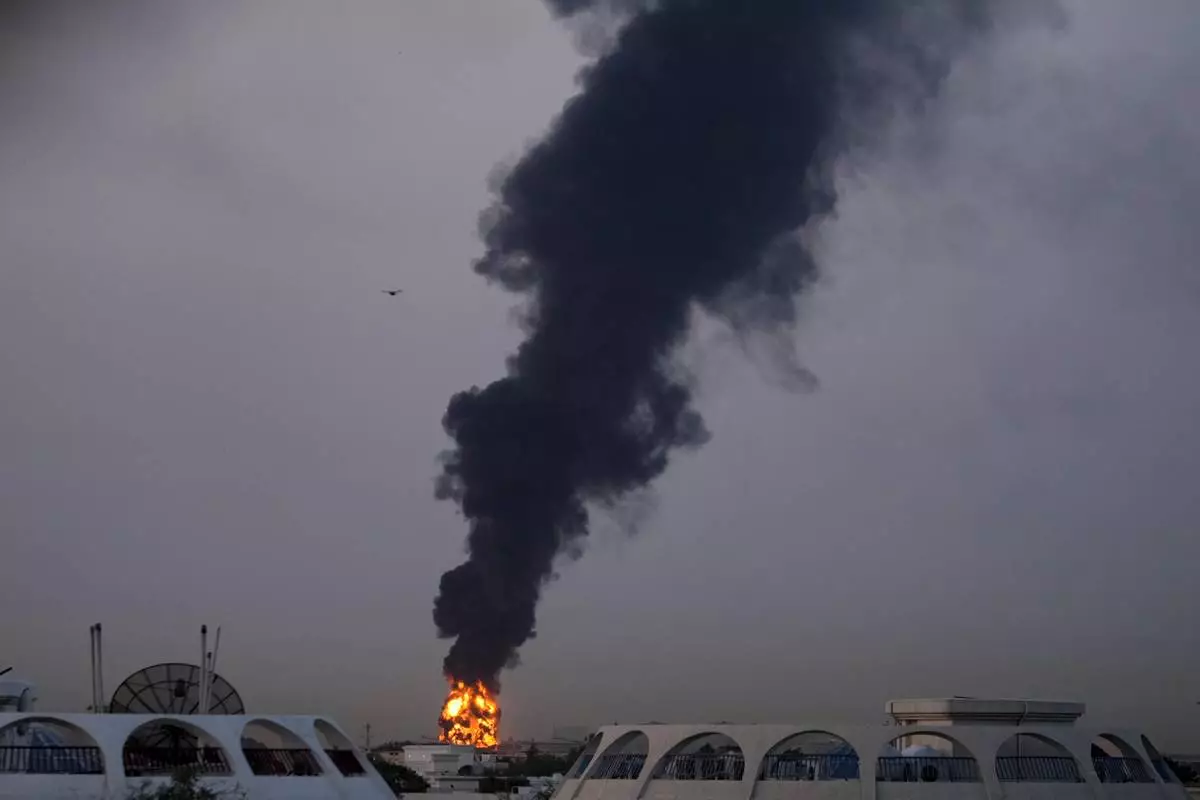
Fire and plumes of smoke rise after a drone struck a fuel tank forcing the temporary suspension of flights. near Dubai International Airport, in United Arab Emirates, early Monday, March 16, 2026. (AP Photo)
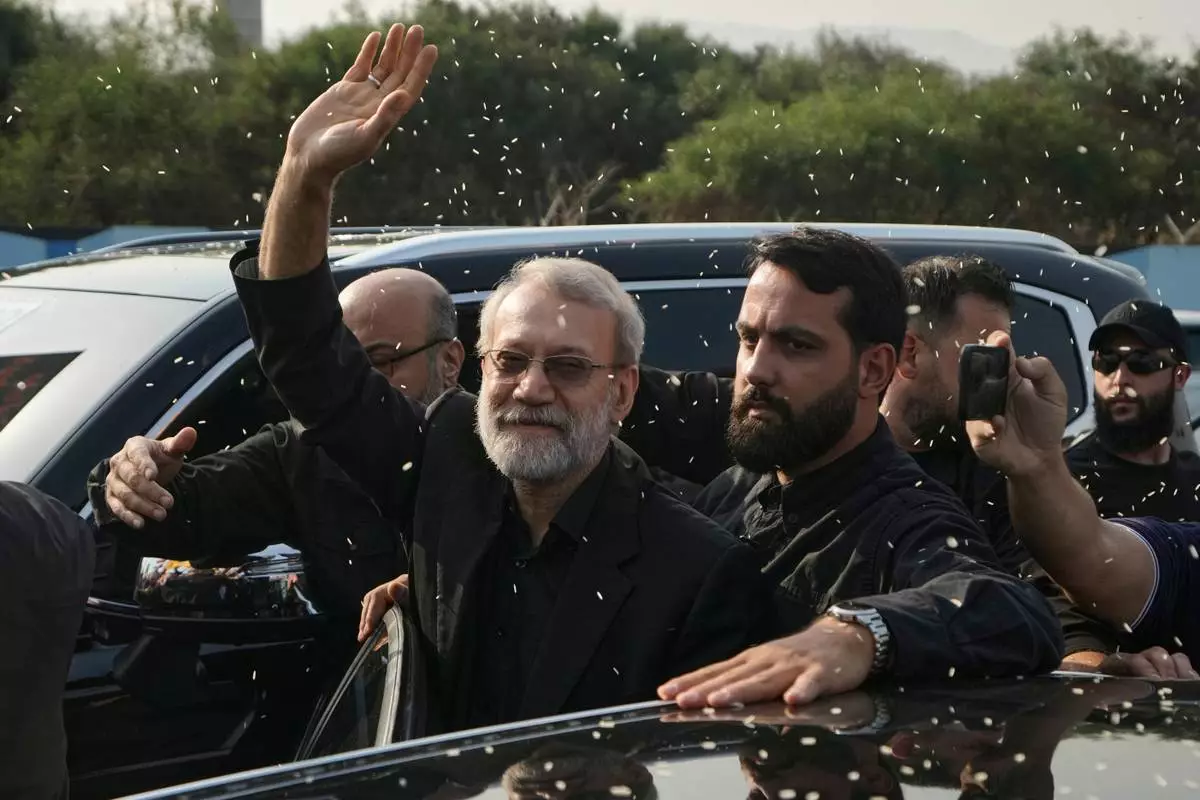
FILE - Ali Larijani, center, head of Iran's National Security Council, gestures as Hezbollah supporters throw rice to welcome him outside Rafik Hariri International Airport in Beirut, Lebanon, Wednesday, Aug. 13, 2025. (AP Photo/Bilal Hussein, File)
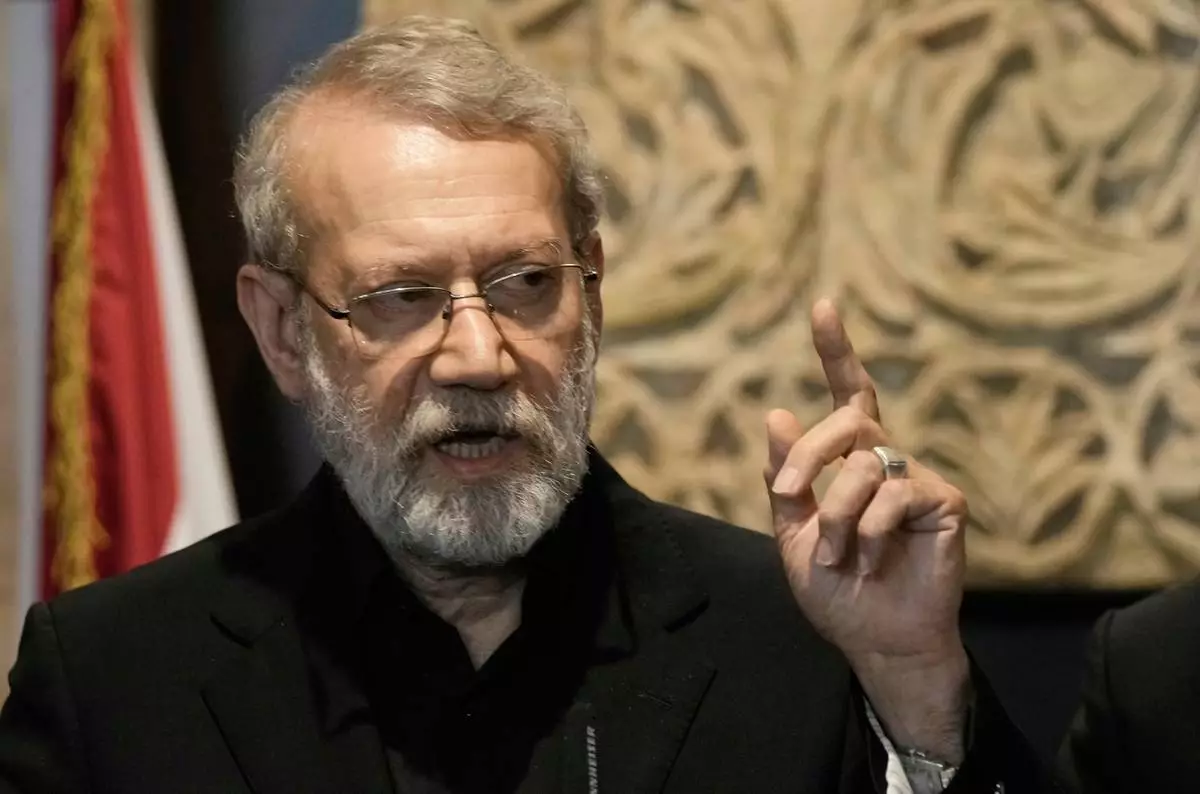
FILE -Iranian Secretary of Supreme National Security Council Ali Larijani, speaks during a press conference after his meeting with the Lebanese parliament speaker Nabih Berri, in Beirut, Lebanon, Aug. 13, 2025. (AP Photo/Bilal Hussein, File)
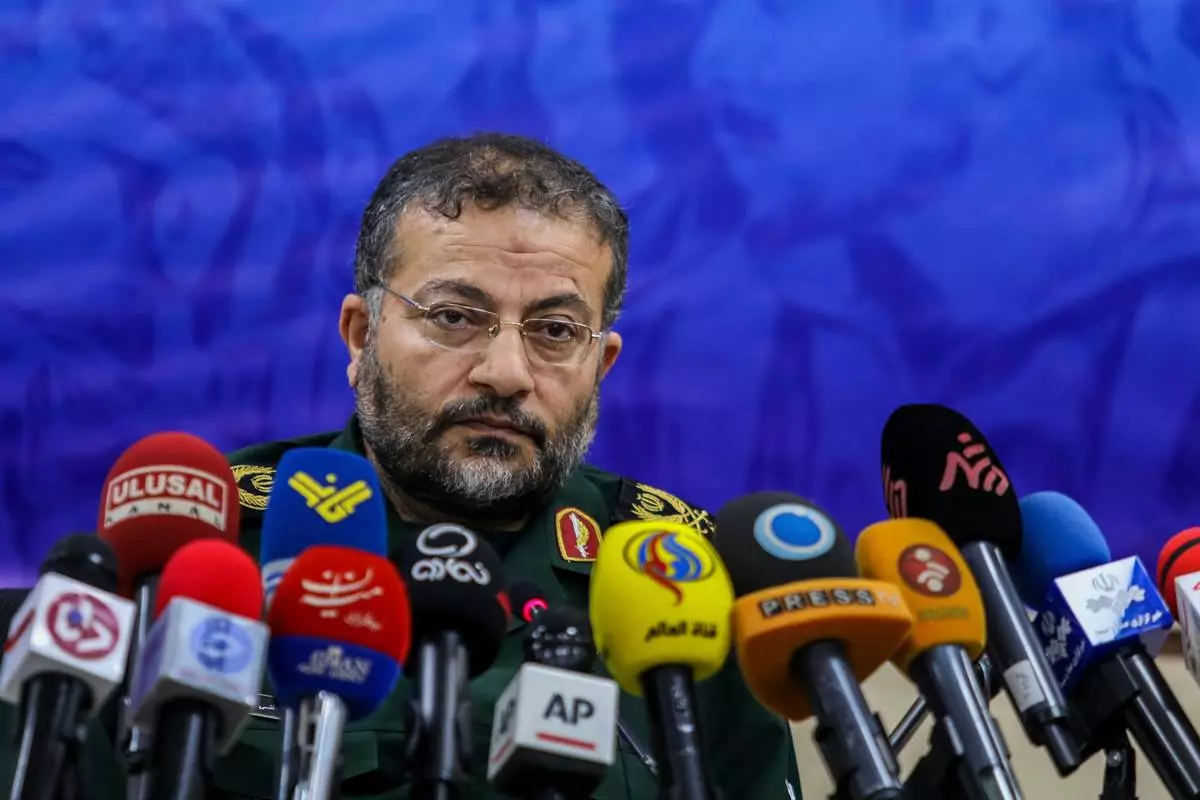
FILE - Commander of Iran's Basij paramilitary force, Gen. Gholam Reza Soleimani, gives a press conference in Tehran, Iran, Nov. 18, 2019. (AP Photo/Ebrahim Noroozi, File)
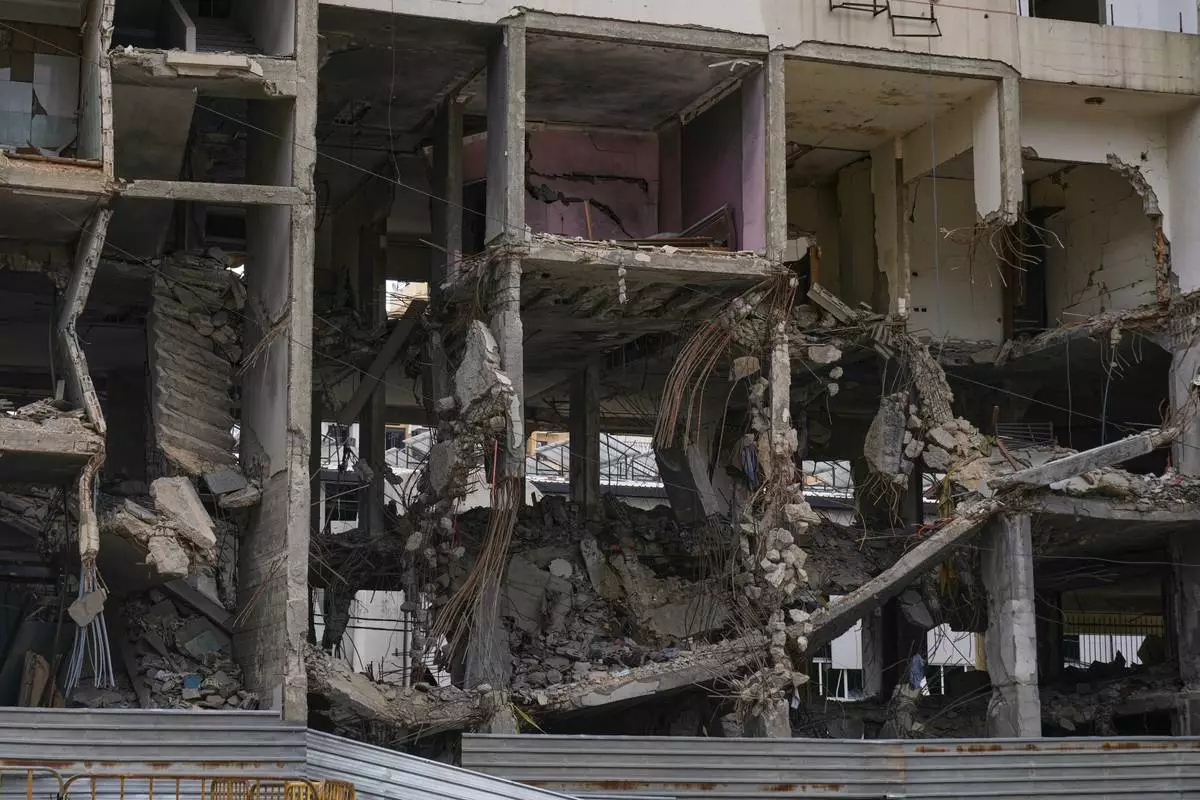
A view of a building damaged in an Israeli airstrike, in Dahiyeh, Beirut's southern suburbs, Beirut's southern suburbs, Lebanon, Monday, March 16, 2026. (AP Photo/Bilal Hussein)
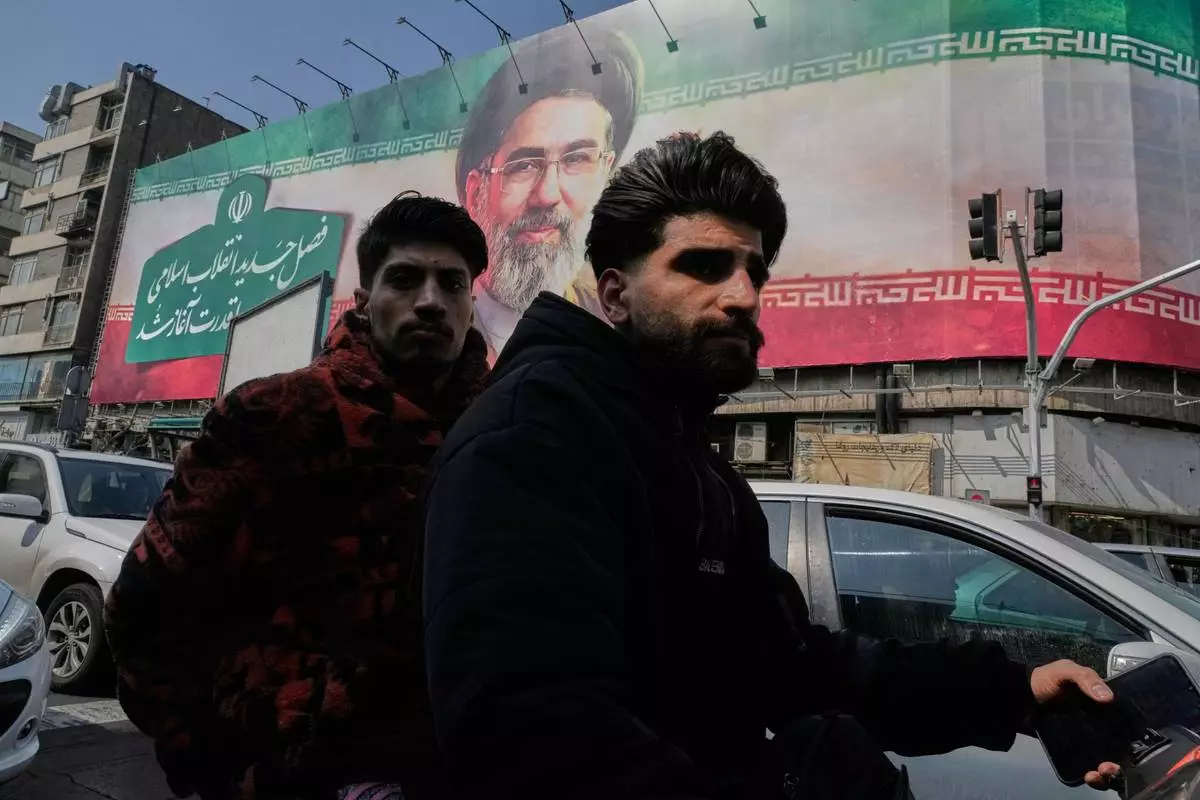
Two men ride their motorbike past a billboard of the Iranian Supreme Leader Ayatollah Mojtaba Khamenei in downtown Tehran, Iran, Saturday, March 14, 2026. (AP Photo/Vahid Salemi)
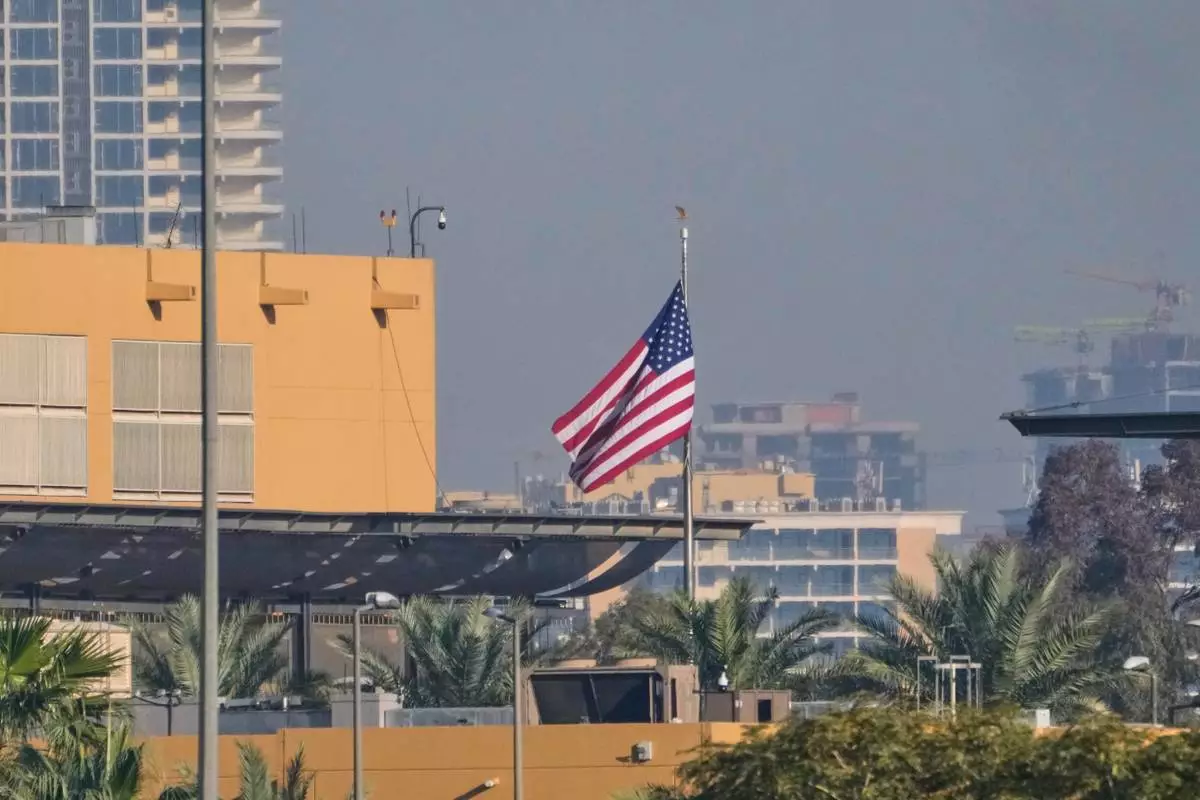
U.S. Embassy is seen across the Tigris River in Baghdad, Tuesday, March 17, 2026. (AP Photo/Hadi Mizban)
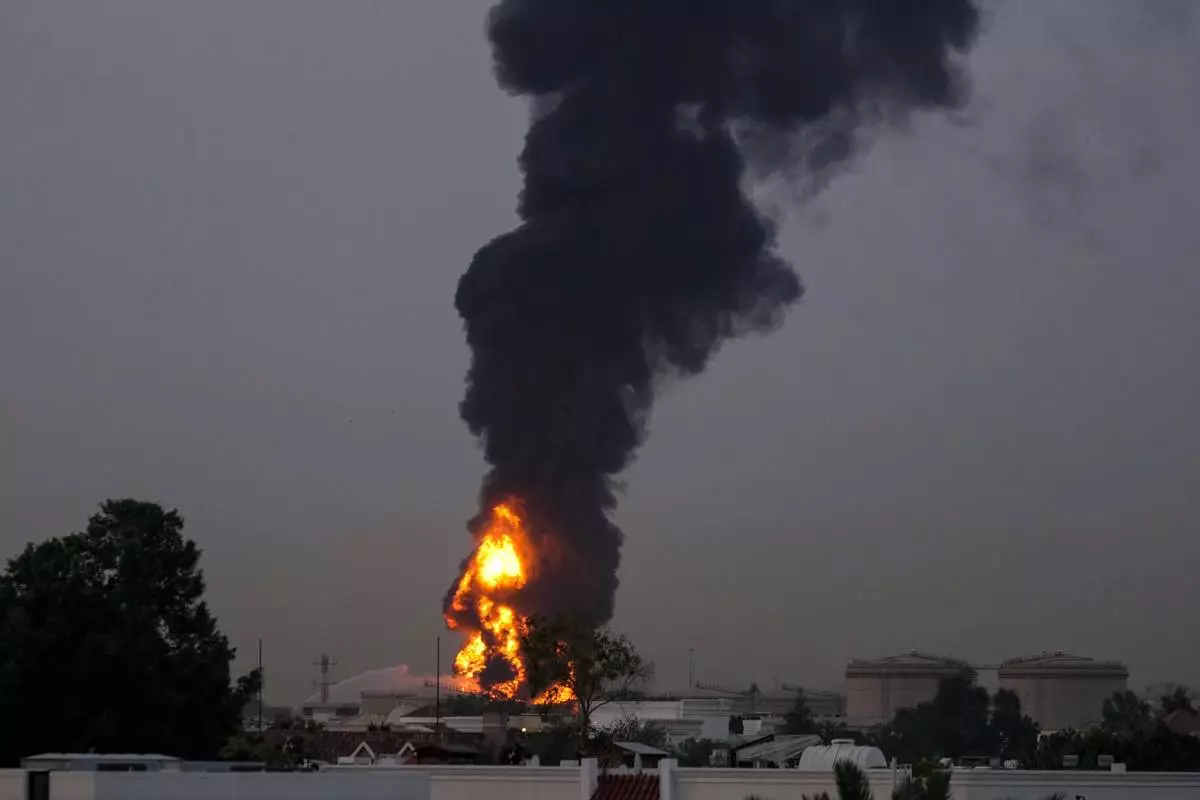
Fire and plumes of smoke rises after a drone struck a fuel tank forcing the temporary suspension of flights. near Dubai International Airport, in United Arab Emirates, early Monday, March 16, 2026. (AP Photo)
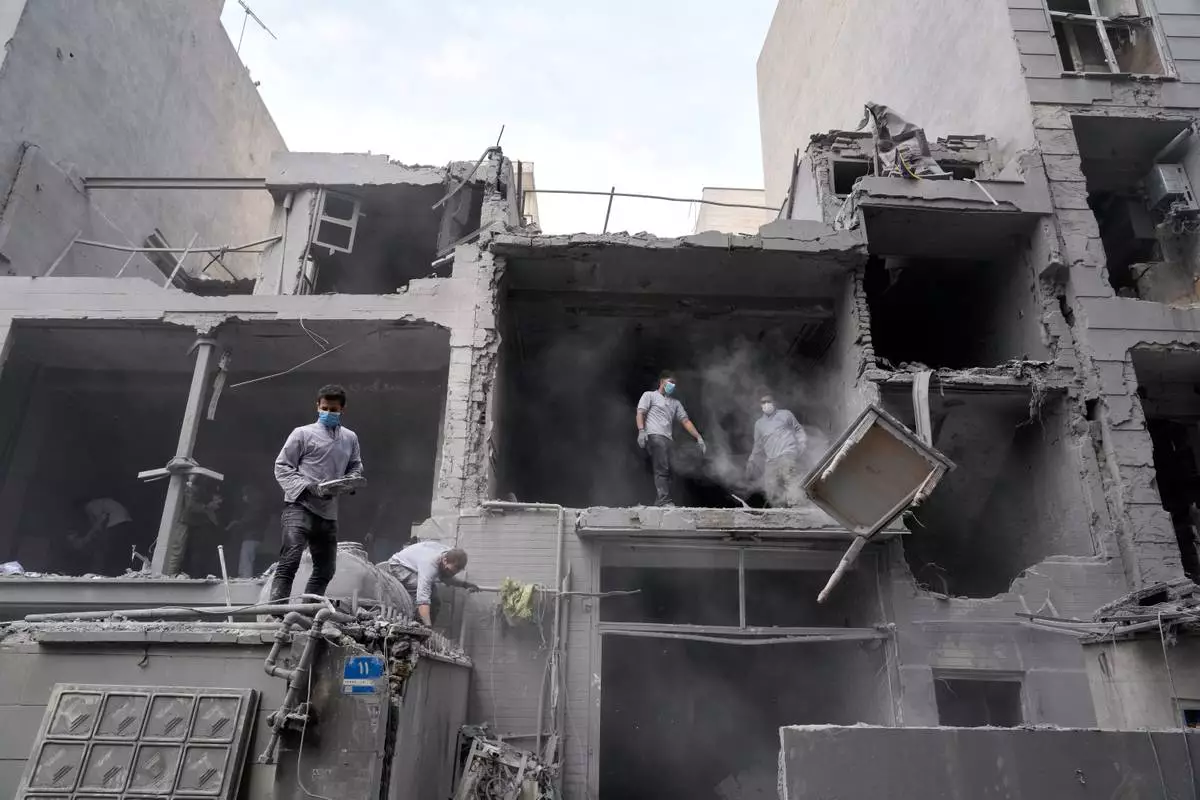
Volunteers clean debris from a residential building damaged when a nearby police station was hit Friday in a U.S.-Israeli strike in Tehran, Iran, Sunday, March 15, 2026. (AP Photo/Vahid Salemi)