CAIRO (AP) — Sayyed Ragheb was already struggling to keep his family afloat, earning less than $100 a month. Now he fears it will get even worse after Egypt hiked fuel prices because of the Iran war.
The father of four school-age children works day-to-day in cafes and sometimes in construction. With prices of meat and produce jumping just the past week, he worries about meeting his family’s basic needs.
Click to Gallery
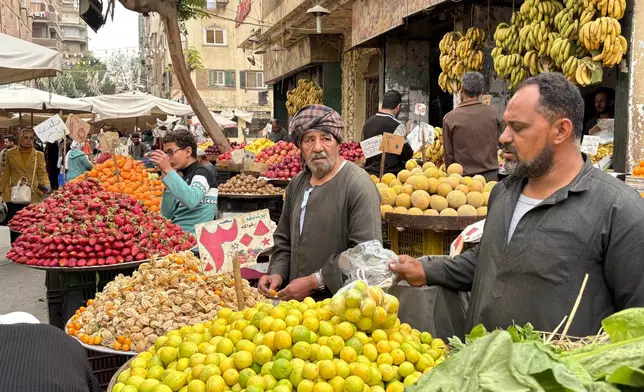
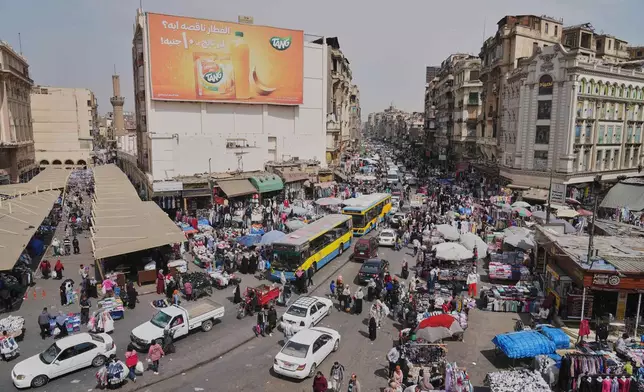
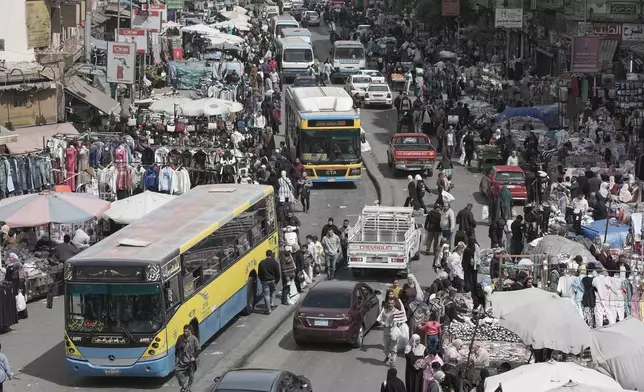
Vendors line up at a popular market in Cairo, Egypt, Tuesday, March 12, 2026. (AP Photo/Amr Nabil)
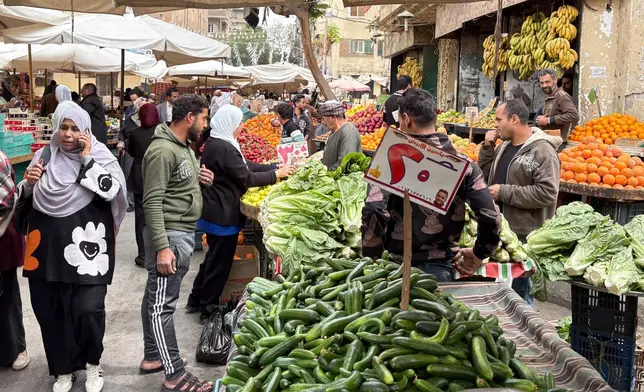
People buy vegetables at a popular market in Cairo, Egypt, Tuesday, March 12, 2026. (AP Photo/Amr Nabil)
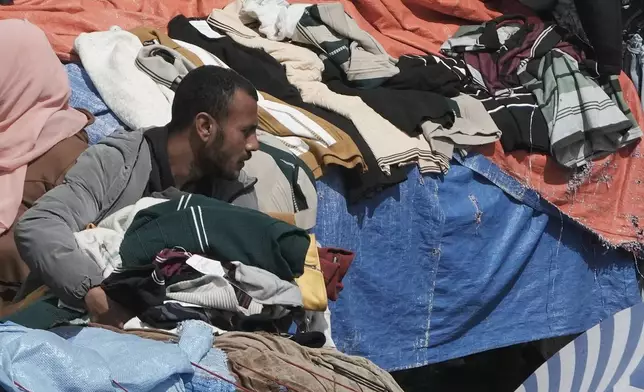
A vendor carries second hand clothes at a popular market in Cairo, Egypt, Tuesday, March 12, 2026. (AP Photo/Amr Nabil)
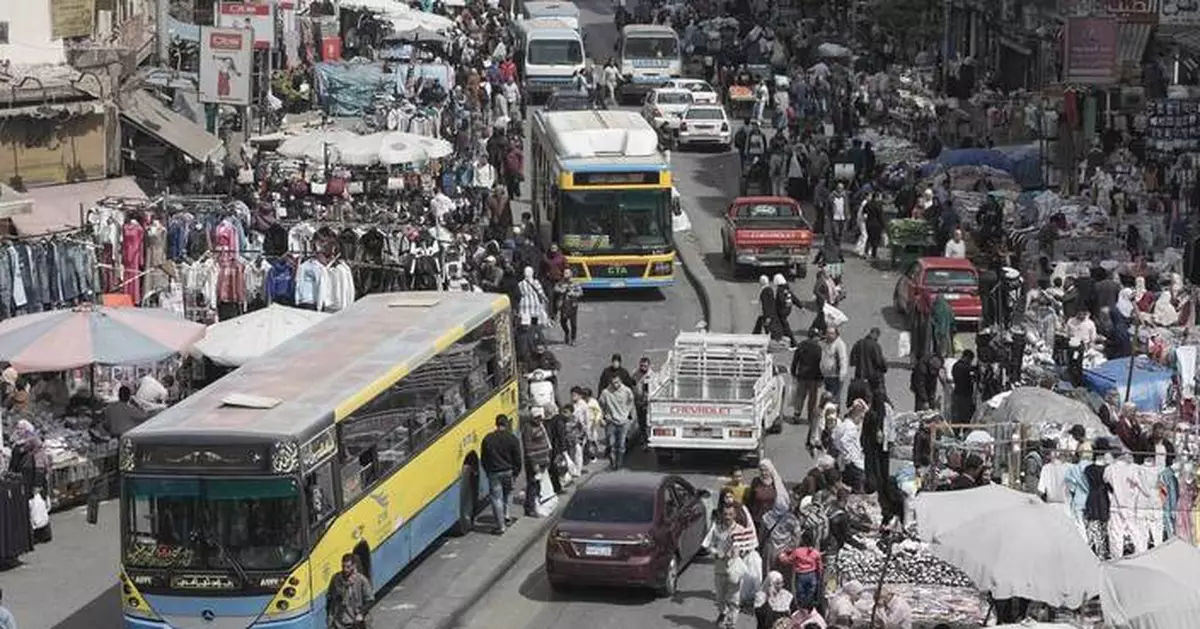
A view of people and vehicles at a popular market in Cairo, Egypt, Tuesday, March 12, 2026. (AP Photo/Amr Nabil)
People and vehicles crowd at a popular market in Cairo, Egypt, Tuesday, March 12, 2026. (AP Photo/Amr Nabil)
“This means a price increase for everything,” said Ragheb, as he served hot drinks at a cafe on a recent evening in Cairo. “This is catastrophic for someone like me.”
Egypt is one of the few countries in the Middle East not directly affected by the war, now in its third week with no sign of abating. It’s not part of the U.S.-Israeli campaign against Iran, and it hasn’t been targeted by Iranian missile and drone fire, like Arab Gulf nations, or by Israeli bombardment, like Lebanon.
But the nation of over 108 million people is feeling the conflict’s repercussions. Soaring energy prices forced the government to implement a steep hike in the prices of subsidized fuel and cooking gas.
That is having a domino effect on the prices of other goods and services in Egypt's struggling economy. Moreover, it comes during the Muslim holy month of Ramadan, when families traditionally hold large dinner gatherings, and ahead of the holiday of Eid al-Fitr, a major shopping season when people buy new clothes, especially for children.
World energy prices have surged since the U.S. and Israel launched the war on Feb. 28. Iran retaliated by attacking oil and gas infrastructure across the Persian Gulf and effectively blocking traffic through the Strait of Hormuz, where a fifth of the world's traded oil passes.
Brent crude, the international benchmark, soared from less than $70 a barrel on Feb. 27 to a peak of nearly $120 early March 9. It spiked to around $110 a barrel on Wednesday after Iran threatened to retaliate for an attack on an offshore gas field.
The rise in prices is particularly painful for Egypt because the government dedicates a large part of its already strained budget to subsidizing gasoline, fuel and electricity.
Energy prices aren’t its only vulnerability.
Traffic through the Suez Canal, a major source of government income, had started to recover after two years of attacks on Red Sea shipping by Yemen's Houthi rebels. Now some shipping companies are again routing traffic away from the Middle East because of the latest turmoil, and the government says it expects more losses.
Egypt, home to the ancient pyramids, also earns considerable foreign income from tourism. But arrivals are expected to plunge as travelers steer clear of the region.
If the conflict is prolonged and continues to drive up prices and reduce government revenues, the short-term economic pain could become a broader political and economic crisis, said Alexandra Blackman, an expert in Mideast politics at Cornell University.
“That will be more challenging for the regime to manage and control,” she said.
On March 10, the government announced a 15% hike in the price of gasoline, a 22% hike in cooking gas and a 17% hike in diesel, widely used in commercial and public transport.
President Abdel-Fattah el-Sissi acknowledged the pressure on people but said the increases are “inevitable” and “the least expensive” option to protect the economy.
“The requirements of the reality sometimes necessitate taking difficult measures … to avert harsher options and more serious consequences,” he said over the weekend at an Iftar event, breaking the daily sunrise-to-sunset Ramadan fast.
He said Egypt’s consumption of oil products costs $20 billion annually, including fuel used to operate power plants.
The government imports 28% of its gasoline needs and 45% of its diesel needs, which puts pressure on the budget, said Petroleum Minister Karim Badawy.
The government announced a series of measures aimed at mitigating the impact, including reducing official overseas trips and tightening fuel consumption across the public sector. It also announced salary increases starting in July.
Egypt’s poor and middle class have already seen their purchasing power shrink over the past decade under government austerity measures. The measures included the slashing of subsidies and devaluation of Egypt’s currency as part of an ambitious reform program in 2016.
Inflation jumped from 10% in January to 11.5% in February of this year, according to official figures. The price increases are rippling across the economy in a country where a third of the population is below the poverty line, according to government statistics.
Since the new fuel prices took effect, the cost of meat has jumped 25% and fruit and vegetables rose 15-30%, according to merchants at three markets in Cairo.
Hussein Rashad, a grocer in a poorer district, said customers have become more selective, and most have reduced the amount of vegetables they buy. Some have stopped buying fruit altogether, he said.
“Many things have become out of their reach,” he said.
Ragheb, the cafe worker, said his family has tightened its budget, including resorting to the cheapest food staples. He won't be buying new clothes for his children for the upcoming Eid.
“One has no other option,” he said.
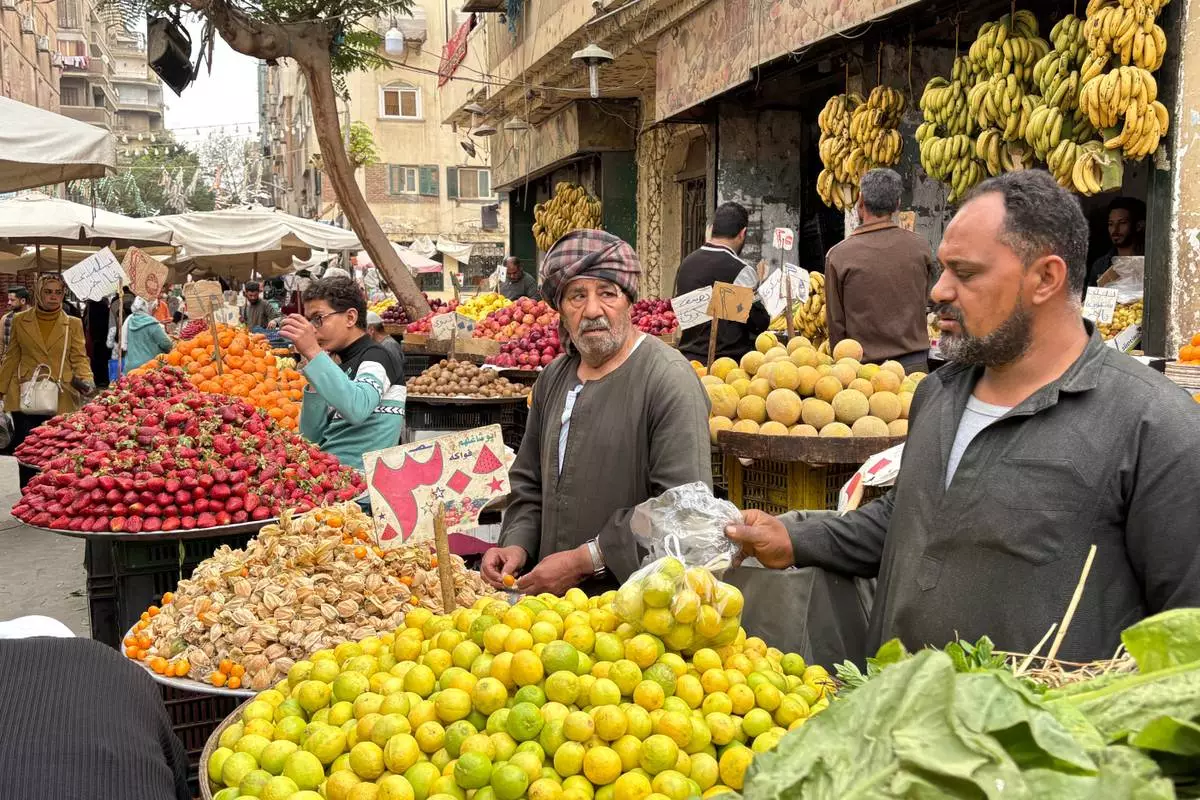
Vendors line up at a popular market in Cairo, Egypt, Tuesday, March 12, 2026. (AP Photo/Amr Nabil)
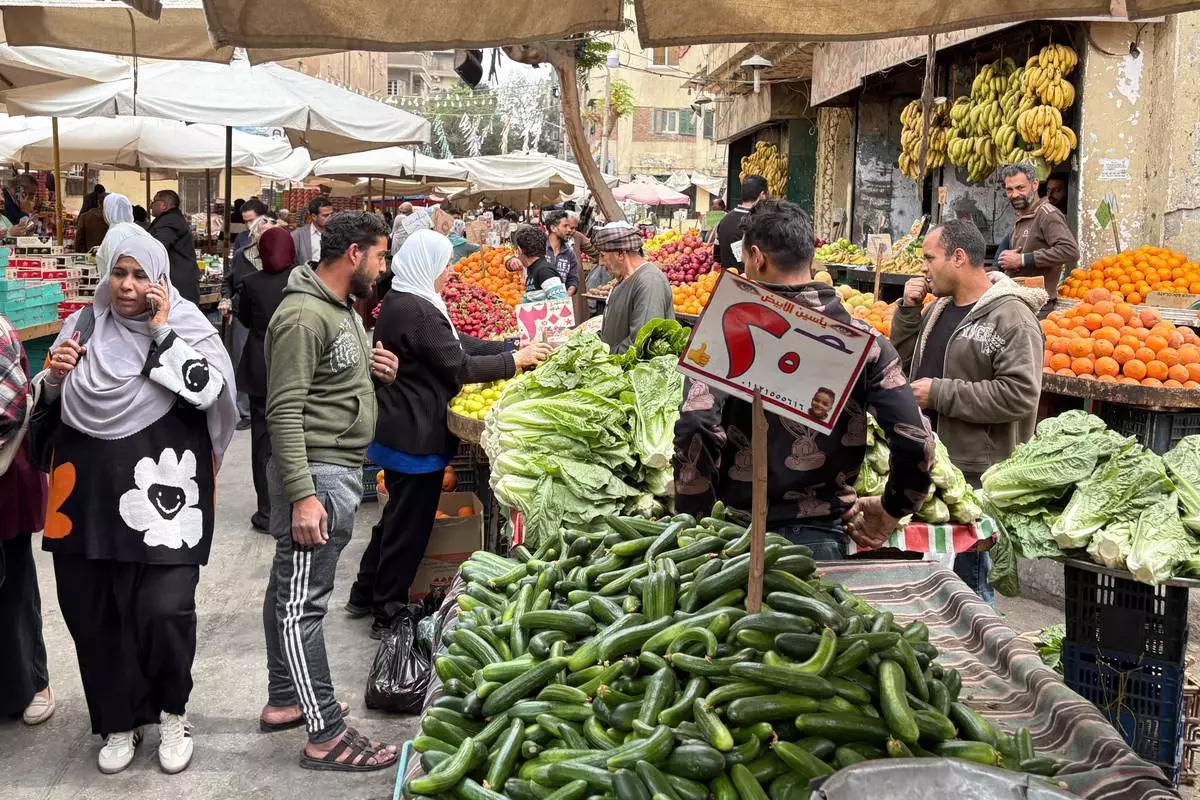
People buy vegetables at a popular market in Cairo, Egypt, Tuesday, March 12, 2026. (AP Photo/Amr Nabil)
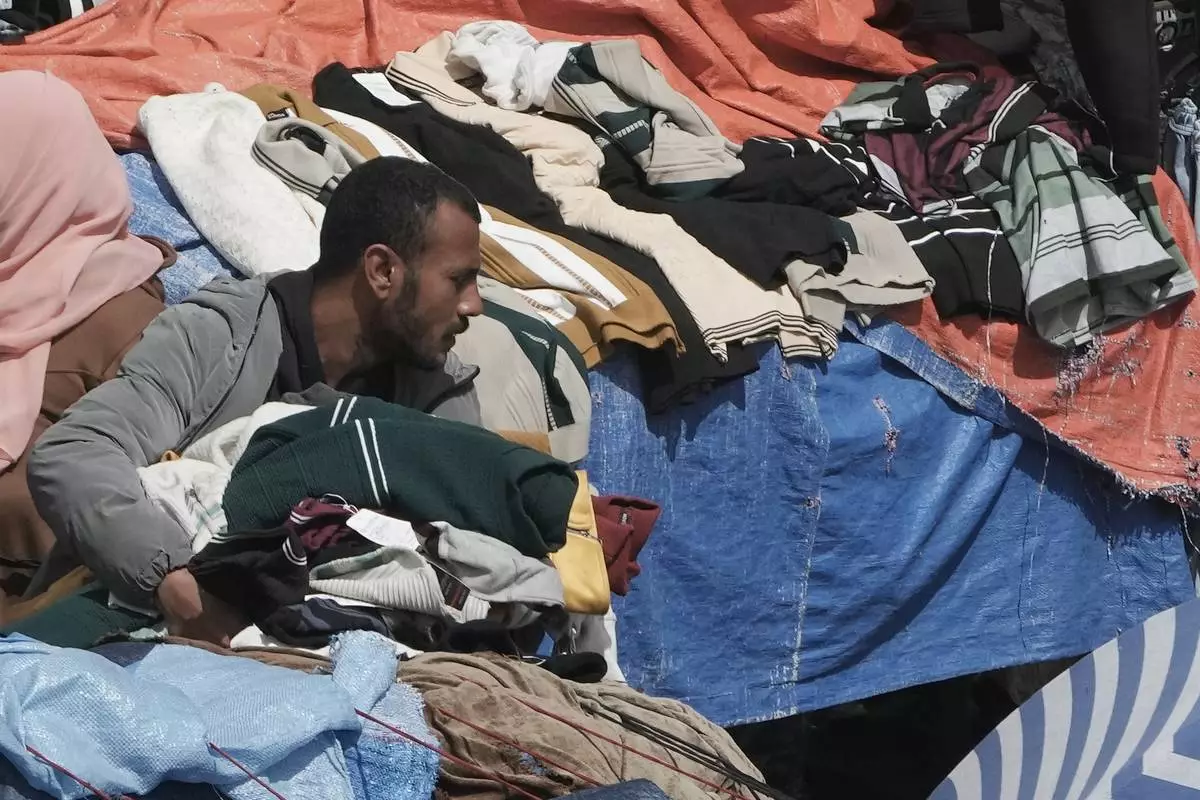
A vendor carries second hand clothes at a popular market in Cairo, Egypt, Tuesday, March 12, 2026. (AP Photo/Amr Nabil)
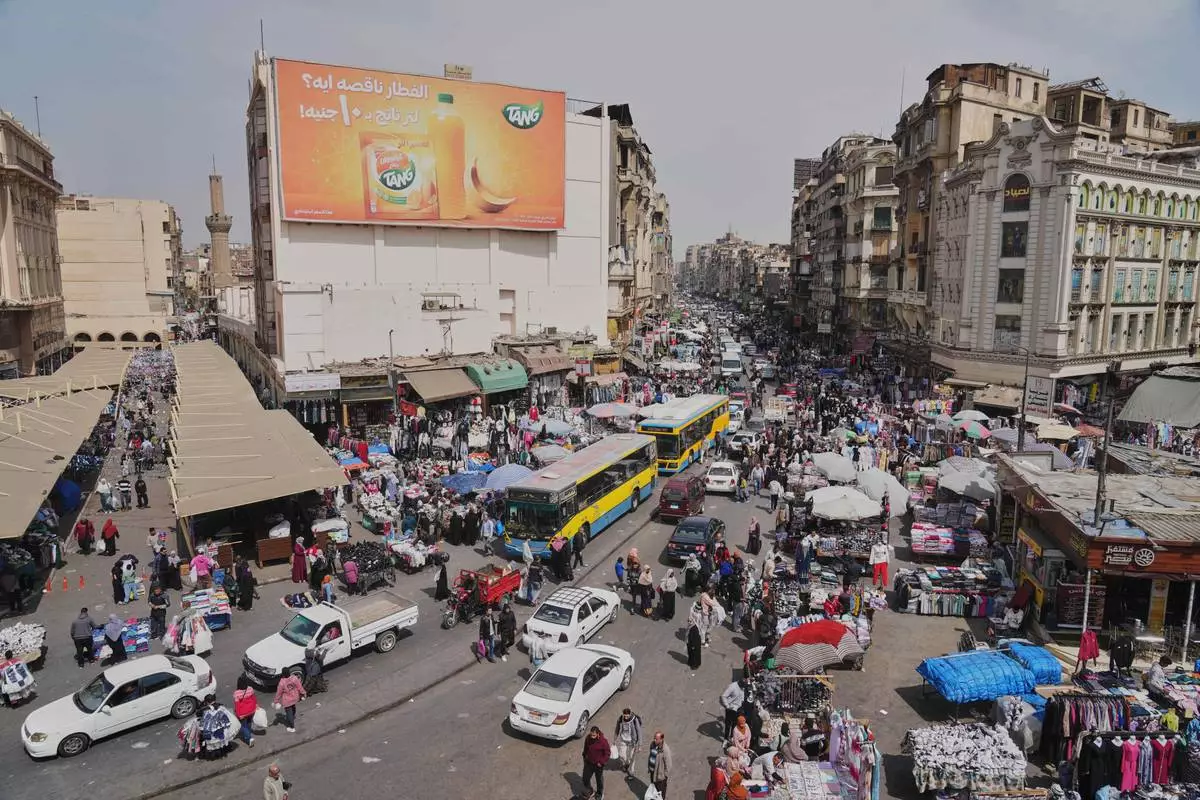
A view of people and vehicles at a popular market in Cairo, Egypt, Tuesday, March 12, 2026. (AP Photo/Amr Nabil)
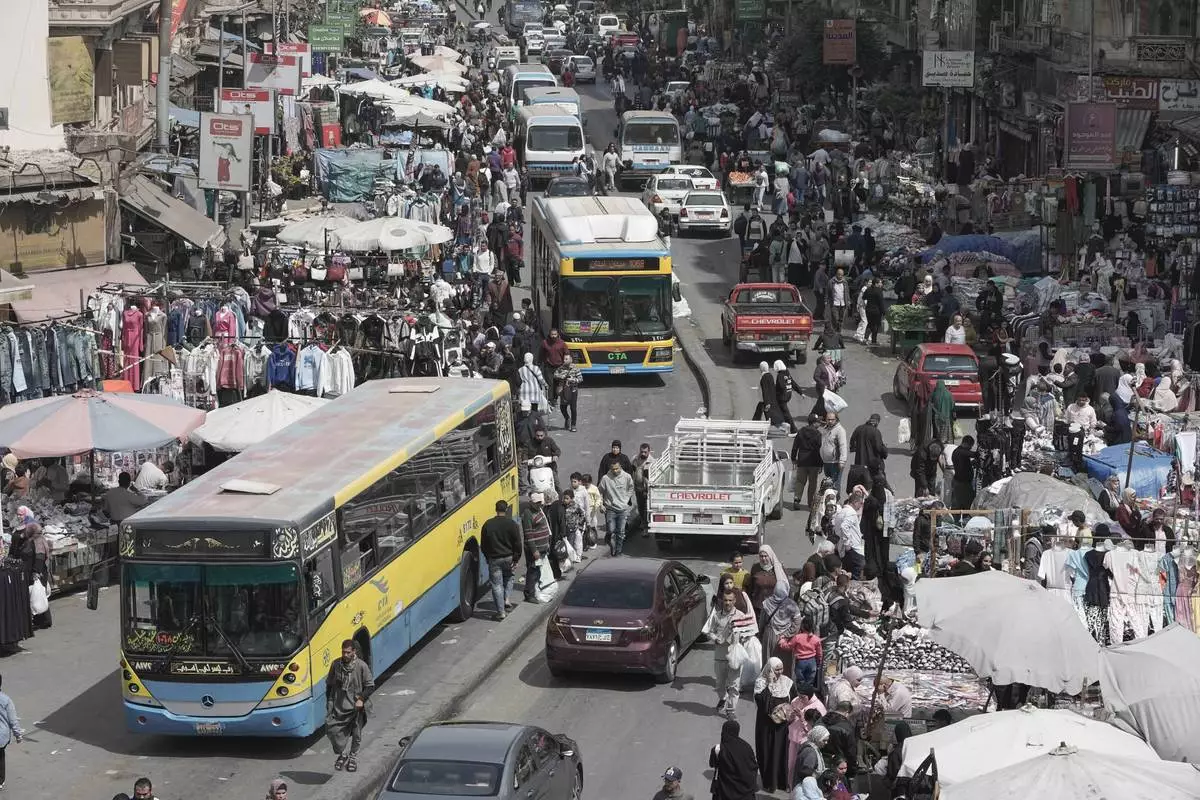
People and vehicles crowd at a popular market in Cairo, Egypt, Tuesday, March 12, 2026. (AP Photo/Amr Nabil)
OMAHA, Neb. (AP) — The fate of Nebraska's “blue dot” — a small, but significant factor in presidential politics — will take center stage Tuesday as Democratic voters select a congressional nominee in the state's high-profile 2nd District.
The Omaha-area district, where Republican U.S. Rep. Don Bacon is retiring, is one of the Democratic Party's biggest targets this midterm season. It's also a national focus every four years in presidential contests because Nebraska is one of just two states that splits its electoral votes. The 2nd District has gone to Democratic presidential candidates three out of five times since 2008 — a “blue dot” in an otherwise sea of red.
Three Democrats are seen as the top contenders in Tuesday's primary: state Sen. John Cavanaugh, political activist Denise Powell and district court clerk Crystal Rhoades. Republican Brinker Harding, an Omaha City Council member endorsed by President Donald Trump, is running unopposed on the GOP side.
Cavanaugh, more than anyone else on Tuesday's ballot, has been under attack from both parties.
Some Democratic opponents argue that a primary victory for Cavanaugh would jeopardize the district's “blue dot” status because he'd be leaving his valuable state legislative seat, making it easier for Republicans in the Nebraska Legislature to change the law that allows the state to split its electoral votes.
The issue has defined the primary contest perhaps more than any other.
The Democratic argument against Cavanaugh has little to do with his politics or policies.
His opponents and groups backing them have flooded mailboxes, airwaves and social media warning that if he wins the congressional primary, Nebraska's Republican governor would appoint a conservative Republican to replace him in the Legislature.
That move, they say, could give state Republicans enough votes to enact a conservative wish list that includes stricter limitations on abortion and transgender rights.
It could also empower Republicans to enact midcycle redistricting or change the state's unusual system of splitting presidential electoral votes, some Democrats argue. Republicans failed in 2024 to pass a bill that would have made Nebraska the 49th state to award its Electoral College votes on a winner-take-all basis.
“Our Blue Dot. We fought hard for it. But if John Cavanaugh goes to Congress, it could all fall down,” cautions one TV ad by the super PAC New Democrat Majority.
EMILY’s List, a national group that supports women running for office, has put its reach and money behind Powell, calling Cavanaugh’s candidacy “a gift to MAGA Republicans.”
Republican groups have sent out mailers and social media posts claiming Cavanaugh “is in agreement with President Donald Trump” and showing a photo of Cavanaugh overlaid on a photo of the president, making it appear as if the two are standing together.
“Clearly, the Republicans know that I’m the strongest general election candidate,” Cavanaugh said. “And so they’re trying to hurt me.”
The attacks on Cavanaugh show Democrats and Republicans believe he has the best chance of winning the general election, said Paul Landow, a former Nebraska Democratic Party executive director.
He called the “blue dot” attacks disingenuous, noting Republicans already have a filibuster-proof majority in the Legislature but have still failed to pass key elements of their agenda because it is unpopular even among GOP lawmakers. The argument that a Cavanaugh win could weaken the state’s “blue dot” also assumes Democrats won’t pick up additional legislative seats this year, he said.
“There’s so many things that have to fall into place for this alleged danger to the ‘blue dot,’” Landow said. “It’s just wild speculation.”
While all the Democratic contenders cite affordability and opposition to Trump administration policies — from immigration and healthcare to military actions — the top three contenders began attacking one another more aggressively in the days leading up to the primary.
Candidates and allied groups have spent more than $2.6 million on TV and digital advertising since Jan. 1, according to the advertising tracking company AdImpact. Nearly all of that has been by or on behalf of Cavanaugh and Powell.
Cavanaugh has spent about $375,000. Powell's campaign has spent almost as much — $345,000 — but with the help of groups backing her, campaign advertising has been overwhelmingly pro-Powell.
Powell co-founded Women Who Run Nebraska, a political action committee that supports progressive female candidates, and she has a decade of Democratic political activism. She's never held office but said her deep connections have helped her with independents and third-party voters who make up nearly 30% of the district's electorate.
“My name recognition has increased dramatically,” Powell said, adding that "people are really connecting with my message.”
Rhoades carries her own name recognition after 20 years in public service and running a slew of successful local Democratic elections — including that of Omaha Mayor John Ewing, who unseated a longtime Republican last year. Rhoades has raised a fraction of what Cavanaugh and Powell have amassed, but said she's intentionally eschewing campaign ads and instead blanketing the city with door-knocking and personal contact with voters.
Both Powell and Rhoades have leaned heavily into the concern that Democrats' influence in the district will erode if Cavanaugh is elected to Congress.
The winner of Tuesday's primary will head to a highly competitive general election. Trump won the district in 2016, and the retiring Bacon, who has clashed with Trump, has held the House seat for five terms.
Also on Tuesday's ballot is the race for U.S. Senate, where Republican incumbent Pete Ricketts is seeking a full term, following his 2023 appointment and 2024 special election victory to replace Republican Ben Sasse.
Ricketts faces four Republican primary challengers, but he’s already looking ahead to an expected general election contest against independent candidate Dan Osborn, an industrial mechanic and military veteran who came within 7 points of defeating Republican U.S. Sen. Deb Fischer in her 2024 reelection bid. Running in the Democratic primary are William Forbes and Cindy Burbank.
In the race for governor, incumbent Republican Gov. Jim Pillen faces five primary challengers, while former state Sen. Lynne Walz and frequent candidate Larry Marvin compete for the Democratic nomination. Marvin previously ran for U.S. Senate four times since 2012.
Peoples reported from New York.

District county clerk Crystal Rhoades speaks at a fundraising event Thursday, April 16, 2026, in Omaha, Neb. (AP Photo/Margery A. Beck)
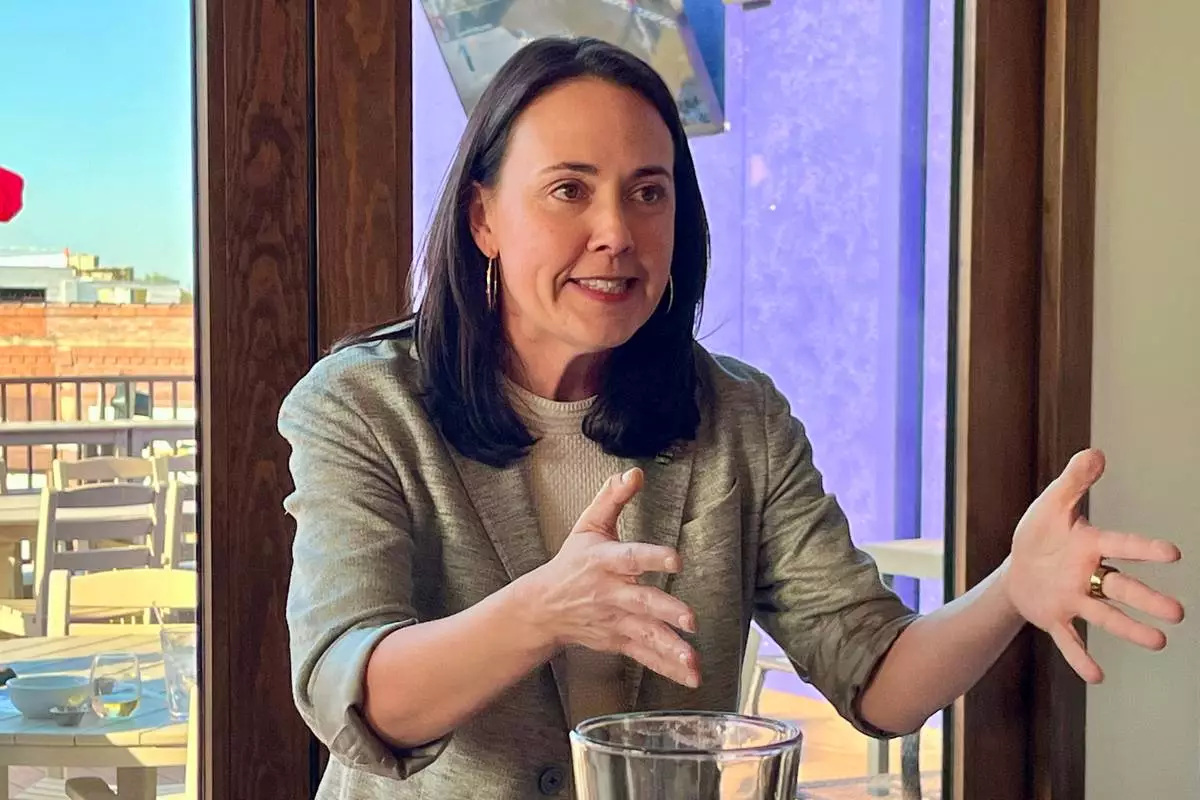
Political activist Denise Powell speaks at a fundraising event Thursday, April 16, 2026, in Omaha, Neb. (AP Photo/Margery A. Beck)
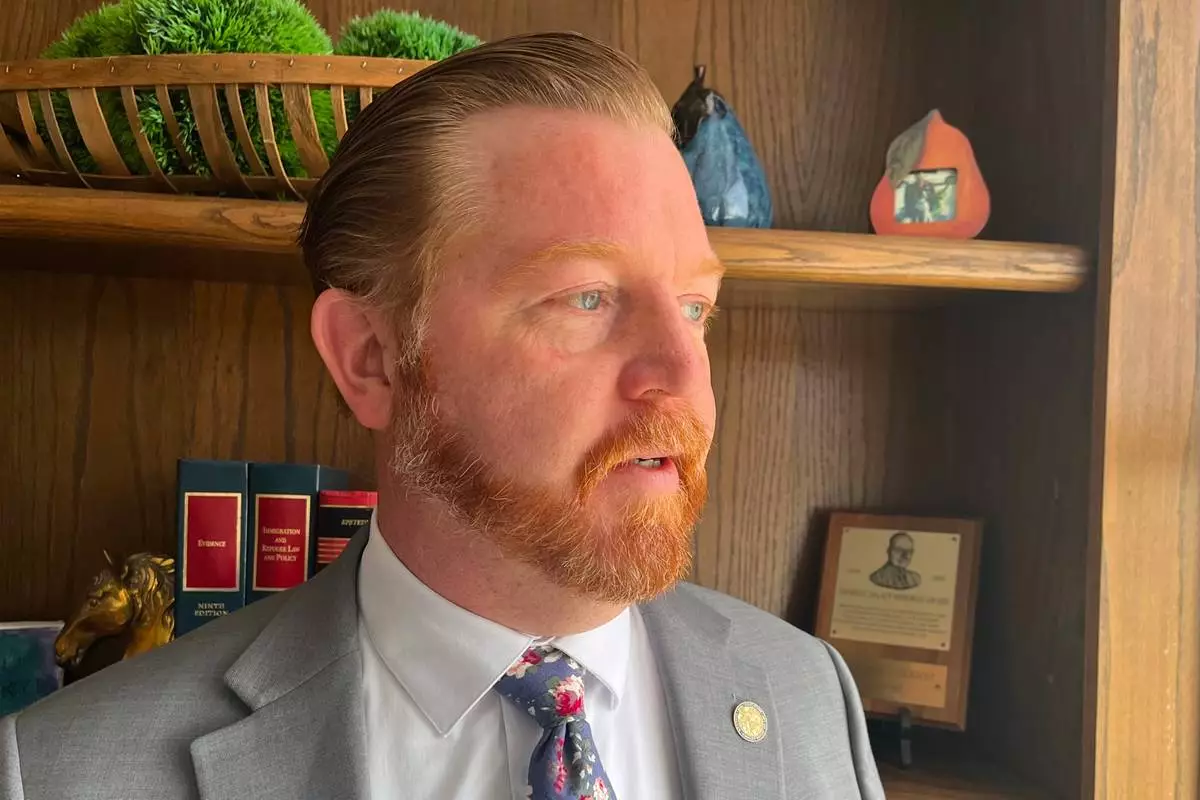
State Sen. John Cavanaugh speaks at an office in Lincoln, Neb., Friday, April 10, 2026. (AP Photo/Margery A. Beck)