A research team in Shanghai has identified key genes that determine the perennial growth habit of wild rice and created new plants by transplanting those genes into cultivated rice.
The new plants are capable of surviving for at least two years with multiple harvests.
The study offers significant potential to reduce agricultural costs and promote sustainable development.
Cultivated rice ranks among the world's most important annual food crops. Yet its ancestor, wild rice, persists as a perennial creeping grass.
The team, from the Center for Excellence in Molecular Plant Sciences (CEMPS) of the Chinese Academy of Sciences (CAS), studied how wild rice gradually evolved into the annual, upright-growing cultivated varieties during domestication, a long-standing evolutionary puzzle.
After conducting a systematic analysis of 446 wild rice accessions, the team found that, unlike annual cultivated rice, certain wild rice varieties do not senesce or die after seeds mature.
Instead, they continuously generate new branches from axillary buds at the nodes. These branches extend and take root upon touching the ground, developing into new plants and exhibiting a clonal perennial growth habit.
To isolate the genes responsible for this perennial habit, the researchers performed genetic analysis using a wild rice strain and an annual indica rice variety. They ultimately pinpointed the genomic region and named it Endless Branches and Tillers 1 (EBT1).
By combining EBT1 with two known rice creeping genes, PROG1 and TIG1, the research team created wild-rice-like plants that exhibit strong clonal reproduction capacity and can survive for at least two years in the fields in China's southern island province of Hainan.
"Our rice yields two to three harvests annually, so measured across years, it has persisted for two years. After the spikelet matures, new shoots emerge next to it. It displays strong vitality -- what we call 'longevity genes' -- that keeps it perpetually youthful," said Han Bin, an academician at CAS and one of the leading scientists on the team from CEMPS.
Perennial rice is suitable for sloping farmland and hilly mountainous areas where machinery cannot be used on a large scale, serving as an effective supplement to conventional annual crops and helping ensure China's food security, said the scientists.
The study was published in the journal Science on Friday.
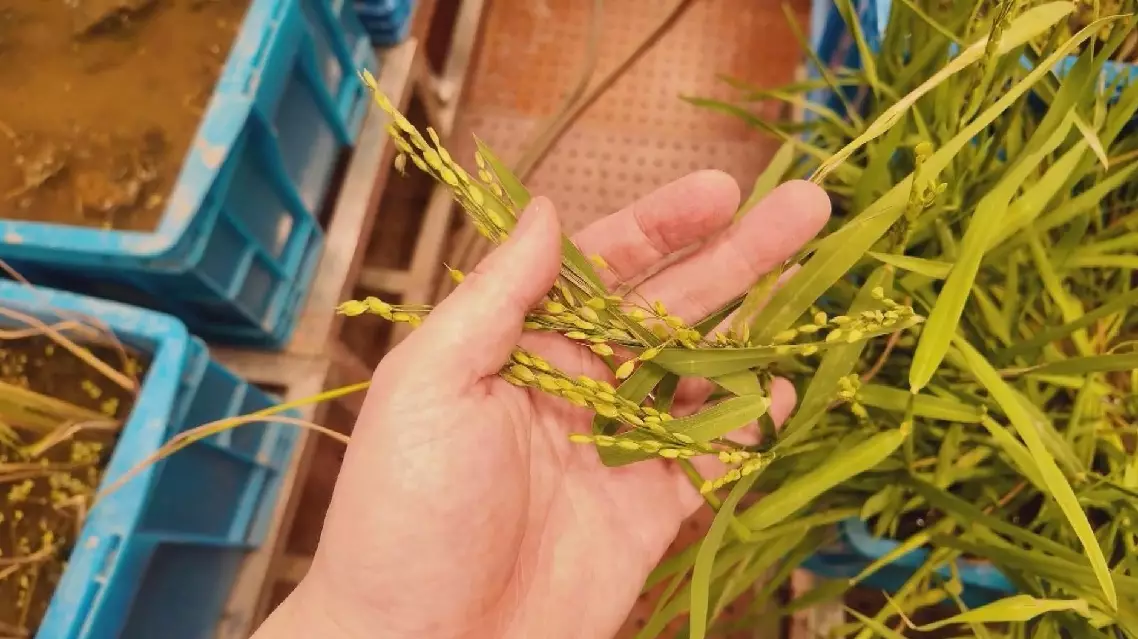
Chinese scientists unlock "longevity genes" in wild rice, paving way for perennial crops