VERIA, Greece (AP) — Each spring, a pink veil unfolds across the plains of Greece’s largest peach-producing region. The blossoming peach trees create a spectacular sight that attracts visitors every year, mostly from Greece but increasingly also from the rest of Europe.
“It’s something that people must experience and see at least once in their lifetime, because it’s a huge area,” said Gianna Pilitsidou, president of the Veria Tourism Club, based in the northern city of Veria.
Click to Gallery
People enjoy a catering among the blooming peach trees at an event to encourage the public to visit the blossoms near near the city of Veria, northern Greece, on Sunday, March 22, 2026. (AP Photo/Giannis Papanikos)
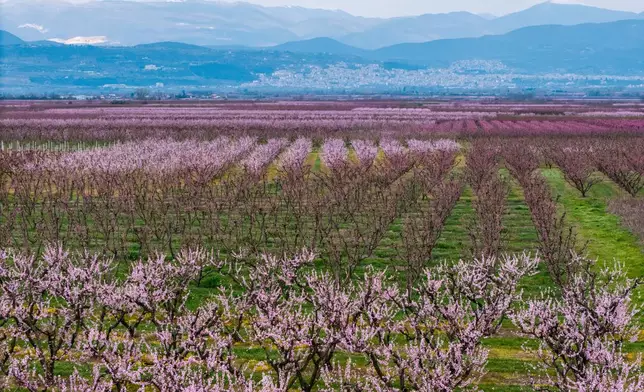
The blooming peach trees are seen form above near the city of Veria, northern Greece, on Sunday, March 22, 2026. (AP Photo/Giannis Papanikos)
Mantalena Kalianou enjoys a walk among the blooming peach trees at an event to encourage the public to visit the blossoms near the city of Veria, northern Greece, on Sunday, March 22, 2026. (AP Photo/Giannis Papanikos)
People enjoy a picnic among the blooming peach trees at an event to encourage the public to visit the blossoms near the city of Veria, northern Greece, on Sunday, March 22, 2026. (AP Photo/Giannis Papanikos)
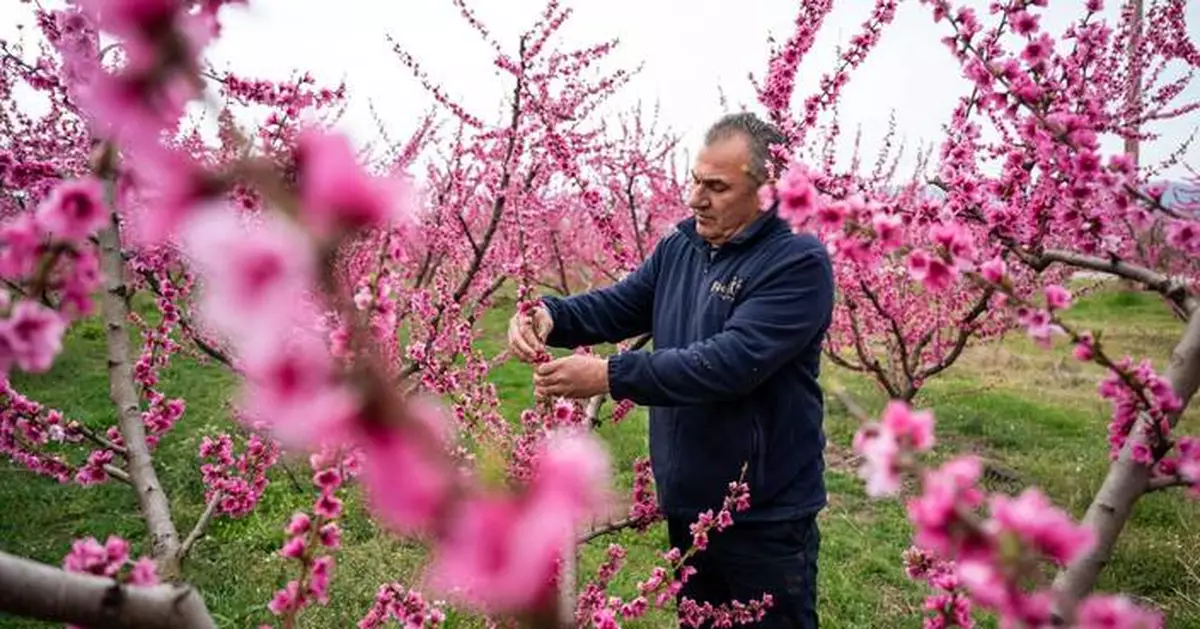
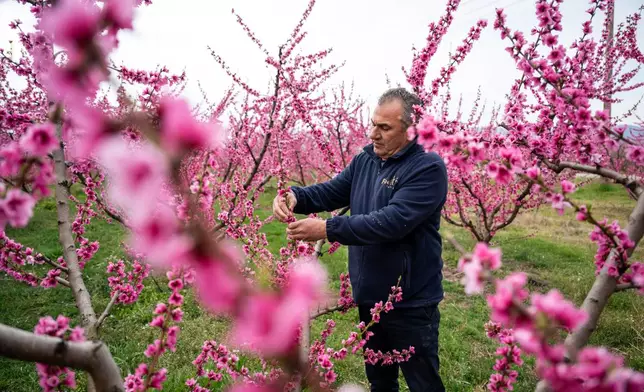
Anastasios Chalkidis, head of the Agricultural Association of Veria tends the blooming peach trees near the city of Veria, northern Greece, on Sunday, March 22, 2026. (AP Photo/Giannis Papanikos)
The plain, which stretches for 170 square kilometers (about 65 square miles), turns completely pink, she said.
Over the past few years, the Veria Tourism Club has been organizing events in the blossoming peach orchards to mark the occasion: photography activities, cycling tours and the promotion of local farmers’ products.
“Every year we welcome spring with celebrations in the fields, inviting people to visit us and experience it,” Pilitsidou said.
Over two weekends, thousands of visitors wandered among the blooming peach trees around Veria, located 72 kilometers (45 miles) west of Greece’s second largest city of Thessaloniki.
“I want the people in Holland and Belgium to know what amazing spots there still are besides all the places that people already know,” said Wesley van Eijk, a blogger from the Netherlands who travels around Greece. “For example Veria. I mean more and more people get to know it, but you have to feel it and be here.”
The events aim to promote the region and support farmers involved in peach production.
“For all of this to happen, it takes a lot of hard work — a lot of effort from us farmers,” said Anastasios Chalkidis, president of the local farmers union. “We’re happy that this beautiful event takes place, this great promotion for the wonderful product we have.”
The events have been a boon to the region, with hotel workers saying they have visibly increased the number of visitors.
“I came all the way from Germany to this fabulous event to have a look at the peach blossom, which I absolutely adore,” said traveler Andrea Lachnit. “You have to come because it’s stunning and beautiful and heavenly. I have never seen anything like this before.”
The peach trees in the Veria region blossom roughly between mid-March and mid-April.
Kantouris reported from Thessaloniki, Greece

People enjoy a catering among the blooming peach trees at an event to encourage the public to visit the blossoms near near the city of Veria, northern Greece, on Sunday, March 22, 2026. (AP Photo/Giannis Papanikos)
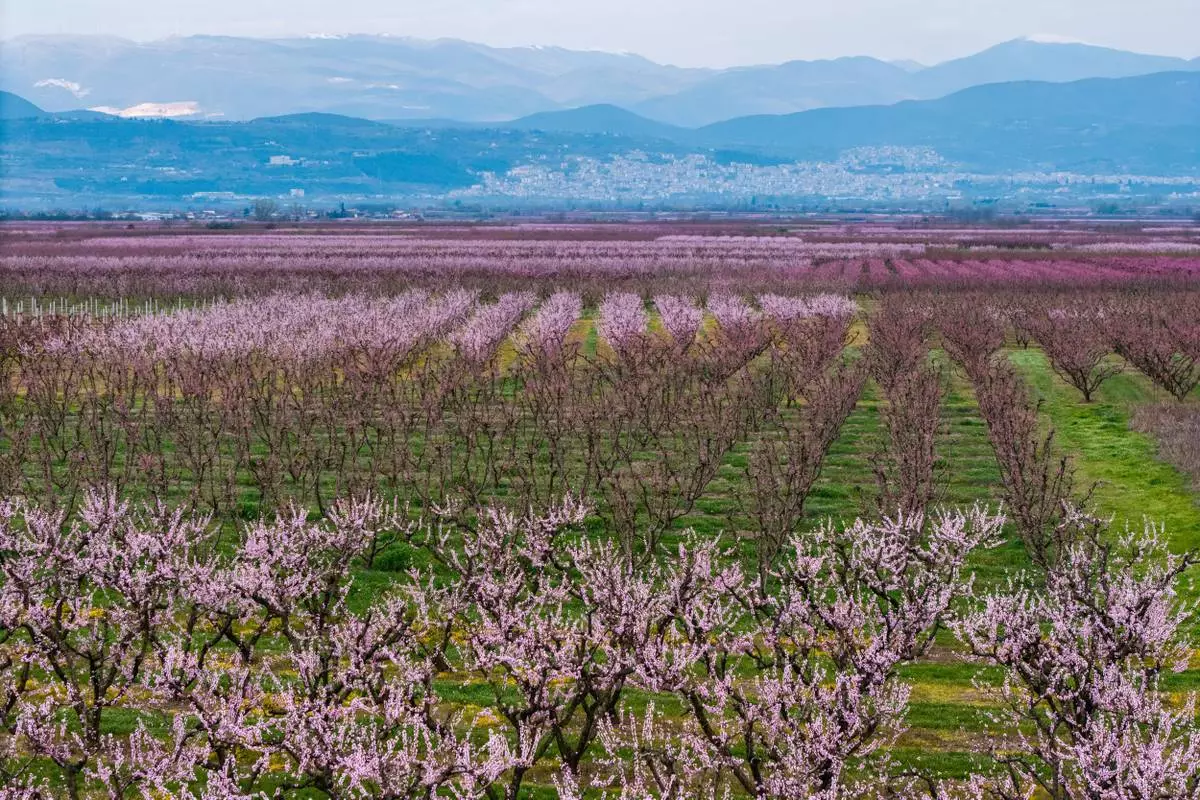
The blooming peach trees are seen form above near the city of Veria, northern Greece, on Sunday, March 22, 2026. (AP Photo/Giannis Papanikos)

Mantalena Kalianou enjoys a walk among the blooming peach trees at an event to encourage the public to visit the blossoms near the city of Veria, northern Greece, on Sunday, March 22, 2026. (AP Photo/Giannis Papanikos)
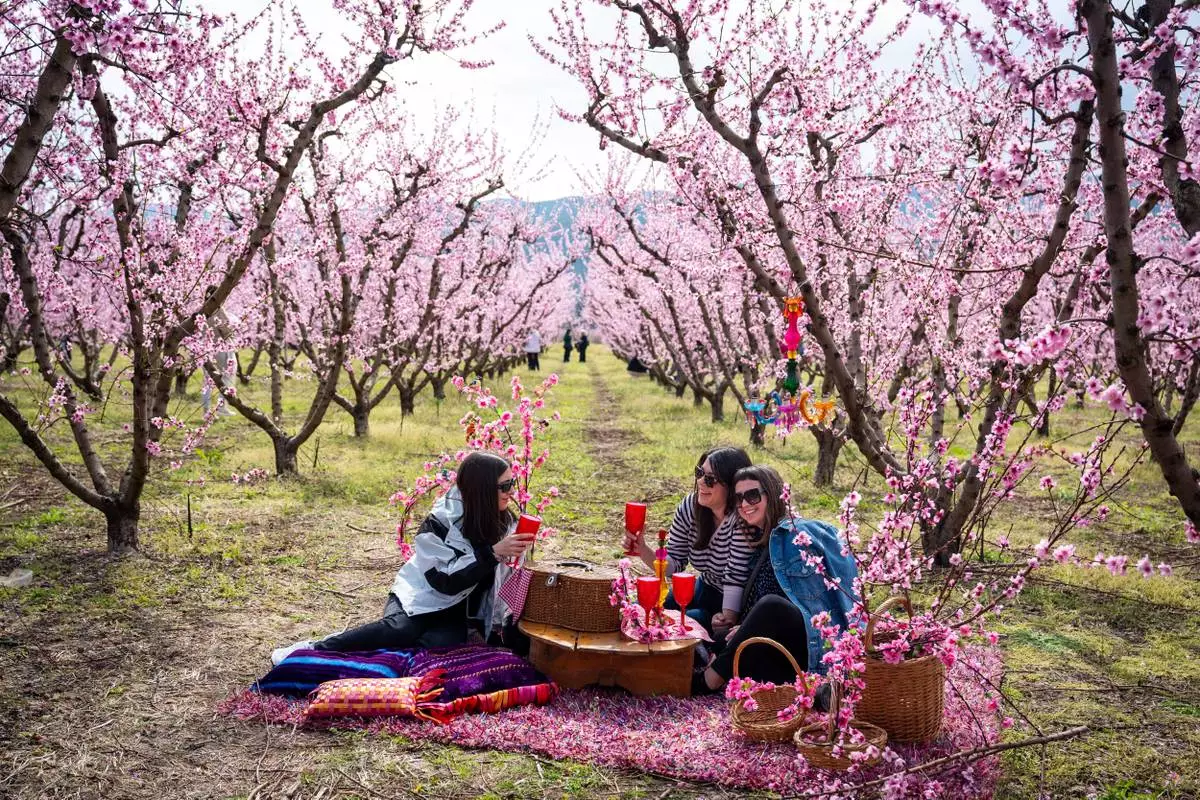
People enjoy a picnic among the blooming peach trees at an event to encourage the public to visit the blossoms near the city of Veria, northern Greece, on Sunday, March 22, 2026. (AP Photo/Giannis Papanikos)
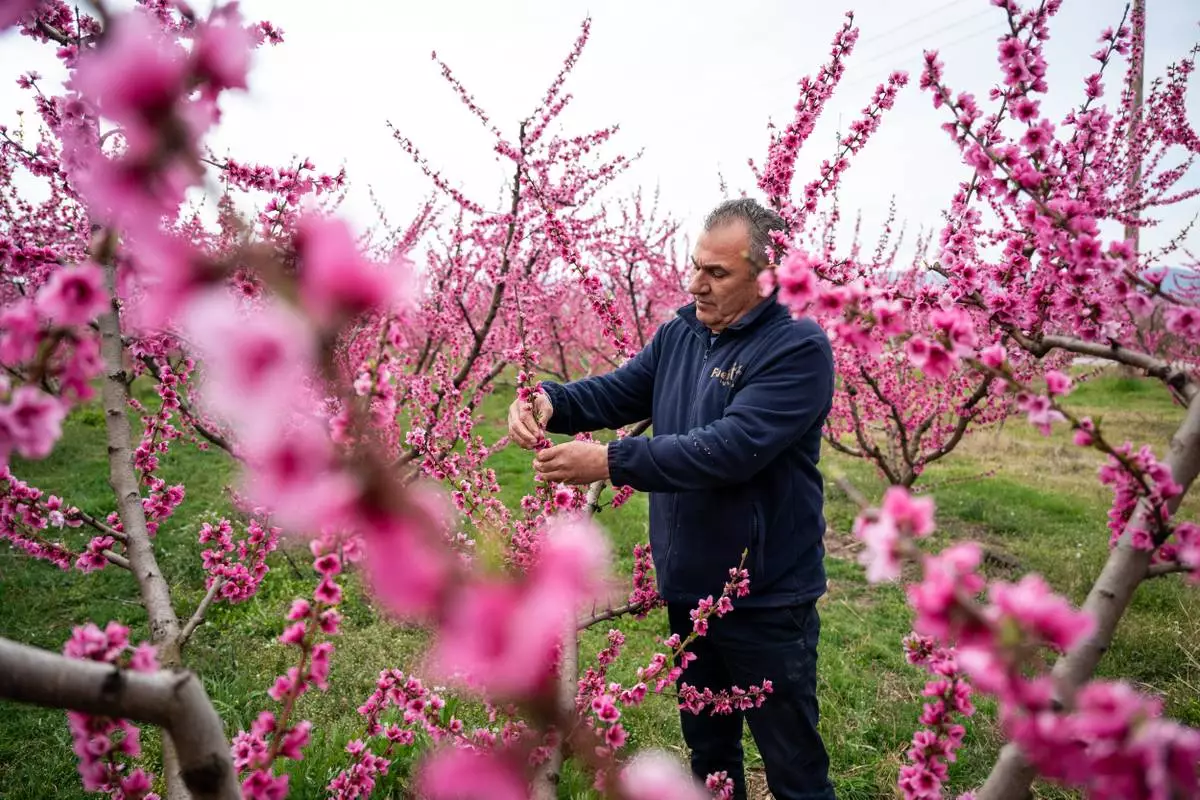
Anastasios Chalkidis, head of the Agricultural Association of Veria tends the blooming peach trees near the city of Veria, northern Greece, on Sunday, March 22, 2026. (AP Photo/Giannis Papanikos)
GENEVA (AP) — Scientists in Geneva are taking some antiprotons out for a spin — a very delicate one — in a truck, in a never-tried-before test drive.
If this so-called antimatter comes into contact with actual matter, even for a fraction of an instant, it will be annihilated in a quick flash of energy. So experts at the European Organization for Nuclear Research, known as CERN, will, over the course of four hours Tuesday, are taking about 100 antiprotons on the road.
The antiprotons are suspended in a vacuum inside a specially designed box and held in place by supercooled magnets.
After easing them from the lab and onto the truck, the scientists are taking the antimatter on a half-hour drive to test how — if at all — the infinitesimal particles can be transported by road without seeping out. If all goes well, the antiprotons will be returned back to the lab.
The hard part: Manipulating antimatter, like antiprotons, can be tricky business. As scientists understand the universe today, for every type particle that exists, there is a corresponding antiparticle, exactly matching the particle but with an opposite charge.
If those opposites come into contact, they “annihilate” each other, setting off lots of energy, depending on the masses involved. Any bumps in the road on the test journey that aren't compensated for by the specially-designed box could spoil the whole exercise.
Tuesday’s practice is a first step toward making good on hopes, one day, to deliver CERN antiprotons to researchers at Heinrich Heine University in Düsseldorf, Germany, which is about eight hours away in normal driving conditions.
The antiprotons have been encased in a 1,000-kilogram (2,200 pounds) box called a “transportable antiproton trap.” It's compact enough to fit through ordinary laboratory doors and fit on a truck. It uses superconducting magnets cooled to -269 degrees Celsius (-452 Fahrenheit) that allows the antiprotons to be remain suspended in a vacuum — not touching the inner walls, which are made of ... matter.
The mass in Tuesday's test — slightly less than that of about 100 hydrogen atoms — is so little, experts say, that the worst possible outcome is the loss of the antiprotons. Even if they do touch matter, any release of energy would be unnoticeable, only an oscilloscope, which picks up electrical signals, would be able to detect it.
The trap, says CERN spokeswoman Sophie Tesauri, “is supposed to contain these antiprotons no matter what: if the truck stops, if it starts again, if it has to slam on the brakes — all that.” Work remains: The trap can contain the antiprotons on its own for only about four hours, and the drive to Düsseldorf is twice that.
The Geneva-based center is best known for its Large Hadron Collider, a network of magnets that accelerates particles through a 27-kilometer (17-mile) underground tunnel and slams them together at velocities approaching the speed of light. Scientists then study the results of those collisions.
But the sprawling, buzzing complex of scientific experiment is more than just about smashing atoms together: the World Wide Web, for example, was invented here by Britain’s Tim Berners-Lee in 1989.
Heinrich Heine University is seen as a better place to study antiprotons in-depth, because CERN — with all its other activities — generates a lot of magnetic interference that can skew the study of antimatter.
But to get them there, those antiprotons will have to avoid touching anything on the way.
The center's Antiproton Decelerator, where a proton beam gets fired into a block of metal, causes collisions that generate secondary particles, including lots of antiprotons. It’s billed as a unique machine that produces low-energy antiprotons for the study of antimatter.
CERN’s “Antimatter Factory,” lab officials say, is the only place in the world where scientists can store and study antiprotons.
The center has been experimenting with antimatter for years, and has made breakthroughs on measurement, storage and interaction of antimatter. Two years ago, the team transported a “cloud” of about 70 protons — not antiprotons — across CERN's campus.
It's a similar drill this time, except that with antiprotons, a much better vacuum chamber is needed, according to Christian Smorra, head of a team behind the apparatus designed to store and transport antimatter.
Jittery test teams weren't available for interviews before the exercise, but were expected to explain the results afterward on Tuesday.
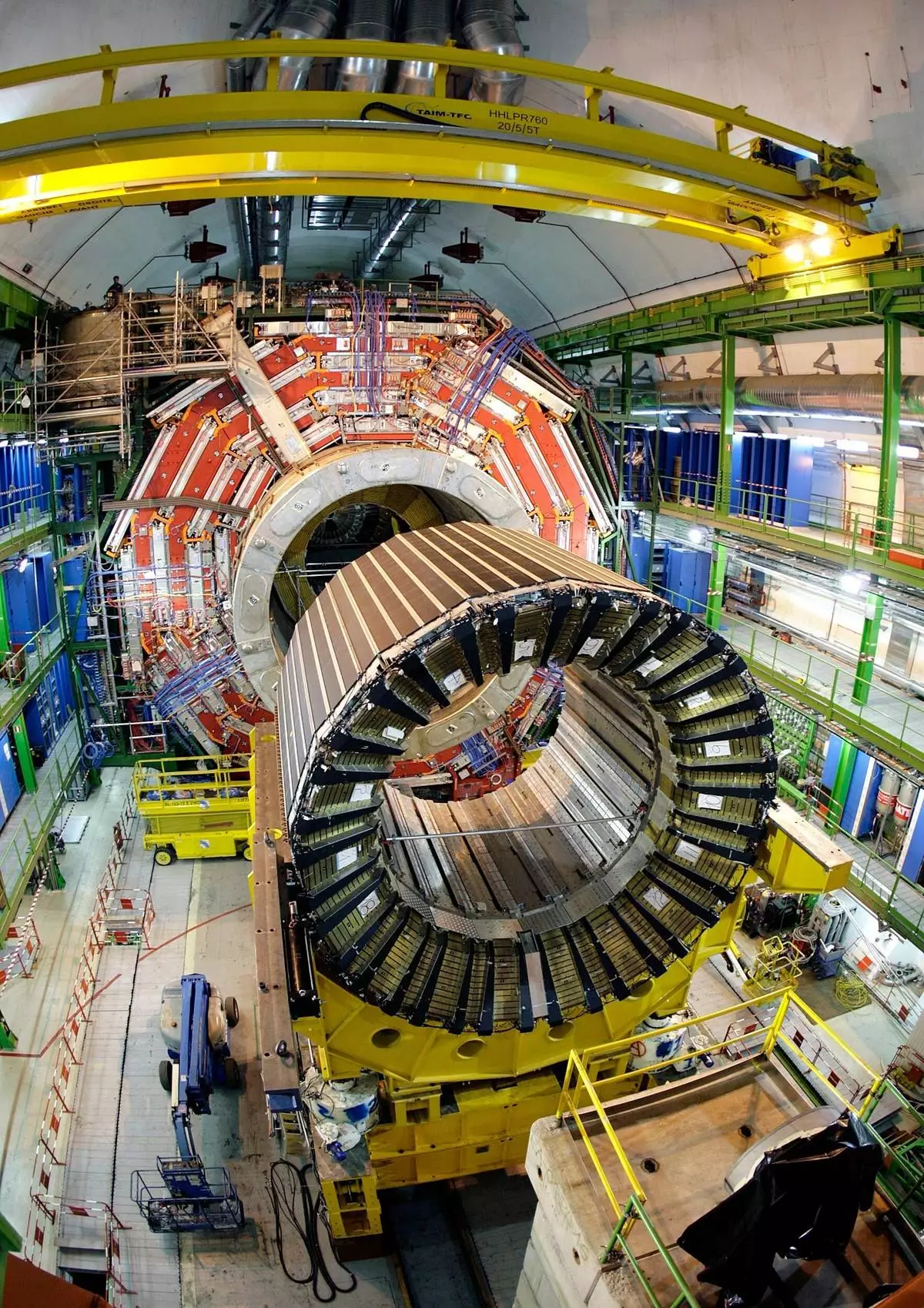
FILE - The magnet core of the world's largest superconducting solenoid magnet (CMS, Compact Muon Solenoid) at the European Organization for Nuclear Research (CERN)'s Large Hadron Collider (LHC) particle accelerator, in Geneva, Switzerland, March 22, 2007. (AP Photo/Keystone, Martial Trezzini, File)
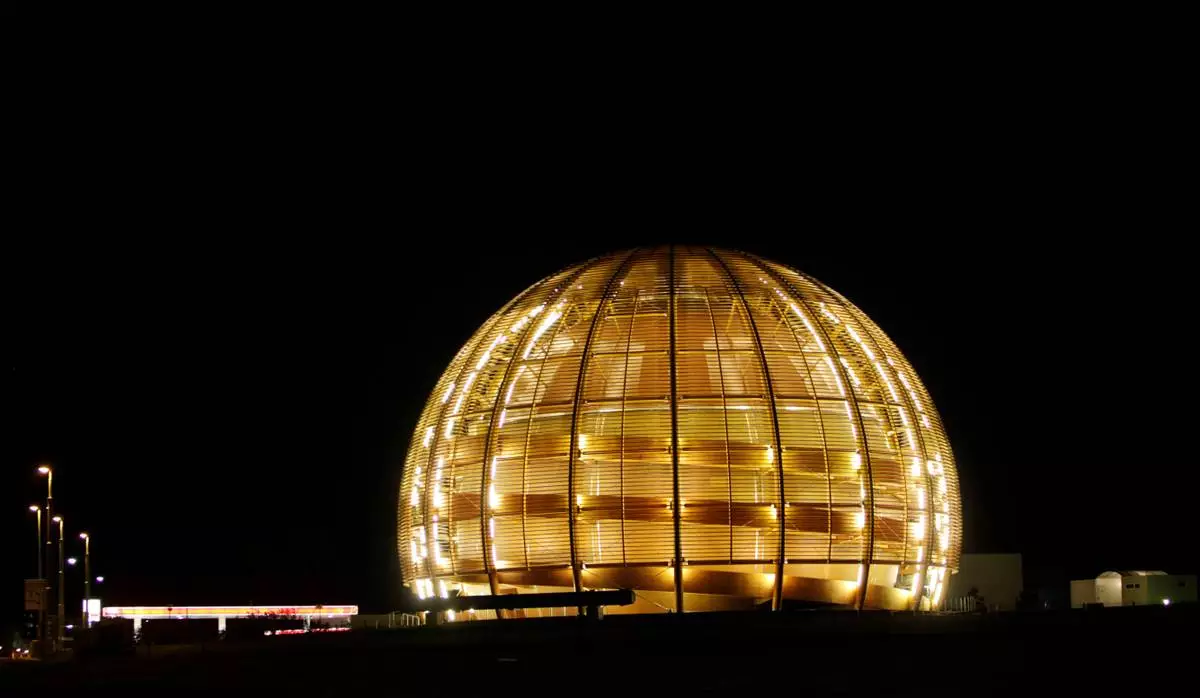
FILE - The globe of the European Organization for Nuclear Research, CERN, is illuminated outside Geneva, Switzerland, March 30, 2010. (AP Photo/Anja Niedringhaus, File)
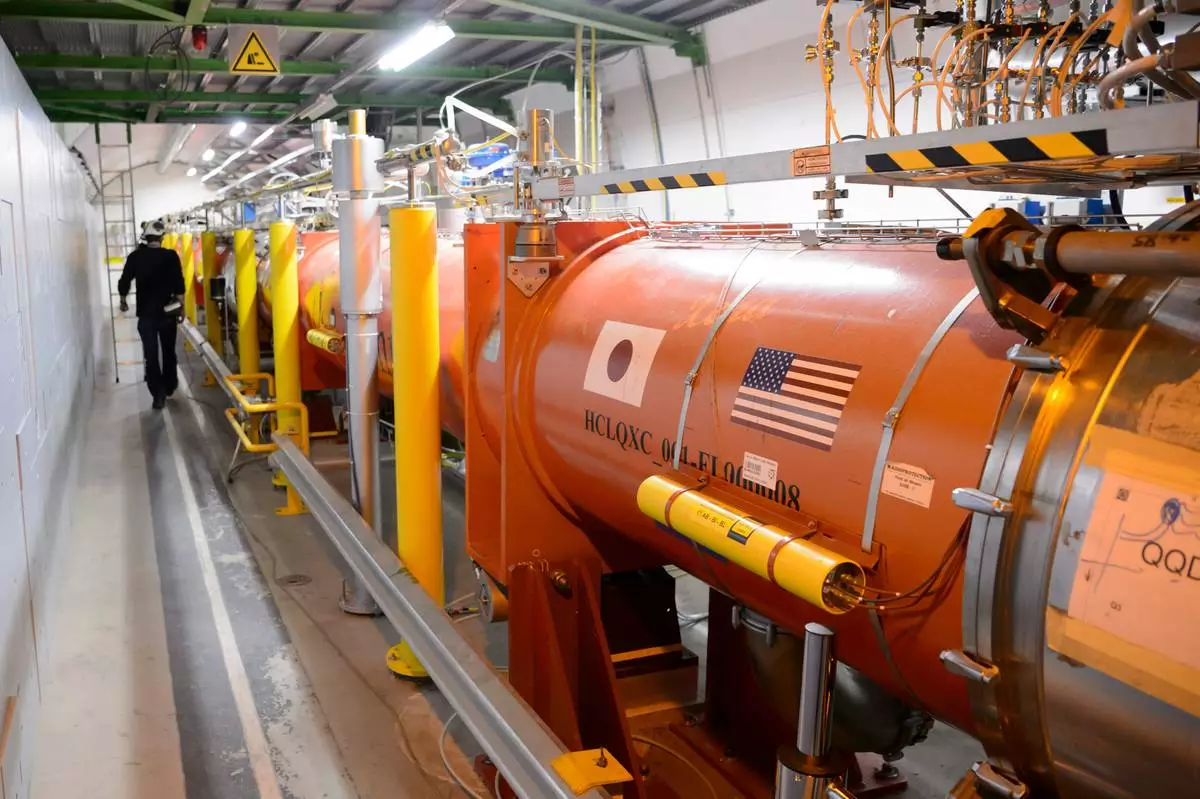
FILE - A technician works in the LHC (Large Hadron Collider) tunnel of the European Organization for Nuclear Research, CERN, during a press visit in Meyrin, near Geneva, Switzerland, Feb. 16, 2016. (Laurent Gillieron/Keystone via AP, File)
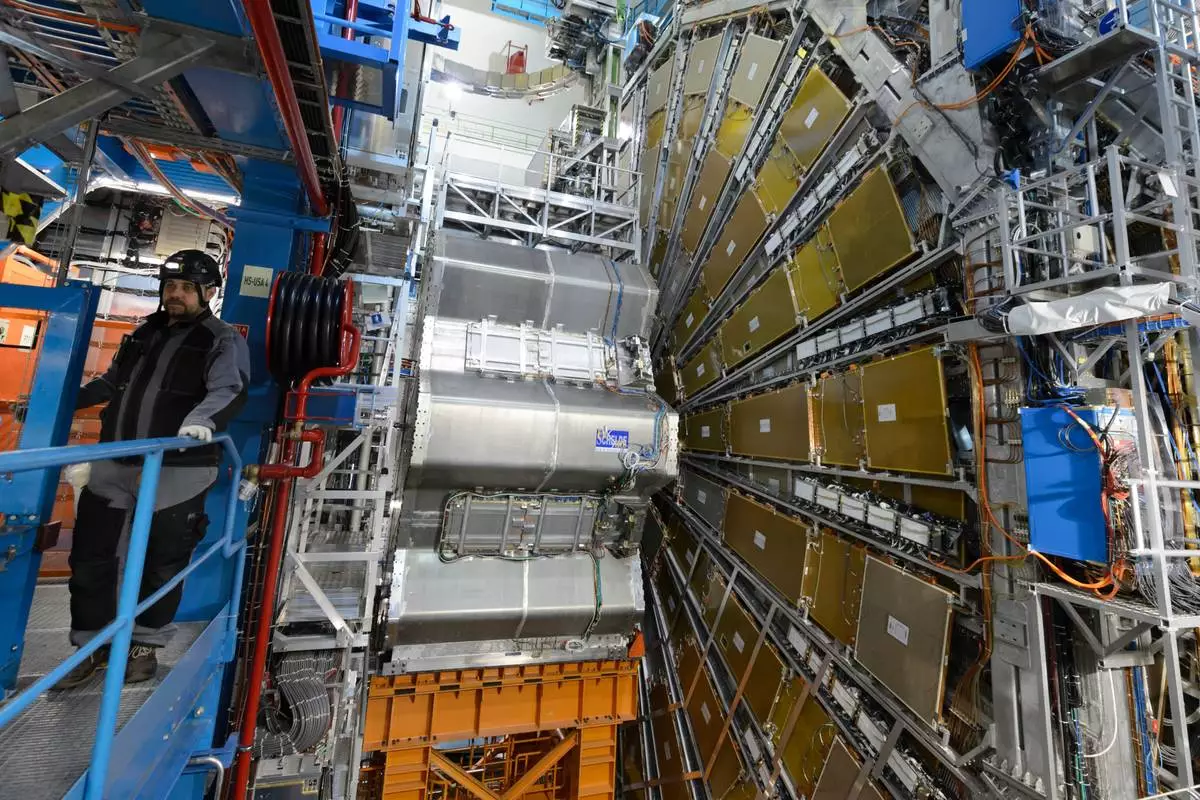
FILE - A technician works in the LHC (Large Hadron Collider) tunnel of the European Organization for Nuclear Research, CERN, during a press visit in Meyrin, near Geneva, Switzerland, Feb. 16, 2016. (Laurent Gillieron/Keystone via AP, File)