Skip to Content Facebook Feature Image

Ex-ump Richie Garcia worries current umps will be embarrassed when robots overturn ball/strike calls

Sport

Ex-ump Richie Garcia worries current umps will be embarrassed when robots overturn ball/strike calls
Sport

Sport

Ex-ump Richie Garcia worries current umps will be embarrassed when robots overturn ball/strike calls

2026-03-26 03:22 Last Updated At:03:31

NEW YORK (AP) — Richie Garcia is worried about the impact that robot umpires will have on their human counterparts.

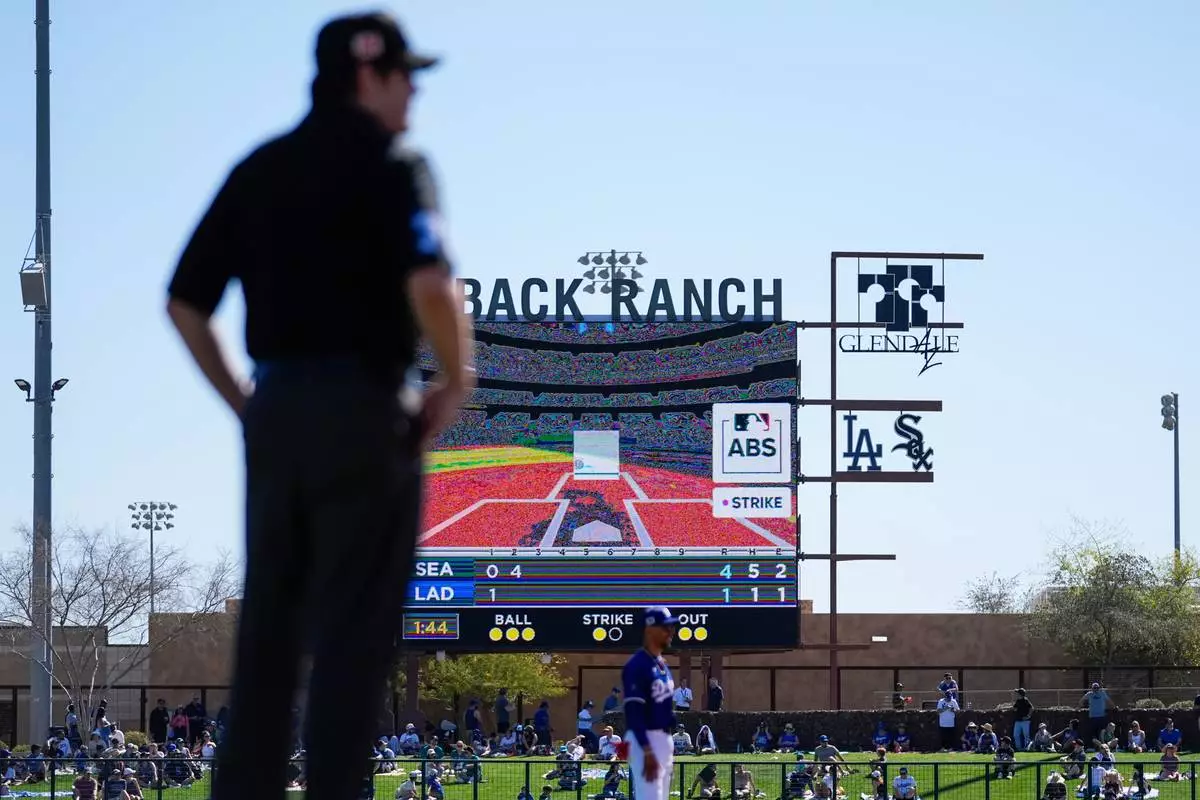
Major League Baseball introduced the Automated Ball-Strike System for regular-season play this season starting with the New York Yankees' opener at San Francisco on Wednesday night, giving teams a chance to appeal strike zone decisions to a system based on 12 Hawk-Eye cameras.

“I think it’s embarrassing, embarrassing to the umpires that are calling the game. Nobody likes to be humiliated in front of 30,000, 40,000 people,” said Garcia, a major league umpire from 1975-99. “What Major League Baseball is saying is: I don’t trust the umpire’s strike zone, so I’m going to use something that’s going to be operated by some computer geek that knows nothing about baseball, and he’s the one that’s going to measure this and measure that because he’s got a Ph.D. in physics or whatever the hell he’s got a degree in.”

Garcia drew criticism for not calling a strike on a 2-2 pitch from San Diego's Mark Langston to the Yankees' Tino Martinez in the 1998 World Series opener, and Martinez hit a tiebreaking grand slam on the next offering that sparked New York to a four-game sweep.

While there is constant debate over calls, umpires were overall their most accurate ever last year. Just not as perfect as technology.

There were 368,898 regular-season pitches called by big league umps last season, an average of 152 per game. The 92.83% accuracy rate was the highest — an average of 10.88 missed calls per game, according to MLB. That is down from an average of 16.58 missed calls per game in 2016, when the accuracy rate was 89.31%.

“I’m 60 and it seems to me like the younger generation really wants this technology and they want the certainty of a pitch being a ball or a strike," said Ted Barrett, a big league ump from 1994 to 2022.

Under ABS, each team gets two challenges per game and keeps a challenge if successful. A team out of challenges gets one additional in each extra inning.

“As an umpire, you never want to miss anything. You want to be absolutely 100% correct, but we’re all human and that’s just not possible,” said Sam Holbrook, an MLB umpire from 1996 to 2022. “Social media and the media have really been hammering the umpires for pitches that are just minutely off the zone or in the zone or whatever, and it’s just too hard to be perfect with all of this. I think it’s going to be good to correct any egregious pitches. I think it’s going to show how good the umpires actually are.”

MLB installed an Umpire Information System developed by Questec at some ballparks in 2001 and upgraded to a league-wide Zone Evaluation in 2009 as part the PITCHf/x system. TrackMan's doppler radar system took over in 2017 as part of MLB Statcast.

Since 2009, umpires have received a Z-E evaluation for every game they work behind the plate. Since 2014, they also have experienced getting overturned by expanded video review.

“It's tough mentally on an umpire because you failed at your job and there’s that instant feedback of failure,” Barrett said. “Nobody wants to fail at your job, but then there’s also the, hey, thank God I didn’t cost that team a game or a run or a pennant. No one wants to live with that. And so we take the positive of that. The negative is sometimes it’s like: What am I doing over there? I got overturned twice at first base."

Under ABS, a strike is defined as when the ball crosses over the plate at the midpoint of the plate in a box 53.5% of the batter’s height at the top and 27% at the bottom. That is different from the rule book strike zone of a cube whose top is the midpoint between the top of the shoulders and the top of the uniform pants and whose bottom is at the hollow beneath the kneecap.

“They’re going to change to what the ABS calls, whether it’s a challenge or not because, remember, they are getting evaluated on their performance based on that ABS,” Barrett said.

Philadelphia had the best spring training challenge success rate among teams at the plate with 61%, followed by the Chicago Cubs (60%), Boston and Seattle (54% each), while Texas and Arizona (33% each) and Kansas City (34%) were at the bottom.

St. Louis (75%), Cincinnati (71%) and Cleveland (70%) topped challenge success by fielding teams, while the Los Angeles Dodgers (43%) and Baltimore (45%) lagged.

Batters won 46% of 887 challenges and defense 60% of 1,020. The Yankees won the most challenges overall with 54, and Arizona, the Dodgers and the New York Mets tied for the fewest wins with 20.

Boston's Willson Contreras had the most batter challenges and was successful on six of seven. Philadelphia's Christian Cairo had the most challenges among batters with a 100% success rate at four.

Among catchers, Pedro Pagés of St. Louis was 8 for 8, Cincinnati's P.J. Higgins 7 for 7 and Milwaukee's Jeferson Quero 6 for 6.

Edgar Quero of the Chicago White Sox was 2 for 11, Payton Henry of the New York Yankees 1 for 9 and Austin Wynns of the Athletics 0 for 7.

AP MLB: https://apnews.com/hub/MLB
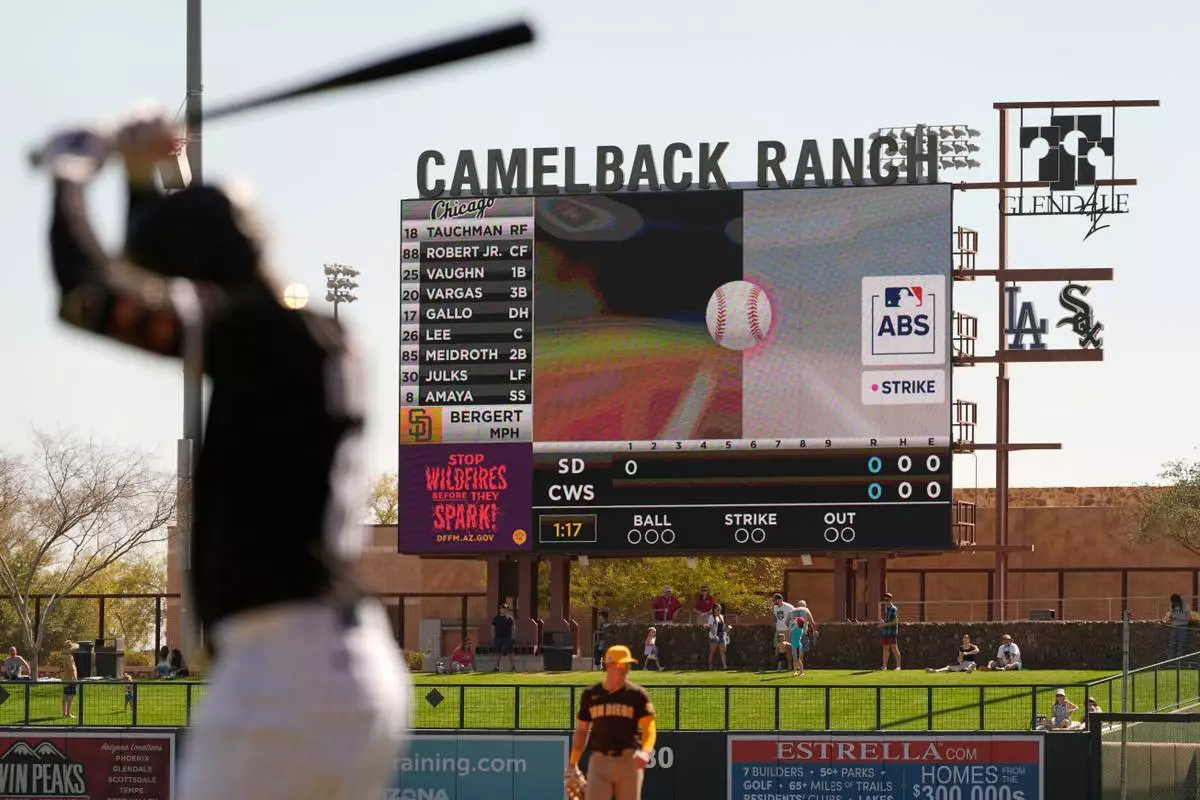
FILE - The Automated Ball-Strike System plays on the scoreboard after a pitch call was challenged during the first inning of a spring training baseball game between the Chicago White Sox and the San Diego Padres, Feb. 26, 2025, in Phoenix. (AP Photo/Carolyn Kaster, File)
FILE - The Automated Ball-Strike System plays on the scoreboard after a pitch call was challenged during the first inning of a spring training baseball game between the Chicago White Sox and the San Diego Padres, Feb. 26, 2025, in Phoenix. (AP Photo/Carolyn Kaster, File)

FILE - A replay from the Automated Ball-Strike System plays after a play was challenged during the second inning of a spring training baseball game between the Seattle Mariners and the Los Angeles Dodgers, Tuesday, Feb. 25, 2025, in Phoenix. (AP Photo/Ashley Landis, File)
FILE - A replay from the Automated Ball-Strike System plays after a play was challenged during the second inning of a spring training baseball game between the Seattle Mariners and the Los Angeles Dodgers, Tuesday, Feb. 25, 2025, in Phoenix. (AP Photo/Ashley Landis, File)

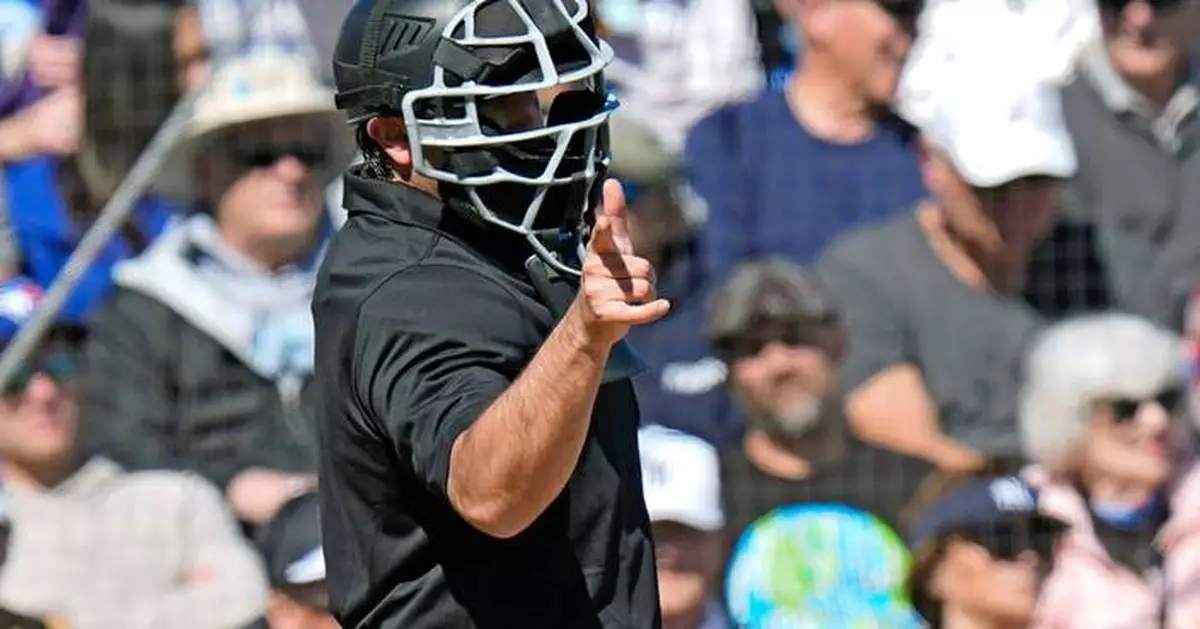
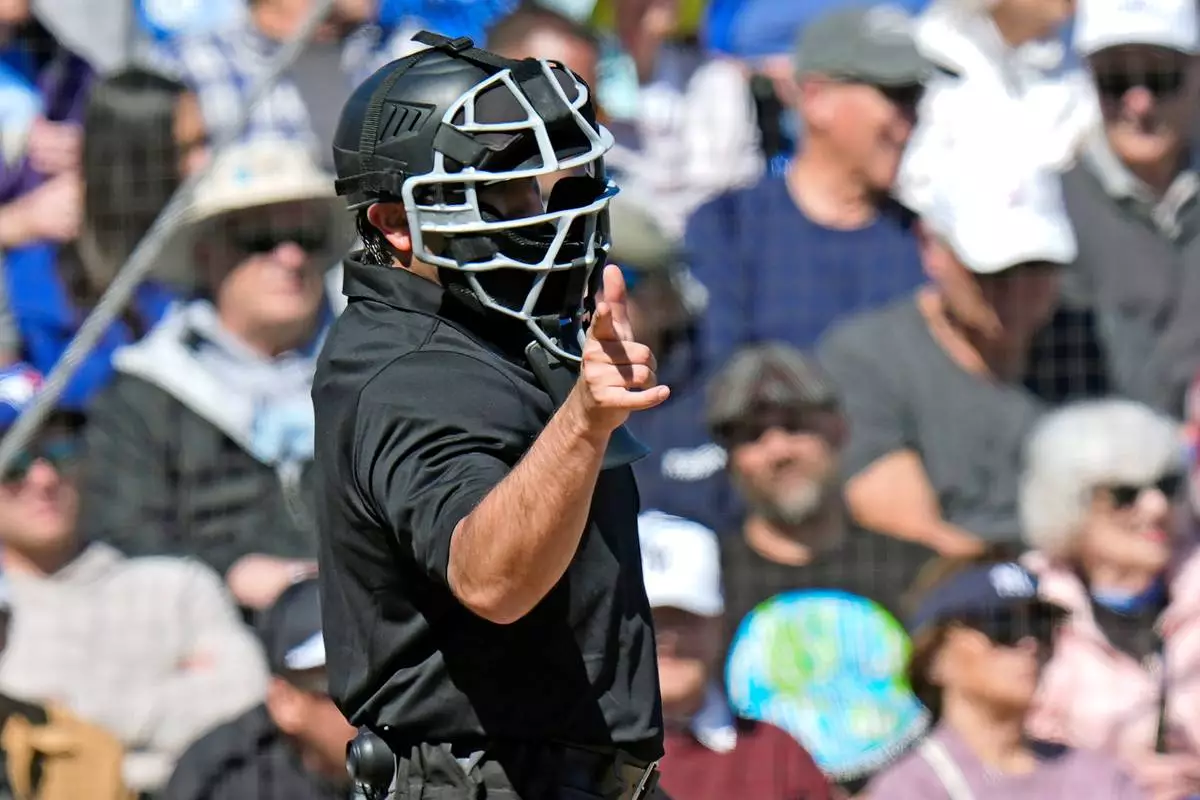
FILE 0 Home plate umpire Tom Fornarola calls a strike during the fifth inning of a spring training baseball game between the Toronto Blue Jays and the New York Yankees Tuesday, Feb. 24, 2026, in Dunedin, Fla. (AP Photo/Chris O'Meara, File)
FILE 0 Home plate umpire Tom Fornarola calls a strike during the fifth inning of a spring training baseball game between the Toronto Blue Jays and the New York Yankees Tuesday, Feb. 24, 2026, in Dunedin, Fla. (AP Photo/Chris O'Meara, File)
LANCASTER, Pa. (AP) — Two teenage boys who used artificial intelligence to create fake nude photos of their classmates at a tony private school in Pennsylvania received probation Wednesday after dozens of victims described the images' traumatizing effect on them.

The boys were 14 at the time. They admitted this month that they made about 350 images, showing at least 59 girls under 18, along with other victims who so far have not been identified.

Authorities said the boys took images of the girls from school photos, yearbooks, Instagram, TikTok and FaceTime chats in 2023 and 2024, and morphed them with images of adults depicting nudity or sexual activity.

More than 100 students and parents from Lancaster Country Day School were in court to hear victims describe the shock of having to identify their own faces in pornographic photos to detectives. Juvenile proceedings in Pennsylvania are normally closed, but this was opened by the judge, providing an unusual opportunity for the community to be seen and heard.

They described the fallout — anxiety attacks, a loss of trust, problems focusing on schoolwork and a fear that the images may someday surface in unexpected ways.

“I will never understand why they did this,” one victim told Judge Leonard Brown, saying it “destroyed my innocence.”

One young woman told Brown “how excruciating it is to bring these feelings up again and again.” Another choked back tears as she excoriated one of the defendants for expressing “fake empathy” as they confided with him about their pain before it became known that he had been part of creating and disseminating the images. Still another said all of her friends transferred schools, and that she “needed trauma therapy to even walk around my neighborhood.”

The two young men stood stone-faced throughout, flanked by their lawyers and parents, as they were called pedophiles, “sick and twisted” and perverted.

They declined several opportunities to comment to the judge, who said he had not heard either boy take responsibility or apologize.

“This has been a regrettable, long, torturous process for everyone involved,” said Heidi Freese, defense attorney for one of the defendants. “There were very interesting, underlying legal issues surrounding the charges in this case and those will be decided on a different day in a different case.”

Brown ordered each to perform 60 hours of community service, have no contact with the victims and pay an unspecified amount of restitution. If they don’t have any additional legal problems, Brown said, the case can be expunged after two years.

As he imposed his sentence, Brown said that if they were adults, they probably would be headed for state prison. He said they should “take this opportunity to really examine” themselves.

The resolution of the Pennsylvania case comes days after three teenagers in Tennessee sued Elon Musk's xAI, claiming the company’s Grok tools morphed their real photos into explicitly sexual images. The high school students are seeking class-action status to represent what the lawsuit says are thousands of people who were similarly victimized as minors.

The scandal in Pennsylvania in 2024 led to a student protest, the departure of school leaders and criminal charges against the two teenagers.

Nadeem Bezar, a Philadelphia lawyer who represents at least 10 of the victims, said Tuesday he expects to file a claim “against the school and anybody else we think has culpability in these deepfakes being created and disseminated.”

He said he has not yet seen the photos but expects the legal process to determine “exactly when and where and how the school knew, how the boys created these images, what platforms they used to create these images and how they were disseminated.”

As AI has become accessible and powerful, lawmakers across the country have passed laws aimed at barring deepfakes.

President Donald Trump signed the Take it Down Act last year, making it illegal to publish intimate images including deepfakes without consent, and requiring websites and social media sites to remove such material within 48 hours of being notified by a victim.

Associated Press writers Geoff Mulvihill in Haddonfield, New Jersey, and Holly Ramer in Concord, New Hampshire, contributed.

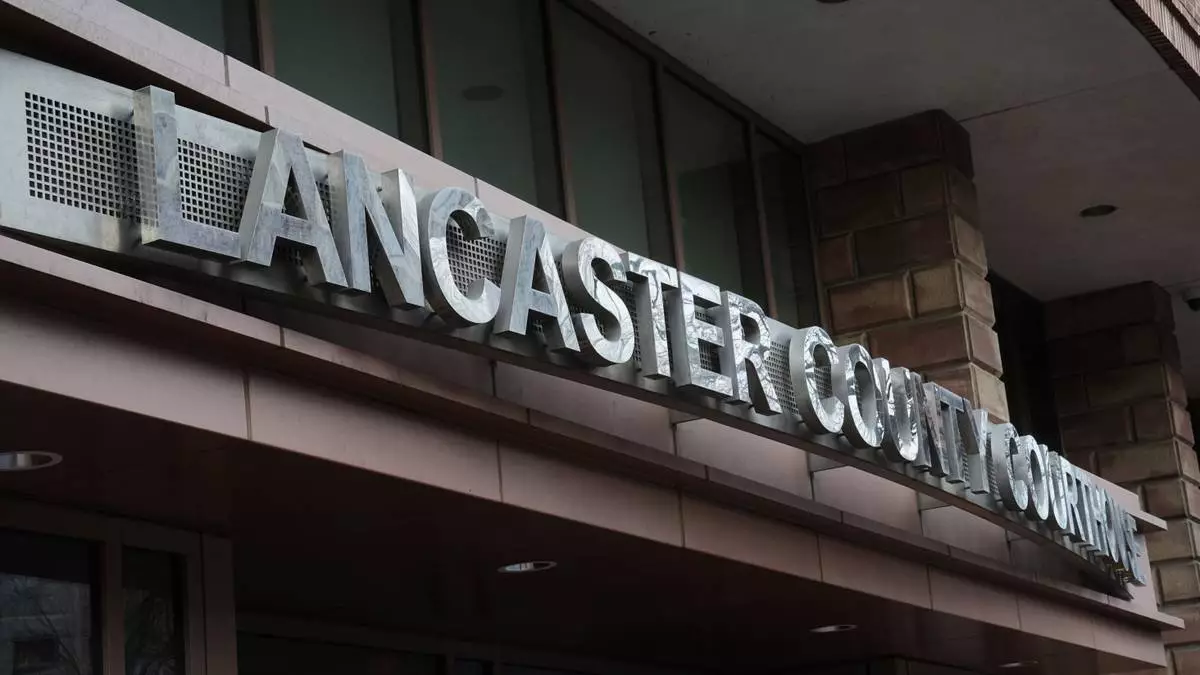
Shown is the Lancaster County Courthouse in Lancaster, Pa., Wednesday, March 25, 2026. (AP Photo/Matt Rourke)

Shown is the Lancaster County Courthouse in Lancaster, Pa., Wednesday, March 25, 2026. (AP Photo/Matt Rourke)

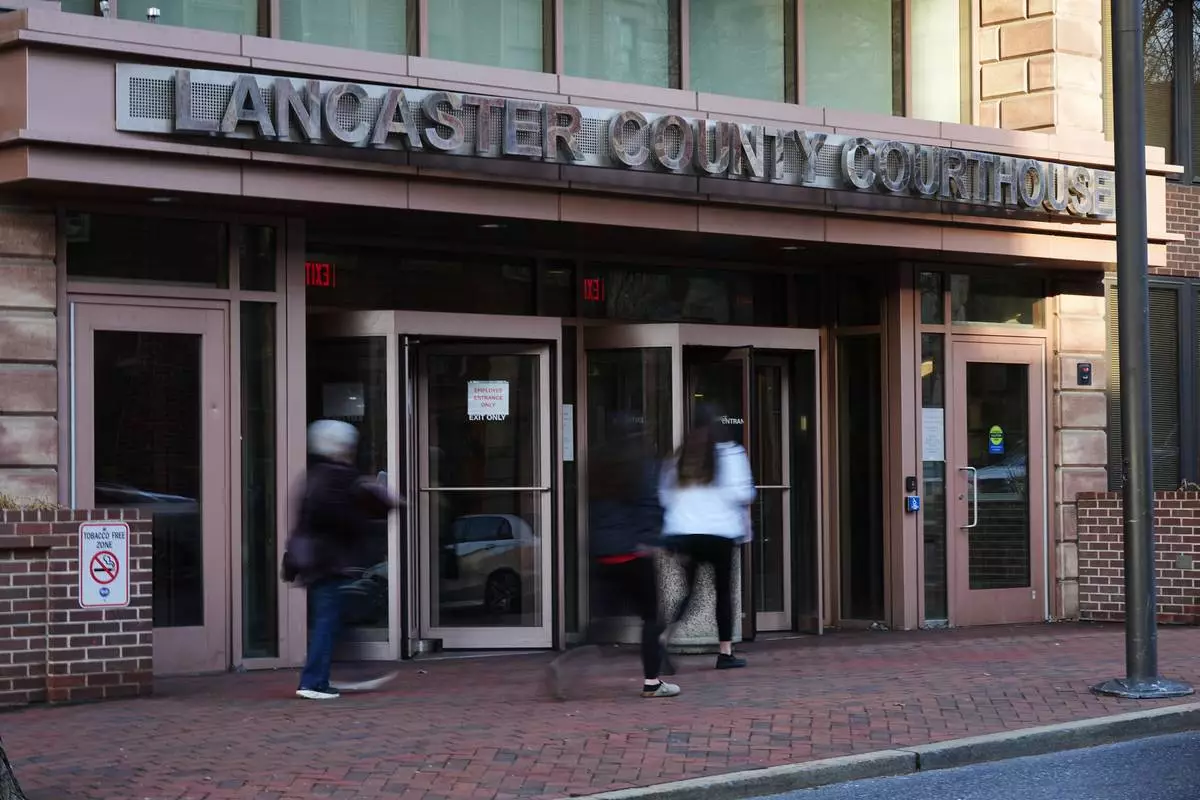
People enter the Lancaster County Courthouse in Lancaster, Pa., Wednesday, March 25, 2026. (AP Photo/Matt Rourke)

People enter the Lancaster County Courthouse in Lancaster, Pa., Wednesday, March 25, 2026. (AP Photo/Matt Rourke)

Recommended Articles