LEMONT, Ill.--(BUSINESS WIRE)--Mar 25, 2026--
Every second, scientific experiments produce a flood of data — so much that transmitting and analyzing it can slow down even the most advanced research. To help scientists better manage this data deluge, researchers at the U.S. Department of Energy’s (DOE) Argonne National Laboratory have developed a new computer chip that rapidly compresses and processes the huge amounts of data generated by advanced X-ray detectors, like those at the Advanced Photon Source (APS), a DOE Office of Science user facility at Argonne. By compressing data right at the source, this technology makes experiments faster, more efficient and more insightful than ever.
This press release features multimedia. View the full release here: https://www.businesswire.com/news/home/20260325911136/en/
When X-rays or electrons hit a sample, detectors capture the resulting signals — much like a digital camera captures light to produce photos. These signals are converted into electrical pulses and then digitized into numbers that computers can process. But with modern detectors, the amount of data generated is enormous. This can overwhelm computer systems and slow down research.
“Our goal is to bring more computing right where the data is generated,” said physicist Antonino Miceli of Argonne and the University of Chicago. “ In our earlier work, we showed how advanced mathematical techniques could shrink data while keeping the important parts for analysis. Now, using new chip technology and improvements in microelectronics, we’ve built a chip that puts the math right inside the detector.”
Building on their work, the team has now implemented a fast, compact matrix-math processor into the detector chip itself. Instead of sending every pixel off the instrument, the chip distills each image into a compact set of numbers that preserves the most important features for scientists. The output is always the same size and streams in real time, making it easier to manage and send.
Tests and design studies show this on-chip approach can reduce data by about 100 to 200 times, while running at speeds of up to a million frames per second. That means less data to move, lower power use and fewer cables, making experiments cheaper, more efficient and easier to scale up.
By combining smart data compression with fast hardware, scientists can get answers in real time and adjust their experiments right away. This helps speed up the cycle of discovery and makes the most of every minute at the beamline. The Argonne team is now working to move this chip from the design stage to large-scale fabrication and use in real experiments.
The results of this research were published in the Journal of Instrumentation.
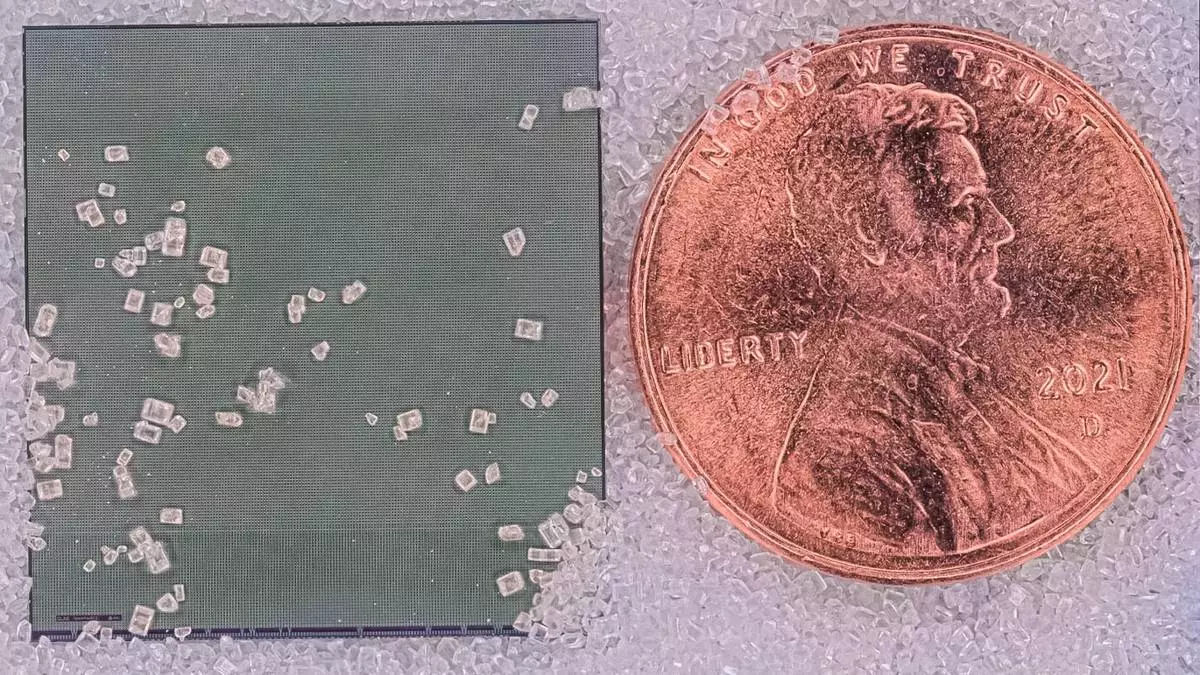
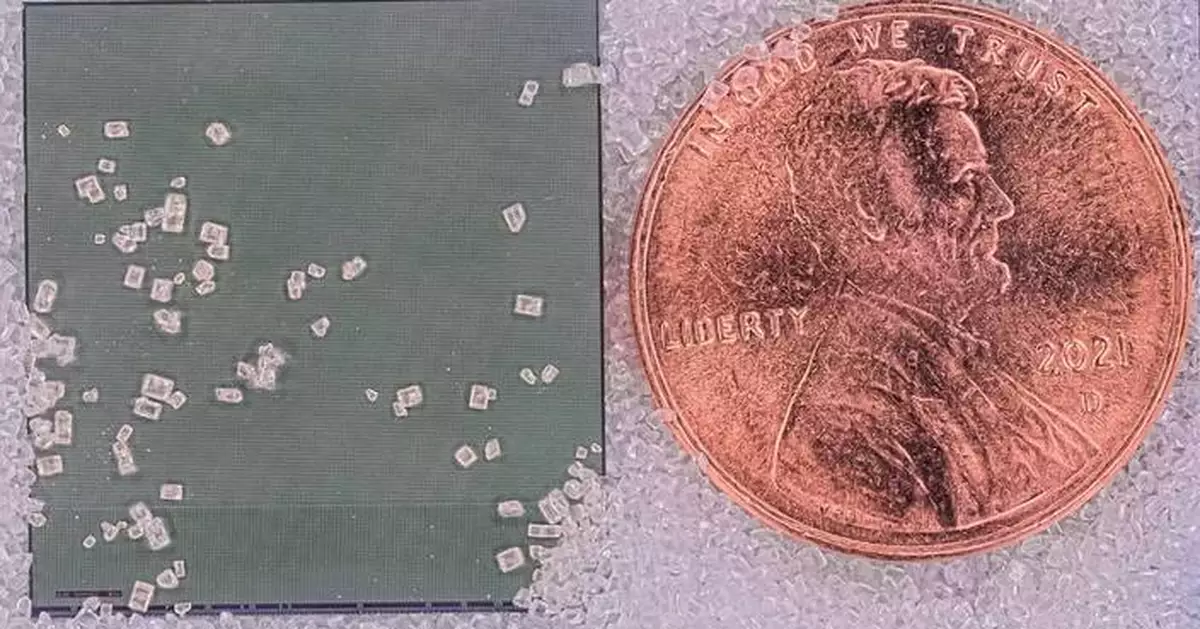
Silicon chip that integrates both imaging sensors and data compression, shown next to a U.S. penny and resting on grains of sand. This chip was co-designed by Argonne and SLAC. (Image by Antonino Miceli/Argonne National Laboratory.)
WASHINGTON (AP) — The Transportation Security Administration may have to shut down operations at some airports as travelers are experiencing record waiting times, the agency's acting head said Wednesday, as the latest offer to end a funding impasse and put restraints on President Donald Trump’s mass deportation agenda met fierce resistance in Congress.
The TSA's Ha Nguyen McNeill described the mounting hardships facing unpaid airport workers — piling up bills and eviction notices, even plasma donations to make ends meet — and warned that lawmakers must ensure "this never happens again."
“This is a dire situation,” she testified at a House hearing, warning of potential airport closures. “At this point, we have to look at all options on the table. And that does require us to, at some point, make very difficult choices as to which airports we might try to keep open and which ones we might have to shut down as our callout rates increase.”
Yet on the 40th day of the standoff involving the Department of Homeland Security, there was no easy way out in sight. Neither Republican senators, who made the latest offer, nor Democrats, who are demanding more changes in immigration enforcement, appeared closer to a compromise.
Trump, who initially appeared to have given his nod to the deal, has declined to lend it his full support or put his political weight behind making sure it is approved.
Top officials at agencies under the DHS umbrella spoke for more than three-hours before the House Homeland Security Committee about the potential risks of security lapses unless the partial government shutdown comes to an end.
DHS has gone without routine funding since mid-February. Democrats are insisting on changes to the Trump administration’s immigration enforcement and mass deportation operations after the killings of two U.S. citizens in Minneapolis by federal officers during protests.
The latest proposal would fund most of DHS except for the enforcement and removal operations of U.S. Immigration and Customs Enforcement that have been central to the debate. The plan would cover other aspects of ICE as well as Customs and Border Protection.
While the offer added some new restraints on immigration officers, including the use of body cameras, it excluded other policies that Democrats have demanded.
Senate Democratic leader Chuck Schumer of New York said they needed to see real changes. House Democratic leader Hakeem Jeffries of New York pressed for “bold” changes at ICE.
Republican leaders said Democrats are putting the country at risk.
“They know this is crazy," said House Speaker Mike Johnson, R-La.
But conservative Republicans also panned the proposal, demanding full funding for immigration operations and skeptical of the promise from GOP leaders that they would address Trump's proof-of-citizenship voting bill in a subsequent legislative package.
McNeill, the acting TSA administrator, told lawmakers that multiple airports are experiencing greater than 40% callout rates and more than 480 transportation security officers have now quit during the shutdown.
She cited the growing financial strain on the TSA workforce.
“Some are sleeping in their cars, selling their blood and plasma, and taking on second jobs to make ends meet, all while being expected to perform at the highest level when in uniform to protect the traveling public,” she said.
McNeil also said TSA officers working at the nation’s airports have experienced a more than 500% increase in the frequency of assaults since the shutdown began.
“This is unacceptable and it will not be tolerated,” McNeill said.
The top executive overseeing Houston’s airport said security lines that have travelers waiting four hours or more could get longer if the political impasse was not soon settled.
Lines that twist and turn across multiple floors at George Bush Intercontinental Airport have been the result of TSA only being able to staff one-third to one-half the usual number of checkpoint lines, said Jim Szczesniak, aviation director for Houston’s airport system.
Trump’s decision to send ICE agents to the airports risks inflaming the situation, lawmakers have said. Video footage of federal officers detaining a crying woman at San Francisco International Airport drew outrage Monday from local officials, although it was unrelated to Trump's order to deploy immigration officers.
The Federal Emergency Management Agency's Disaster Relief Fund is “rapidly depleting,” Victoria Barton, a FEMA external affairs official, told lawmakers.
FEMA is able to continue its disaster response and recovery work as long as that fund has money, and about 10,000 of its disaster workers continue being paid through it.
Associated Press writers Wyatte Grantham-Philips in New York, Rio Yamat in Las Vegas, Russ Bynum in Houston and Gabriela Aoun Angueira in San Diego contributed to this report.

Senior Official Performing the Duties of the Administrator Ha Nguyen McNeill, left, testifies as Nicholas Andersen, acting director of the Cybersecurity and Infrastructure Security Agency, right, listens during a House Committee on Homeland Security hearing on Capitol Hill, Wednesday, March 25, 2026, in Washington. (AP Photo/Mariam Zuhaib)

Speaker of the House Mike Johnson, R-La., speaks during a news conference at the Capitol in Washington, Wednesday, March 25, 2026. (AP Photo/J. Scott Applewhite)
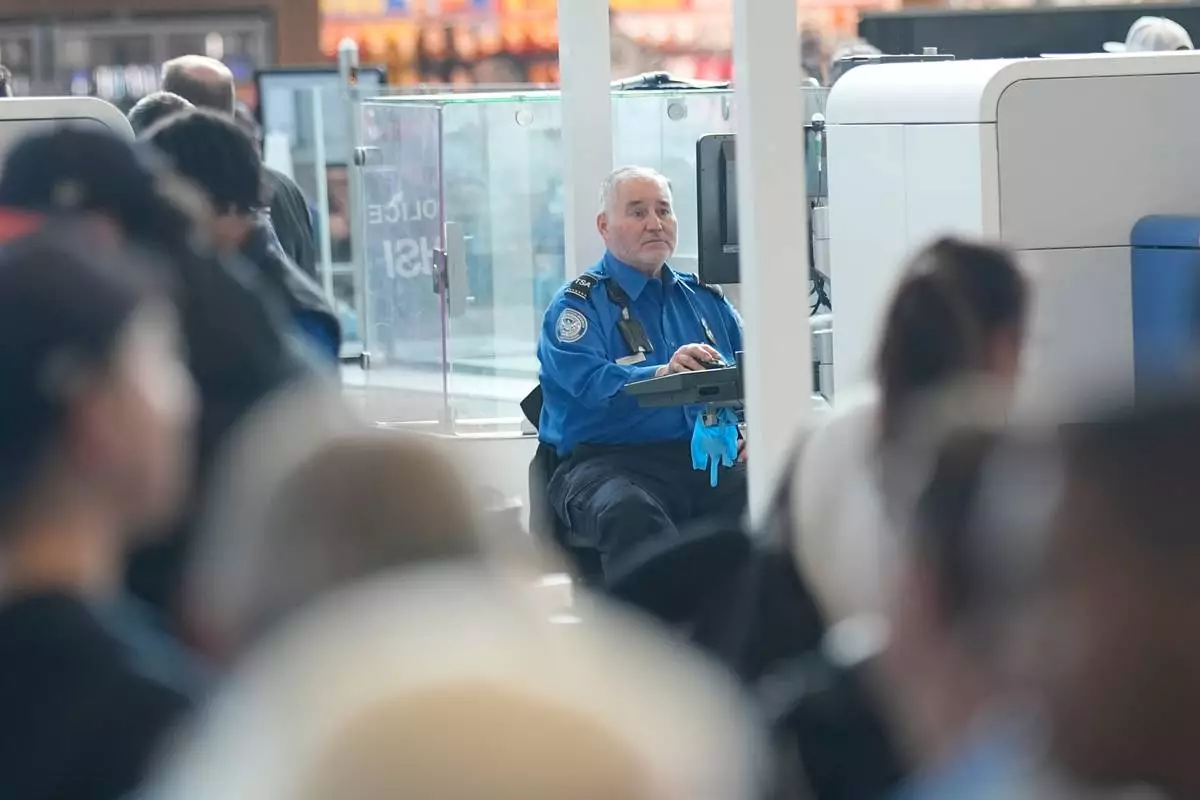
Passengers and their bags are screened at a security checkpoint at George Bush Intercontinental Airport, Wednesday, March 25, 2026, in Houston. (AP Photo/David J. Phillip)
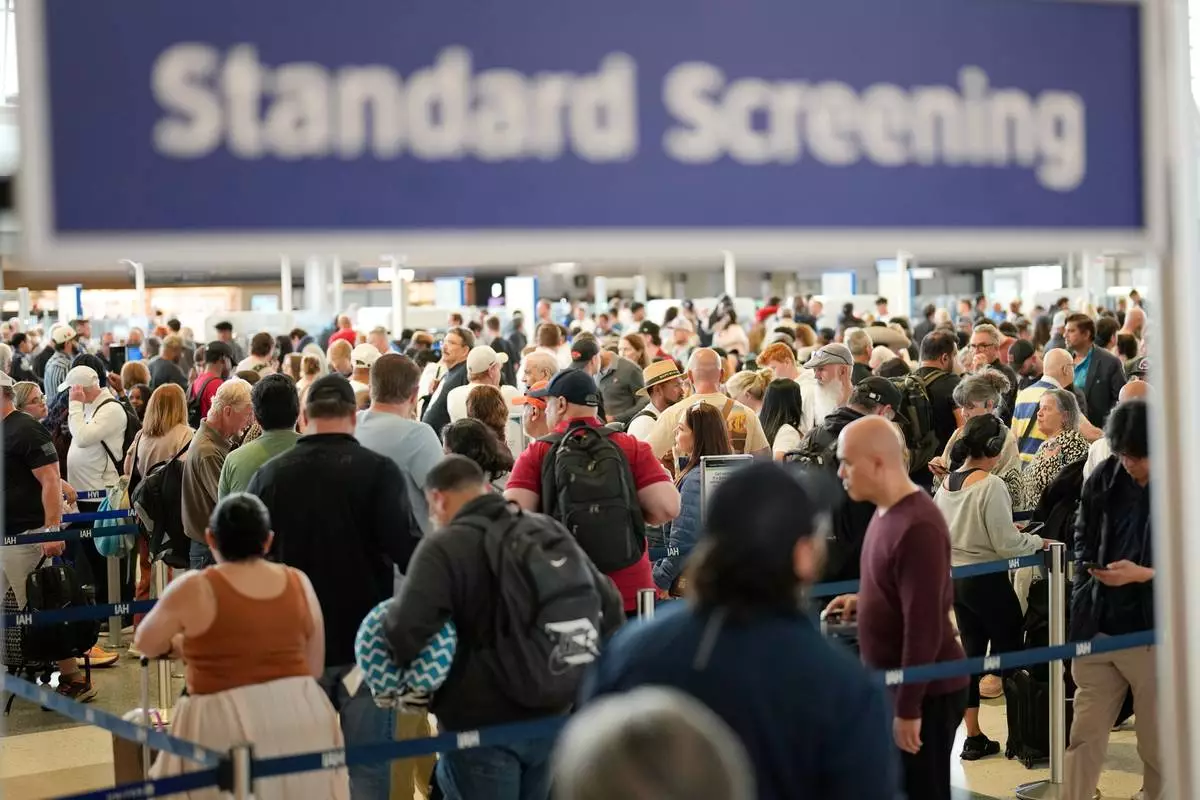
Passengers wait in a security checkpoint line at George Bush Intercontinental Airport, Wednesday, March 25, 2026, in Houston. (AP Photo/David J. Phillip)
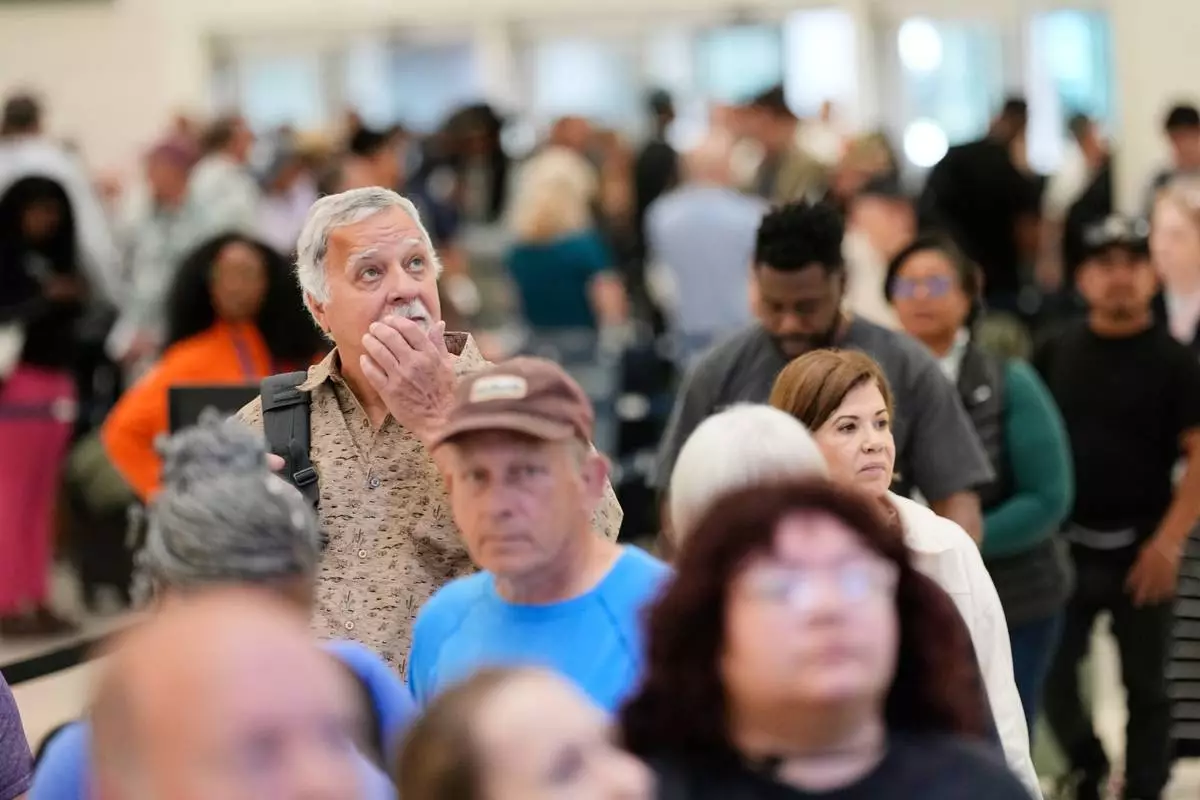
Passengers wait in a security checkpoint line at George Bush Intercontinental Airport, Wednesday, March 25, 2026, in Houston. (AP Photo/David J. Phillip)