A prolonged funding lapse at the Department of Homeland Security (DHS) has triggered a severe shortage of security officers, resulting in chaotic scenes and hours-long delays for passengers at several U.S. airports.
Hundreds of Transportation Security Administration (TSA) agents have resigned since February amid the DHS shutdown, which was triggered by Congress's failure to pass a budget.
According to Immigration and Customs Enforcement (ICE) officials assigned to assist at George Bush Intercontinental Airport in Houston, TSA screener absenteeism reached 50 percent that day, as reported by a China Media Group (CMG) correspondent on the scene.
Prompted by an airline notification, the reporter arrived three hours early. However, security clearance took more than 3.5 hours, causing him to miss his scheduled flight.
On Thursday, President Donald Trump said in a social media post that he will sign an order to pay TSA workers to end the chaos, without providing any details.
Just two days earlier, Senate Democrats rejected a Republican plan to fund DHS - a proposal supported by President Trump.
The proposal would fund nearly all of DHS while allocating separate funding for ICE.

Several US airports face chaos amid gov't department weeks-long shutdown
The Chinese Academy of Sciences (CAS) announced major RISC-V achievements at a sub-forum during the 2026 Zhongguancun Forum (ZGC Forum) on Thursday, highlighting a new path for open-source chip industrial application.
RISC-V is an open-source, flexible and efficient processor architecture that has gained global attention.
Two landmark achievements were introduced at the forum. Xiangshan, an open-source high-performance RISC-V processor system, has set a new international record and includes the world's first open-source network-on-chip IP.
"The Xiangshan processor core now ranks among the global top tier in performance. Several companies are already developing actual chips based on it. Real market demand, high-level expertise, and high quality are the core elements for open-source chip projects to transition from the lab to industrial deployment," said Bao Yungang, a researcher at the Institute of Computing Technology, CAS.
While Ruyi, a native RISC-V operating system, became the first to support the RVA23 high-performance international standard.
Together, Xiangshan and Ruyi have formed two RISC-V open-source communities led by China.
Currently scientific research teams in China have constructed a full-chain RISC-V development system, strengthening China’s voice in shaping global open-source technology standards.
The 2026 ZGC Forum, running in Beijing through Sunday, is focused on the theme of "Full Integration Between Technological and Industrial Innovation". Since its founding in 2007, this forum has become a major international event for advancing science and technology innovation.
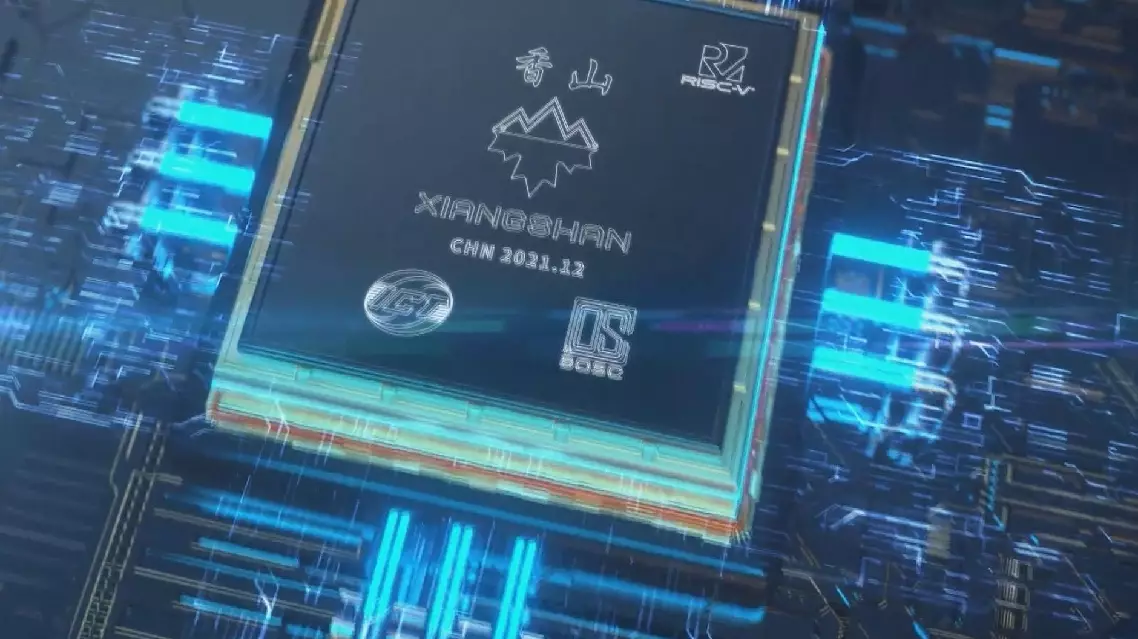
China unveils major RISC-V achievements, opens new path for open-source chip industry