Panelists attending the South China Sea Sub-Forum of the Boao Forum for Asia (BFA) Annual Conference 2026 have stressed the need for dialogue and cooperation to safeguard the South China Sea as Asia's key maritime passage, as global crises cast a shadow over regional stability.
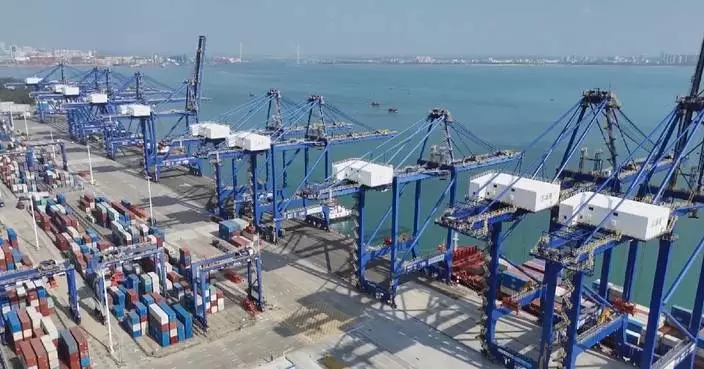
The South China Sea is an important international shipping lane. More than 500,000 commercial vessels pass through it each year, and about 40 percent of global seaborne crude oil is shipped via the South China Sea.
At a sub-forum of the BFA Annual Conference 2026 on Friday, which was convened against the backdrop of ongoing conflict in Ukraine and the Middle East, discussions evolved from territorial and maritime disputes to broader concerns about a rapidly changing world.
"Overlapping interests have become increasing, and there is a tendency to resolve overlapping interests or conflict of interests through force," said Nguyen Hung Son, president of the Diplomatic Academy of Vietnam, noting the lack of diplomatic means.
Disputes persist in the South China Sea, but conflicts elsewhere serve as a reminder that hard-won peace must be safeguarded, shared sea lanes kept open, and cooperation deepened, according to panelists. One of the most pressing questions in the packed room has been how to prevent the South China Sea from becoming the next Strait of Hormuz.
"ASEAN countries and China should feel a sense of urgency to complete the formulation of the Code of Conduct as soon as possible. All parties should earnestly summarize the good experiences and traditions in implementing the Declaration on the Conduct of Parties in the South China Sea," said Liu Zhenmin, China's Special Envoy for Climate Change and former under-secretary-general of the United Nations.
"We must also send a consistent message that the South China Sea is a passageway that will always remain open, will remain safe and remain inclusive, and will be a space for connectivity and cooperation," said Nguyen.
The sub-forum, held annually since 2014, comprised two days of seminars and an open-door session, marked by friendly exchanges and open dialogue. In contrast to the maritime tensions often highlighted in international media, it offered a glimpse into the region's more nuanced approach.
"Despite periodic tensions, the region has thus far avoided serious outright conflict in recent times. And this, I would suggest, ladies and gentlemen, is less a coincidence than the result of a sustained, if understated, commitment to cooperation," said Oh Ei Sun, principal adviser at the Pacific Research Center of Malaysia.
The four-day Boao Forum for Asia (BFA) Annual Conference 2026 concluded in south China's tropical island province of Hainan on Friday, with fruitful results achieved to inject new impetus into multilateral cooperation.
The conference, themed "Shaping a Shared Future: New Dynamics, New Opportunities, New Cooperation", wrapped up after bringing together around 2,000 representatives from over 60 countries and regions around the world to discuss a broad range of issues including Asia's development, multilateralism, free trade, globalization, digitalization and green transition.
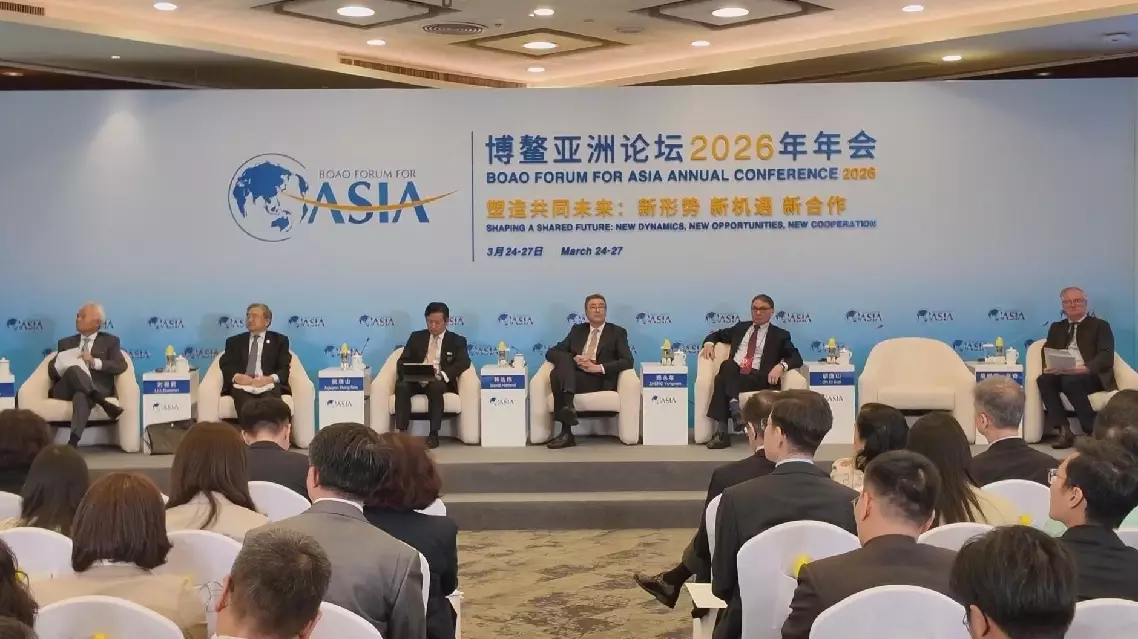
South China Sea sub-forum highlights peace, dialogue amid turmoil in Middle East