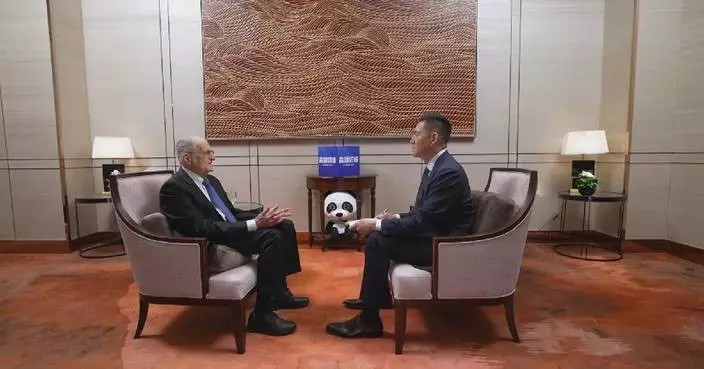
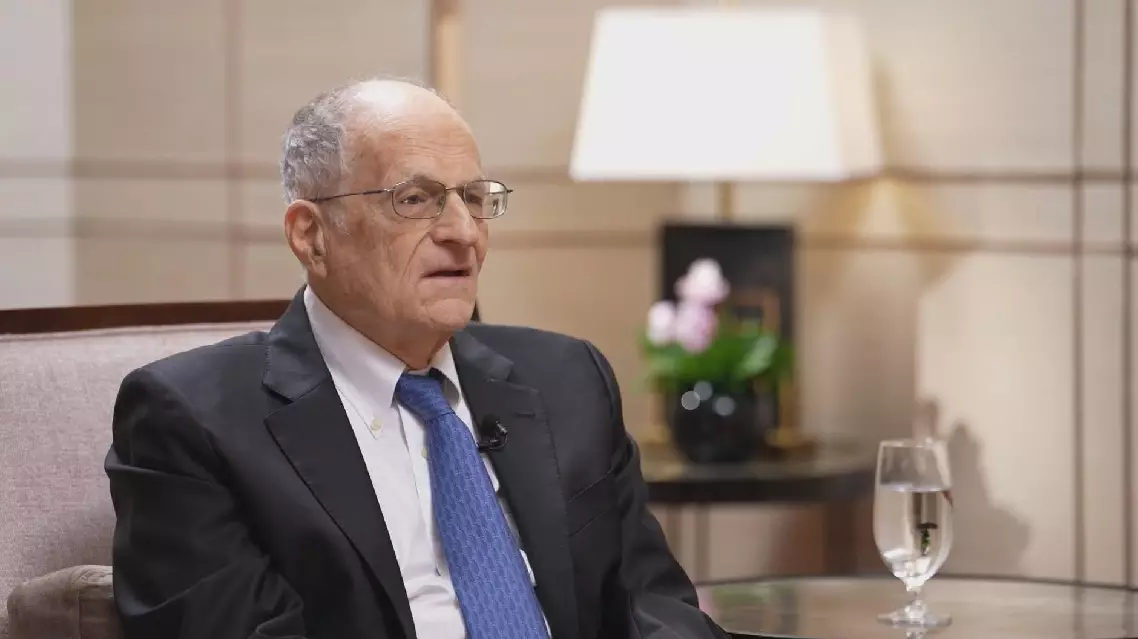
Nobel laureate Thomas J. Sargent has praised the continuity and coherence of China's successive five-year plans, saying they strike a thoughtful balance between strategic direction and operational detail.
Sargent, who won the 2011 Nobel Prize in Economic Sciences, told China Media Group (CMG) in Shanghai that the plans are "connected" and that their five-year cadence is a pragmatic choice.
"If you actually look at the China's five-year plans, they're connected. Five years is kind of a long time. Why five and not ten? Well, because you don't know what's going to happen that far out realistically, you want to adapt. But if you look at the plans, they fit together, kind of interesting to read. It's kind of a broad strategy, but what I'm thinking is kind of like, we're going to create incentives so we kind of push things in this direction. So it's kind of interesting if you ask us, how would you read them? They're clearly written by some very smart and thoughtful people. How much detail would you want to give? So the matter of detail versus kind of general direction, they strike a balance. That's what strikes me," he said.
Deputies to the 14th National People's Congress, the country's supreme organ of state power, earlier this month approved the outline of the 15th Five-Year Plan (2026-2030) for national economic and social development at a yearly session. The plan places high-quality development at the top of the agenda, with indicators covering economic growth, innovation, public well-being, green transition and security.
Many of the targets focus on improving livelihoods, underscoring that development is ultimately meant to benefit the people. Observers say the continuity of successive plans provides China with a stable framework to pursue long-term growth while adapting to changing circumstances.
Nobel laureate commends continuity, coherence of China's five-year plans
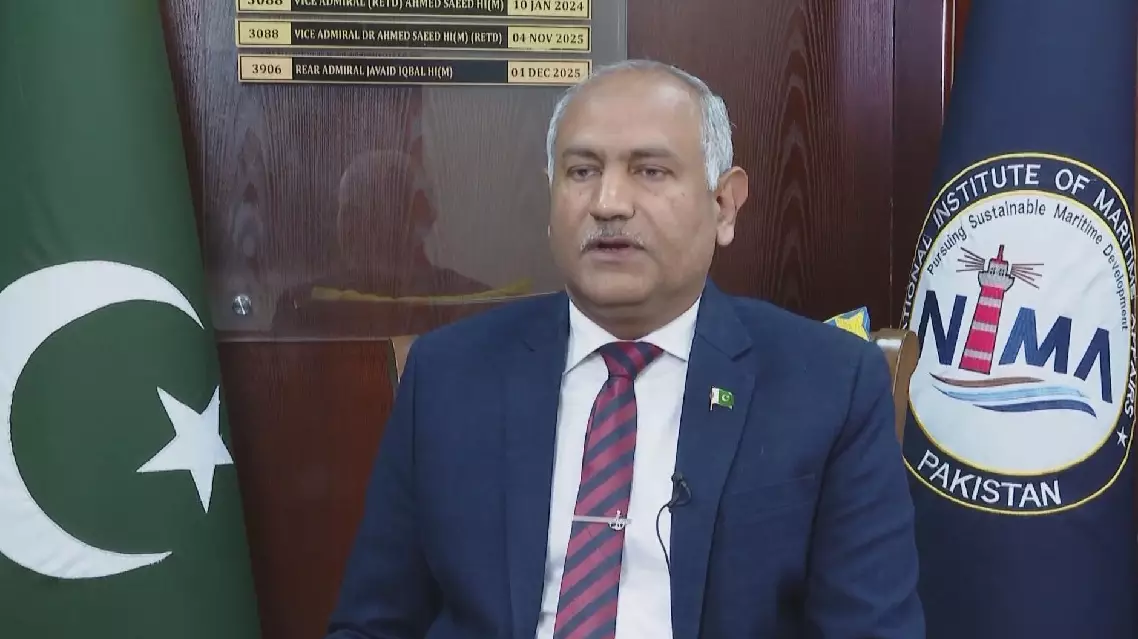
Pakistan's sense of global responsibility and concern over the impact of the ongoing conflict between Iran and the United States and Israel on the world order compel it to mediate between the warring parties, Javed Iqbal, president of the Pakistani National Institute of Maritime Affairs, said on Friday.
Pakistan is a key stakeholder in maritime security in the Strait of Hormuz, and because conflicts in one region can ripple across the world, the country sees mediation as essential to safeguarding its interests and promoting broader regional stability, Iqbal, who is also a senior defense analyst, told the China Global Television Network (CGTN).
"We are a part of not only the global community of nations, but also part of Global South. We are sitting at the mouth of the Strait of Hormuz. We are an important stakeholder in ensuring maritime security in the region, because it's an interconnected world. If there is a threat, it affects everybody. And we have witnessed in the last four weeks that how the oil prices, gas prices have impacted the entire world. The food security crisis is brewing. Prices of the commodities are going up. So Pakistan had to play this role, not only for its own interest, but also in the interest of the global community," he said.
Iqbal also noted that Pakistan is committed to not only ending the conflict, but also addressing its broader consequences, as the Middle East conflict continues to reshape the global order.
"And I think as a responsible nation, we are not only looking at the war termination, but we are also looking at the second order and the third order effects, the post war also, because it's a major, cataclysmic event. I think it will transform the world order. It will reset the global balance of power. It will reset the security order in the Middle East. So it's a very, very important event. And being a critical stakeholder, in the interest of the global security, global peace, and development, Pakistan is playing its due role and acting as a conveyor of the messages between the United States and Iran," he said.
Pakistan has been relaying messages between Iran and the United States, helping bring an end to the conflict. The country will host a quadrilateral meeting of foreign ministers including Türkiye, Egypt and Saudi Arabia on Monday to discuss tensions in the Middle East, according to Pakistan's state media.
Pakistan affirms responsibility to mediate as Middle East conflict reshapes global order: analyst