From quantum computing and brain-computer interfaces to superconducting magnets, a host of real-world applications of cutting-edge research breakthroughs are displayed during the ongoing 2026 Zhongguancun Forum in Beijing.
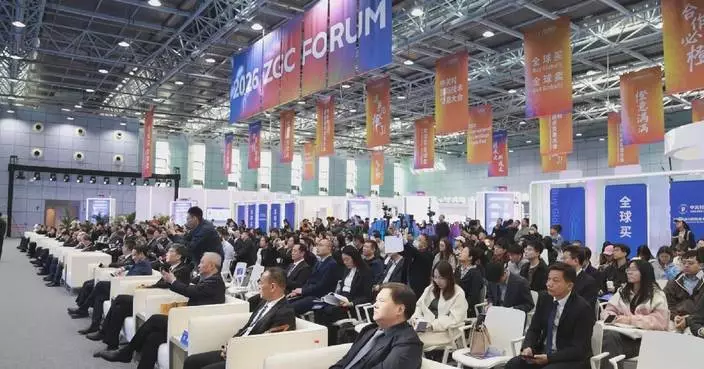
Themed "Full Integration Between Technological and Industrial Innovation," this year's Zhongguancun Forum is being held in Beijing from March 25 to 29, attracting more than 1,000 guests from over 100 countries and regions across the world.
The permanent exhibition at the Zhongguancun Exhibition Center in Beijing this year showcases over 560 technologies and products in the fields such as artificial intelligence (AI), Embodied Intelligence (EI) and advanced medical devices from 350 plus companies.
Inside the exhibition hall are no longer just lab samples, but real-world applications of new technologies.
Among the exhibits is China's first scalable special-purpose quantum computer with a maximum of 1,000 qubits.
"It can be applied to areas like optimization problems in finance, as well as logistics and power grids, where there are many challenges involving optimal routing and matching. It can also accelerate computing in artificial intelligence," said Wen Kai, head of the photonic quantum computing team at the exhibition.
An invasive brain-computer interface system with up to 1,024 channels made its debut at this year's forum. The research team has adopted a stretchable and flexible electrode with a specially designed spiral structure to enable long-term, stable neural signal recording.
According to the team, the system is a technology transfer project from the research group at the Chinese Institute for Brain Research, whose research paper was published just this February. Within less than two months, the product has already been unveiled at the exhibition and entered clinical trials.
"The government has provided us with significant impetus in terms of both policy and guidance. Meanwhile, we also benefit from the highly complete industrial chain here in China, which allows us to truly build self-supporting and risk-controllable industrial and supply chains of this high-throughput brain-computer interface," said Song Qi, head of the brain-computer interface team at the exhibition.
Also on display is a world-record 35.6 Tesla all-superconducting user magnet, which has already entered commercial use.
The team noted that the development of major national science and technology infrastructure in Beijing's Huairou Science City has provided critical support in turning the global challenge into a market-ready product. Beyond this application, the technology holds potential for widespread use in life sciences, medical magnetic resonance imaging, and controlled nuclear fusion.
Since its founding in 2007, the Zhongguancun Forum has become a major international event for advancing science and technology innovation.
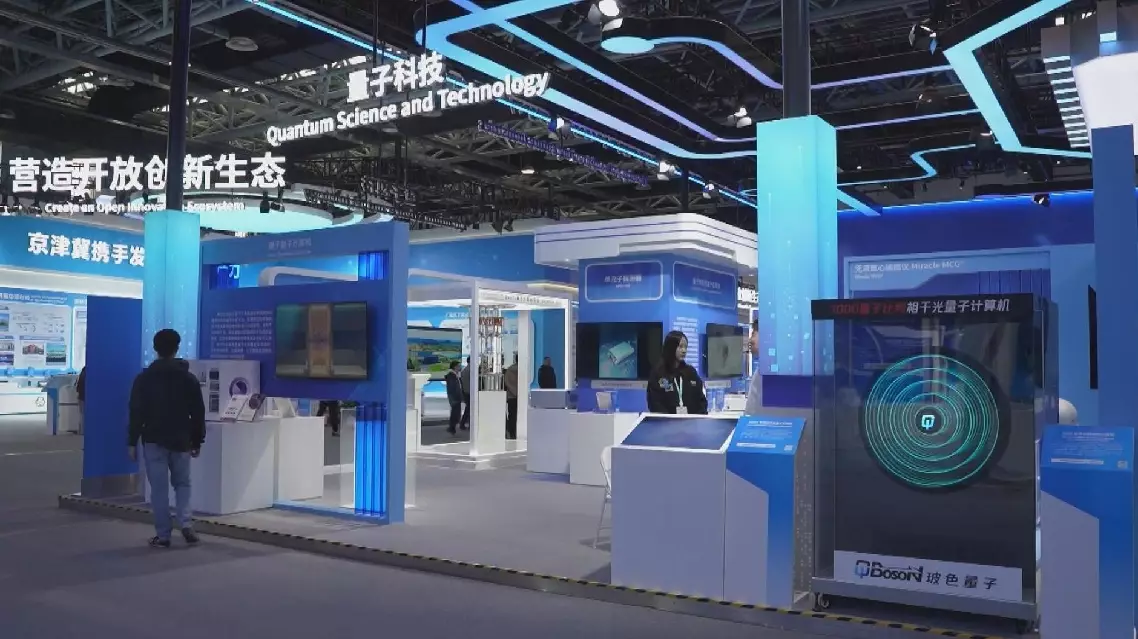
Real-world applications of research breakthroughs displayed at Beijing's Zhongguancun Forum