Skip to Content Facebook Feature Image

A college instructor turns to typewriters to curb AI-written work and teach life lessons

TECH

A college instructor turns to typewriters to curb AI-written work and teach life lessons
TECH

TECH

A college instructor turns to typewriters to curb AI-written work and teach life lessons

2026-03-31 12:04 Last Updated At:18:56

The scene is right out of the 1950s with students pecking away at manual typewriters, the machines dinging at the end of each line.

Once each semester, Grit Matthias Phelps, a German language instructor at Cornell University, introduces her students to the raw feeling of typing without online assistance. No screens, online dictionaries, spellcheckers or delete keys.

More Images
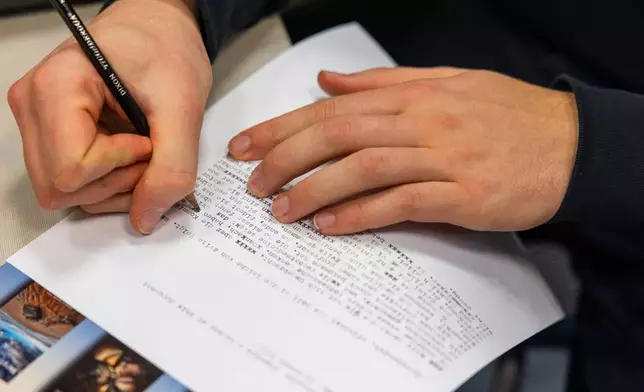
Marcello Popelka makes edits using a pencil after writing an assignment in German on a typewriter at Cornell University, Friday, March 20, 2026, in Ithaca, N.Y. The professor, Grit Matthias Phelps, brings out the typewriters once each semester for students to disconnect from technology and connect with the assignment in a different way. (AP Photo/Lauren Petracca)
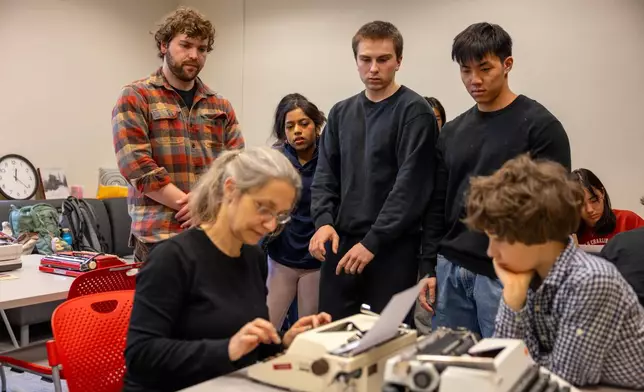
Marcello Popelka makes edits using a pencil after writing an assignment in German on a typewriter at Cornell University, Friday, March 20, 2026, in Ithaca, N.Y. The professor, Grit Matthias Phelps, brings out the typewriters once each semester for students to disconnect from technology and connect with the assignment in a different way. (AP Photo/Lauren Petracca)

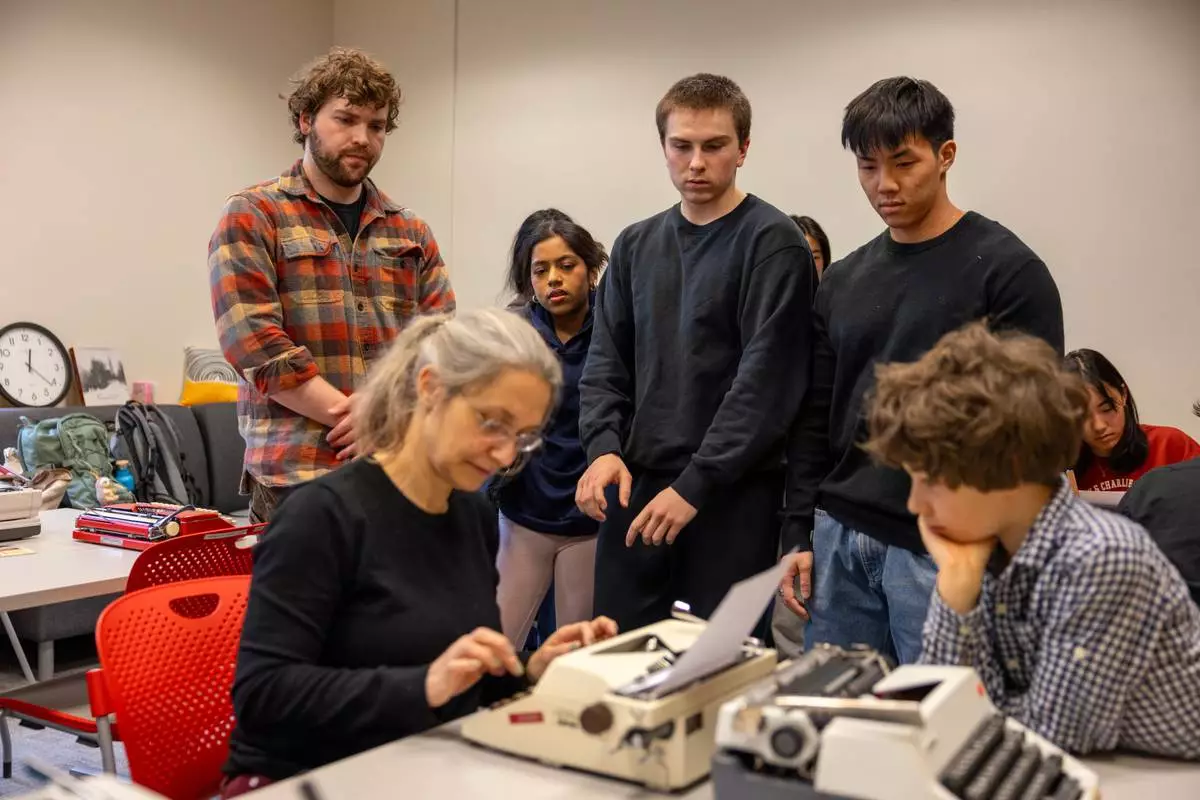
Grit Matthias Phelps gives students a demonstration on how to use a typewriter before class at Cornell University, Friday, March 20, 2026, in Ithaca, N.Y. (AP Photo/Lauren Petracca)
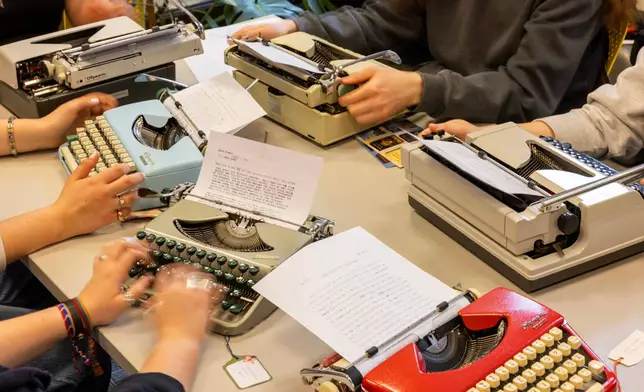
Grit Matthias Phelps gives students a demonstration on how to use a typewriter before class at Cornell University, Friday, March 20, 2026, in Ithaca, N.Y. (AP Photo/Lauren Petracca)

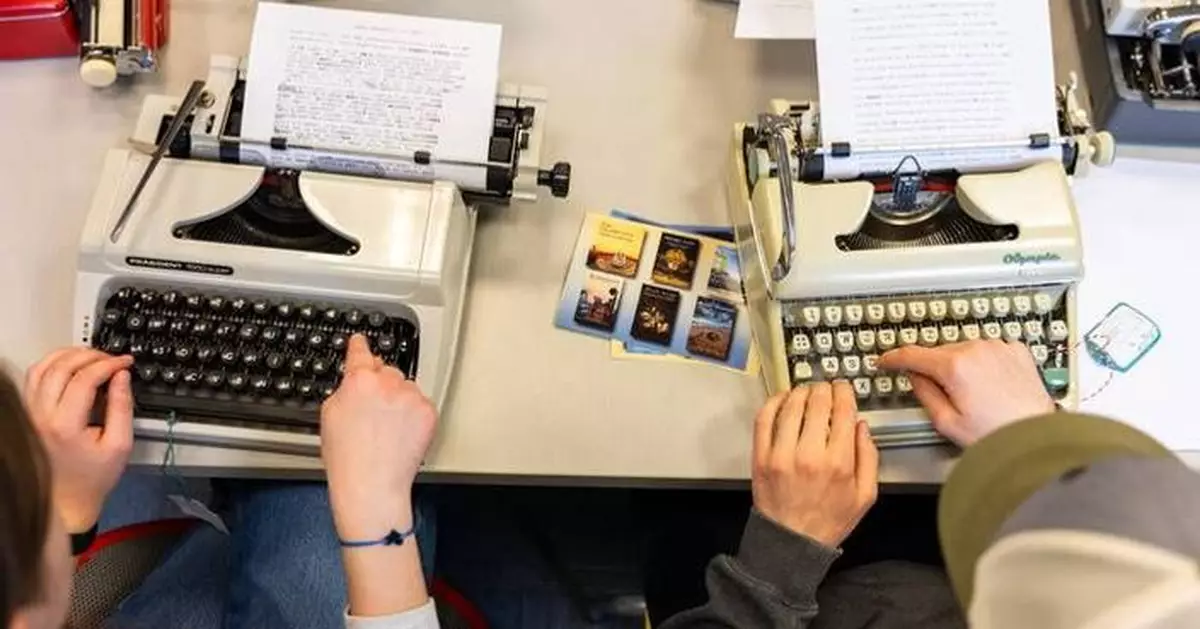
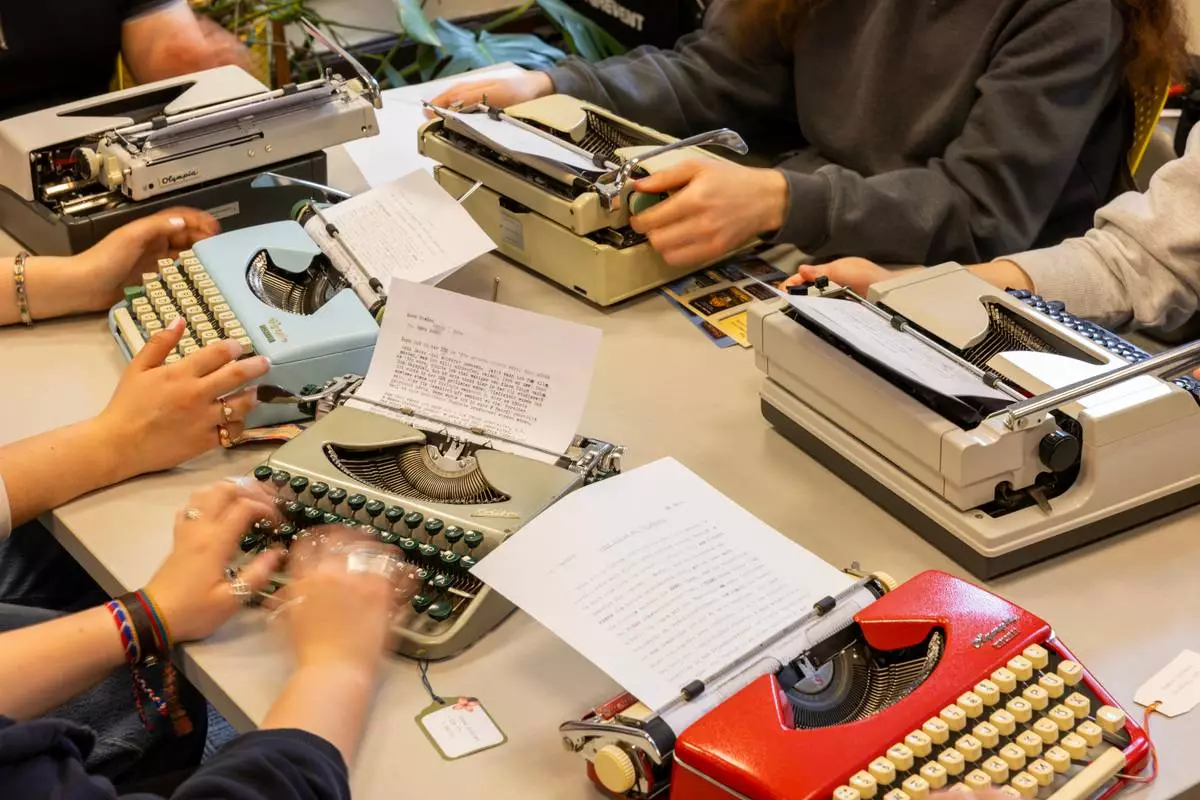
Students use typewriters to complete a writing assignment in German at Cornell University, Friday, March 20, 2026, in Ithaca, N.Y. Their professor, Grit Matthias Phelps, brings out the typewriters once each semester for students to disconnect from technology and connect with the assignment in a different way. (AP Photo/Lauren Petracca)
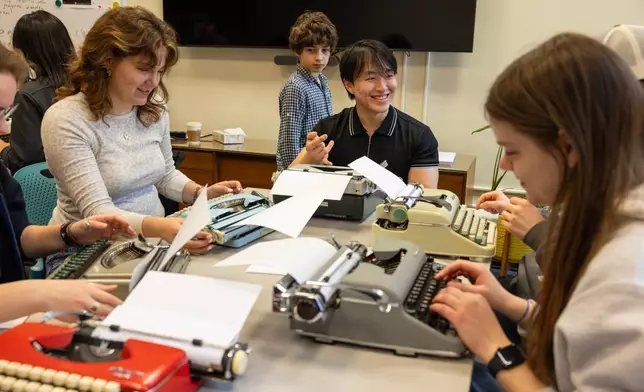
Students use typewriters to complete a writing assignment in German at Cornell University, Friday, March 20, 2026, in Ithaca, N.Y. Their professor, Grit Matthias Phelps, brings out the typewriters once each semester for students to disconnect from technology and connect with the assignment in a different way. (AP Photo/Lauren Petracca)

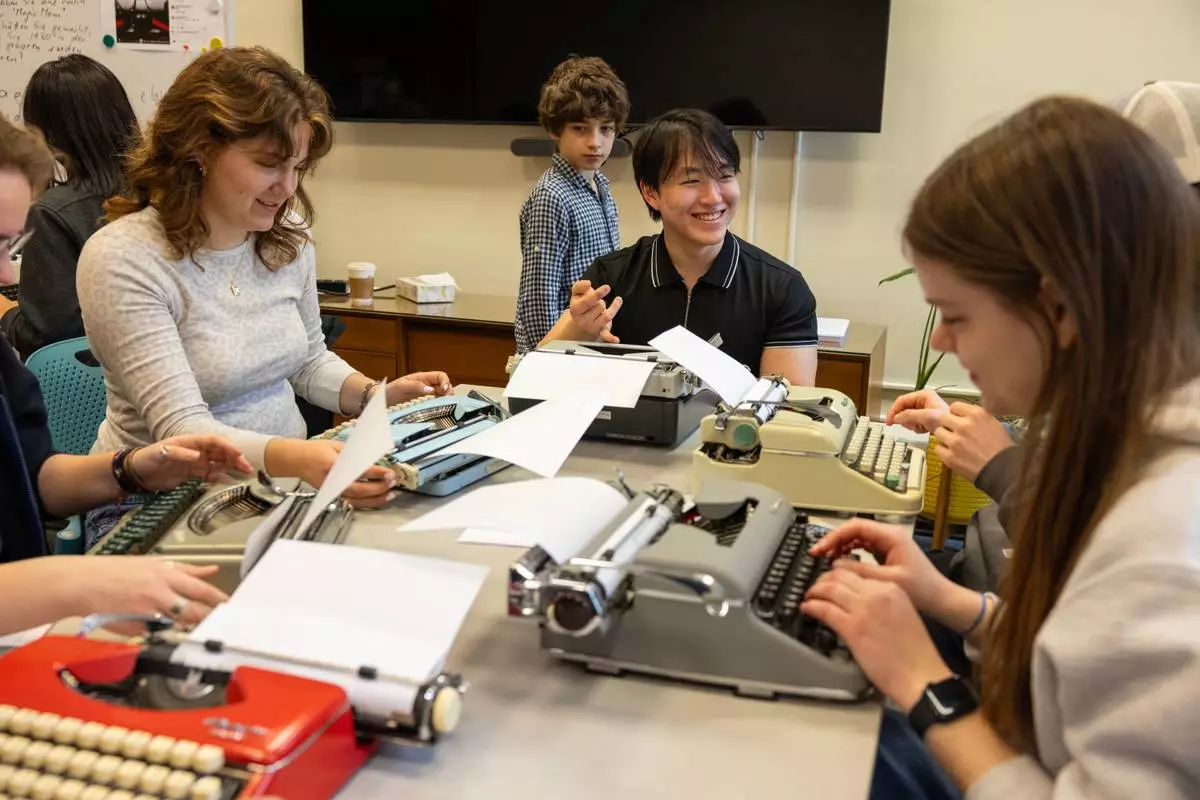
Ratchaphon Lertdamrongwong, a sophomore at Cornell University, laughs with classmates while using a typewriter for a German writing assignment on Friday, March 20, 2026, in Ithaca, N.Y. The professor, Grit Matthias Phelps, brings out the typewriters once a semester for her students to use. (AP Photo/Lauren Petracca)
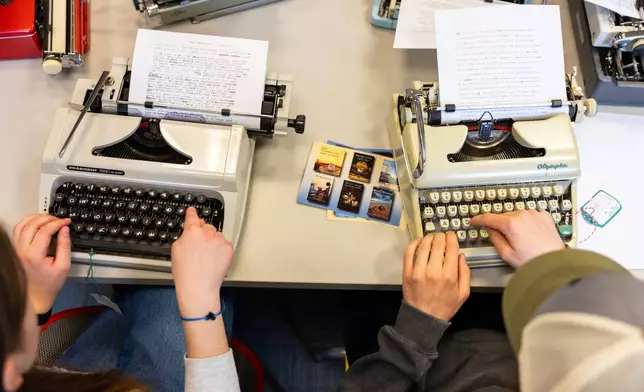
Ratchaphon Lertdamrongwong, a sophomore at Cornell University, laughs with classmates while using a typewriter for a German writing assignment on Friday, March 20, 2026, in Ithaca, N.Y. The professor, Grit Matthias Phelps, brings out the typewriters once a semester for her students to use. (AP Photo/Lauren Petracca)

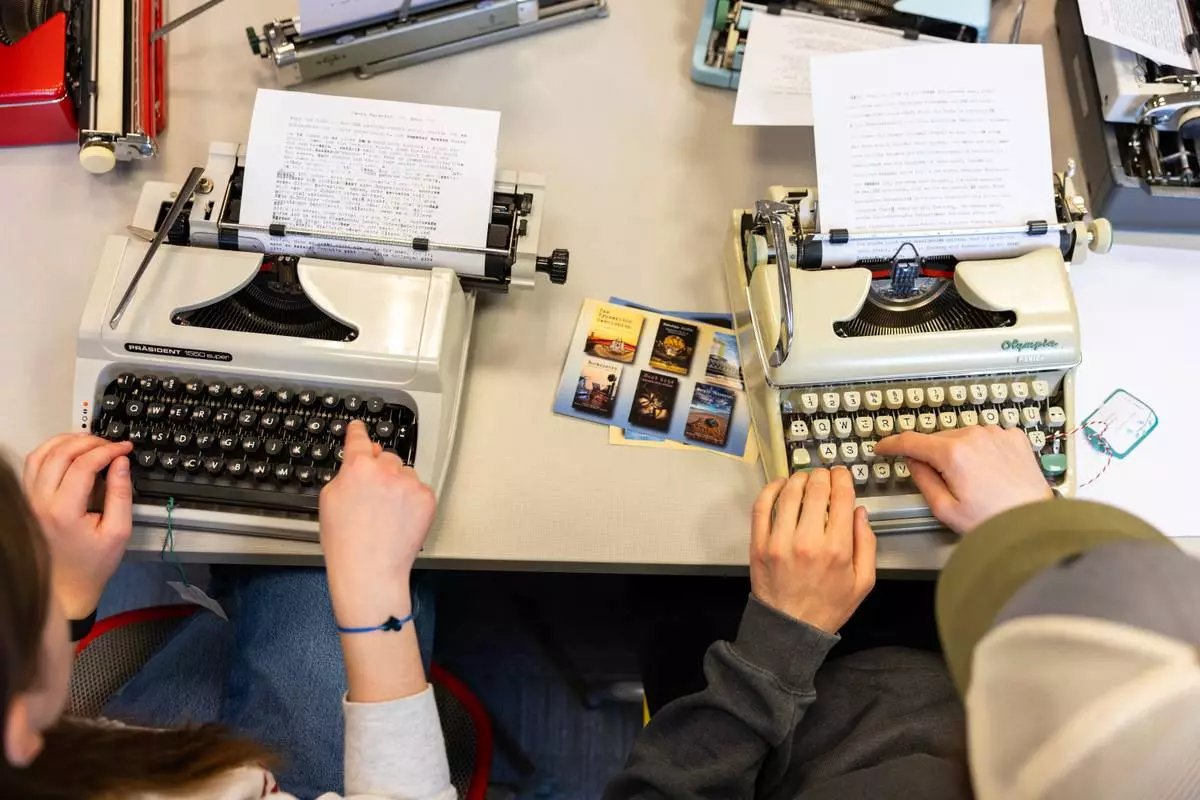
Student use typewriters to complete a writing assignment in German at Cornell University, Friday, March 20, 2026, in Ithaca, N.Y. The professor, Grit Matthias Phelps, brings out the typewriters once each semester for students to disconnect from technology and connect with the assignment in a different way. (AP Photo/Lauren Petracca)

Student use typewriters to complete a writing assignment in German at Cornell University, Friday, March 20, 2026, in Ithaca, N.Y. The professor, Grit Matthias Phelps, brings out the typewriters once each semester for students to disconnect from technology and connect with the assignment in a different way. (AP Photo/Lauren Petracca)

The exercise started in spring 2023 as Phelps grew frustrated with the reality that students were using generative AI and online translation platforms to churn out grammatically perfect assignments.

“What’s the point of me reading it if it’s already correct anyway, and you didn’t write it yourself? Could you produce it without your computer?” said Phelps.

She wanted students to understand what writing, thinking and classrooms were like before everything turned digital. So, she found a few dozen old manual typewriters, in thrift shops and online marketplaces, and created what her syllabus simply calls an “analog" assignment.

It might be premature to say that typewriters are making a comeback beyond Cornell's campus. But the revival is part of a national trend toward old-school testing methods like in-class pen-and-paper exams and oral tests to prevent AI use for assignments on laptops.

Students arrived for class on a recent analog day to find typewriters at the desks, some with German and some QWERTY keyboards.

“I was so confused. I had no idea what was happening. I’d seen typewriters in movies, but they don’t tell you how a typewriter works,” said Catherine Mong, 19, a freshman in Phelps' Intro to German class. “I didn’t know there was a whole science to using a typewriter.”

Like a rotary phone, the manual typewriter appears simple but is not intuitive to the smartphone generation. Phelps demonstrated how to feed the paper manually, striking the keys with force but not so hard the letters would smudge. She explained that the dinging bell signifies the end of a line and the need to manually return the carriage to start the next line. ("Oh," said one student, “that’s why it’s called ‘return.’”)

“Everything slows down. It’s like back in the old days when you really did one thing at a time. And there was joy in doing it,” said Phelps, who brings in her two children, aged 7 and 9, to serve as “tech support” and ensure no one has their phones out.

The assignment carries lessons beyond simply how to use a typewriter, which is the whole point.

“It dawned on me that the difference with typing on a typewriter is not just how you interact with the typewriter, but how you interact with the world around you,” said computer science major Ratchaphon Lertdamrongwong, a sophomore, whose class had to write a critique of a German movie they’d watched.

In the absence of screens, there are no notifications to distract you as you write, and without every answer readily available at his fingertips, he asked his classmates for help, which Phelps heartily encouraged.

“While writing the essay, I had to talk a lot more, socialize a lot more, which I guess was normal back then,” Lertdamrongwong said, referring to the typewriter era. “But it’s drastically different from how we interact within the classroom in modern times. People are always on a laptop, always on the phone.”

Without a delete key and the ability to correct every mistake, he paused to think more intentionally about his writing.

“This might sound bad, but I was forced to actually think about the problem on my own instead of delegating to AI or Google search," he said.

Most students found their pinkies weren’t strong enough to touch-type, so they typed more slowly, pecking at the keyboard with their index fingers.

Mong, the freshman, faced an added challenge with a recently broken wrist, requiring her to use just one hand. The self-described perfectionist was initially frustrated with how messy her page looked with odd spacing between certain letters and misspellings. (Phelps told students to backspace and type ‘X’s over errors.)

“This thing I handed in had pencil marks all over it and definitely did not look clean or finished. But it’s part of the process of learning that you’re going to make mistakes,” said Mong, who found the assignment of typing a poem “fun and challenging.”

She embraced the odd spacing and played with the visual boundaries of the page to indent and fragment lines in the style of poet E.E. Cummings. It took several sheets of paper and many mistakes, all of which Mong saved.

“I’m probably going to hang them on my wall," Mong said. I’m kind of fascinated by typewriters. I told all my friends, I did a German test on a typewriter!”

The Associated Press’ education coverage receives financial support from multiple private foundations. AP is solely responsible for all content. Find AP’s standards for working with philanthropies, a list of supporters and funded coverage areas at AP.org.
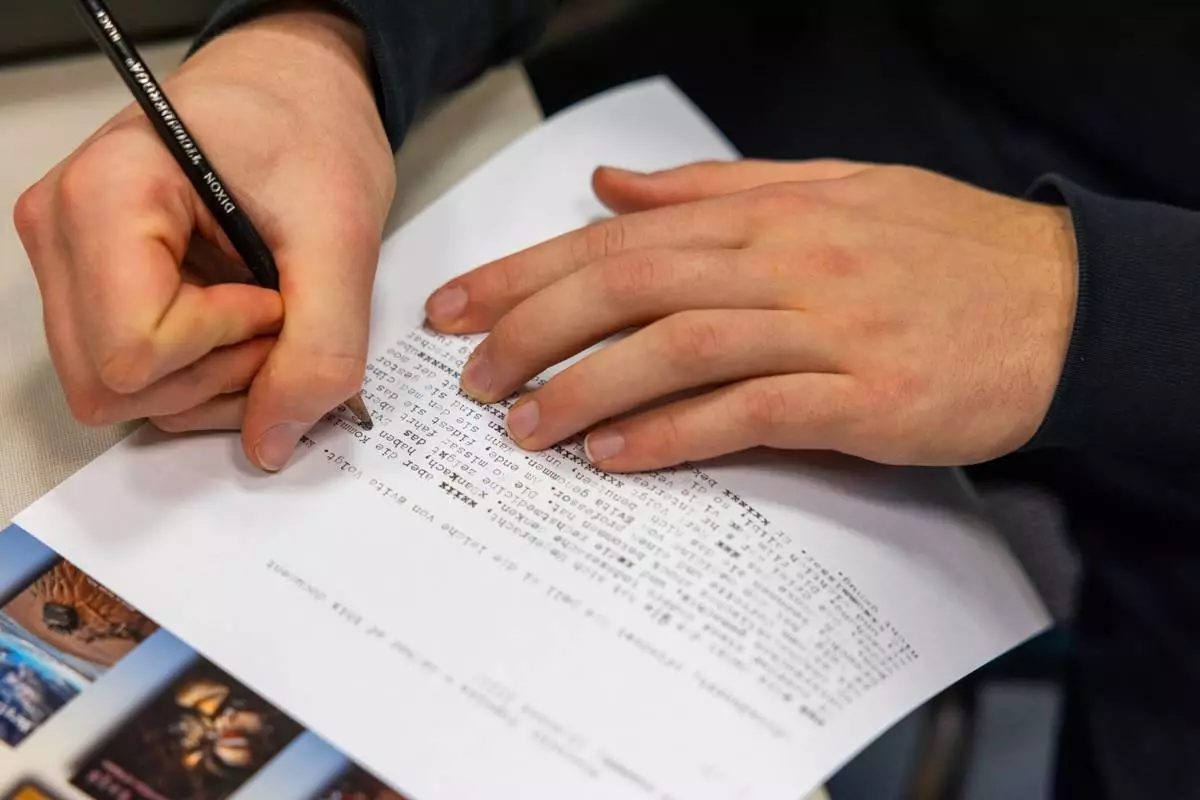
Marcello Popelka makes edits using a pencil after writing an assignment in German on a typewriter at Cornell University, Friday, March 20, 2026, in Ithaca, N.Y. The professor, Grit Matthias Phelps, brings out the typewriters once each semester for students to disconnect from technology and connect with the assignment in a different way. (AP Photo/Lauren Petracca)
Marcello Popelka makes edits using a pencil after writing an assignment in German on a typewriter at Cornell University, Friday, March 20, 2026, in Ithaca, N.Y. The professor, Grit Matthias Phelps, brings out the typewriters once each semester for students to disconnect from technology and connect with the assignment in a different way. (AP Photo/Lauren Petracca)

Grit Matthias Phelps gives students a demonstration on how to use a typewriter before class at Cornell University, Friday, March 20, 2026, in Ithaca, N.Y. (AP Photo/Lauren Petracca)
Grit Matthias Phelps gives students a demonstration on how to use a typewriter before class at Cornell University, Friday, March 20, 2026, in Ithaca, N.Y. (AP Photo/Lauren Petracca)

Students use typewriters to complete a writing assignment in German at Cornell University, Friday, March 20, 2026, in Ithaca, N.Y. Their professor, Grit Matthias Phelps, brings out the typewriters once each semester for students to disconnect from technology and connect with the assignment in a different way. (AP Photo/Lauren Petracca)
Students use typewriters to complete a writing assignment in German at Cornell University, Friday, March 20, 2026, in Ithaca, N.Y. Their professor, Grit Matthias Phelps, brings out the typewriters once each semester for students to disconnect from technology and connect with the assignment in a different way. (AP Photo/Lauren Petracca)

Ratchaphon Lertdamrongwong, a sophomore at Cornell University, laughs with classmates while using a typewriter for a German writing assignment on Friday, March 20, 2026, in Ithaca, N.Y. The professor, Grit Matthias Phelps, brings out the typewriters once a semester for her students to use. (AP Photo/Lauren Petracca)
Ratchaphon Lertdamrongwong, a sophomore at Cornell University, laughs with classmates while using a typewriter for a German writing assignment on Friday, March 20, 2026, in Ithaca, N.Y. The professor, Grit Matthias Phelps, brings out the typewriters once a semester for her students to use. (AP Photo/Lauren Petracca)

Student use typewriters to complete a writing assignment in German at Cornell University, Friday, March 20, 2026, in Ithaca, N.Y. The professor, Grit Matthias Phelps, brings out the typewriters once each semester for students to disconnect from technology and connect with the assignment in a different way. (AP Photo/Lauren Petracca)

Student use typewriters to complete a writing assignment in German at Cornell University, Friday, March 20, 2026, in Ithaca, N.Y. The professor, Grit Matthias Phelps, brings out the typewriters once each semester for students to disconnect from technology and connect with the assignment in a different way. (AP Photo/Lauren Petracca)

ULAANBAATAR, Mongolia (AP) — Mongolia has named its third prime minister in nine months as the ruling party tries to overcome internal power struggles at a time of mounting economic pressures and political infighting at home.

The hope is that Uchral Nyam-Osor can manage the divisions in the Mongolian People's Party that toppled his two predecessors and brought him to power. He called for unity after parliament confirmed his appointment Monday night.

“As others unite to confront crises, we cannot afford political infighting that weakens our economy,” he told lawmakers.

Uchral was elected as leader of the Mongolian People’s Party and speaker of the parliament last November. Before entering politics, he was a popular hip-hop artist known as “Timon.”

The 39-year-old lawmaker has positioned himself as a reform-minded leader focused on modernizing the country’s regulatory environment. He wants to end a Soviet-era system that gives officials the power to issue permits, creating fertile ground for corruption. Mongolia transitioned to democracy in 1990 after decades of Communist rule.

Ucrhal is a former minister of digital development and communications who promoted transparency reforms and digital governance initiatives. He has played a role in efforts to attract foreign investment to the resource-rich country, including a uranium-related agreement with France’s Orano Group in early 2025.

The Mongolian parliament has been paralyzed following a boycott earlier this month by the opposition Democratic Party and infighting in the ruling party. Together, that meant not enough members were showing up for the legislature to hold votes.

The previous prime minister, Zandanshatar Gombojav, who submitted his resignation Friday to resolve the crisis, had come under pressure because one of his senior ministers faced corruption allegations.

Uchral was seen as a compromise between factions in the Mongolian People's Party loyal to the president and the supporters of another former prime minister, Oyun-Erdene Luvsannamsrai.

A total of 107 of the parliament’s 126 lawmakers voted Monday night, with 88 supporting Uchral — or 82% — clearing the way for him to take office.

Zandanshatar, who is close to the president, had replaced Oyun-Erdene, last June. All three prime ministers are from the Mongolian People’s Party.

Uchral warned Monday that Mongolia is entering a period of three overlapping crises: rising global fuel prices, volatile commodity markets and deepening domestic political divisions.

He highlighted the country’s heavy reliance on coal and copper exports, warning that price swings could erode government revenue and strain public finances. The government is also demanding a greater share of the financial benefits in talks with mining giant Rio Tinto over the Oyu Tolgoi copper and gold mine.

Mongolia, a landlocked country that depends entirely on imported fuel, is vulnerable to supply disruptions and price hikes. The government has asked Russia to keep fuel prices stable, and Moscow has indicated it would respond favorably in the near term, Zandanshatar said at a ceremony to transfer power to Uchral.

Uchral's appointment comes amid renewed concern among foreign investors over Mongolia’s political instability, frequent policy changes and reputation for corruption and regulatory unpredictability.

FILE - Mongolian Prime Minister Gombojavyn Zandanshatar speaks to Russian President Vladimir Putin during their meeting on the sidelines of the Eastern Economic Forum in Vladivostok, Russia, Sept. 4, 2025. (Vladimir Smirnov, Sputnik, Kremlin Pool Photo via AP, File)

FILE - Mongolian Prime Minister Gombojavyn Zandanshatar speaks to Russian President Vladimir Putin during their meeting on the sidelines of the Eastern Economic Forum in Vladivostok, Russia, Sept. 4, 2025. (Vladimir Smirnov, Sputnik, Kremlin Pool Photo via AP, File)

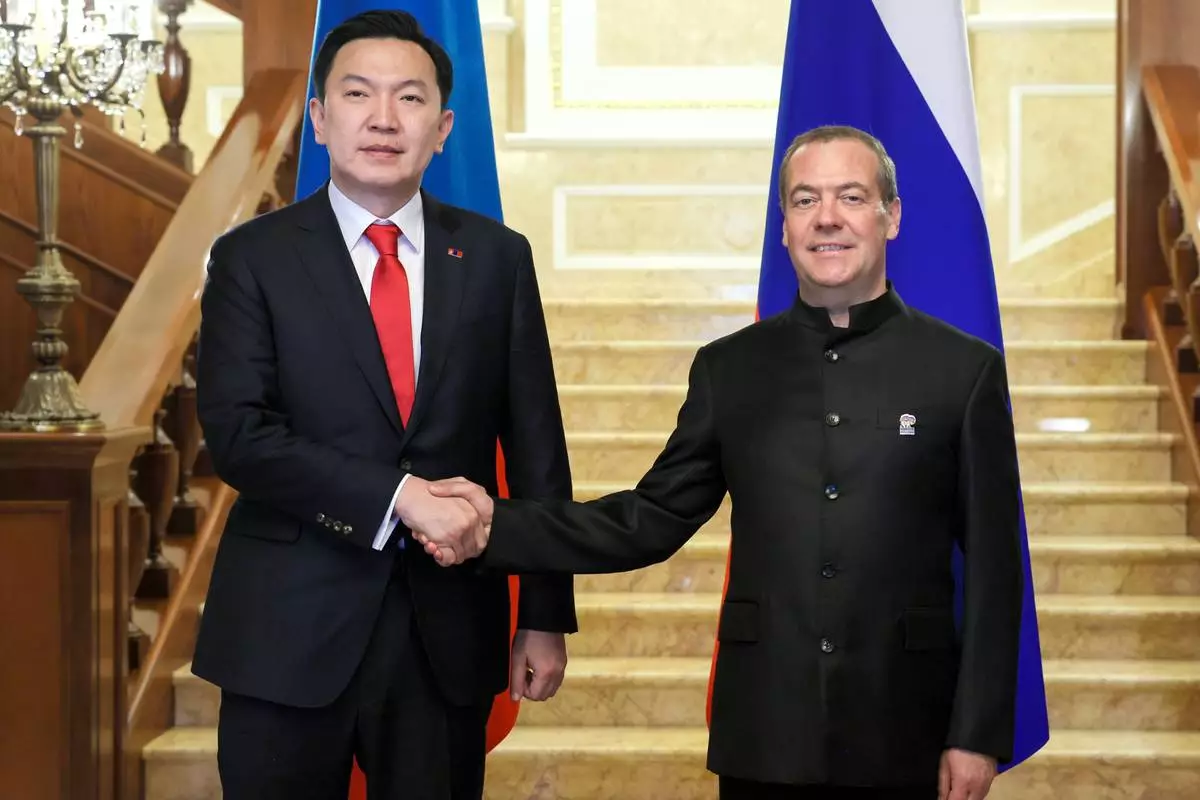
FILE - Russian Security Council Deputy Chairman and the head of the United Russia party Dmitry Medvedev, right, and Chairman of Mongolian People's Party and Chairman of the State Great Khural Nyam-Osoryn Uchral pose for a photo during their meeting at the Gorki state residence outside Moscow, on Feb. 10, 2026. (Ekaterina Shtukina, Sputnik Pool Photo via AP, File)

FILE - Russian Security Council Deputy Chairman and the head of the United Russia party Dmitry Medvedev, right, and Chairman of Mongolian People's Party and Chairman of the State Great Khural Nyam-Osoryn Uchral pose for a photo during their meeting at the Gorki state residence outside Moscow, on Feb. 10, 2026. (Ekaterina Shtukina, Sputnik Pool Photo via AP, File)

Recommended Articles