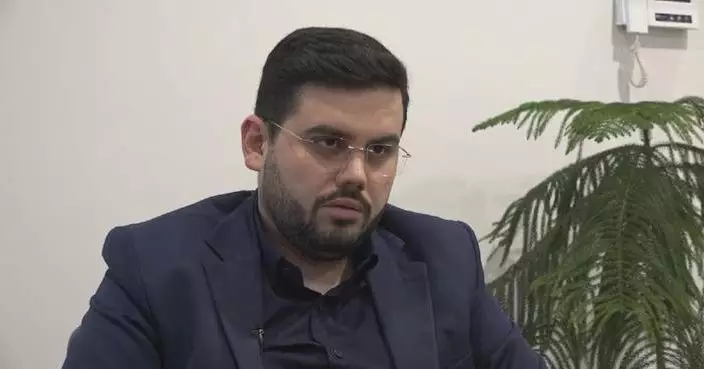
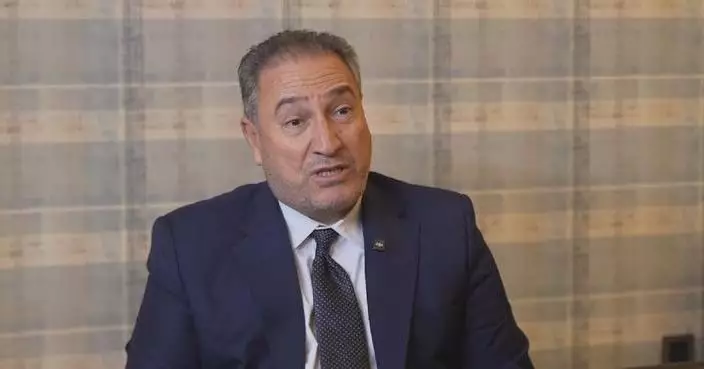
Mojtaba Ferdowsi-Pour, the head of the Islamic Republic of Iran's Interests Office in Egypt, reaffirmed Tehran's firm stance on any potential diplomatic settlement, stating that Iran will not accept any agreement that fails to meet its fundamental conditions.
In an exclusive interview with CGTN Arabic, Ferdowsi-Pour emphasized that the majority of the five conditions Iran has laid out for ending the conflict constitute red lines that cannot be compromised.
He added that Tehran will only accept a fair and balanced diplomatic solution.
"We will only accept a balanced and fair diplomatic solution, based on a win-win principle between Iran and the United States. If these conditions are accepted, there must be a genuine agreement that achieves balance and parity between the two sides," said Ferdowsi.
The Iranian diplomat confirmed that there are no direct or indirect negotiations with the United States, noting that there is only an exchange of messages through intermediaries.
"There are no direct or indirect contacts, contrary to what is being circulated by the White House or U.S. President Donald Trump. These messages are being conveyed to the Iranian side and include approximately 15 conditions put forward by the U.S. and Israel. As you mentioned, Iran has its own conditions and cannot accept the other side's demands unconditionally," said Ferdowsi-Pour.
Iran has put forth five conditions for ending the war: a complete end to aggression and assassinations by the United States and Israel; guaranteed mechanisms to prevent future attacks; guaranteed and clearly defined payment of war damages; stopping the war across all fronts and for all resistance groups involved in the West Asia; and recognizing Iran's sovereign right over the Strait of Hormuz.
Ferdowsi-Pour added that Israel wants to create strife between Iran and the Gulf states by targeting some civilian facilities in these countries, stressing his country's readiness to form investigation committees after the war.
"Any location where there are military elements belonging to the United States or the Israeli entity will be within the target range of the Islamic Republic of Iran. But I would like to say in this regard that it is necessary for us to be patient and for this war to end completely, and joint committees will be formed between Iran and these countries to study this issue, and to ascertain the truth and reality of this crisis that we have seen," he said
Regional and international powers are intensifying their efforts to convey messages between the United States and Iran, at a time both sides are raising the bar on their demands.
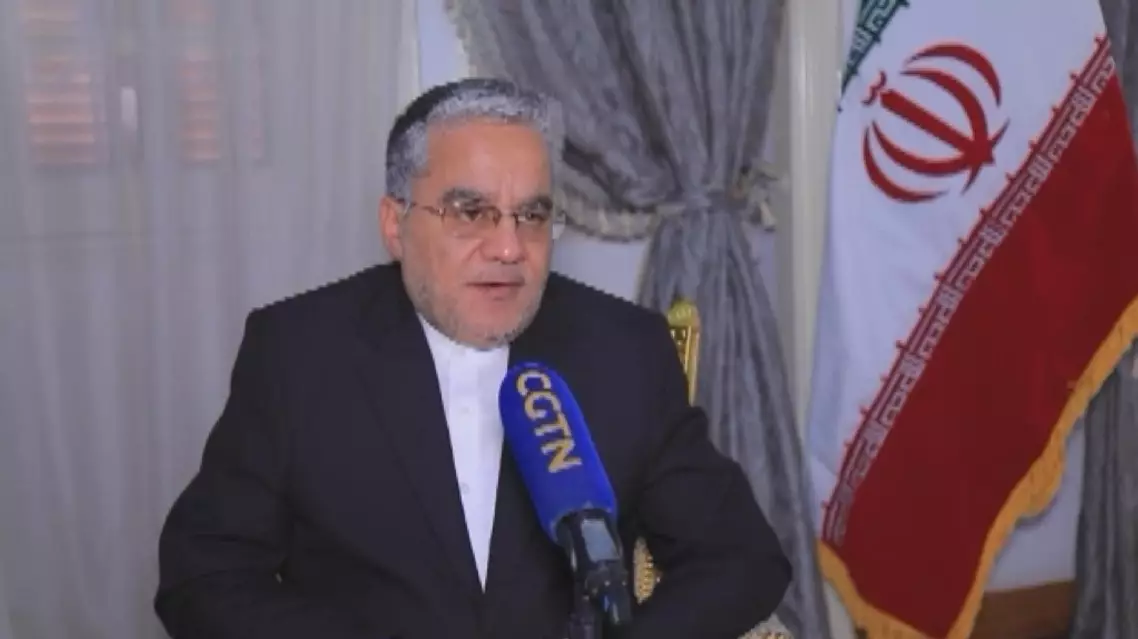
Iran will only accept a balanced diplomatic solution: Iranian envoy
Chinese Foreign Minister Wang Yi said on Tuesday that mediation efforts of the Pakistani side regarding the Middle East tensions are in the common interests of all parties.
Wang, also a member of the Political Bureau of the Communist Party of China Central Committee, made the remarks in his talks with Pakistani Deputy Prime Minister and Foreign Minister Mohammad Ishaq Dar in Beijing.
During their talks, the two sides exchanged views on current international issues and regional conflicts.
Wang welcomed the visit of the Pakistani side to Beijing for discussion on easing tensions in the Middle East, just after its holding of a quadrilateral foreign ministers' meeting in Islamabad.
He said China supports and looks forward to Pakistan playing a unique and important role in easing the situation and resuming peace talks. This process is no easy task, and Pakistan's mediation efforts are in line with the common interests of all parties, Wang added.
He noted China is willing to make joint efforts with Pakistan to end the hostilities as soon as possible, create opportunities for peace and open the window for peace talks.
On bilateral ties, Wang said this year marks the 75th anniversary of the establishment of diplomatic relations between China and Pakistan, calling on both sides to implement the important consensus reached by the leaders of the two countries and constantly advance the building of a China-Pakistan community with a shared future.
For his part, Dar said the Pakistan-China friendship is precious and deeply rooted in people's hearts, adding that Pakistan is willing to work with China to promote the continuous development of the all-weather strategic cooperative partnership between the two countries.
Dar thanked China for supporting Pakistan's mediation of the situation in Iran, adding that the current conflict has disrupted international energy supplies and caused heavy damage to developing countries.
Noting that solutions can only be found through negotiation, Dar said Pakistan is willing to strengthen communication and coordination with China to push all parties to start peace talks as soon as possible and restore regional peace.
The two sides also put forward a five-point initiative for restoring peace and stability in the Gulf and the Middle East region:
I. Immediate cessation of hostilities: China and Pakistan call for immediate cessation of hostilities and utmost efforts to prevent the conflict from spreading. Humanitarian assistance must be allowed to all war-affected areas.
II. Start of peace talks as soon as possible. Sovereignty, territorial integrity, national independence and security of Iran and the Gulf states should be safeguarded. Dialogue and diplomacy is the only viable option to resolve conflicts. China and Pakistan support the relevant parties in initiating talks, with all parties committing to peaceful resolution of disputes, and refraining from the use or the threat of use of force during peace talks.
III. Security of nonmilitary targets. The principle of protecting civilians in military conflict should be observed. China and Pakistan call on parties to the conflict to immediately stop attacks on civilians and nonmilitary targets, and fully adhere to International Humanitarian Law, and stop attacking important infrastructure, including energy, desalination and power facilities, and peaceful nuclear infrastructure, such as nuclear power plants.
IV. Security of shipping lanes. The Strait of Hormuz, together with its adjacent waters, is an important global shipping route for goods and energy. China and Pakistan call on the parties to protect the security of ships and crew members stranded in the Strait of Hormuz, allow the early and safe passage of civilian and commercial ships, and restore normal passage through the Strait as soon as possible.
V. Primacy of the United Nations Charter. China and Pakistan call for efforts to practice true multilateralism, to jointly strengthen the primacy of the United Nations, and to support the conclusion of an agreement for establishing a comprehensive peace framework and realizing lasting peace based on the purposes and principles of the UN Charter and international law.
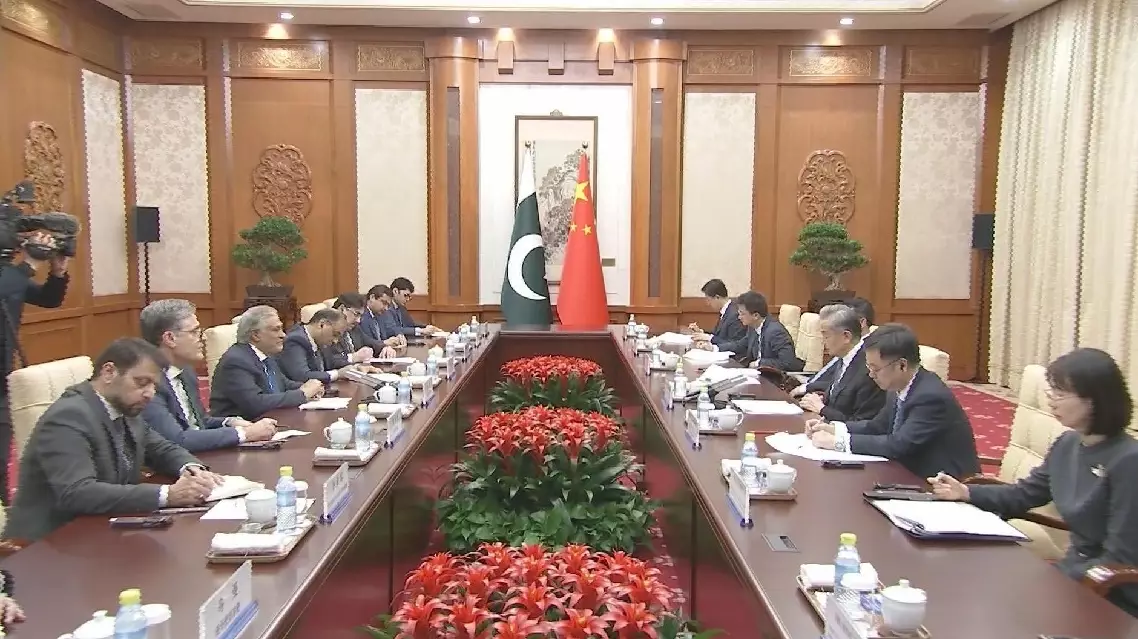
Pakistan's mediation efforts in common interests of all parties: Chinese FM