The French government has asked global crude oil refiners to increase output in an effort to curb rising fuel prices, driven by conflict in the Middle East and tensions around the Strait of Hormuz, a key shipping lane through which nearly 20 percent of the world's oil passes.
Among the refiners responding to the request, North Atlantic Refining, based in Canada, said it would raise production by 10 percent. But industry officials said that while the additional output may help ease supply pressures, it is unlikely to bring down prices.
At gas stations operated by TotalEnergies and Esso, fuel prices have risen by around 20 to 30 euro cents per liter, a jump that is being clearly felt by drivers across France.
"We've seen prices going up by nearly 10 to 15 percent. I think it's the same for everyone. For work-related reasons, we still have to drive. But in our private lives, we'll be more careful. Maybe we could walk somewhere. We'll walk, or use public transportation methods," said Paul Dehouck, a car dealer.
"Prices have definitely increased. For a full tank, I'm paying 20 to 30 euros more than I was six or eight months ago," said Justin Deleforge, a local resident.
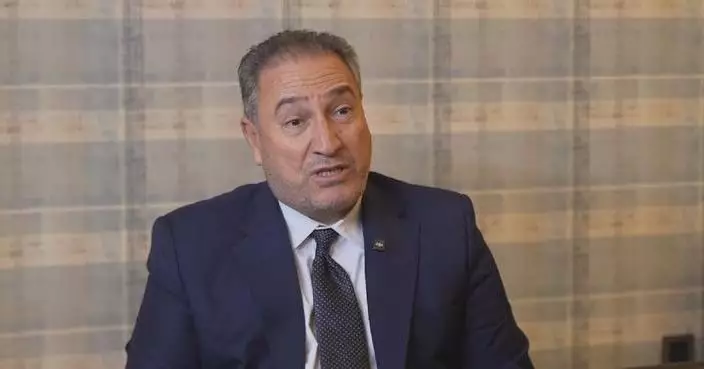
France's six refineries, including those operated by TotalEnergies and North Atlantic, are currently running at full capacity. Blandine Ruty, secretary-general of the French Association of Petroleum Industry, said this is still insufficient to bring down prices at gas stations.
"North Atlantic said it could increase production by around 10 percent. Others can also raise output, but not to that extent. At the national level, we believe production could increase by 2 to 3 percent, which isn't 10 percent. It's 2 to 3 percent, but even just 2 to 3 percent in diesel amounts to 45,000 tons of products. So, on the scale of France, putting that on the market is still something, as it can ease the pressure. It won't bring prices down, because it's not enough to ease a situation of very high prices that depend on the international market. However, it can certainly ease the pressure in terms of production and the logistical supply of product," Ruty said.
In her view, contrary to some people's fears, France is not facing a fuel shortage.
"At the European level, and particularly in France, we don't currently have a shortage problem. We only import 13 percent of our oil, even 10 percent according to the latest figures from 2025, and only 10 percent of our crude oil from the Middle East. So, that means we have diversified sources of supply, and therefore we don't lack products today. As for France, we haven't yet released any strategic reserves because we're not in a shortage situation. But knowing that we can release them at a given moment, if needed, can still provide a buffer against these current supply fluctuations," she said.
On March 11, the 32 member countries of the International Energy Agency (IEA) unanimously decided to release 400 million barrels of oil from their emergency reserves to the market in response to the disruptions caused by the conflict in the Middle East.
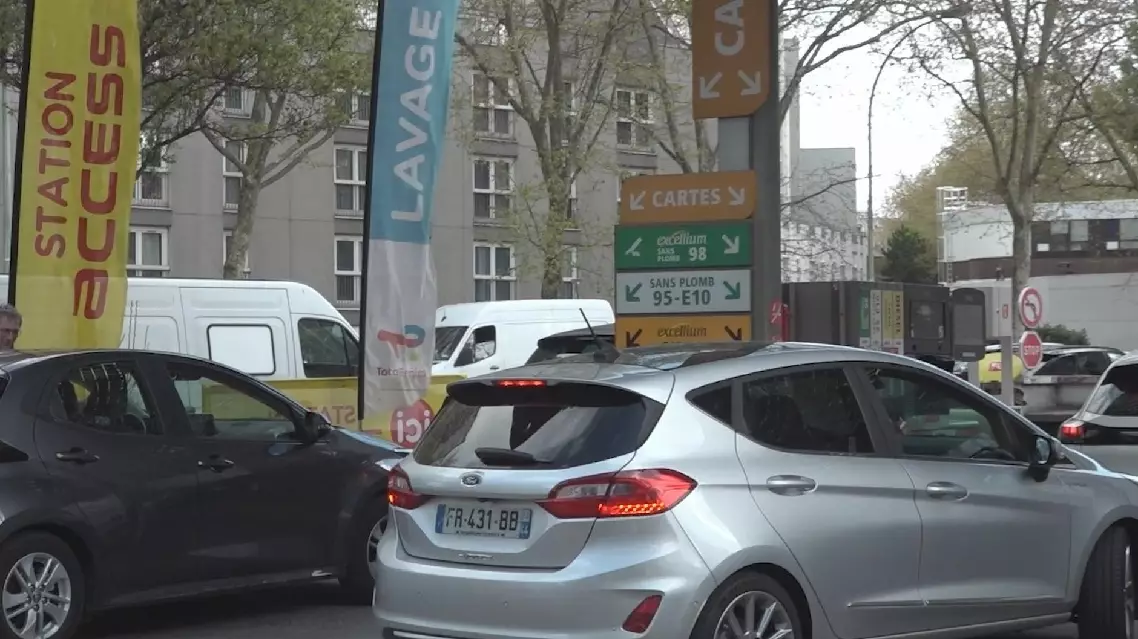
Middle East tensions push up fuel prices in France
Chinese Foreign Minister Wang Yi said on Tuesday that mediation efforts of the Pakistani side regarding the Middle East tensions are in the common interests of all parties.
Wang, also a member of the Political Bureau of the Communist Party of China Central Committee, made the remarks in his talks with Pakistani Deputy Prime Minister and Foreign Minister Mohammad Ishaq Dar in Beijing.
During their talks, the two sides exchanged views on current international issues and regional conflicts.
Wang welcomed the visit of the Pakistani side to Beijing for discussion on easing tensions in the Middle East, just after its holding of a quadrilateral foreign ministers' meeting in Islamabad.
He said China supports and looks forward to Pakistan playing a unique and important role in easing the situation and resuming peace talks. This process is no easy task, and Pakistan's mediation efforts are in line with the common interests of all parties, Wang added.
He noted China is willing to make joint efforts with Pakistan to end the hostilities as soon as possible, create opportunities for peace and open the window for peace talks.
On bilateral ties, Wang said this year marks the 75th anniversary of the establishment of diplomatic relations between China and Pakistan, calling on both sides to implement the important consensus reached by the leaders of the two countries and constantly advance the building of a China-Pakistan community with a shared future.
For his part, Dar said the Pakistan-China friendship is precious and deeply rooted in people's hearts, adding that Pakistan is willing to work with China to promote the continuous development of the all-weather strategic cooperative partnership between the two countries.
Dar thanked China for supporting Pakistan's mediation of the situation in Iran, adding that the current conflict has disrupted international energy supplies and caused heavy damage to developing countries.
Noting that solutions can only be found through negotiation, Dar said Pakistan is willing to strengthen communication and coordination with China to push all parties to start peace talks as soon as possible and restore regional peace.
The two sides also put forward a five-point initiative for restoring peace and stability in the Gulf and the Middle East region:
I. Immediate cessation of hostilities: China and Pakistan call for immediate cessation of hostilities and utmost efforts to prevent the conflict from spreading. Humanitarian assistance must be allowed to all war-affected areas.
II. Start of peace talks as soon as possible. Sovereignty, territorial integrity, national independence and security of Iran and the Gulf states should be safeguarded. Dialogue and diplomacy is the only viable option to resolve conflicts. China and Pakistan support the relevant parties in initiating talks, with all parties committing to peaceful resolution of disputes, and refraining from the use or the threat of use of force during peace talks.
III. Security of nonmilitary targets. The principle of protecting civilians in military conflict should be observed. China and Pakistan call on parties to the conflict to immediately stop attacks on civilians and nonmilitary targets, and fully adhere to International Humanitarian Law, and stop attacking important infrastructure, including energy, desalination and power facilities, and peaceful nuclear infrastructure, such as nuclear power plants.
IV. Security of shipping lanes. The Strait of Hormuz, together with its adjacent waters, is an important global shipping route for goods and energy. China and Pakistan call on the parties to protect the security of ships and crew members stranded in the Strait of Hormuz, allow the early and safe passage of civilian and commercial ships, and restore normal passage through the Strait as soon as possible.
V. Primacy of the United Nations Charter. China and Pakistan call for efforts to practice true multilateralism, to jointly strengthen the primacy of the United Nations, and to support the conclusion of an agreement for establishing a comprehensive peace framework and realizing lasting peace based on the purposes and principles of the UN Charter and international law.
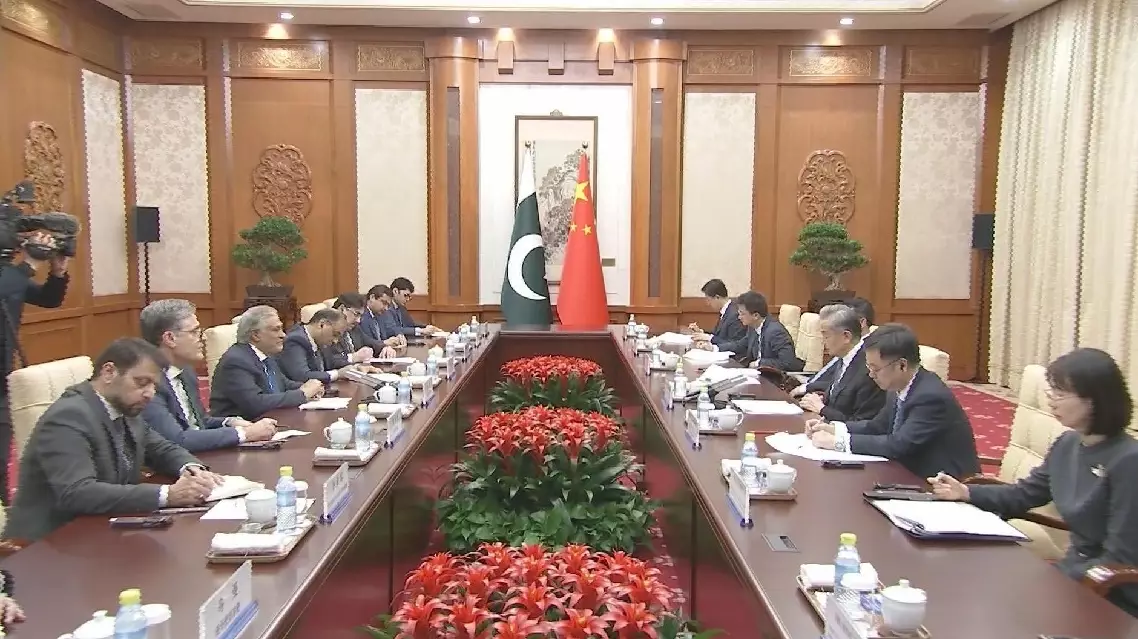
Pakistan's mediation efforts in common interests of all parties: Chinese FM