Skip to Content Facebook Feature Image

US, Chinese youth engage in cultural, tech exchange in Beijing

China

China

China

US, Chinese youth engage in cultural, tech exchange in Beijing

2026-04-04 16:35 Last Updated At:04-05 00:47

As part of the initiative to invite 50,000 young Americans to China for exchange and learning over five years, a group of U.S. students have recently visited Beijing Bayi School, where they took part in hands-on cultural and technological activities alongside their Chinese peers.

At Beijing Bayi School, American and Chinese students paired up one-on-one to take part in hands-on cultural activities, including Peking opera, dragon dancing, martial arts, shadow puppetry, and pottery. During the dragon dance class, students from both countries lifted the dragon poles together, moving in sync to the rhythm and building teamwork step by step.

"I think holding the head is like a privilege, and the culture behind it and the dance like when you get some music on I think it sounds really really cool," said Noah Ward, a student at Orem High School in the Alpine Unified School District, Utah, USA.

"I've been learning Chinese since first grade, so I know a lot about Chinese culture. Coming here, I've seen so many beautiful places - it's really cool. I wish I could see every single thing and go everywhere," said Bao Xinyi, a student at Lone Peak High School in the Alpine Unified School District, Utah, USA.

Beyond cultural exchanges, the event also highlighted technological exploration. American students learned how solar sensors work and built their own sun-tracking devices, gaining a close-up look at China's advances in science and technology.

"So we were making like solar panels and stuff like that and like seeing how it moves with like the strongness of light, and like the lightness. I think it's really cool about all the technology improvements and stuff like that. And it was like really cool to see how this is happening in like high schools here in China," said Sheila Steadman, a student at Lone Peak High School in the Alpine Unified School District, Utah, USA.

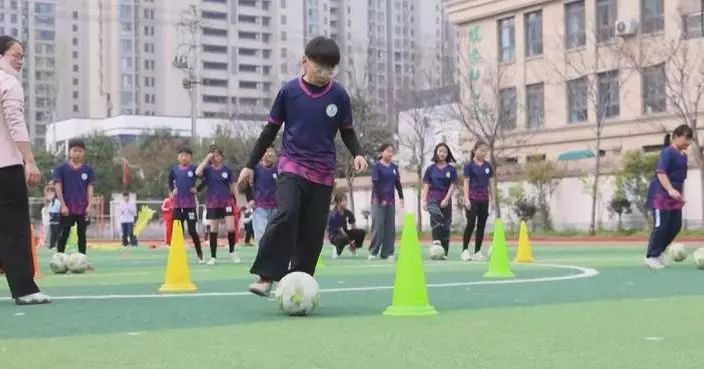
On the soccer field, a friendly match brought the students together. Mixed teams of American and Chinese youth played side by side, building mutual understanding through cooperation, and planting the seeds of friendship.

In 2023, Chinese President Xi Jinping announced during his visit to San Francisco that China would invite 50,000 young Americans to China for exchange and study over five years to increase exchanges between the two peoples, especially between the youths.

US, Chinese youth engage in cultural, tech exchange in Beijing
US, Chinese youth engage in cultural, tech exchange in Beijing
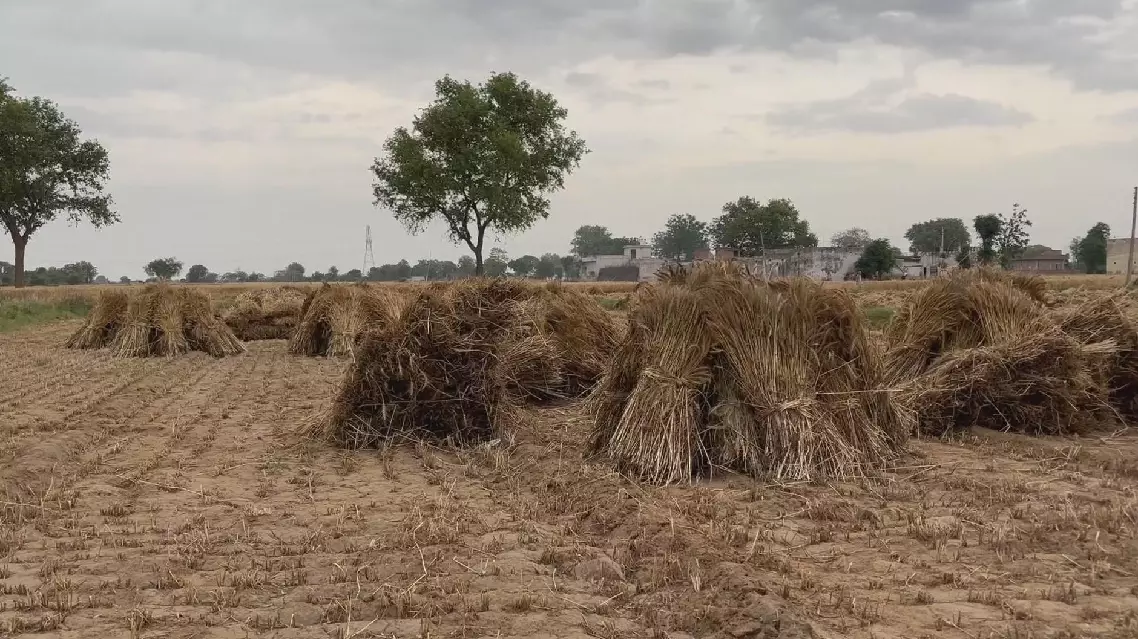
Farmers in India, a major agricultural producer and fertilizer importer, are raising concerns over fertilizer availability ahead of the planting season, as the escalating Middle East conflict and disruptions to shipping through the Strait of Hormuz put global supplies at risk.

The Middle East serves as both a vital energy hub and a major global fertilizer supplier, yet the ongoing U.S.-Israeli war with Iran has heightened risks of disruption to international supplies.

Chand Singh Yadav, a farmer in Haryana, a northern Indian state, said poor crop yields would be disastrous for the country and called on the government to ensure adequate supplies of fertilizers, agrochemicals and seeds to prevent a food crisis. "Without fertilizers, our crops will not grow well, and this would be disastrous for the entire country. If farmers cannot grow crops, people will not be able to buy food in the market. We urge the government to improve the supply system for fertilizers, agrochemicals and seeds to prevent the country and society as a whole from sliding into a food crisis," he said.

The Indian government is stepping up subsidies for farmers and optimizing fertilizer distribution and allocation to stabilize the supply. Prices have remained broadly stable, but demand is expected to surge ahead of the planting season, potentially exacerbating supply pressures.

"The current situation is worrying for us farmers. Spring sowing has not yet started, and the rainy season has not arrived. Fertilizer prices are temporarily stable, but in two months, demand for agricultural fertilizers will become pressing. Without fertilizers, it will be difficult to properly cultivate various types of crops. Urea and diammonium phosphate are especially critical. Crops can only grow normally when these fertilizers are applied. As these fertilizers are largely imported, if the conflict persists, supplies cannot be guaranteed," said Santosh Mishra, a farmer in India's eastern state of Odisha.

Escalating Middle East conflict strains India’s fertilizer supply

Escalating Middle East conflict strains India’s fertilizer supply

Escalating Middle East conflict strains India’s fertilizer supply

Escalating Middle East conflict strains India’s fertilizer supply

Recommended Articles