Skip to Content Facebook Feature Image

Digital-intelligent transformation reshapes China's manufacturing landscape

China

China

China

Digital-intelligent transformation reshapes China's manufacturing landscape

2026-04-04 16:33 Last Updated At:04-05 00:57

The digital-intelligent transformation, a key priority outlined in China's 15th Five-Year Plan (2026–2030), is reshaping the country's manufacturing landscape by significantly boosting production efficiency.

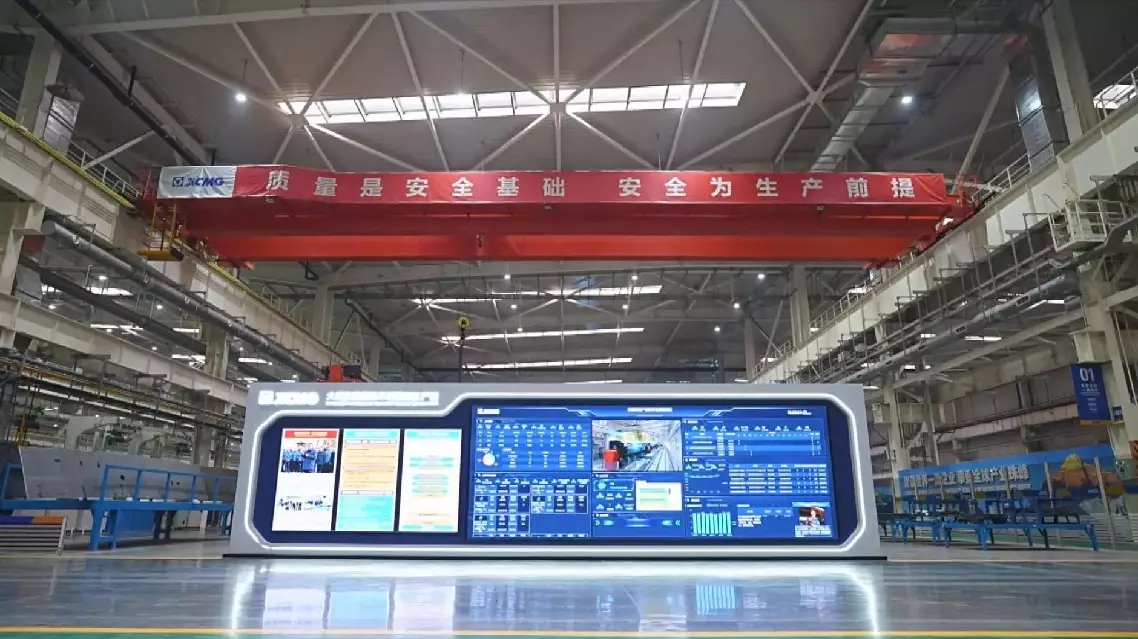
At Xuzhou Construction Machinery Group (XCMG), a leading heavy machinery manufacturer in east China's Jiangsu Province, AI technology has been applied to 25 out of 38 scenarios across five major operational stages, including plant construction, research and development, design and production, involving 35 intelligent models.

At the company's smart manufacturing research and development center, researchers can use digital twin technology to remotely monitor production progress in real time.

From digitalization to digital-intelligent transformation, the overall production efficiency of XCMG has increased by about 30 percent.

"Once the program is sent to the on-site robot, it can start production work using my program," said Zhao Meng, a process engineer at the Intelligent Manufacturing Institute of XCMG's Hoisting Machinery Division.

XCMG is now also developing a new intelligent welding model for crane production.

The model integrates cutting-edge digital technologies such as digital twins, 3D vision, and AI-driven reverse modeling. Expected to become fully operational in 2027, it could fundamentally reshape current production methods.

China is currently fostering 15 pilot smart factories like XCMG, covering sectors such as steel, refining, automobiles, and electronics. These factories have driven collective upgrades across more than 1,300 upstream and downstream manufacturing facilities.

During the 15th Five-Year Plan period, China plans to build dozens more such leading factories.

"During the 14th Five-Year Plan period (2021-2025), China made phased breakthroughs in smart factory construction. The focus of the 15th Five-Year Plan will be on expanding coverage, improving quality, and consolidating advantages, and laying a solid foundation for the broader application of intelligent manufacturing across various industrial sectors. The 15th Five-Year Plan period will be a critical phase for accelerating the digital-intelligent transformation of the manufacturing industry," said Ao Li, vice president of the China Academy of Information and Communications Technology.
Digital-intelligent transformation reshapes China's manufacturing landscape
Digital-intelligent transformation reshapes China's manufacturing landscape

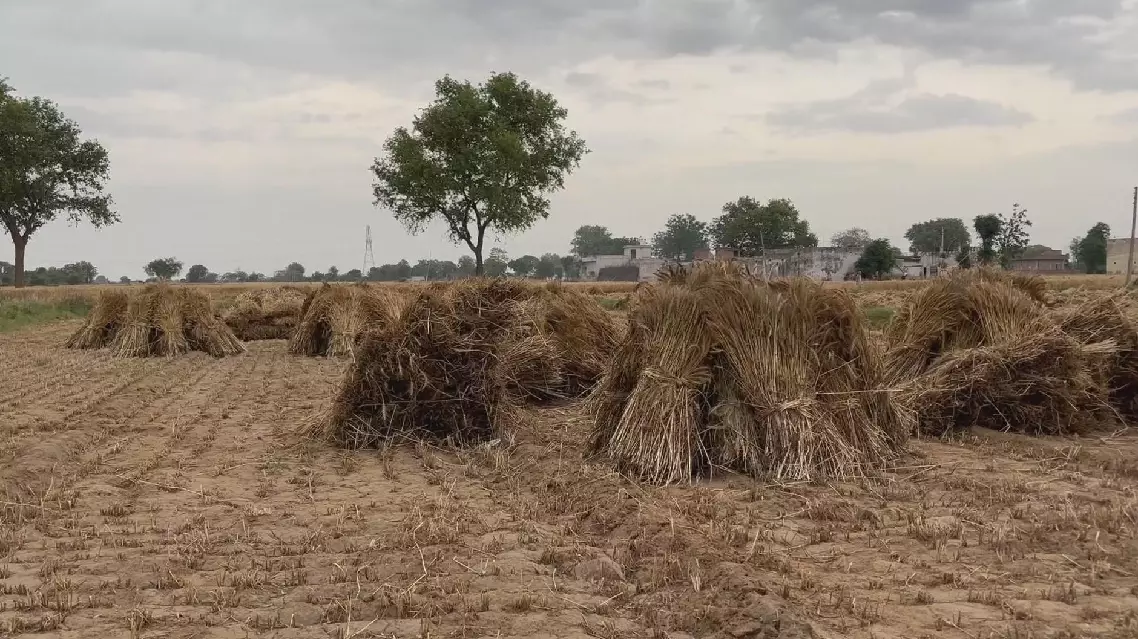
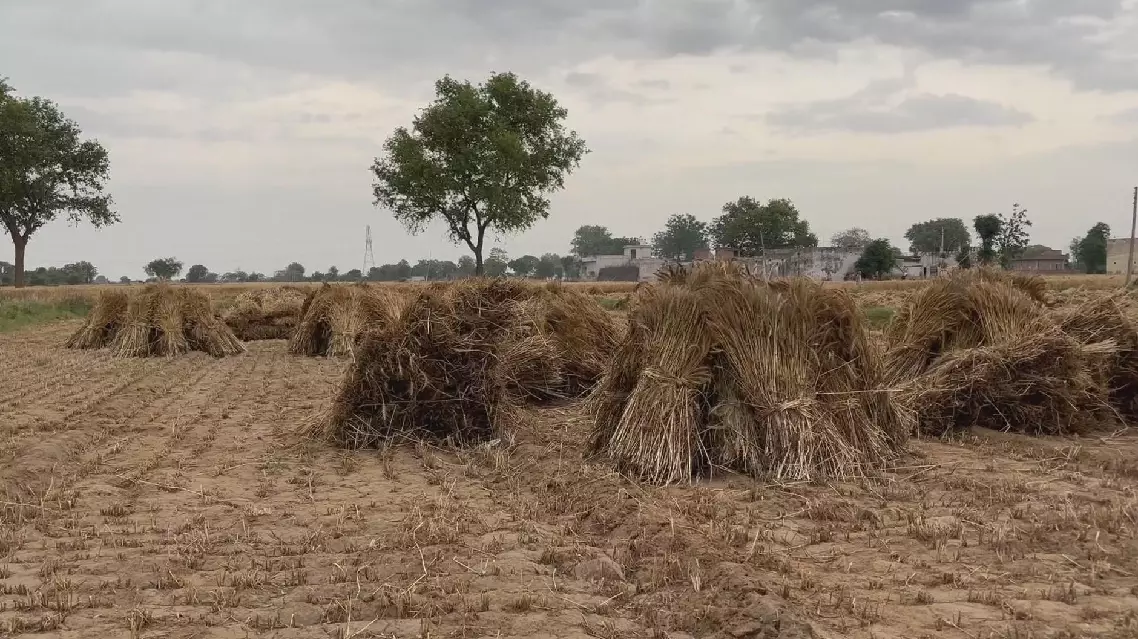
Farmers in India, a major agricultural producer and fertilizer importer, are raising concerns over fertilizer availability ahead of the planting season, as the escalating Middle East conflict and disruptions to shipping through the Strait of Hormuz put global supplies at risk.

The Middle East serves as both a vital energy hub and a major global fertilizer supplier, yet the ongoing U.S.-Israeli war with Iran has heightened risks of disruption to international supplies.

Chand Singh Yadav, a farmer in Haryana, a northern Indian state, said poor crop yields would be disastrous for the country and called on the government to ensure adequate supplies of fertilizers, agrochemicals and seeds to prevent a food crisis. "Without fertilizers, our crops will not grow well, and this would be disastrous for the entire country. If farmers cannot grow crops, people will not be able to buy food in the market. We urge the government to improve the supply system for fertilizers, agrochemicals and seeds to prevent the country and society as a whole from sliding into a food crisis," he said.

The Indian government is stepping up subsidies for farmers and optimizing fertilizer distribution and allocation to stabilize the supply. Prices have remained broadly stable, but demand is expected to surge ahead of the planting season, potentially exacerbating supply pressures.

"The current situation is worrying for us farmers. Spring sowing has not yet started, and the rainy season has not arrived. Fertilizer prices are temporarily stable, but in two months, demand for agricultural fertilizers will become pressing. Without fertilizers, it will be difficult to properly cultivate various types of crops. Urea and diammonium phosphate are especially critical. Crops can only grow normally when these fertilizers are applied. As these fertilizers are largely imported, if the conflict persists, supplies cannot be guaranteed," said Santosh Mishra, a farmer in India's eastern state of Odisha.

Escalating Middle East conflict strains India’s fertilizer supply

Escalating Middle East conflict strains India’s fertilizer supply

Escalating Middle East conflict strains India’s fertilizer supply

Escalating Middle East conflict strains India’s fertilizer supply

Recommended Articles